
NATURAL HOME CURES · NOPAL SCIENCE
Zinc
& Nopal
A trace mineral. Hundreds of biological jobs.
Explore the science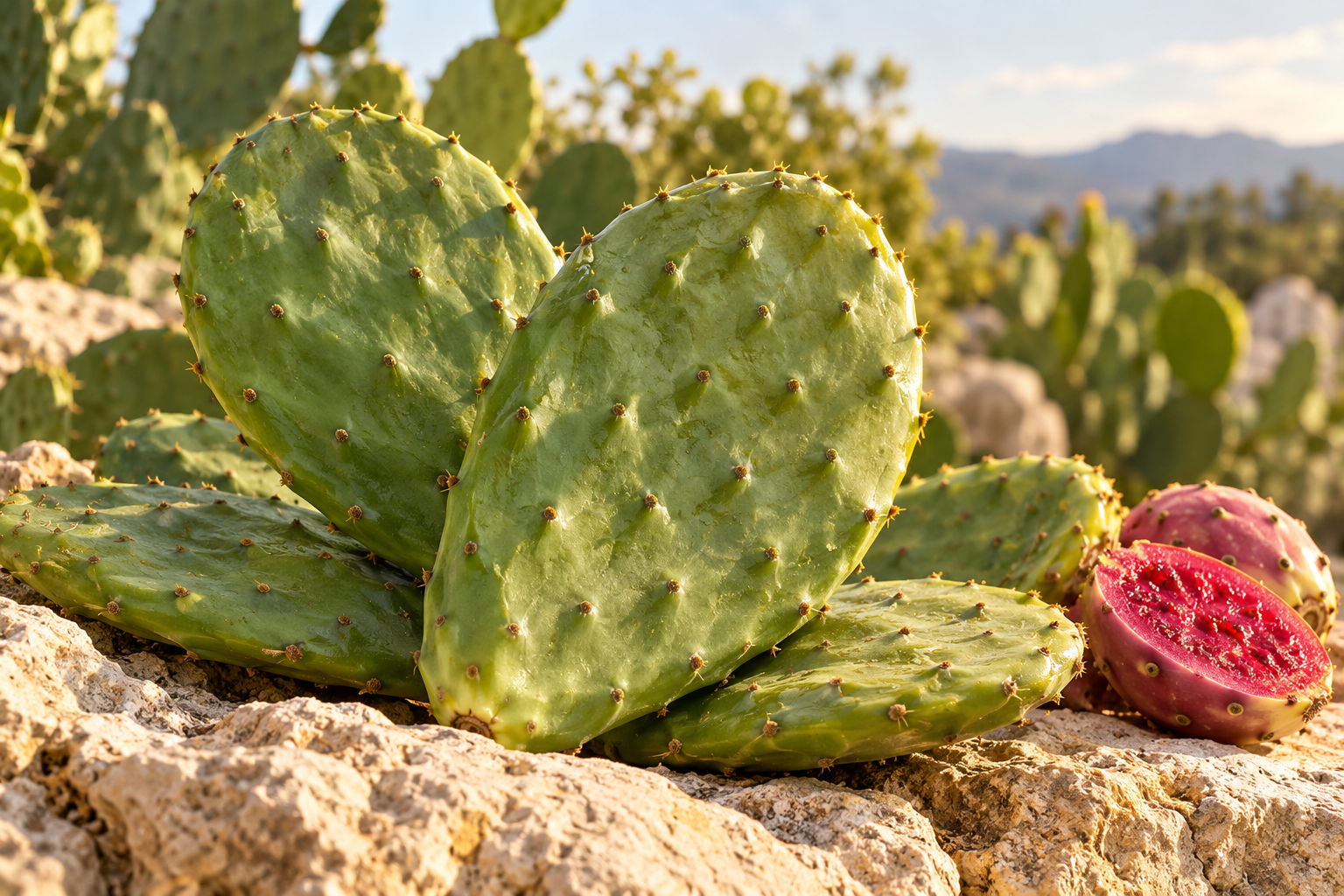
Zinc is another trace mineral—something our bodies need in relatively small amounts, yet something that participates in an extraordinary number of biological processes.
Zinc is involved in the activity of hundreds of enzymes and contributes to normal immune function, DNA and protein synthesis, cell division and wound healing.(1), (2)
It’s also important for our senses of taste and smell.(1)
Zinc occurs naturally in many foods, and it has a natural connection with Nopal cactus and prickly pear.
What Does Zinc Do?
TRACE MINERAL
Small amounts, many roles
Zinc contributes to normal enzyme activity, protein structure and gene regulation.
One reason zinc has so many jobs is that it can play several different roles inside proteins.
Sometimes zinc helps an enzyme carry out a chemical reaction.
Sometimes it helps stabilize the structure of a protein.
And in other cases, zinc helps proteins interact with DNA and regulate which genes are active.(2), (3)
That versatility helps explain why such a small amount of one mineral can become involved in so many different biological systems.
Zinc and the Immune System
NORMAL IMMUNE FUNCTION
A carefully regulated balance
The body needs enough zinc. More does not automatically mean a stronger response.
Zinc is important for the normal development and function of cells involved in the immune system.(1), (4)
Immune cells have to communicate, multiply and respond appropriately when the body encounters a challenge.
Zinc participates in many of the cellular processes behind those activities.
This doesn’t mean that more zinc automatically creates a stronger immune system. Like other essential minerals, zinc works within a range the body carefully regulates.
Its importance comes from being available when normal biological processes need it.
Zinc and Wound Healing
TISSUE REPAIR
Cells · Proteins · New tissue
Zinc participates in normal wound healing.
Zinc also has an established role in normal wound healing.(1)
Repairing damaged tissue requires cells to divide, proteins to be produced and new tissue to be constructed.
Zinc participates in enzymes and cellular processes involved in those activities.(1), (2)
Skin itself contains a meaningful portion of the body’s zinc, making the mineral part of the normal biology involved when tissues maintain and repair themselves.(5)
Zinc Helps Us Taste and Smell
EVERYDAY SENSES
Taste and smell
Specialized cells and signaling pathways connect mineral nutrition with familiar experiences.
Here’s one of zinc’s more surprising connections.
Zinc is important for normal taste and smell.(1)
People with significant zinc deficiency can experience changes in these senses.
Taste and smell may seem simple, but both depend on specialized cells, proteins, nerves and chemical signaling.
So the mineral involved in hundreds of enzyme systems also helps support something as familiar as tasting a meal or smelling a flower.
Zinc and DNA
ZINC FINGERS
Structure makes function possible
A zinc ion helps stabilize the shape of certain proteins that interact with DNA and other molecules.
Zinc also helps certain proteins interact with DNA.
Some of these proteins contain structures called zinc fingers.(3)
The name comes from the way parts of the protein fold around a zinc ion, creating a shape that can interact with DNA or other molecules.
Thousands of proteins in biology contain zinc-binding structures of one kind or another.
This gives zinc a remarkable connection with the way cells control genetic activity.
A tiny mineral can literally help a protein hold the shape it needs to interact with our genetic material.
Where Does Zinc Come From?
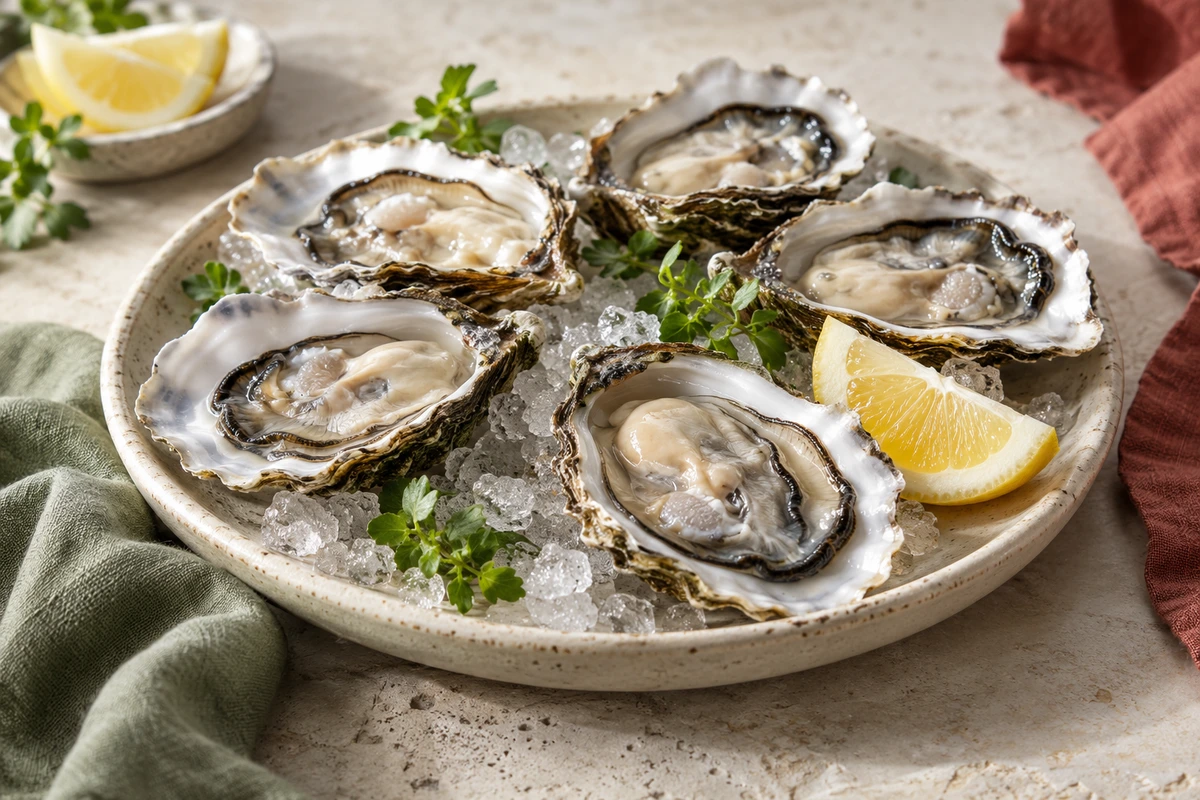
Zinc occurs naturally in many foods, including:
- Oysters and other shellfish
- Beef and poultry
- Dairy products
- Beans and lentils
- Nuts
- Seeds
- Whole grains
- Certain vegetables
- Nopal cactus and prickly pear
Scientific analyses of Nopal and Opuntia materials have identified zinc among the trace minerals found in the plant.(6), (7)
Zinc in Nopal Cactus
THE LIVING CACTUS
Zinc in Nopal Cactus
Species, growing conditions and plant tissues contribute to the larger botanical story.
Nopal contains major minerals such as calcium, potassium and magnesium, along with smaller amounts of trace minerals.
Zinc belongs to that trace-mineral picture.(6), (7) Its presence in published plant analyses does not establish how much zinc a serving of our finished capsules provides.
But as with other trace minerals, zinc becomes even more interesting when we look at the living cactus rather than simply a laboratory analysis.
Plants need zinc too.
Why a Nopal Cactus Needs Zinc
THE LIVING CACTUS
Why a Nopal Cactus Needs Zinc
Species, growing conditions and plant tissues contribute to the larger botanical story.
Zinc is an essential micronutrient for plants.(8)
Plants use zinc in enzymes and proteins involved in growth, metabolism and regulation.
Zinc also contributes to proteins that help plants control gene activity and respond to their environment.(8), (9)
When a Nopal pad grows, its cells are dividing, producing proteins and building new plant tissue.
Zinc becomes one of the trace minerals participating behind the scenes in that living process.
From Soil to Cactus
A plant obtains zinc primarily through its roots.
Zinc present in the soil solution can be taken up by root cells and transported through the plant.(8)
How much zinc is available depends on factors such as soil chemistry, pH, organic matter and interactions with other minerals.
That gives zinc a journey similar to several of the other minerals we’ve examined:
Soil → roots → living cactus.
By the time zinc appears in a scientific analysis of Nopal, the mineral has already been part of the plant’s biological story.
From Our Farms to Natural Home Cures
At Natural Home Cures, our flagship Freeze-Dried Nopal Powder Capsules begin with prickly pear cactus growing on our own farms.
While our Nopal is growing, trace minerals such as zinc participate in the biology of the living plant.
After harvesting, our Nopal is freeze-dried as part of preparing it for our capsules. Our goal is to preserve the character of the cactus we grow as closely as practical while preparing it in a convenient finished form.
That farm-to-product connection is important to the Natural Home Cures story because our relationship with Nopal begins with the plant itself.
The Natural Home Cures Nopal Family
FROM CACTUS TO PRODUCT
The plant comes first
Growing, harvesting and preparation connect the living cactus with the finished Nopal product.
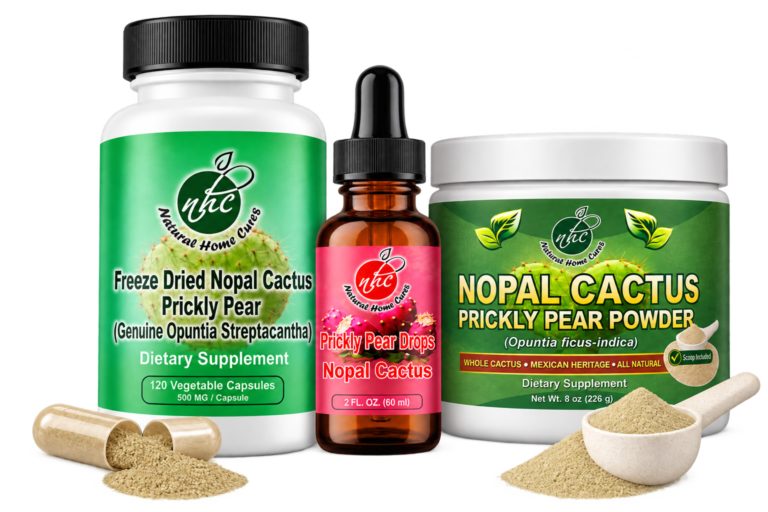
Our flagship Natural Home Cures Freeze-Dried Nopal Powder Capsules remain at the center of our Nopal line.
Natural Home Cures also offers Nopal Powder and Prickly Pear Drops, giving customers several ways to explore Nopal cactus and prickly pear.
Zinc gives us another example of why looking at the complete nutritional makeup of Nopal reveals far more than focusing on a single famous component such as fiber.
A Small Mineral With Hundreds of Jobs
Zinc participates in hundreds of enzyme reactions.
It contributes to normal immune function, DNA and protein synthesis, cell division, wound healing, and our senses of taste and smell.(1), (2)
Inside plants, zinc also participates in enzymes, proteins and normal growth processes.(8), (9)
Within Nopal cactus and prickly pear, zinc becomes another trace mineral inside a much larger nutritional and botanical picture.(6), (7)
For Natural Home Cures, every one of these pieces helps us understand something more about the remarkable cactus growing on our farms and the Nopal products we create from it.
FROM CACTUS TO PRODUCT
Keep the botanical
in the story.
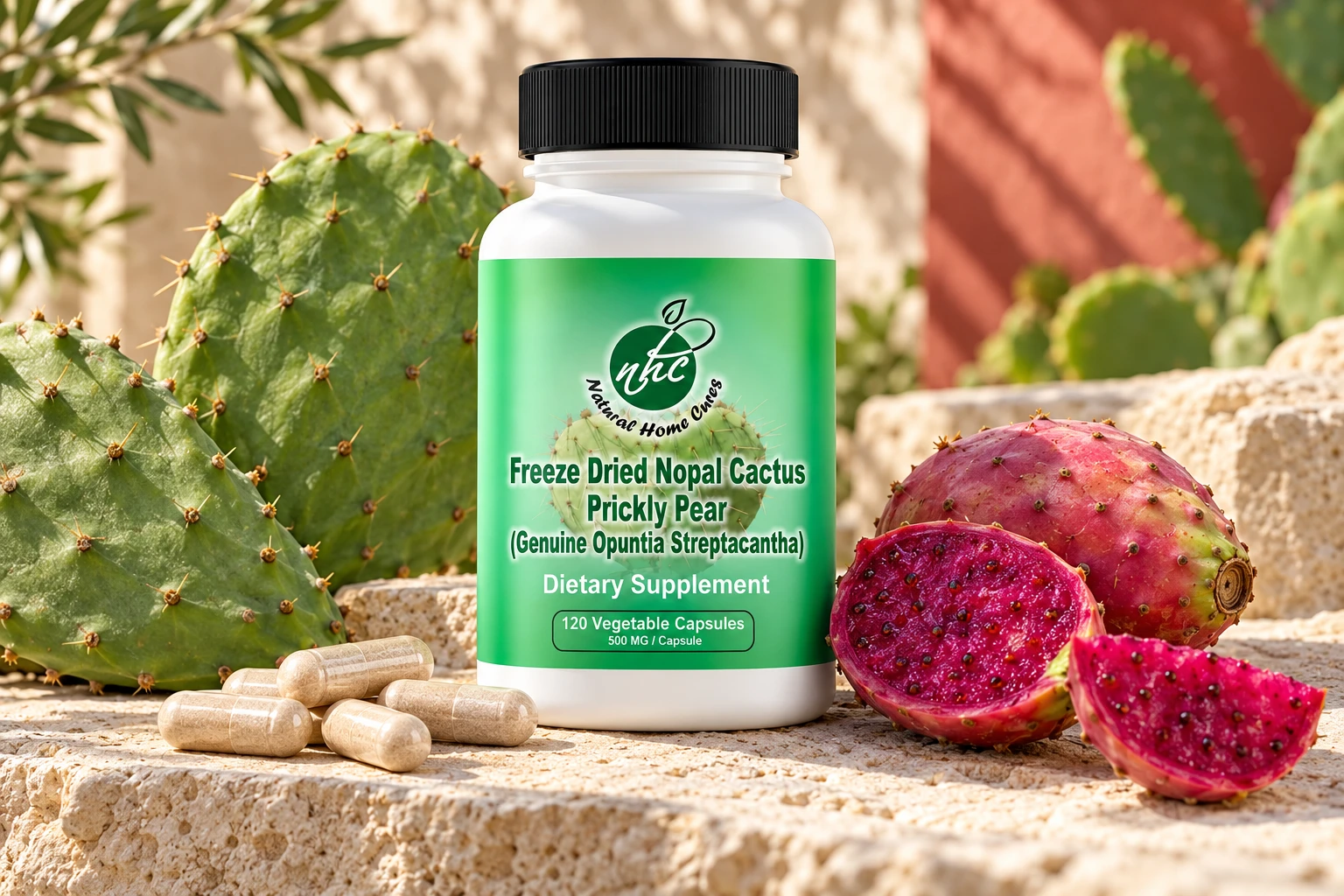
Freeze-dried Nopal cactus capsules.
Explore our Nopal →The research behind this articleSource References
- 01Research referenceZinc — Fact Sheet for Health Professionals.View source
Full citation
National Institutes of Health, Office of Dietary Supplements. “Zinc — Fact Sheet for Health Professionals.” - 02Research referenceZinc Homeostasis in Humans.View source
Full citation
King JC, Shames DM, Woodhouse LR. “Zinc Homeostasis in Humans.” Journal of Nutrition. 2000;130(5S Suppl):1360S–1366S. - 03Research referenceThe Discovery of Zinc Fingers and Their Applications in Gene Regulation and Genome Manipulation.View source
Full citation
Klug A. “The Discovery of Zinc Fingers and Their Applications in Gene Regulation and Genome Manipulation.” Annual Review of Biochemistry. 2010;79:213–231. - 04Research referenceZinc in Infection and Inflammation.View source
Full citation
Gammoh NZ, Rink L. “Zinc in Infection and Inflammation.” Nutrients. 2017;9(6):624. - 05Research referenceZinc and Skin Disorders.View source
Full citation
Ogawa Y, Kinoshita M, Shimada S, Kawamura T. “Zinc and Skin Disorders.” Nutrients. 2018;10(2):199. - 06Research referenceNopal Cactus (Opuntia ficus-indica) as a Source of Bioactive Compounds for Nutrition, Health and Disease.View source
Full citation
El-Mostafa K, El Kharrassi Y, Badreddine A, et al. “Nopal Cactus (Opuntia ficus-indica) as a Source of Bioactive Compounds for Nutrition, Health and Disease.” Molecules. 2014;19(9):14879–14901. - 07Research referenceCactus Stems (Opuntia spp.): A Review on Their Chemistry, Technology, and Uses.View source
Full citation
Stintzing FC, Carle R. “Cactus Stems (Opuntia spp.): A Review on Their Chemistry, Technology, and Uses.” Molecular Nutrition & Food Research. 2005;49(2):175–194. - 08Research referenceZinc in Plants.View source
Full citation
Broadley MR, White PJ, Hammond JP, Zelko I, Lux A. “Zinc in Plants.” New Phytologist. 2007;173(4):677–702. - 09Research referenceThe Zinc Homeostasis Network of Land Plants.View source
Full citation
Sinclair SA, Krämer U. “The Zinc Homeostasis Network of Land Plants.” Biochimica et Biophysica Acta. 2012;1823(9):1553–1567.