Nopal Juice Processing and Additives — The Real Truth Exposed
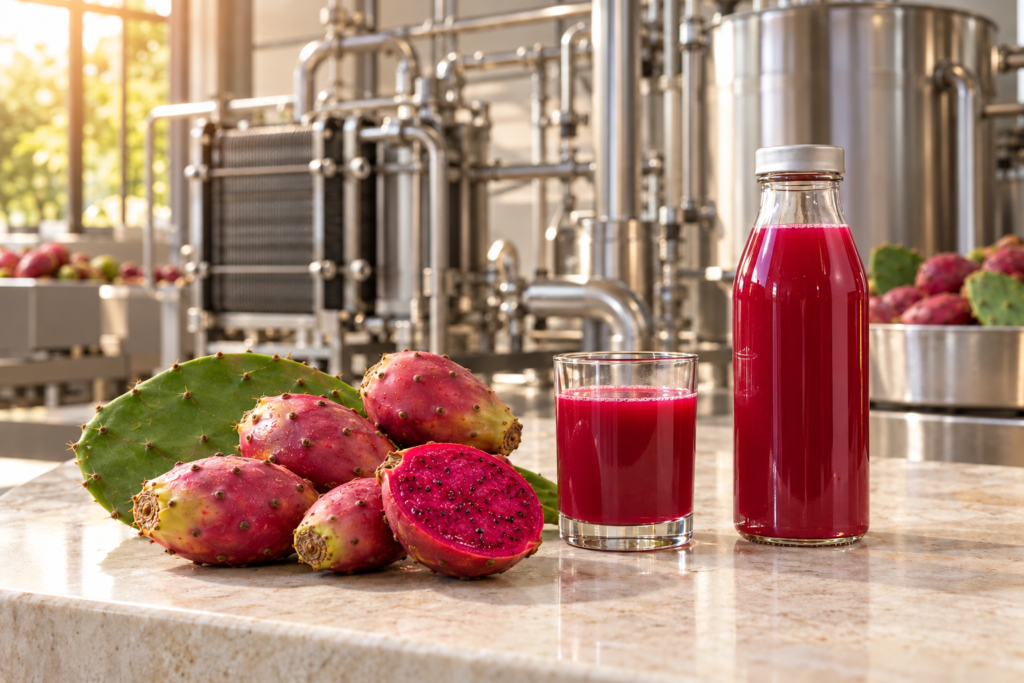
Pasteurization and the Finished Juice
Pasteurization uses heat to reduce harmful microbes in juice. Batch and flash pasteurization use different combinations of time and temperature.(1), (2) Heat treatment can also affect color, flavor and nutrients. Research on fruit juices shows that the effects depend on the process and the juice.(3), (4) Follow the label’s storage directions before and after opening.
Read the Sugar Information
Check the Nutrition Facts panel for the serving size, total carbohydrate, and the amounts of total and added sugars.(5)
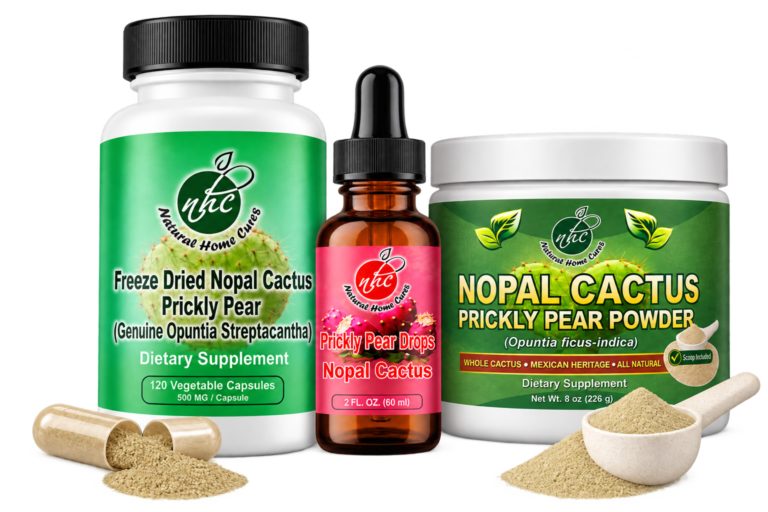
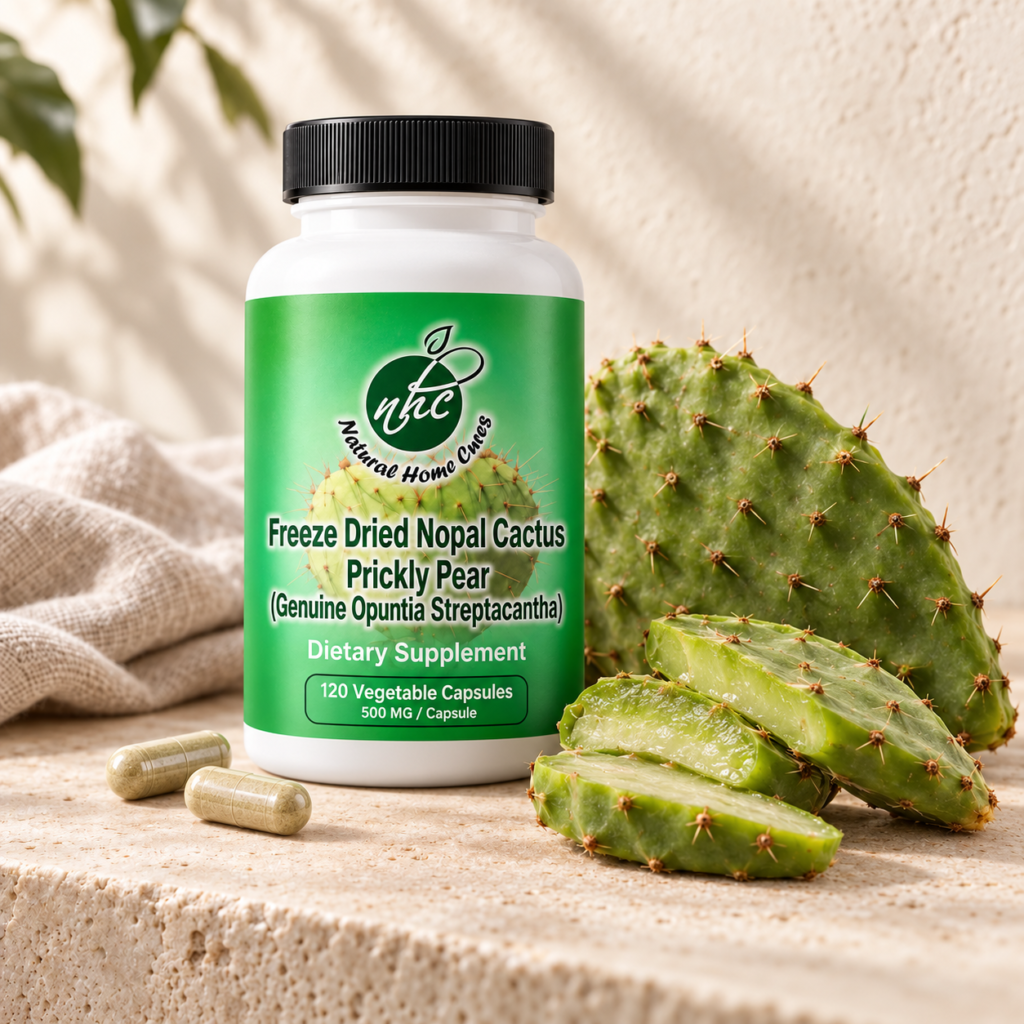
Our Nopal capsules are a different format: freeze-dried green pad powder inside a vegetable capsule. The label identifies Opuntia streptacantha, with 500 mg per capsule, and lists “Veggie Caps” under other ingredients.(8)
Know What Is in the Blend
A finished cactus drink may combine Nopal pad juice, prickly pear fruit juice, other fruit juices and water. The green pad and the fruit are different plant parts. A premium price or a cactus pictured on the front does not tell you how much cactus-derived material is inside. Check the total juice percentage and the full ingredient list. The total juice percentage alone does not tell you the share supplied by cactus.(7)
What Additives Do
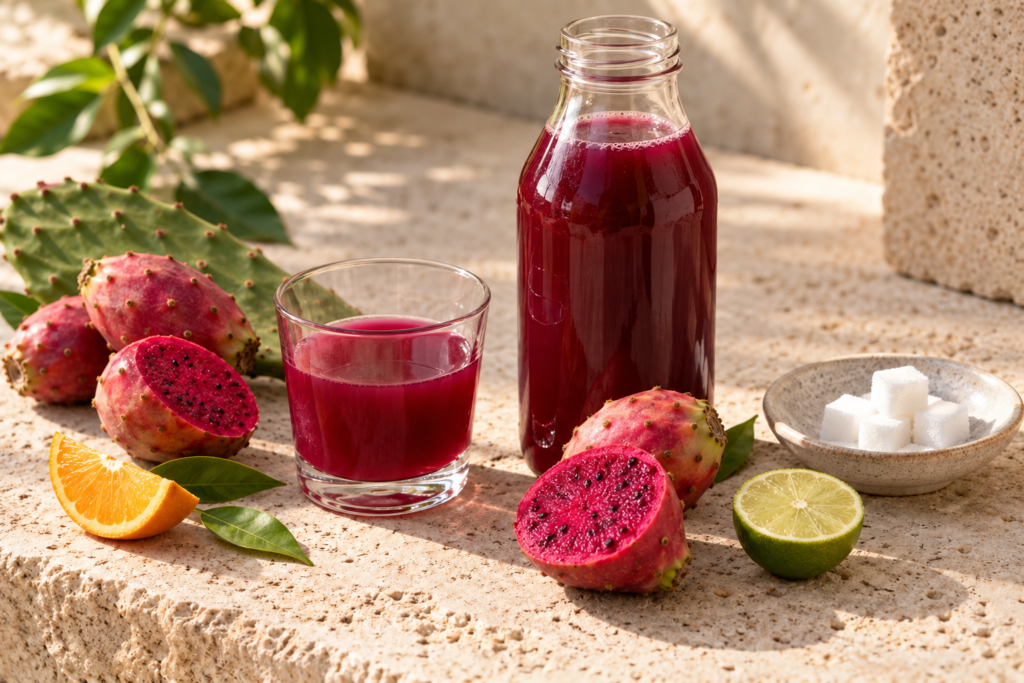
Other fruit juices and flavorings can change a cactus drink’s taste. Citric acid helps control acidity, while sodium benzoate helps prevent spoilage. Different additives serve different purposes.(9)
FDA explains that very low levels of benzene can form in some beverages containing both benzoate salts and vitamin C, especially with exposure to heat or light. Benzene is a carcinogen. In FDA’s 2005–2007 survey, most samples had no detectable benzene or levels below 5 parts per billion. Products found above that level were reformulated if still manufactured.(6)
Beverage scenes are conceptual illustrations, not Natural Home Cures drink products or ingredient lists. Our Nopal capsule image shows the separate pad-based capsule format.
The research behind this articleSource References9 sources · Show or hide
01
02
03
Fruit-juice processing research
04
05
06
07
08