NATURAL HOME CURES · NOPAL SCIENCE
Betalains
& Nopal
The chemistry behind the colors of prickly pear.
Explore the science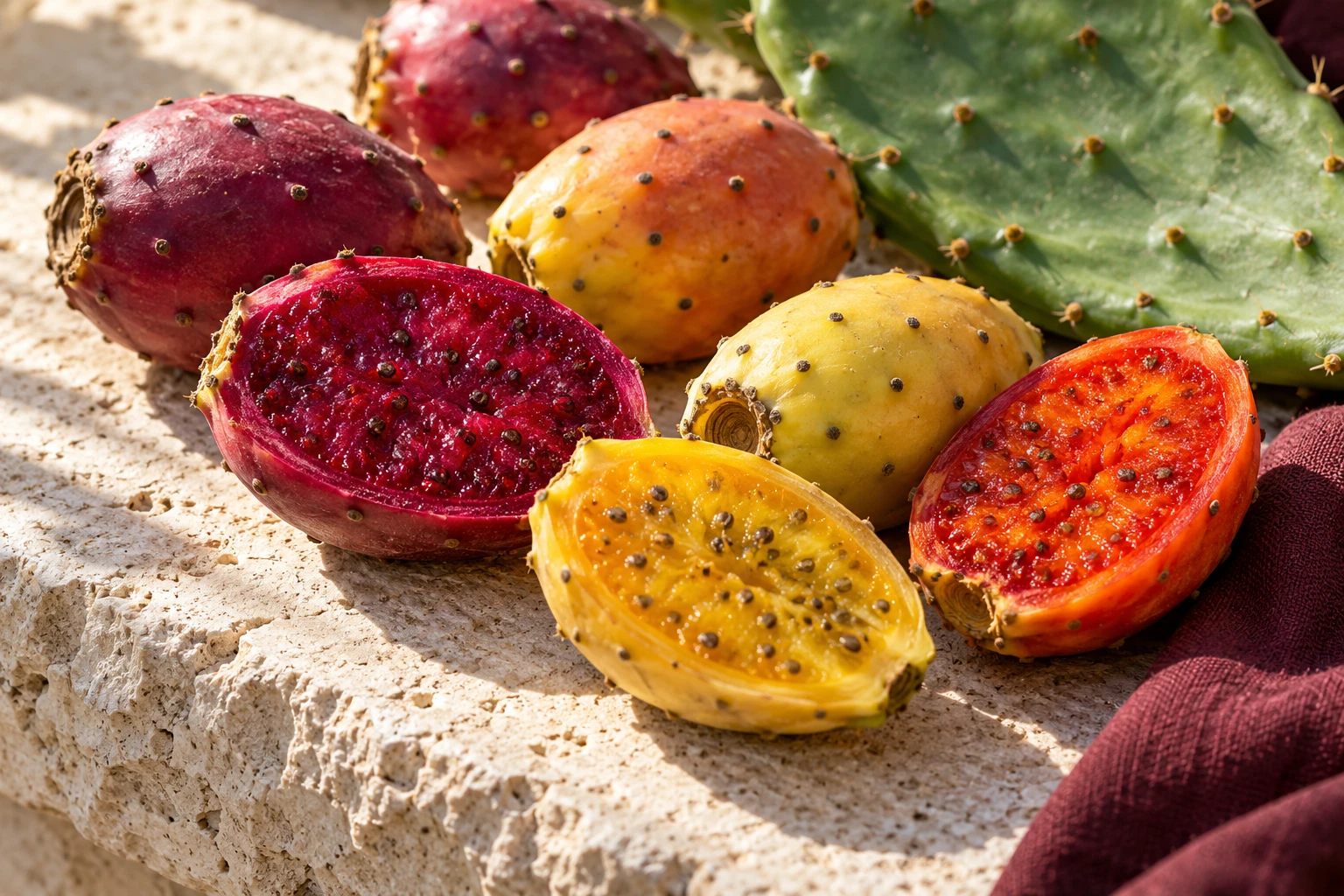
Look at the brilliant red, purple or yellow colors found in some prickly pear fruits and you are seeing plant chemistry with your own eyes.
Much of that remarkable color comes from natural pigments called betalains.(1), (2)
Betalains are a family of water-soluble plant pigments responsible for some of the vivid reds, purples and yellows found in prickly pear cactus and a relatively small number of other plants.(1)
But betalains do more inside a plant than simply make it beautiful.
They're part of the cactus's natural chemistry and have attracted considerable scientific interest because of their antioxidant properties and unusual molecular structure.(2), (3)
For Natural Home Cures, betalains provide another fascinating example of just how much chemistry can be hidden inside Nopal cactus and prickly pear.
What Are Betalains?
There are two major groups:
Betacyanins produce colors ranging from red to violet.
Different combinations and concentrations of these pigments help create the remarkable range of colors we can see in prickly pear fruits.
So when you see a deep purple prickly pear beside a yellow or orange one, you're seeing differences in the plant's natural pigment chemistry.
The Color Is Chemistry
Color can seem like something purely decorative.
In plants, it often isn't.
Pigments are actual molecules with particular chemical structures.
Those structures determine which wavelengths of visible light the molecules absorb and which wavelengths are reflected back toward our eyes.
That's why a betacyanin-rich prickly pear can appear deep red or purple.
The color isn't painted onto the fruit.
It's the visible result of molecules produced by the living cactus.
Betalains Are Unusual in the Plant World
One thing that makes betalains especially interesting is that they aren't found everywhere.
Many familiar red, blue and purple plants obtain their color from pigments called anthocyanins.
Betalain-producing plants use a different pigment system.(1), (4)
In fact, betalains and anthocyanins generally don't occur together in the same plant.
Prickly pear belongs to the relatively limited group of plants capable of producing betalains.
That makes its brilliant colors more than beautiful.
They're botanically unusual.
Betalains and Antioxidant Chemistry
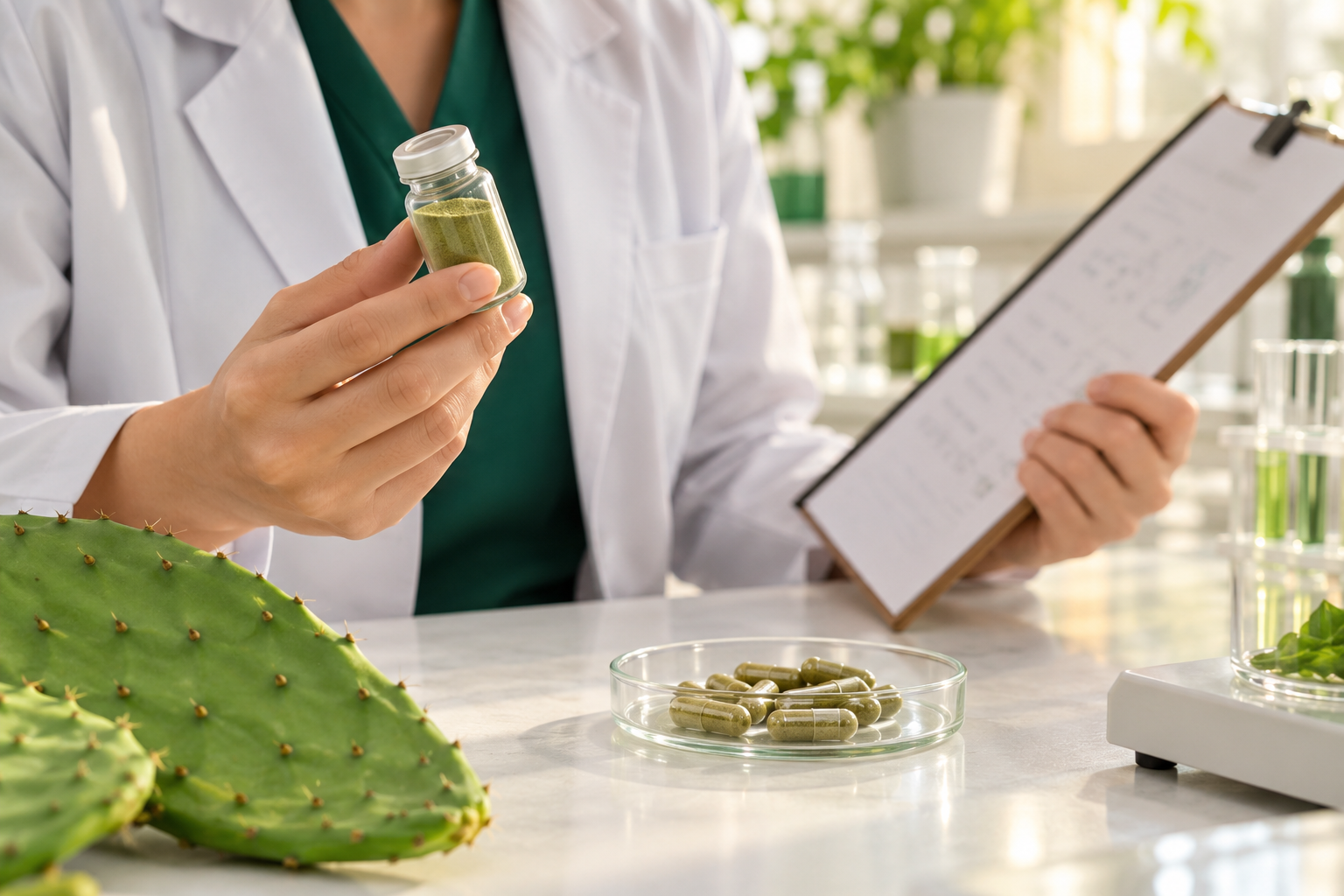
Betalains have attracted scientific attention partly because they can participate in antioxidant reactions in laboratory systems.(2), (3)
Antioxidants are substances that can interact with reactive molecules, including some commonly called free radicals.
That doesn't mean a colorful cactus pigment should be treated as a cure or that every laboratory observation automatically translates into a particular effect in the human body.
What it does mean is that scientists have a legitimate reason to be interested in the chemistry of these pigments.
Their molecular structures allow them to participate in reactions that researchers can measure and study.
And that gives the brilliant colors of prickly pear an entirely different scientific dimension.
Betalains Help the Plant Too
Plants don't produce pigments for our benefit.
Those compounds existed long before people became interested in nutrition.
Betalains can contribute to the plant's responses to environmental stresses and may help protect plant tissues under challenging conditions.(4), (5)
Pigments can interact with light and reactive molecules generated when plants experience environmental stress.
So the same compounds that make prickly pear visually spectacular also belong to the cactus's own biological toolkit.
From Green Pads to Brilliant Fruit
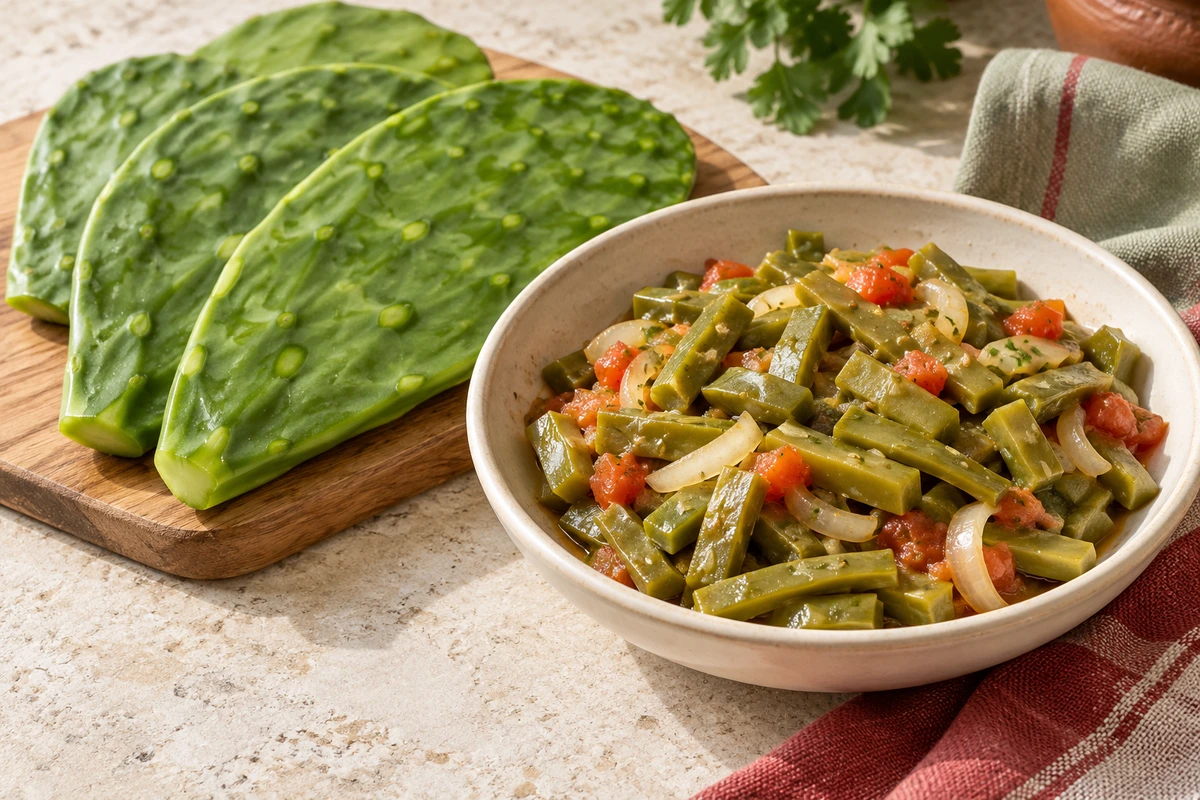
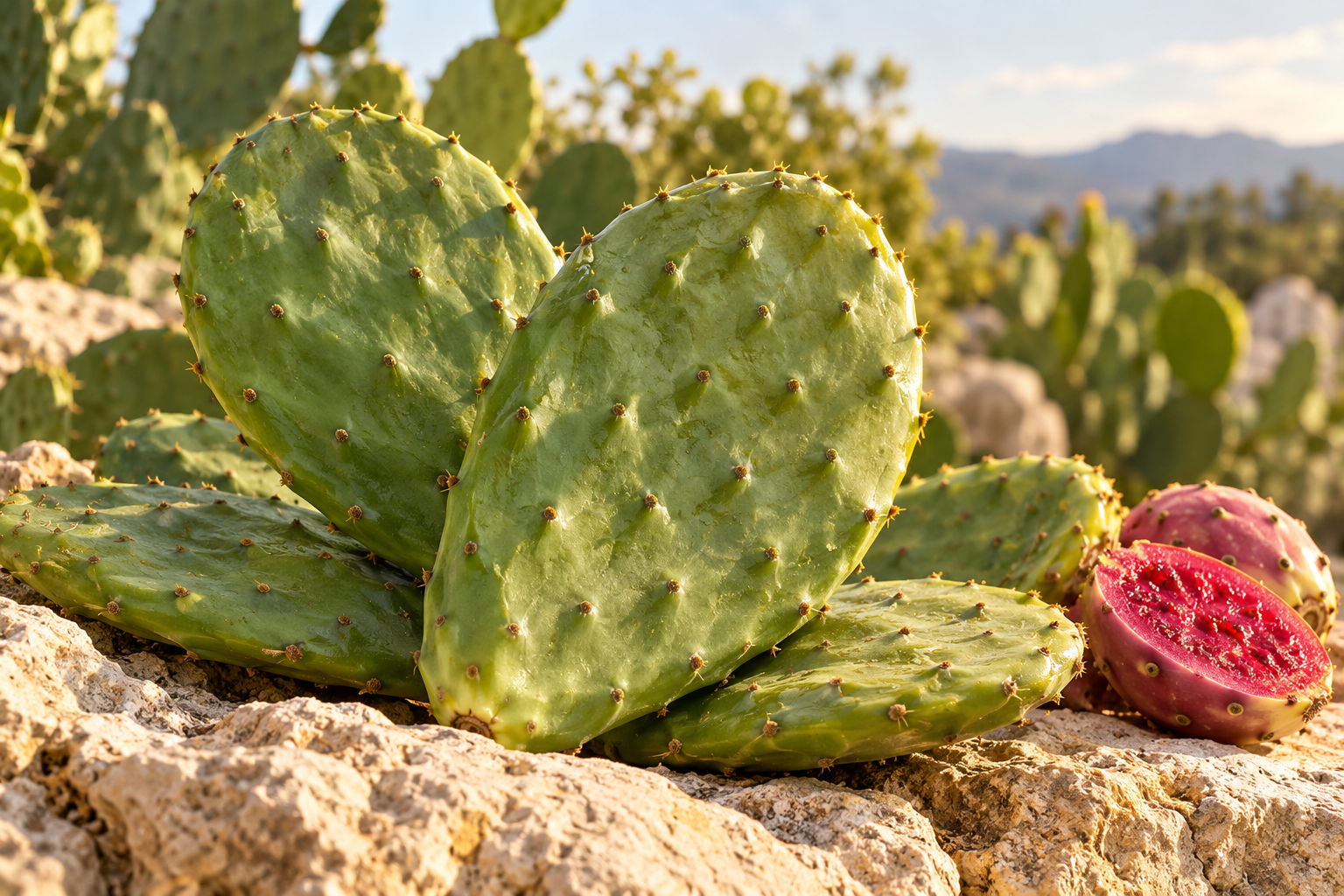
A prickly pear cactus gives us two very different visual worlds.
The pads are dominated by green chlorophyll.
Then the plant can produce fruits displaying brilliant reds, purples, oranges and yellows.
Those colors reveal different parts of the cactus's chemistry.
Chlorophyll helps the green pad capture light for photosynthesis.
Betalains help create the spectacular colors found in the fruit and other pigmented tissues.
One plant.
Different pigments.
Different biological roles.
That's part of what makes the prickly pear family so fascinating.
Betalains in Nopal and Prickly Pear
Researchers studying Opuntia species have identified a variety of betalain pigments, particularly in the colorful fruits.(2), (3), (6)
The exact pigment profile can differ with the species, variety, plant tissue and stage of maturity.
A deep-purple prickly pear doesn't necessarily have the same pigment profile as a yellow fruit.
And the green cactus pad is chemically different again.
Rather than making Nopal less interesting, that diversity makes the plant family even more remarkable.
One cactus can produce dramatically different tissues with dramatically different appearances and chemical profiles.
Why Processing Matters With Plant Pigments
Heat, oxygen, light and other processing conditions can affect the stability of betalain pigments.(2), (7)
That makes handling after harvest an important part of the plant’s story.
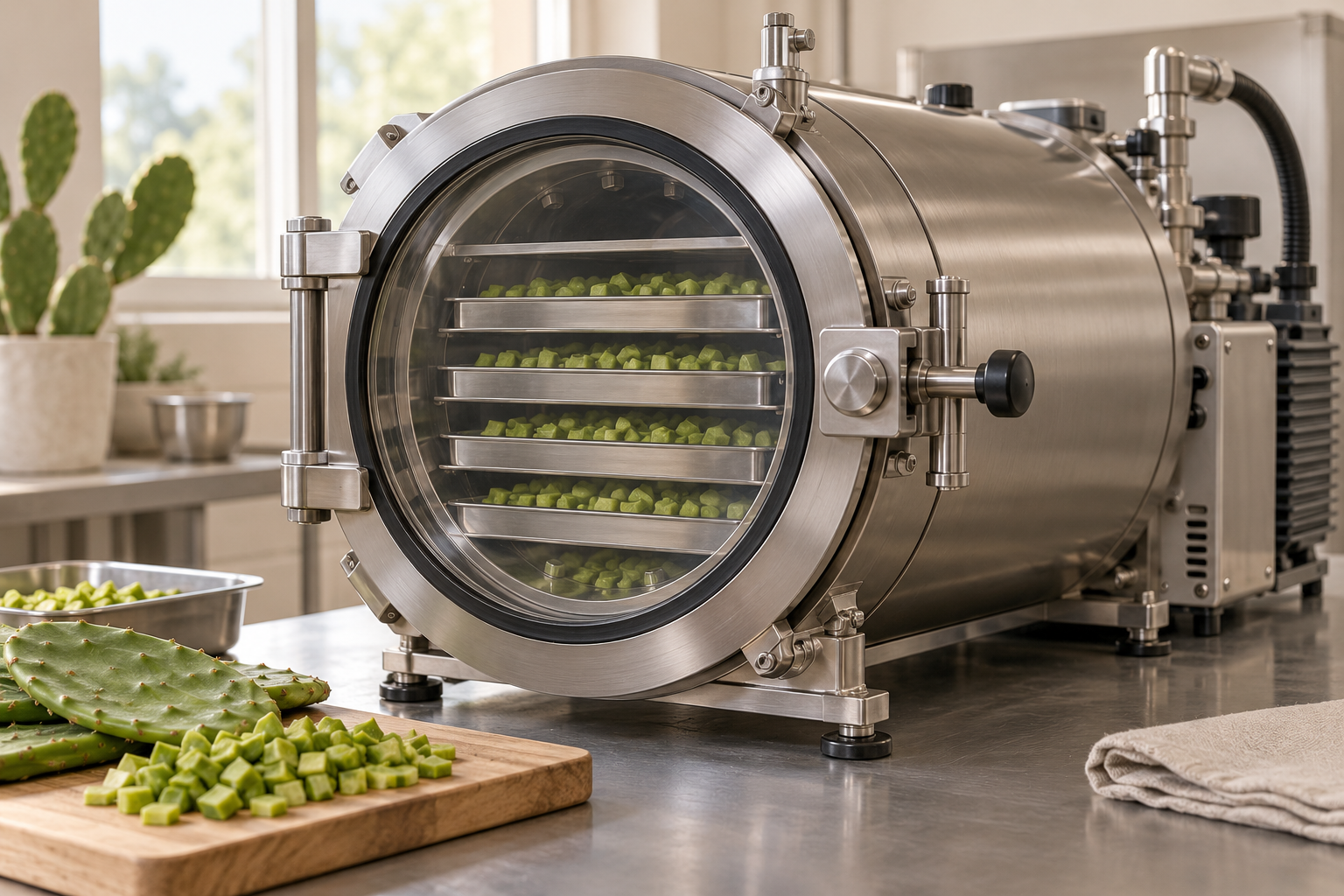
For our flagship Freeze-Dried Nopal Powder Capsules, we freeze-dry the harvested cactus. This removes water at low temperatures under reduced pressure.
Our goal is to preserve the character of the Nopal we grow as closely as practical while preparing it in a convenient form.
From Our Farms to the Nopal Family
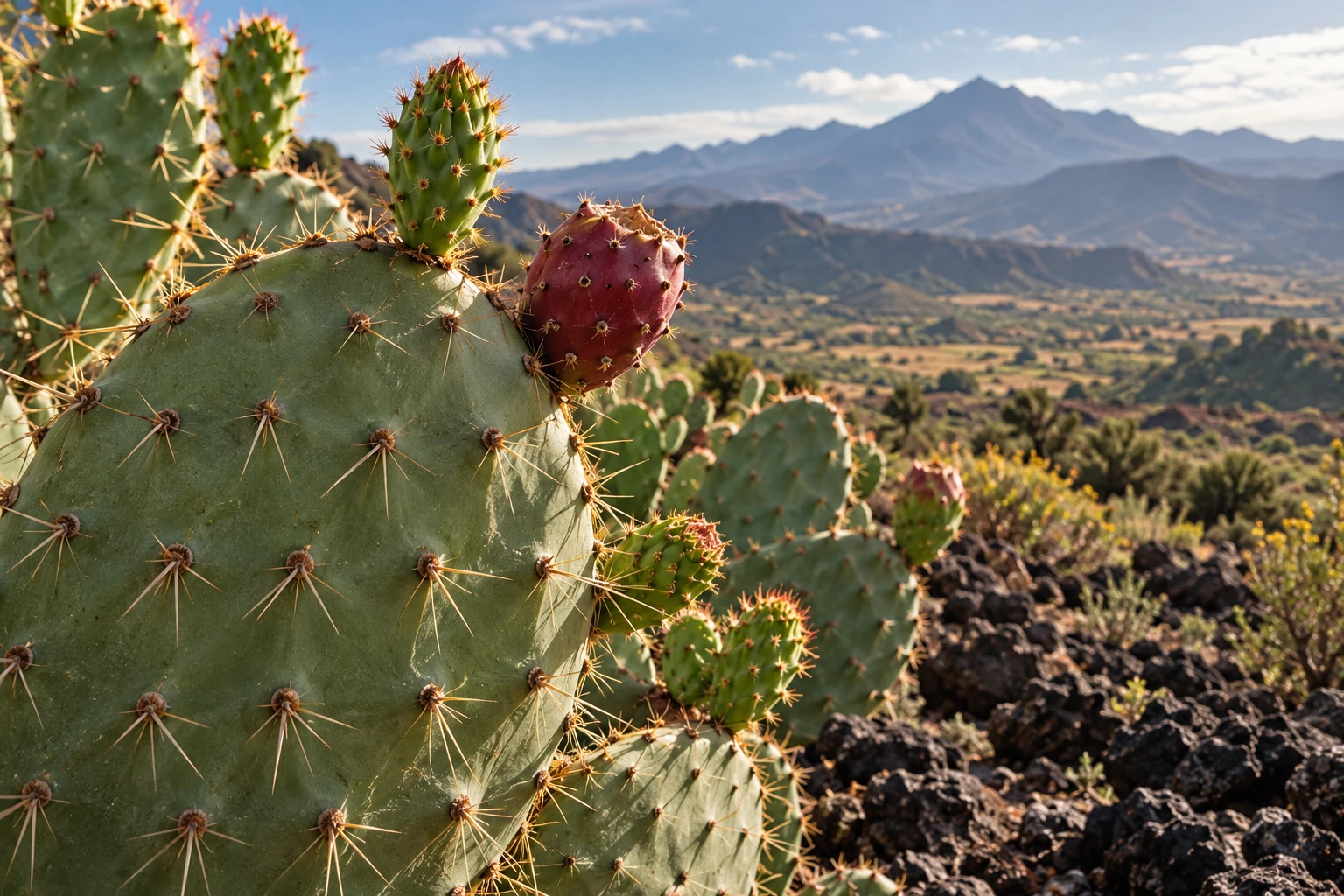
The Opuntia streptacantha behind our flagship capsules grows on our own farms in central Mexico, at approximately 2,500 meters—about 8,200 feet—above sea level.
Our involvement begins with the living cactus and continues through harvest, freeze-drying, milling and preparation for capsules.
Our Nopal family also includes Nopal Powder and Prickly Pear Drops. The colorful fruit has its own pigment story, giving us another reason to explore different parts of the prickly pear cactus.
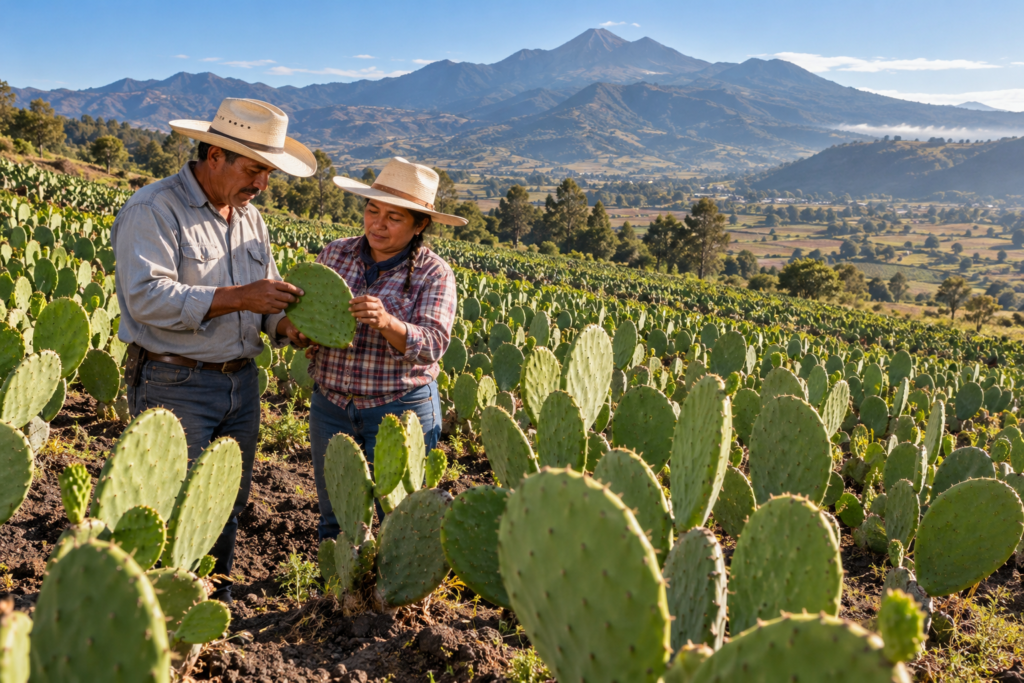 STAGE 1 OF 5
Grow
Nopal cactus grows on our farms.
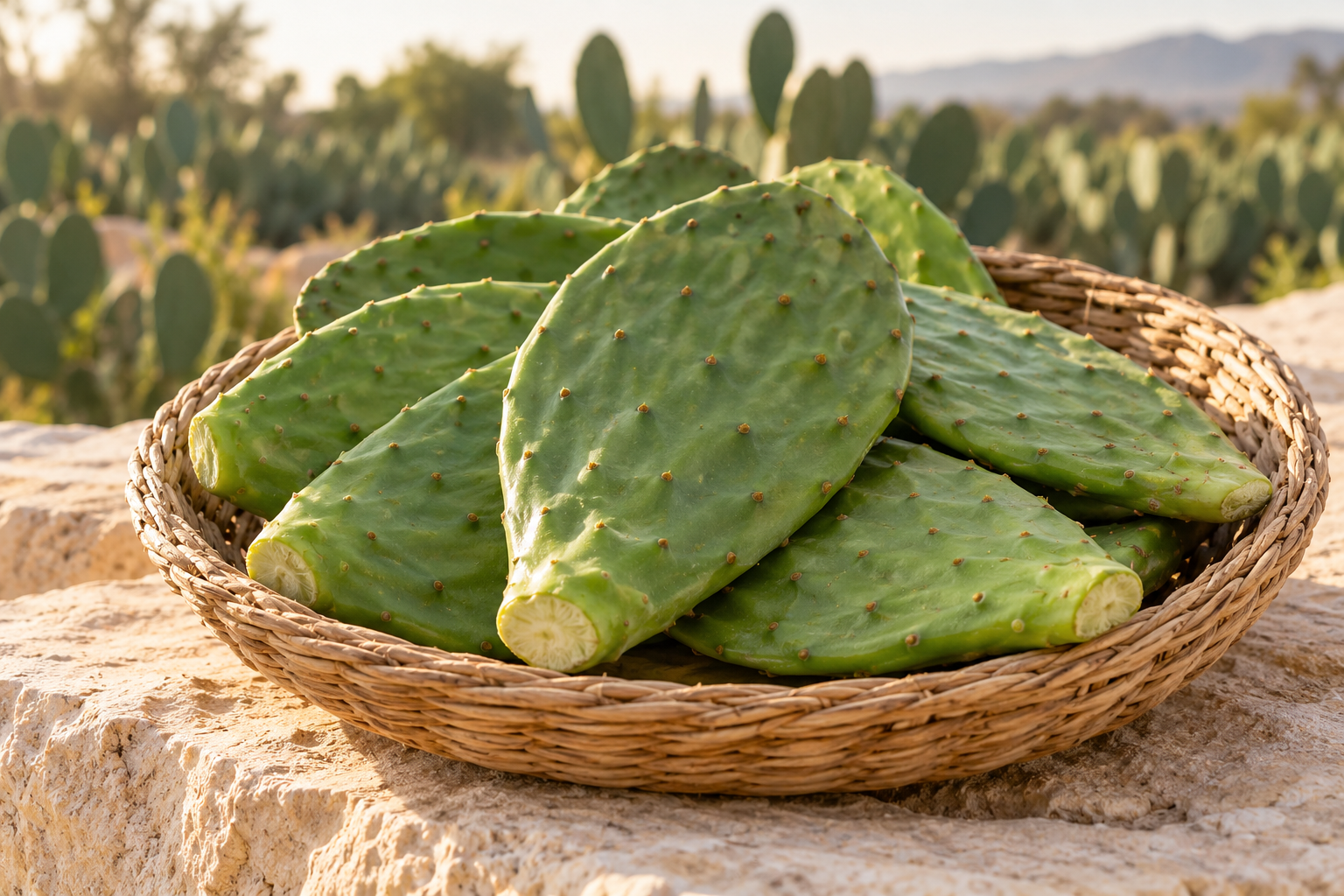 STAGE 2 OF 5
Harvest
The cactus pads are harvested and prepared.
 STAGE 3 OF 5
Freeze-dry
Moisture is removed from the prepared pads by freeze-drying.
 STAGE 4 OF 5
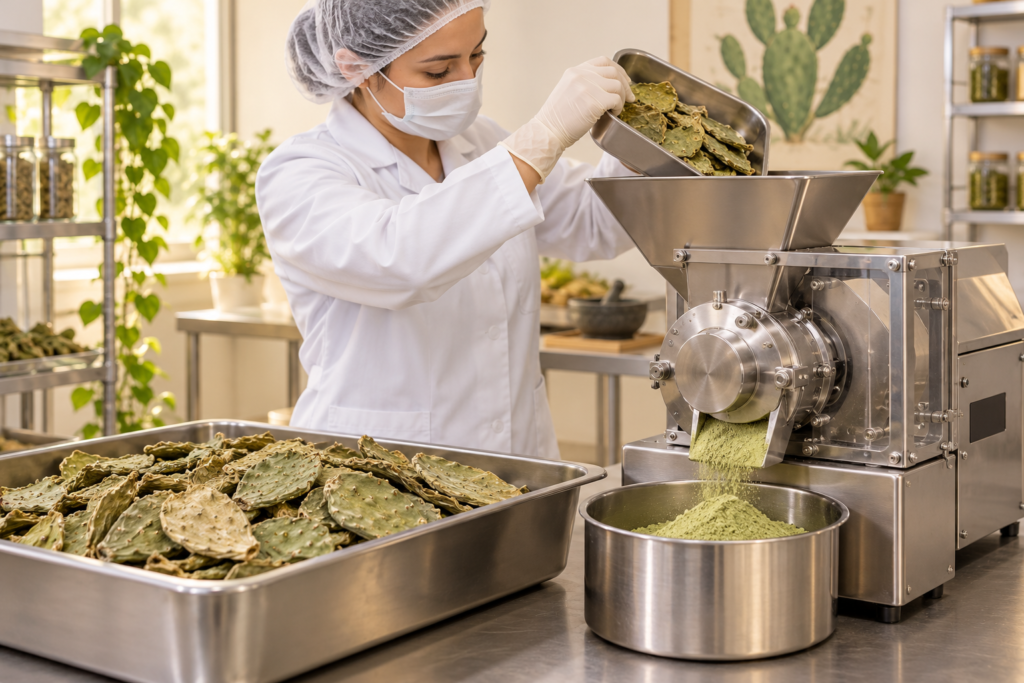
Mill
The dried pads are milled into powder.
 STAGE 5 OF 5
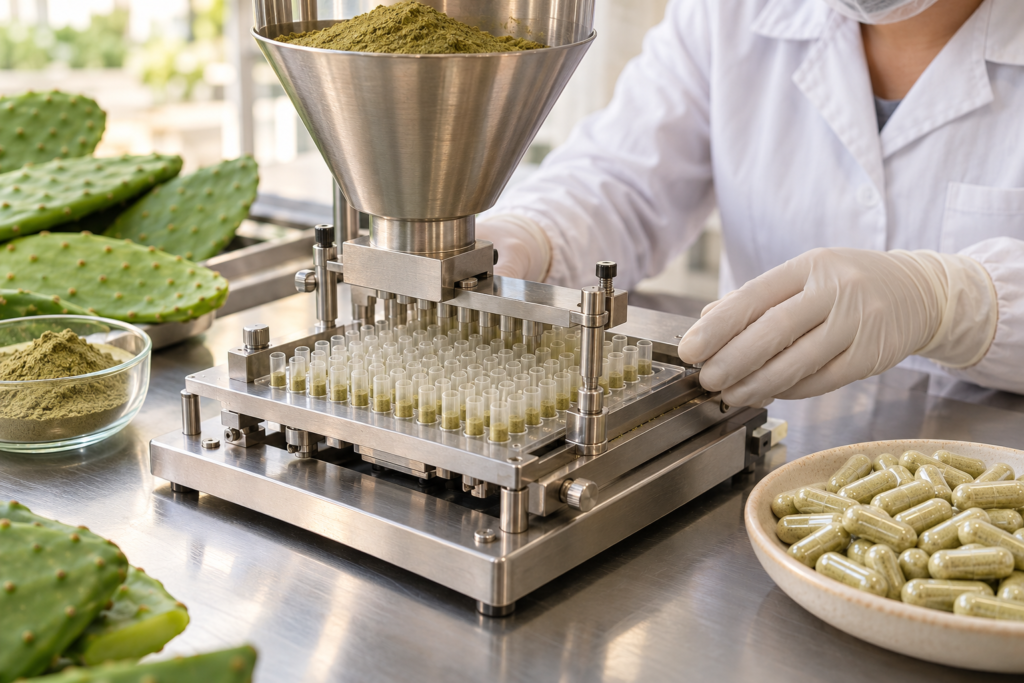
Fill capsules
The milled powder is filled into capsules.
More Than a Pretty Color
It's easy to look at a purple prickly pear and simply think:
That's beautiful.
But now look again.
That color represents molecules.
Those molecules were produced by a living cactus.
Their structures determine the colors our eyes see.
They participate in the plant's own biology.
And scientists continue studying their chemical properties.(1), (2), (3)
That's what makes betalains such a perfect subject for the Natural Home Cures Science Library.
They take something anyone can see—the spectacular color of a prickly pear—and reveal the remarkable chemistry underneath it.
For Natural Home Cures, betalains are another reminder that the closer we look at Nopal cactus and prickly pear, the more extraordinary the plant becomes.
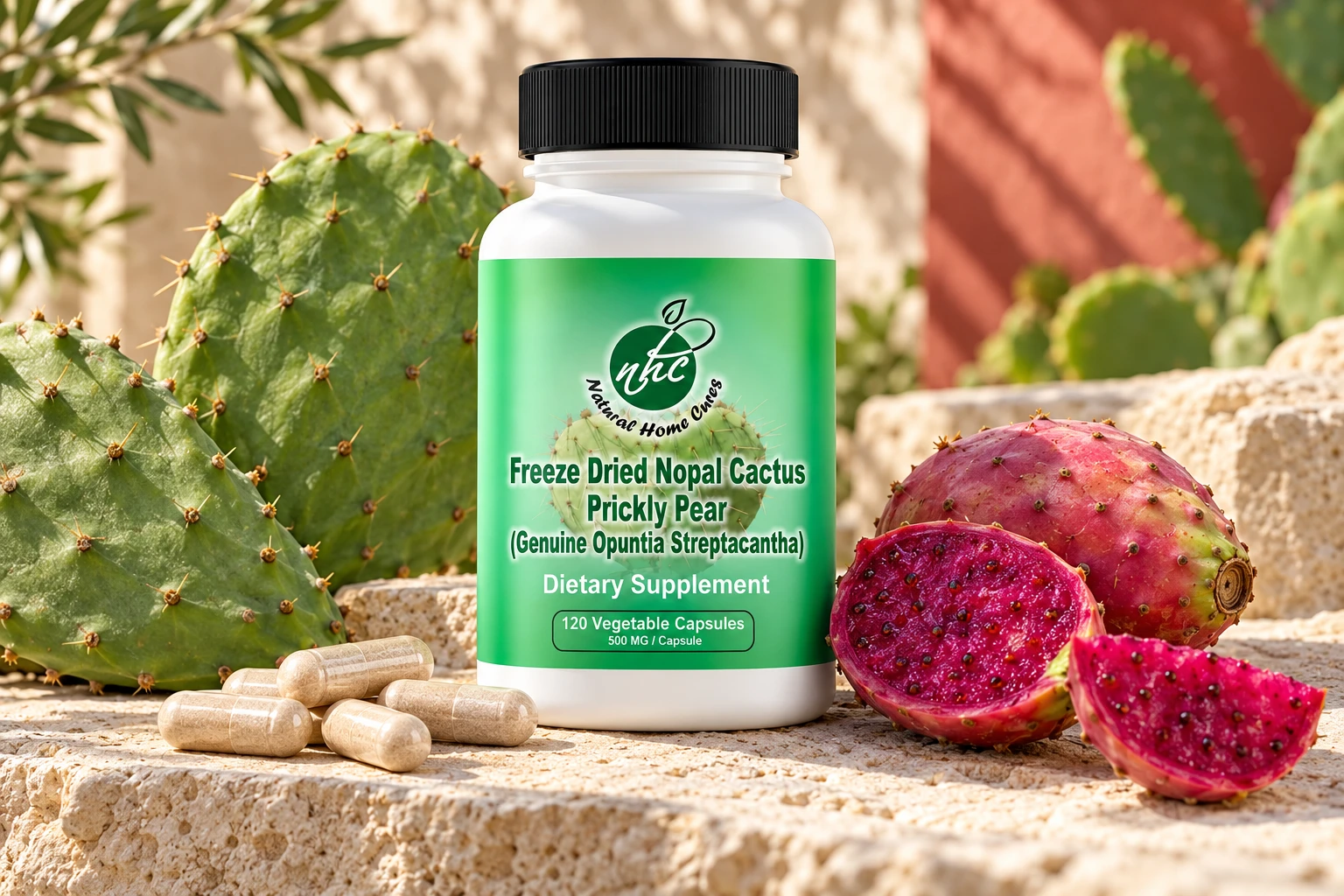
FROM CACTUS TO PRODUCT
Keep the botanical
in the story.
Freeze-dried Nopal cactus capsules.
Explore our Nopal →The research behind this articleSource References
- 01Research referenceRecent Advances in Betalain Research.View source
Full citation
Strack D, Vogt T, Schliemann W. “Recent Advances in Betalain Research.” Phytochemistry. 2003;62(3):247–269. - 02Research referenceFunctional Properties of Anthocyanins and Betalains in Plants, Food, and in Human Nutrition.View source
Full citation
Stintzing FC, Carle R. “Functional Properties of Anthocyanins and Betalains in Plants, Food, and in Human Nutrition.” Trends in Food Science & Technology. 2004;15(1):19–38. - 03Research referenceBiological Activities of Plant Pigments Betalains.View source
Full citation
Gandía-Herrero F, Escribano J, García-Carmona F. “Biological Activities of Plant Pigments Betalains.” Critical Reviews in Food Science and Nutrition. 2016;56(6):937–945. - 04Research referenceLa Vie en Rose: Biosynthesis, Sources, and Applications of Betalain Pigments.View source
Full citation
Polturak G, Aharoni A. “La Vie en Rose: Biosynthesis, Sources, and Applications of Betalain Pigments.” Molecular Plant. 2018;11(1):7–22. - 05Research referenceAre Betalain Pigments the Functional Homologues of Anthocyanins in Plants?View source
Full citation
Jain G, Gould KS. “Are Betalain Pigments the Functional Homologues of Anthocyanins in Plants?” Environmental and Experimental Botany. 2015;119:48–53. - 06Research referenceIdentification of Betalains from Yellow Beet (Beta vulgaris L.) and Cactus Pear [Opuntia ficus-indica (L.) Mill.] by High-Performance Liquid Chromatography-Electrospray Ionization Mass Spectrometry.View source
Full citation
Stintzing FC, Schieber A, Carle R. “Identification of Betalains from Yellow Beet (Beta vulgaris L.) and Cactus Pear [Opuntia ficus-indica (L.) Mill.] by High-Performance Liquid Chromatography-Electrospray Ionization Mass Spectrometry.” Journal of Agricultural and Food Chemistry. 2002;50(8):2302–2307. - 07Research referenceBetalain Stability and Degradation—Structural and Chromatic Aspects.View source
Full citation
Herbach KM, Stintzing FC, Carle R. “Betalain Stability and Degradation—Structural and Chromatic Aspects.” Journal of Food Science. 2006;71(4):R41–R50.