
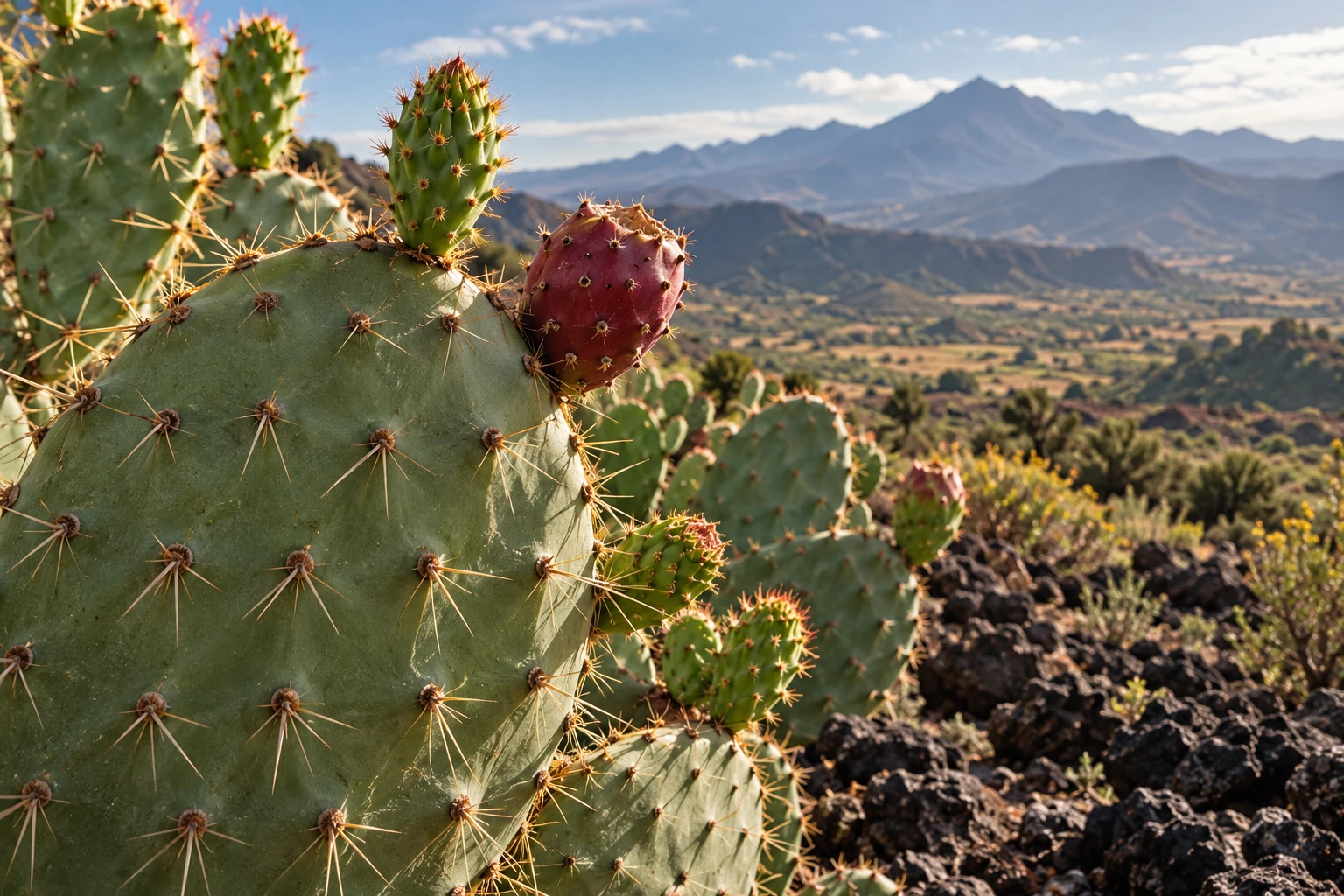
NATURAL HOME CURES · MEXICAN HERITAGE
Nopal: History, Food
& the Aztec
Foundation Story
Food, language, craft and the founding story of Mexico-Tenochtitlan.
Explore the story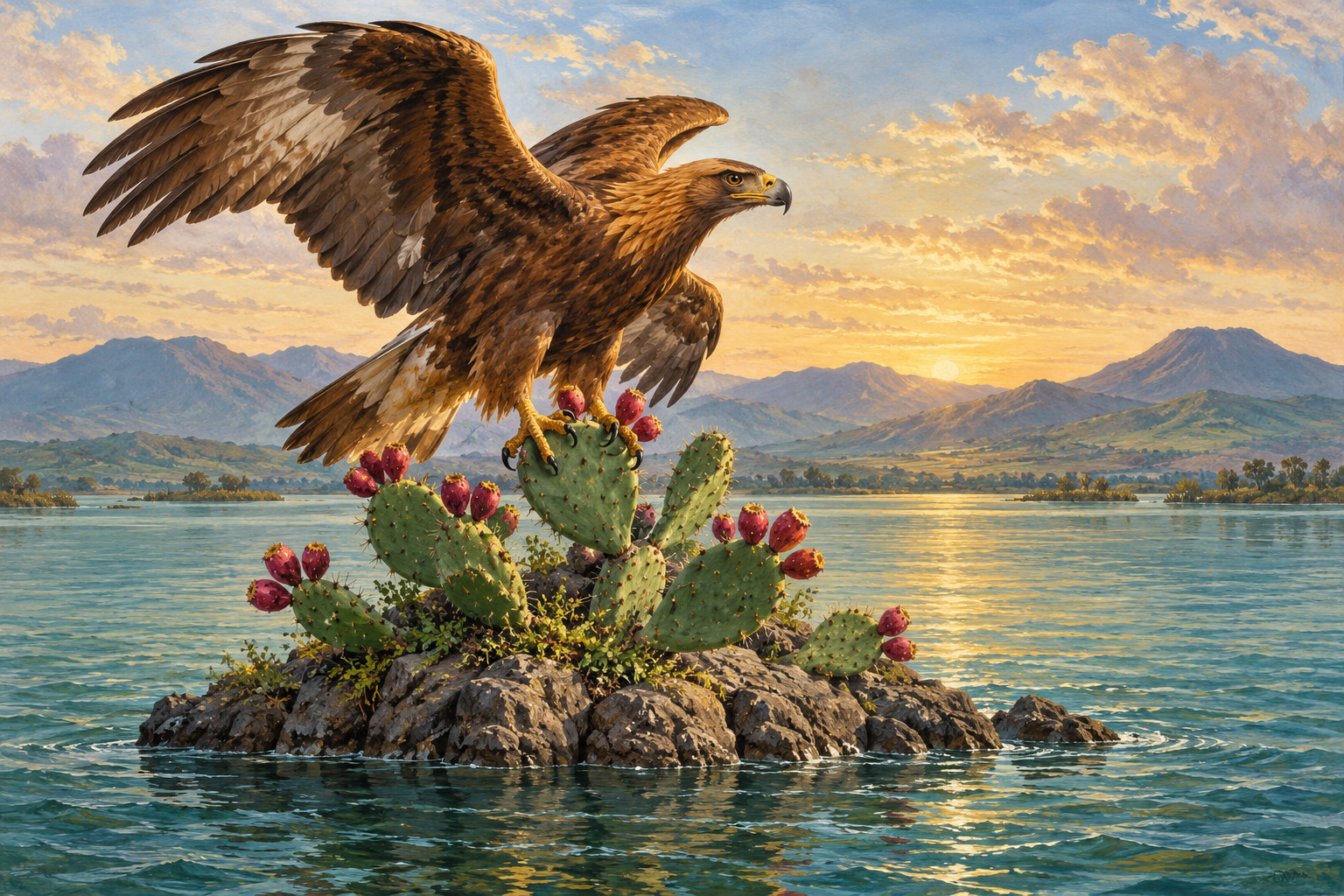
In Mexico, Nopal belongs to the table, the landscape and the story a nation tells about its beginnings.
People in Mesoamerica have used Nopal as food for thousands of years. Its pads and fruit sustained communities; its surface supported a celebrated dye industry. It also became the living plant at the center of Mexico’s best-known foundation image: an eagle perched upon a cactus.(1), (2)
A Food Tradition Older Than the City
Long before Mexico-Tenochtitlan rose from Lake Texcoco, people were gathering the fruit and young pads of Opuntia cacti. Over generations, Indigenous communities selected and cultivated useful varieties, building a lasting relationship with a plant that could thrive where water was scarce.(1), (2), (5)
The cactus offered two distinct foods: tender green pads, prepared as nopales or nopalitos, and sweet prickly pear fruits, commonly called tunas in Mexico. Its usefulness reached well beyond a single meal.
- EARLY FOOD TRADITIONS
People & cactus
Gathering, selection and cultivation across generations.
- 1325 · TRADITIONAL DATE
Tenochtitlan
An eagle and a Nopal mark the foundation story.
- THE COLONIAL ERA
Trade & travel
Cochineal red reaches distant markets; Opuntia spreads overseas.
- TODAY
A living tradition
Nopal remains a food, a crop and a national symbol.
Aztec or Mexica? The Names Behind the Story
THE FAMILIAR BROAD TERM
Aztec
A name connected with Aztlán, the legendary homeland in migration traditions.
THE MORE SPECIFIC NAME
Mexica
The people most closely associated with the founding and rule of Tenochtitlan.
Both names appear in books and museums. Here, Mexica identifies the people at the center of the foundation tradition, while Aztec is the broader name many readers already know.(3)
PEOPLE, DRESS & IDENTITY
History worn in cloth
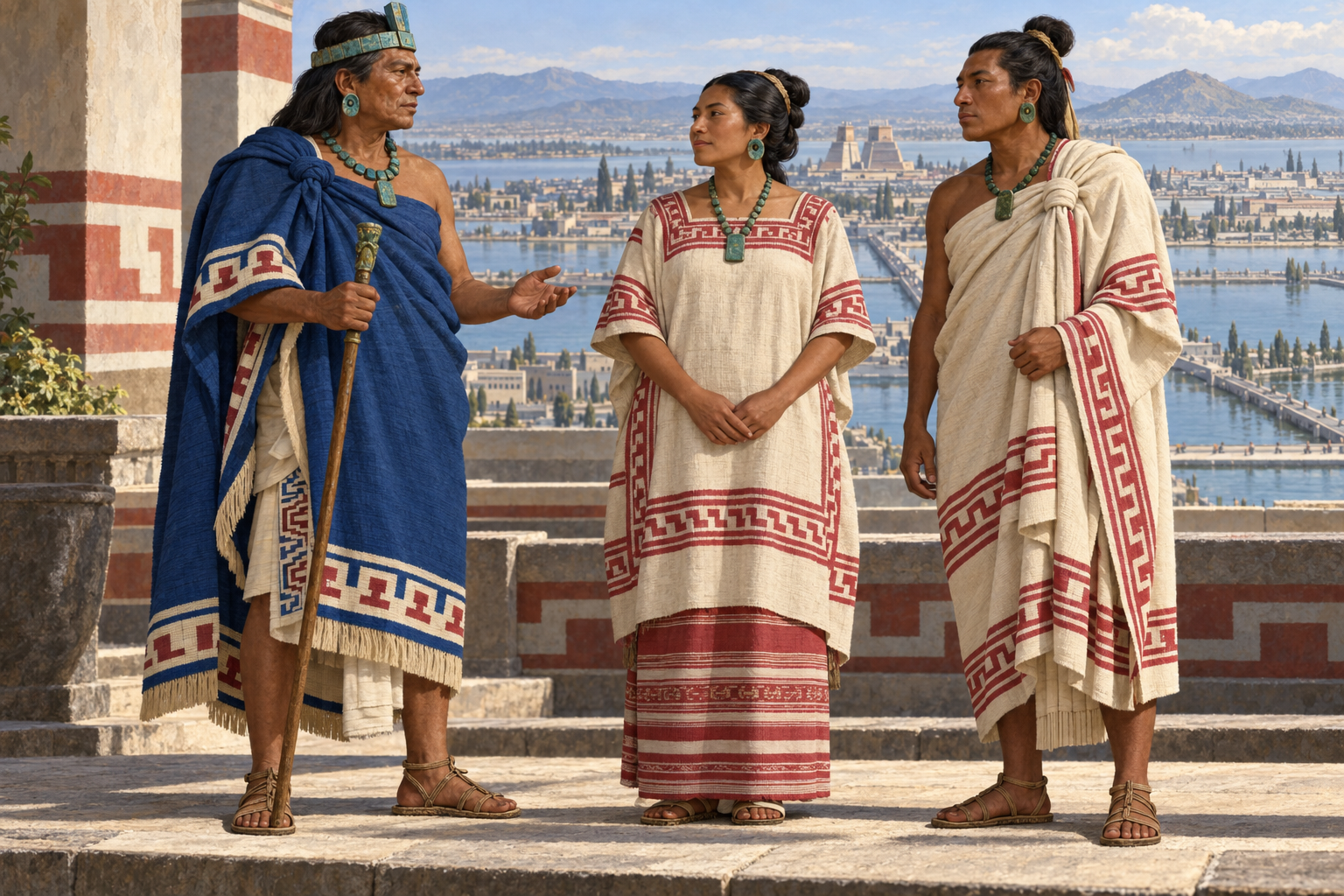
Mexica society included farmers, artisans, merchants and rulers. Clothing made social position visible: men wore a tilmatli, or mantle, while women wore a huipilli tunic and cueitl skirt. Fine cotton and decorated borders distinguished elite dress.(12)
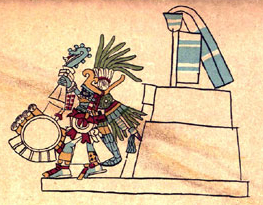
INAH’s study of the Códice Boturini describes the blue mantle and diadem associated with rulers of Tenochtitlan and Texcoco. These garments expressed rank and responsibility.(13)
Language carries another connection: the word Nopal comes from the Nahuatl nopalli.(10)
An Eagle, a Cactus and a Place to Begin
According to Mexica tradition, Huitzilopochtli, their patron deity, would reveal where they should establish their city through a sign involving an eagle and a cactus. Their journey brought them to the Valley of Mexico and an island in Lake Texcoco.
There, the story tells, an eagle stood upon a Nopal. The Mexica founded Mexico-Tenochtitlan, traditionally dated to 1325. The city grew into the capital of a powerful state and a major urban community in the Americas.(3), (4)
The eagle and the cactus belong to a sacred account of origins: a community’s relationship with its patron deity, its journey and the place it would call home. Historical sources preserve differing versions of the foundation image.(9)
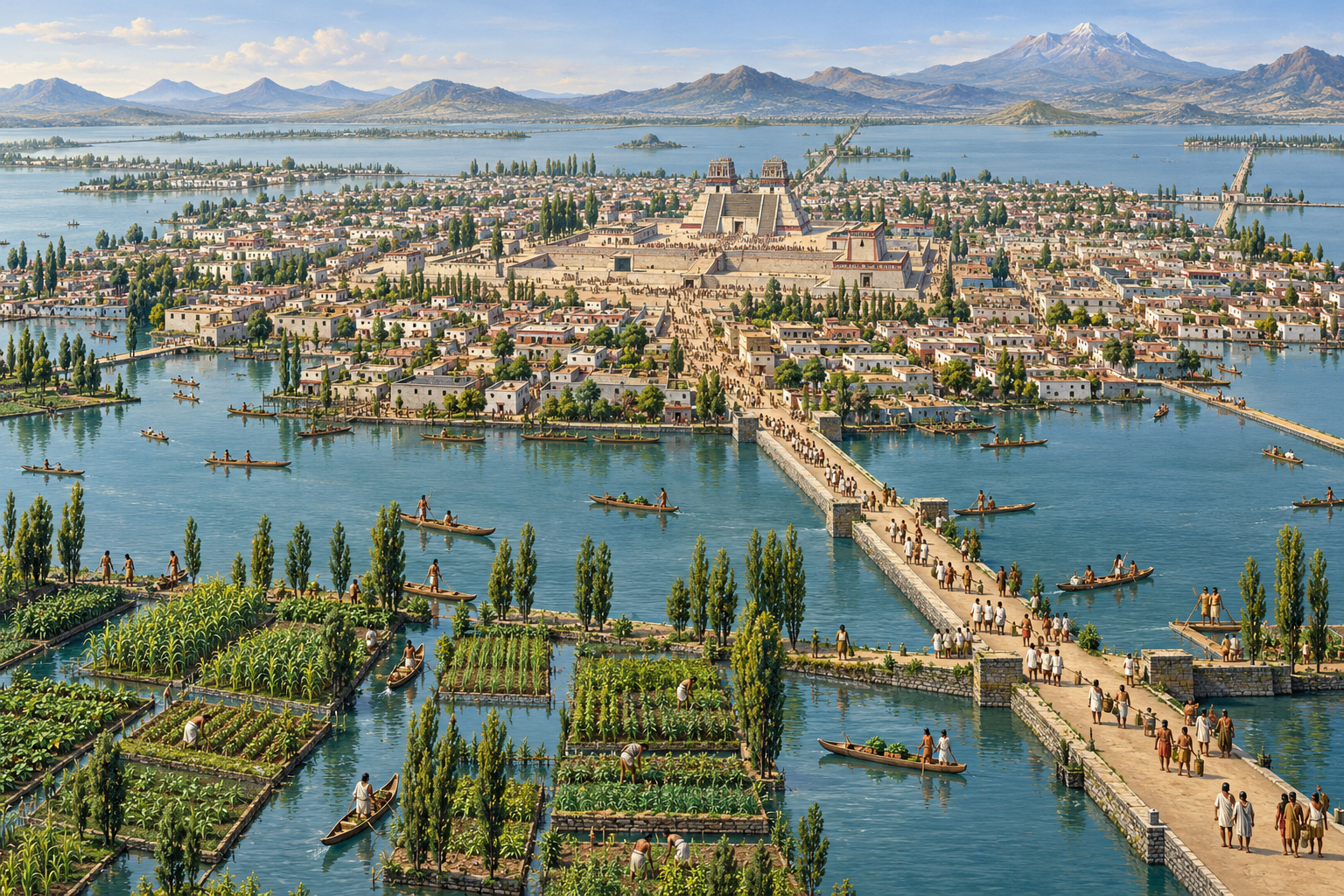
LIFE ON THE LAKE
Tenochtitlan: a city shaped by water
Beyond the founding story stood an inhabited city. Causeways connected it with the shore; canals carried canoes, people and goods. Cultivated chinampas helped turn the lake environment into productive ground.(8)
Homes, markets, palaces and a central ceremonial precinct formed a major urban community. The setting gives the eagle-and-Nopal story a sense of place: water, stone, cultivated land and the surrounding Valley of Mexico.(8)

The Cactus at the Center of the Flag
The modern Mexican emblem brings the story into the present: an eagle stands on a Nopal growing from a rock surrounded by water and holds a serpent. Oak and laurel branches frame the image.(7)
The symbol has changed over time; some early eagle-and-cactus depictions lack the serpent familiar today. Tenochtitlan also changed profoundly after the sixteenth-century Spanish conquest, becoming Mexico City. Yet the eagle-and-cactus image endured, connecting a modern nation with its foundation tradition and lake landscape.(3), (6), (7)
The sign in the foundation tradition.
A living plant rooted in the Mexican landscape.
A connection with the setting of Lake Texcoco.
Two Foods From One Remarkable Cactus
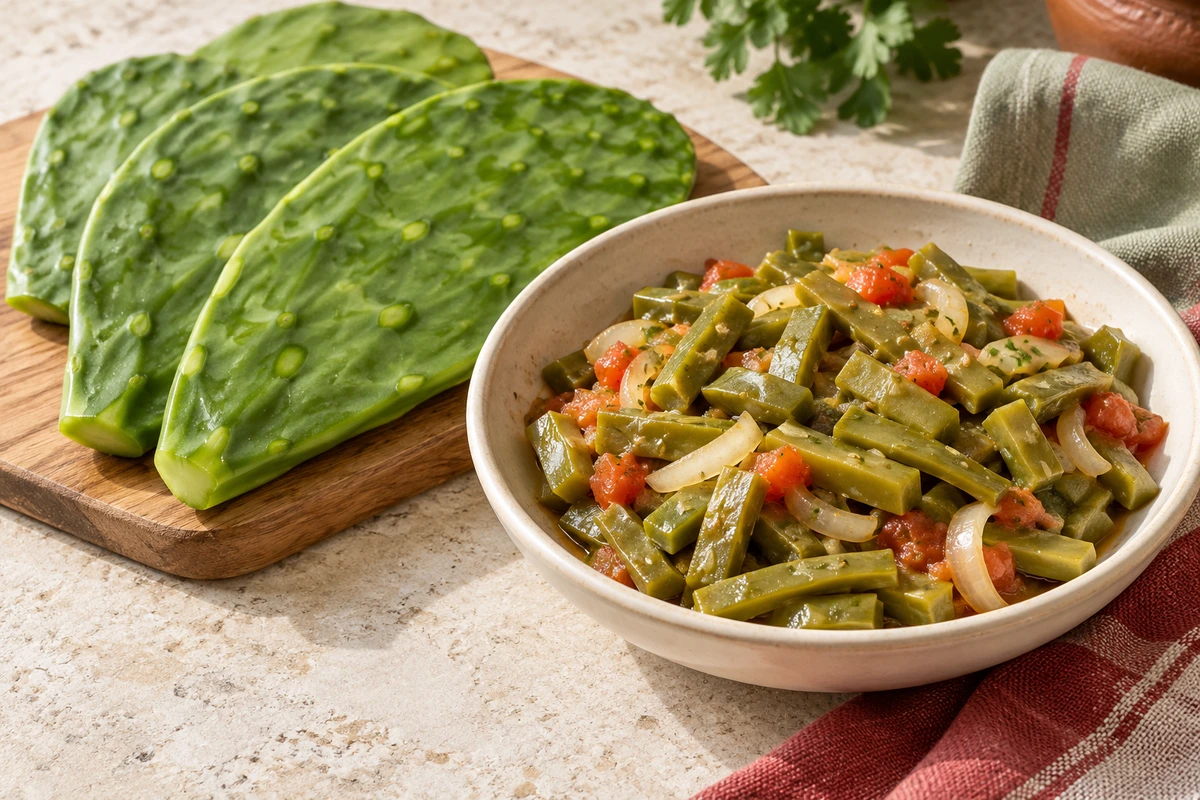
The pads · Nopales
Young pads are harvested before they become tough and fibrous. After the spines and tiny, barbed bristles called glochids are removed, they can be grilled, boiled, roasted or sautéed. They appear in salads, eggs, soups and stews, often alongside beans, tomatoes, peppers, cheese or meat.(1)
Their mild, slightly tart flavor comes with a distinctive texture. Cut pads release mucilage, a water-binding plant material associated with Nopal’s soluble carbohydrates.
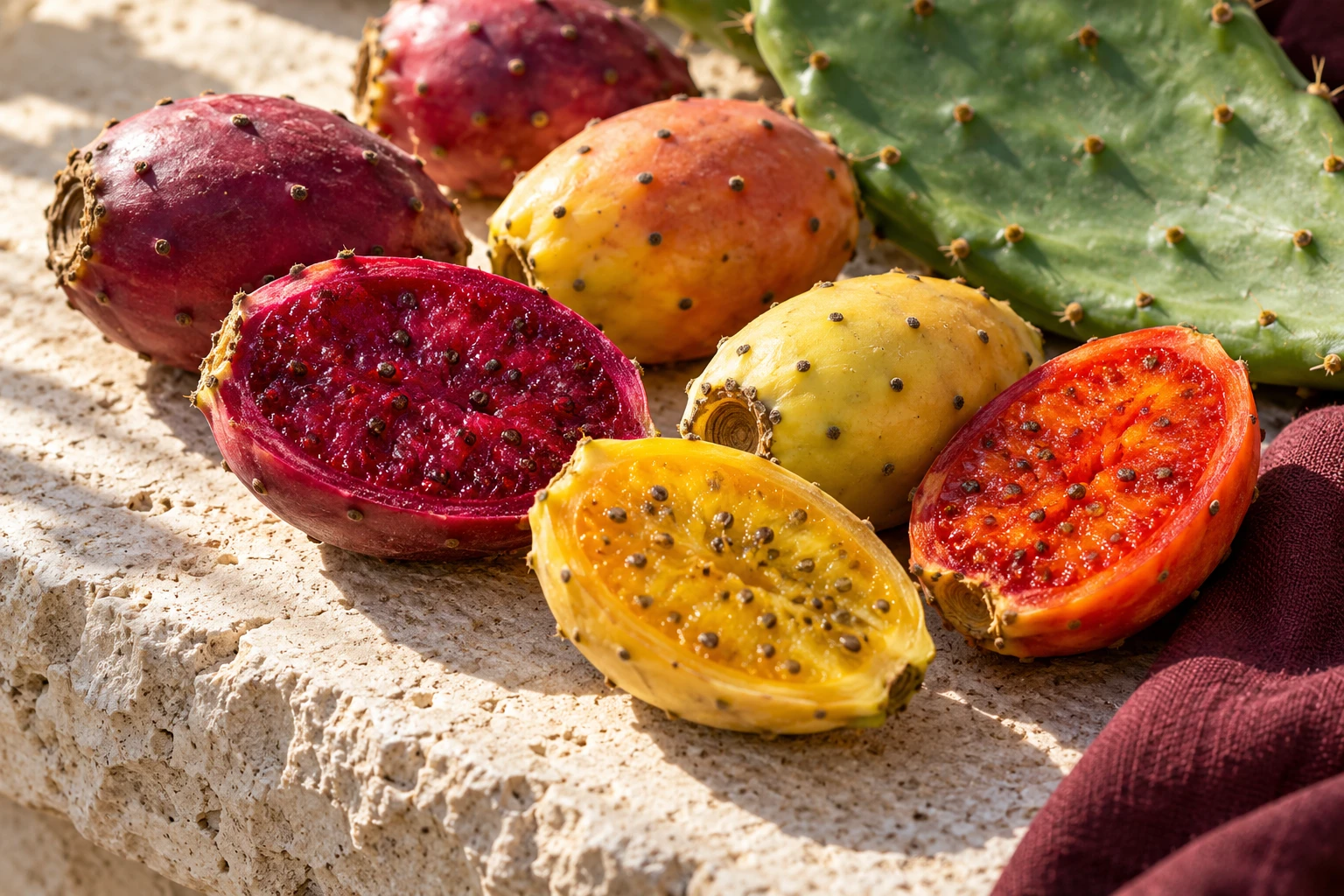
The fruit · Tunas
Juicy pulp surrounds the fruit’s many hard seeds. Depending on the species and variety, fruits may be green, yellow, orange, pink, red or purple. Betalain pigments help create the vivid reds, purples and yellows.(1)
Prickly pear can be eaten fresh or made into juices, sweets, syrups and preserves. The pads and fruit belong to the same broader cactus story, but they are different foods with different textures and chemistry.
The Tiny Insect Behind a Celebrated Red
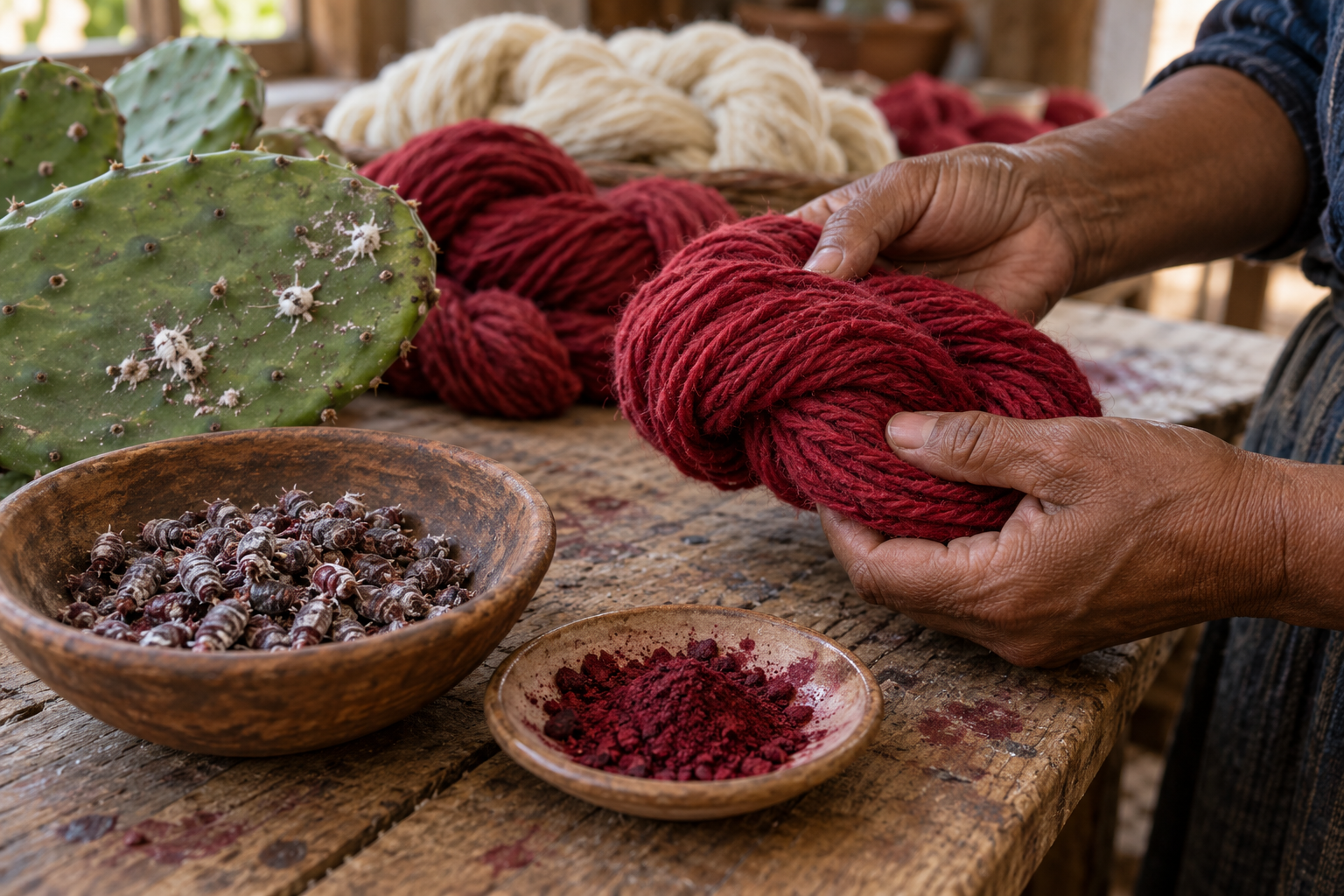
Some of Nopal’s most far-reaching history came from an insect living on its surface. Indigenous peoples in Mexico developed skilled methods for cultivating cochineal on certain Opuntia cacti and preparing a vivid red dye.(1)
After the conquest, cochineal became an important international trade product. Its intense color was prized for textiles, paintings, manuscripts, cosmetics and other materials. An industry that traveled far beyond Mexico depended on the cactus that sustained a tiny insect.
The story also belongs to the people who cultivated the insect, prepared its color and worked with textiles. Cochineal connects Nopal with Indigenous knowledge, skilled making and a continuing Mexican dye tradition.(11)
Opuntia cactus
Supports the insect.
Cochineal
The cultivated insect.
A vivid red dye
Prepared for use and trade.
Two different color stories: prickly pear fruit contains plant pigments; cochineal dye comes from an insect.
A Working Plant That Traveled the World
Nopal was never only a decorative cactus. Across different communities, Opuntia has supplied livestock forage, living fences, boundary plants, mucilage and household materials. It has also been cultivated for soil protection and its usefulness in dry regions. Not every use belonged to every place or species.(1)
FOOD & AGRICULTURE
Feed a community
Pads, fruit and livestock forage.
THE WORKING LANDSCAPE
Mark & protect
Living fences, boundaries and soil protection.
MATERIALS & CRAFT
Put the plant to use
Mucilage, traditional materials and cochineal cultivation.
Following contact between the Americas and Europe, Opuntia spread far beyond its native range. Today it grows in parts of the Mediterranean, North and southern Africa, the Middle East and Australia, as well as throughout regions of the Americas. In some places it became a useful crop; in others it escaped cultivation and spread aggressively.(1)
Our Part in the Modern Nopal Story
Natural Home Cures’ flagship Freeze-Dried Nopal Powder Capsules begin with Opuntia streptacantha grown on our own farms in central Mexico. At approximately 2,500 meters—about 8,200 feet—the cactus grows in volcanic soil within a mild, semi-tropical climate.
Fresh Nopal contains a great deal of water. We freeze the harvested cactus, then remove water under reduced pressure as ice changes directly into vapor. This process is called freeze-drying. We use it to limit heat exposure while preparing the cactus for our capsules.
The dried cactus is milled and placed into vegan capsules. We also offer loose Nopal Cactus Powder made from Opuntia ficus-indica and Prickly Pear Drops—different preparations within the broader Nopal family.
A Symbol That Is Still Alive
Nopal’s place in Mexico is still visible in markets, farms, kitchens and restaurants. Scientists study the same cactus for its agriculture, water-saving physiology, fiber, pigments and plant compounds. It belongs to an ancient food tradition and a continuing story of research and cultivation.
The cactus beneath the eagle is a reminder of a plant that fed communities, supported trade and became part of a national foundation story. It still grows. It is still harvested, prepared and eaten.
For Natural Home Cures, that connection begins with the cactus on our farms. The preparation is modern. The plant’s story reaches back through generations of Mexican life.
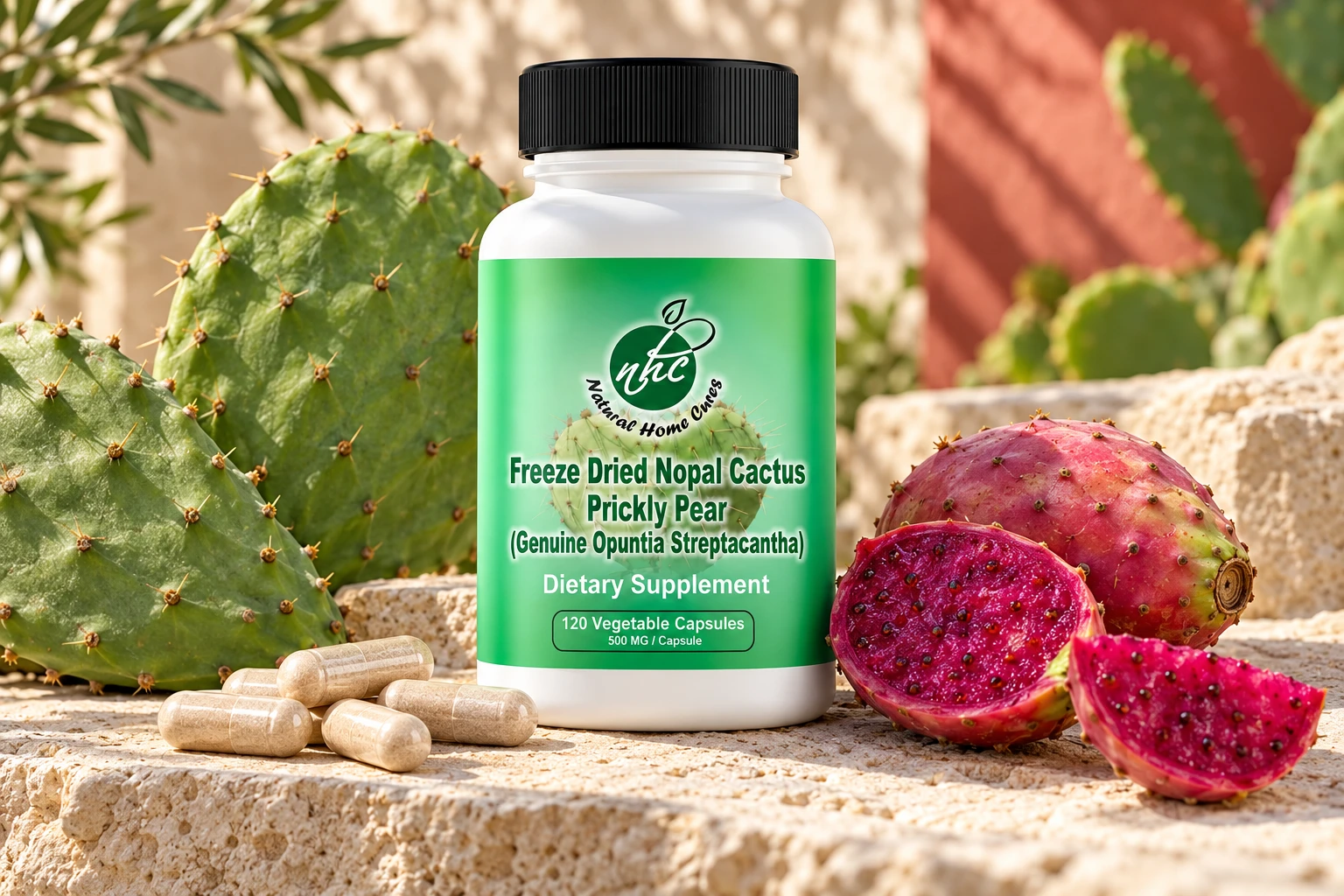
FROM CACTUS TO PRODUCT
Keep the botanical
in the story.
Freeze-dried Nopal cactus capsules.
Explore our Nopal →The research behind this articleSource References
- 01Historical & botanical sourceFood and Agriculture Organization of the United Nations. Crop Ecology, Cultivation and Uses of Cactus Pear. 2017.View source
Full citation
Food and Agriculture Organization of the United Nations. Crop Ecology, Cultivation and Uses of Cactus Pear. 2017. - 02Historical & botanical sourceMesoamerican Domestication and Diffusion.View source
Full citation
Casas A, Barbera G. “Mesoamerican Domestication and Diffusion.” In: Nobel PS, ed. Cacti: Biology and Uses. University of California Press. 2002. - 03Historical & botanical sourceAguilar-Moreno M. Handbook to Life in the Aztec World. Oxford University Press. 2007.View source
Full citation
Aguilar-Moreno M. Handbook to Life in the Aztec World. Oxford University Press. 2007. - 04Historical & botanical sourceSahagún B de. Florentine Codex: General History of the Things of New Spain. Translated by Anderson AJ, Dibble CE. School of American Research and University of Utah. 1950–1982.View source
Full citation
Sahagún B de. Florentine Codex: General History of the Things of New Spain. Translated by Anderson AJ, Dibble CE. School of American Research and University of Utah. 1950–1982. - 05Historical & botanical sourceThe Origins of an Important Cactus Crop, Opuntia ficus-indica (Cactaceae): New Molecular Evidence.View source
Full citation
Griffith MP. “The Origins of an Important Cactus Crop, Opuntia ficus-indica (Cactaceae): New Molecular Evidence.” American Journal of Botany. 2004;91(11):1915–1921. - 06Historical & botanical sourceCorazón de piedra verde.View source
Full citation
Instituto Nacional de Antropología e Historia, Museo Nacional de Antropología. “Corazón de piedra verde.” Museum account of the Cópil foundation tradition. - 07Historical & botanical sourceEl nopal. Boletín trimestral, marzo 2019.View source
Full citation
Secretaría de Relaciones Exteriores, Consulado de México en Frankfurt. “El nopal. Boletín trimestral, marzo 2019.” National coat of arms. - 08Historical settingCentro histórico de México y XochimilcoView source
- 09View source
- 10Language & heritageNopal — Diccionario breve de mexicanismosView source
- 11Cochineal & craftLa sangre del nopal que nutre de color los textiles mexicanosView source
- 12Mexica society & clothingSociedad mexica — Diferencias sociales expresadas a través de la indumentariaView source
- 13Clothing & historical sourcesCódice Boturini — La vestimentaView source