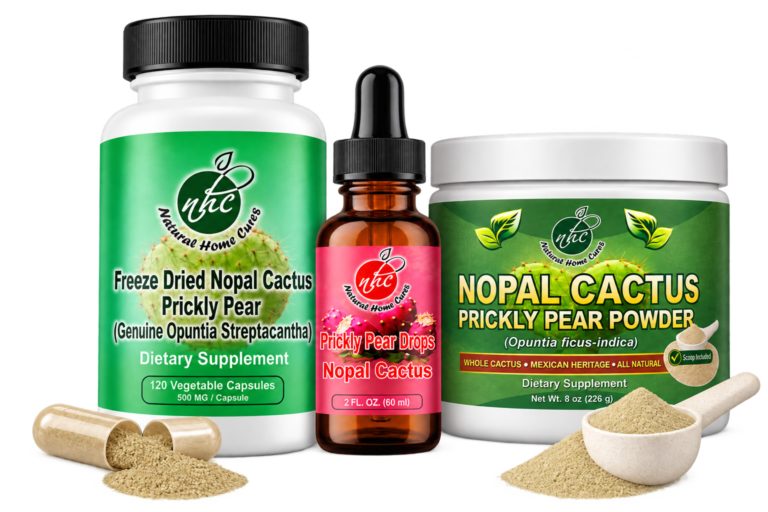
Freeze-Dried Nopal: A Careful Process for Preserving What Matters

The care behind your Nopal begins long before you open the bottle—with the green cactus pad and the way it is prepared.
At Natural Home Cures, we choose freeze-drying for our Nopal capsules. The prepared pad is frozen, dried under vacuum, and then milled into powder. Here is how each part of that journey connects.
Why it matters to you
You choose Nopal.
We care for the pad behind it.
Freeze-drying removes moisture while limiting prolonged exposure to high temperatures. It is a way to prepare a botanical material with its natural character in mind.(1)
Care for sensitive compounds
Choose a drying method with preservation in mind.
Work with the whole pad
Prepare Nopal pad material for milling into powder.
Make it part of your routine
Fill the prepared powder into measured capsules.
The process, at a glance
Four stages.
One purpose: preservation.
What Is Freeze-Drying?
Freeze-drying, also called lyophilization, removes water from frozen material. Under low pressure, ice passes directly into water vapor. That change is called sublimation.(1)
For Nopal, the result is dried pad material that can be milled and prepared for the next steps in making capsules.
How Ice Can Leave Without Melting
A melting ice cube becomes liquid water. A freeze dryer creates different conditions: reduced pressure and controlled heat allow ice to leave as vapor. Temperature and pressure work together throughout the cycle.(2)
01
Preparing the Nopal Pads
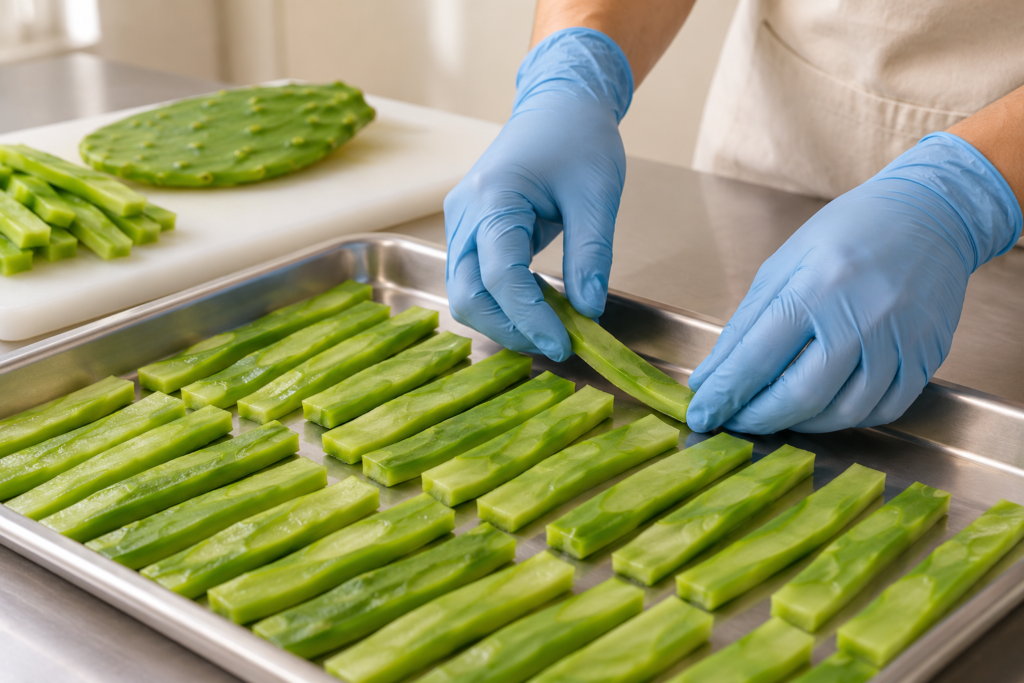
Care starts with selecting, cleaning, and preparing the pads. Pieces are arranged on trays so freezing and drying can proceed consistently. The condition and arrangement of the plant material matter before the dryer starts.
02
Freezing With Care
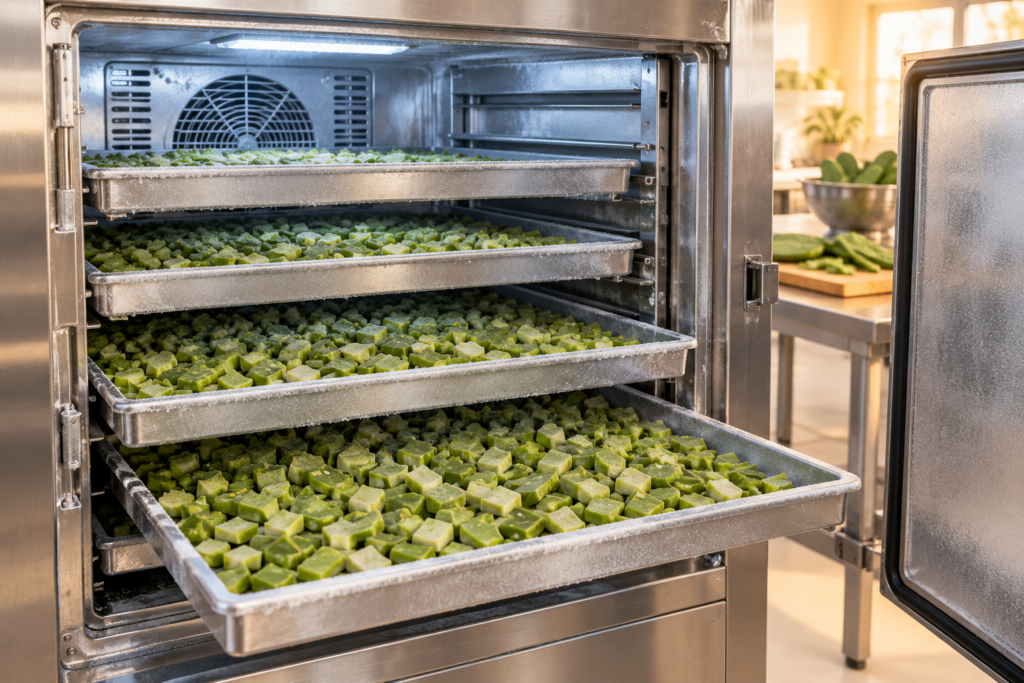
The prepared Nopal is frozen before vacuum drying begins. This establishes the ice structure that will later be removed. The freezing conditions affect how the drying stages proceed.(2)
03
Primary Drying: Removing the Ice
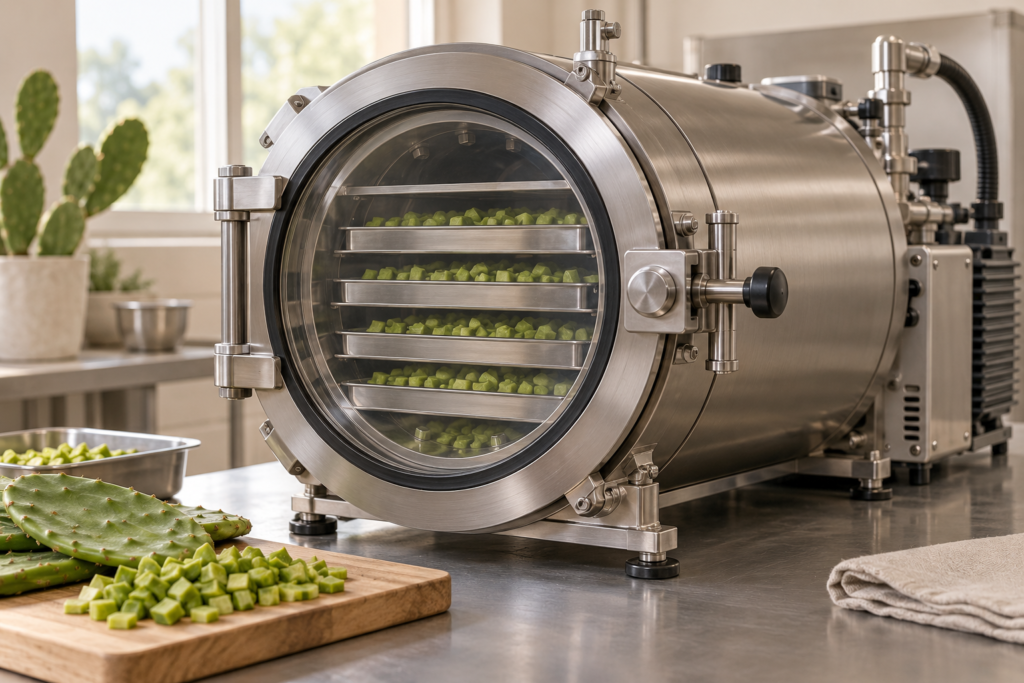
Under vacuum, controlled heat supplies the energy for sublimation. Ice in the Nopal becomes vapor, and a cold condenser captures that vapor elsewhere in the system. Temperature, pressure, and time are carefully balanced.(2)
04
Secondary Drying: Finishing the Job
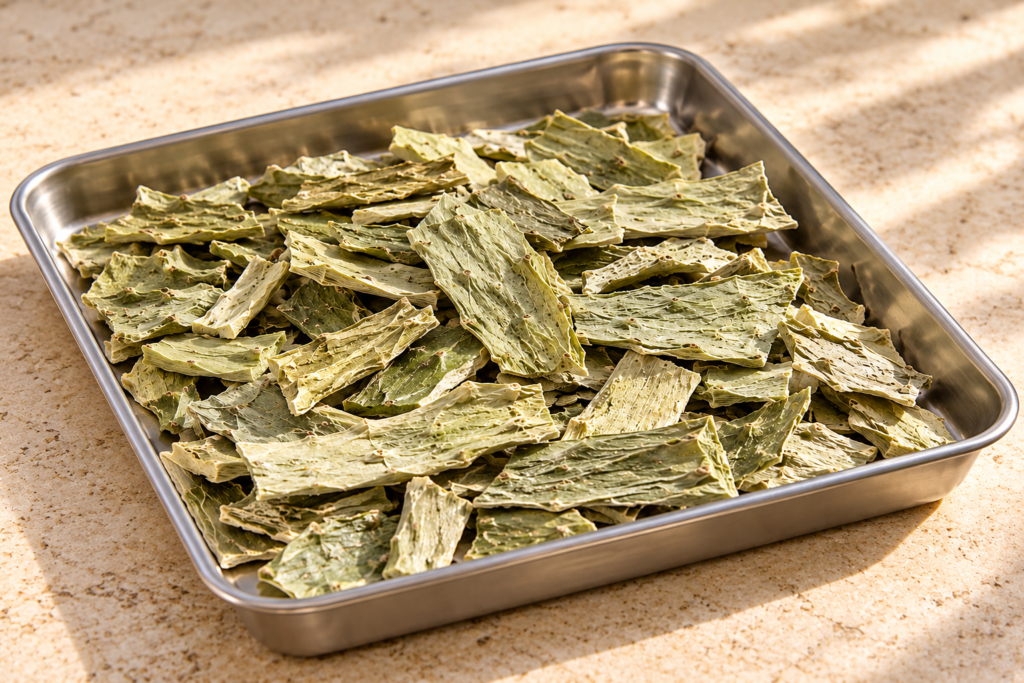
After the ice is removed, some moisture is still held in the plant material. Secondary drying uses controlled warmth under vacuum to help release this remaining moisture. This is called desorption. Milling happens after the drying cycle is complete.(2)
Why Take This Much Care?
The practical value is preservation: preparing the Nopal pad for storage and for the powder that goes into your capsules. That takes equipment, time, and attention.
Our involvement begins with growing Nopal on our own farms in Central Mexico. The care given to the pad continues through its preparation and into the bottle you receive.
Protecting Quality After Drying
Drying is followed by careful handling and packaging. Keeping dried material protected from moisture helps maintain its condition during storage.(1)
At home, keep your bottle properly closed and follow its cool, dry storage directions. The care taken after drying is part of the same journey.
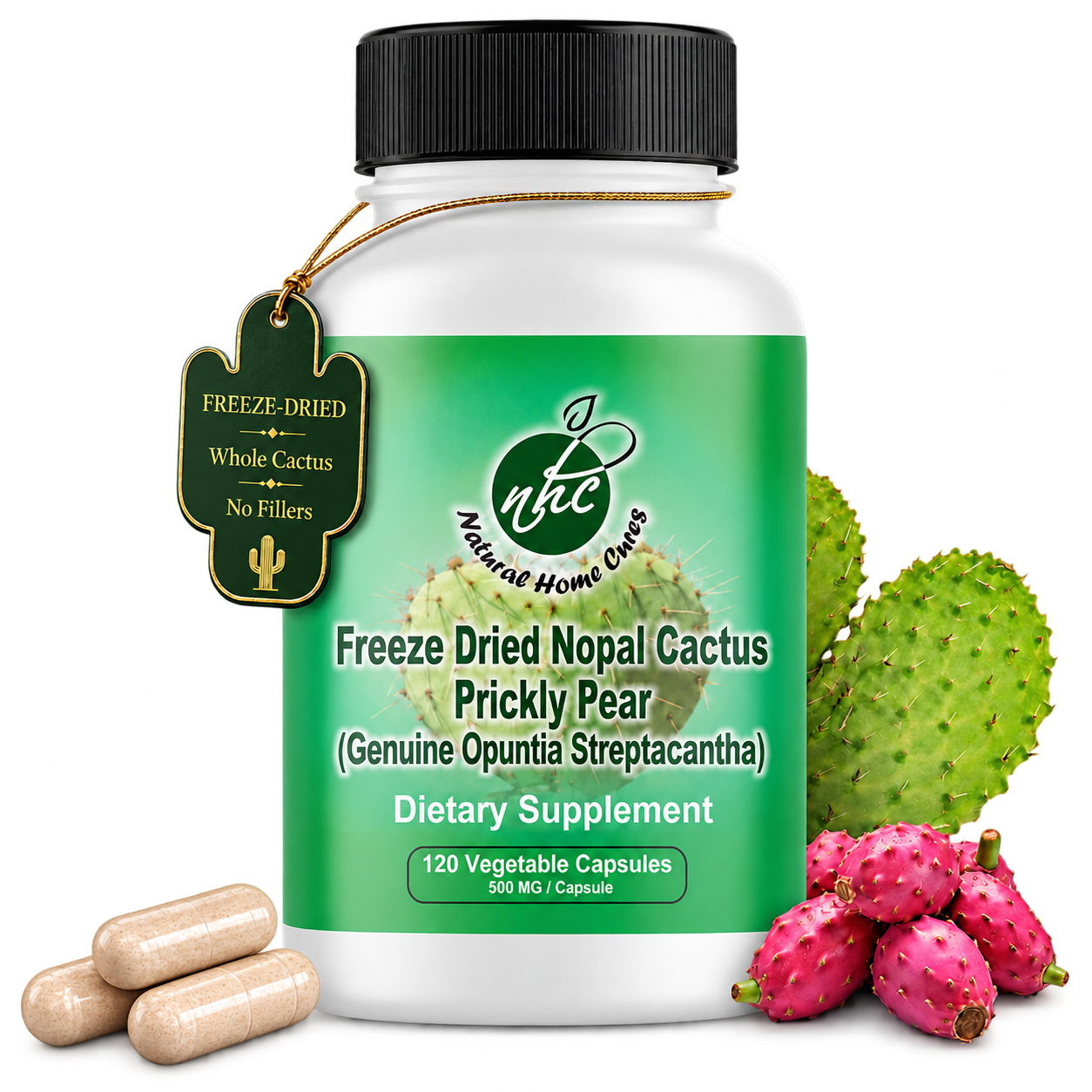
The story continues
From a living cactus
to the bottle in your hands
Follow the connected steps from growing and harvesting the pads to drying, milling, and preparing your capsules.
Source References 2 sources · Show / hide
01
Can I Freeze-Dry That? A Practical Guide to Safe and Effective Freeze-Drying (2026). ↗
Food freeze-drying, moisture removal, and storage principles.
02
Basic Principles of Freeze-Drying. ↗
Freezing, sublimation, primary drying, secondary drying, and equipment.