NATURAL HOME CURES · NOPAL SCIENCE
Vitamin E
& Nopal
A family of fat-soluble compounds, cell membranes and the distinct chemistry of prickly pear seeds.
Explore the science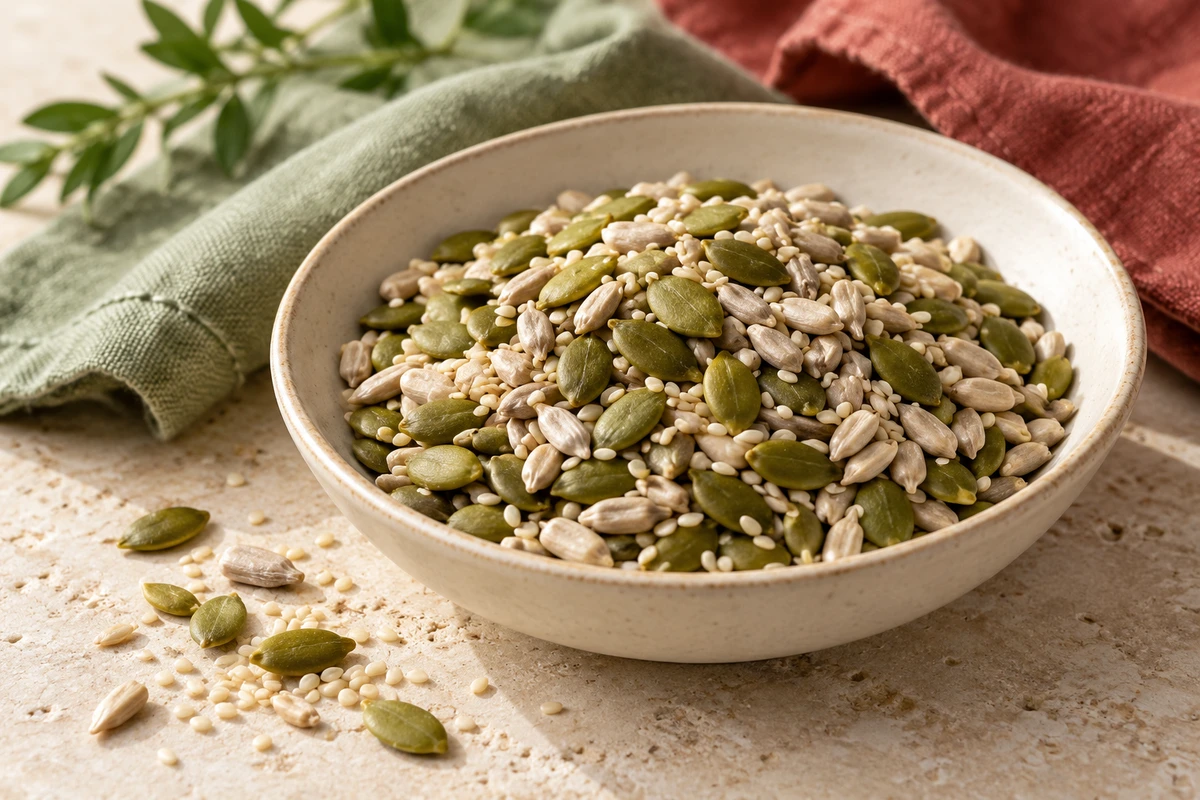
Vitamin E is an essential nutrient best known for one particularly important role: helping protect our cells from oxidative damage.(1)
But vitamin E isn’t actually one single substance.
It’s the name given to a family of eight naturally occurring compounds—four tocopherols and four tocotrienols.(1), (2)
Of these, alpha-tocopherol is the form the human body preferentially maintains and uses to meet vitamin E requirements.(1)
Vitamin E is also fat-soluble, which means the body handles it differently from water-soluble vitamins.
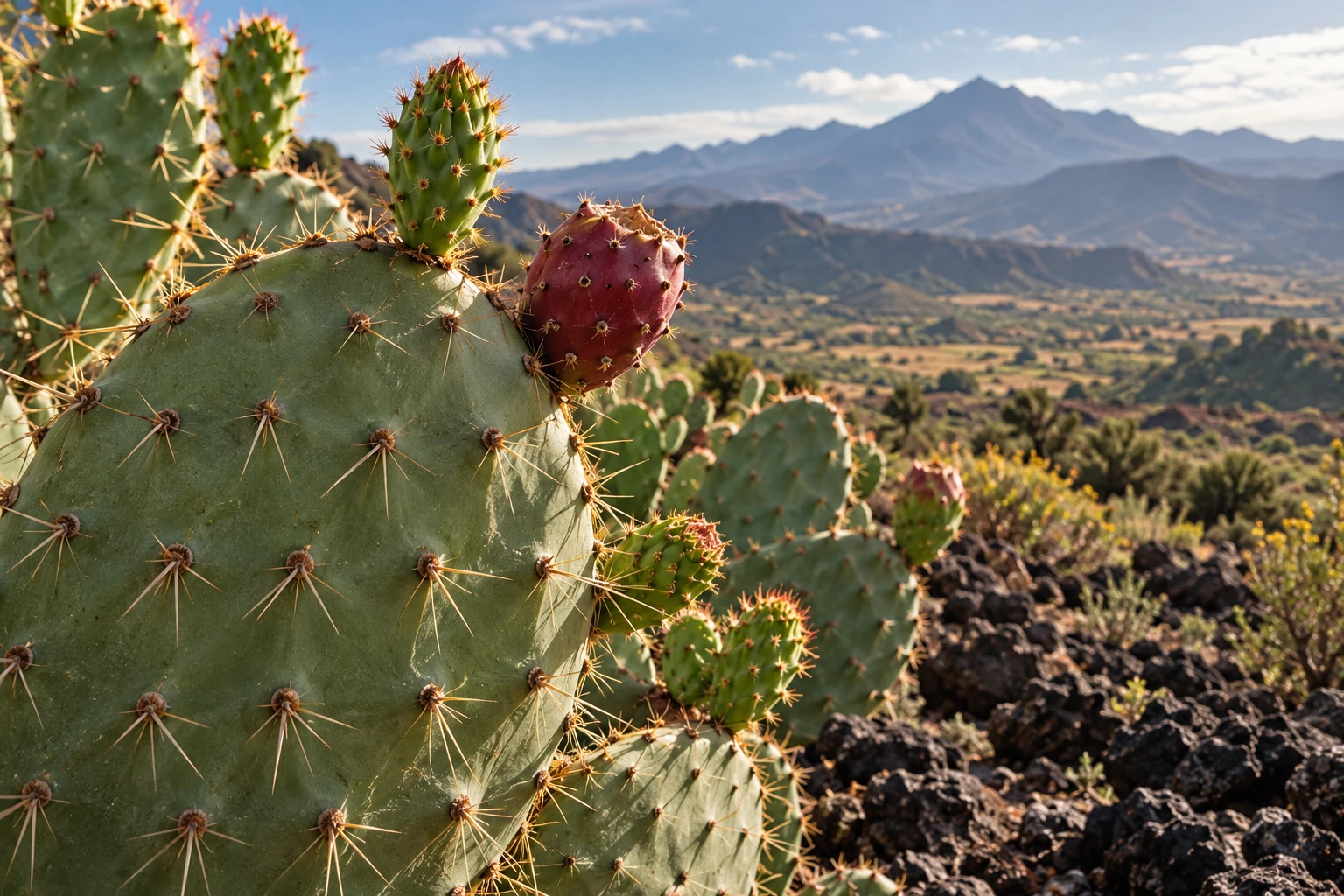
And vitamin E has a natural connection with Nopal cactus and prickly pear.
What Does Vitamin E Do?
AROUND EACH CELL
Protecting membrane fats
Vitamin E acts within a wider antioxidant network that helps protect fats from oxidation.
Every cell in our body is surrounded by a membrane.
These membranes contain fats that can be vulnerable to damage from reactive molecules produced during normal metabolism and environmental exposure.
Vitamin E acts as an antioxidant, helping protect these fats from oxidation.(1), (2)
Think of the cell membrane almost like a protective outer wall.
Vitamin E becomes one part of the defense system helping protect that wall.
It doesn’t work alone.
Our bodies use a network of antioxidants, enzymes and other protective systems that work together.
Vitamin E is one member of that much larger team.
Why Being Fat-Soluble Matters
Some vitamins dissolve in water.
Vitamin E dissolves in fat.
That affects how our bodies absorb, transport and store it.(1)
Vitamin E is absorbed along with dietary fat in the intestine and then carried through the bloodstream in packages of fat and protein called lipoproteins.(1), (3)
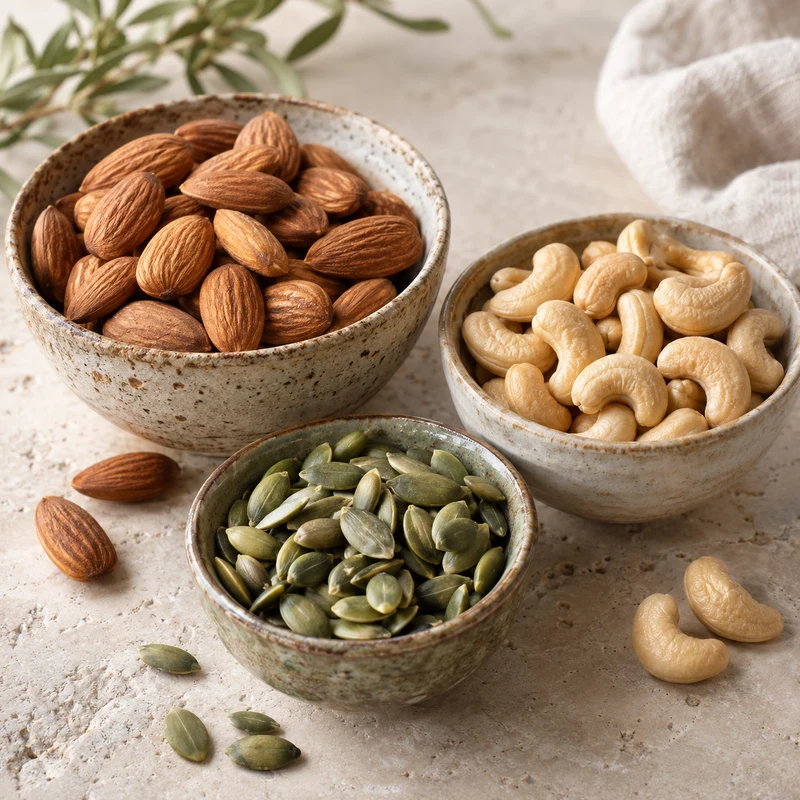
That’s one reason vitamin E is naturally associated with foods containing healthy fats.
It also explains why nuts, seeds and vegetable oils are among the richest dietary sources.
Where Does Vitamin E Come From?
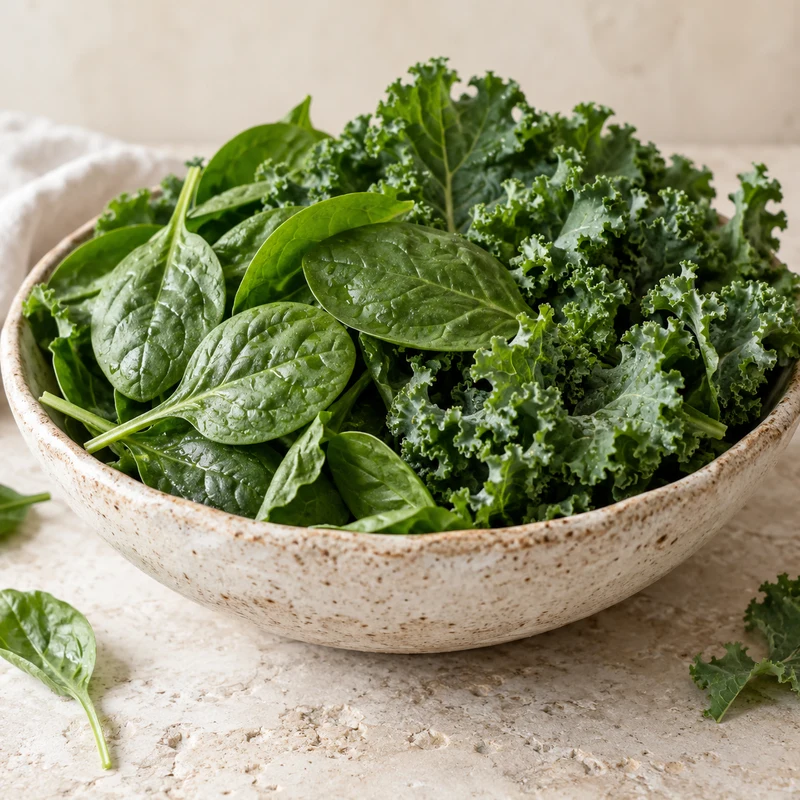
Vitamin E occurs naturally in foods such as:
- Almonds
- Sunflower seeds
- Hazelnuts
- Peanuts
- Wheat germ
- Avocado
- Spinach and other green vegetables
- Vegetable oils
- Nopal cactus
- Prickly pear fruit and seeds
Scientific studies of Nopal and prickly pear materials have identified tocopherols—the family of compounds that includes vitamin E—in different parts of the plant.(4), (5)
Vitamin E in Nopal and Prickly Pear
DISTINCT PLANT MATERIALS
Pads · Fruit · Seed oil
Each material has its own composition. Seed-oil findings describe the oil that researchers studied.
Green cactus pads, fruit pulp and seeds are distinct plant materials. Extracting oil separates another fraction with its own composition.
Ramadan and Mörsel compared oils from seeds and pulp of Opuntia ficus-indica. In those samples, gamma-tocopherol predominated in seed oil and delta-tocopherol in pulp oil. (6)
Those findings describe the extracted oils studied. They do not establish alpha-tocopherol per serving of green pad powder or of a fruit-based liquid product.
Alpha-tocopherol is the form recognized to meet human vitamin E requirements. The presence of gamma- or delta-tocopherol should not be presented as an equivalent alpha-tocopherol amount. (1)
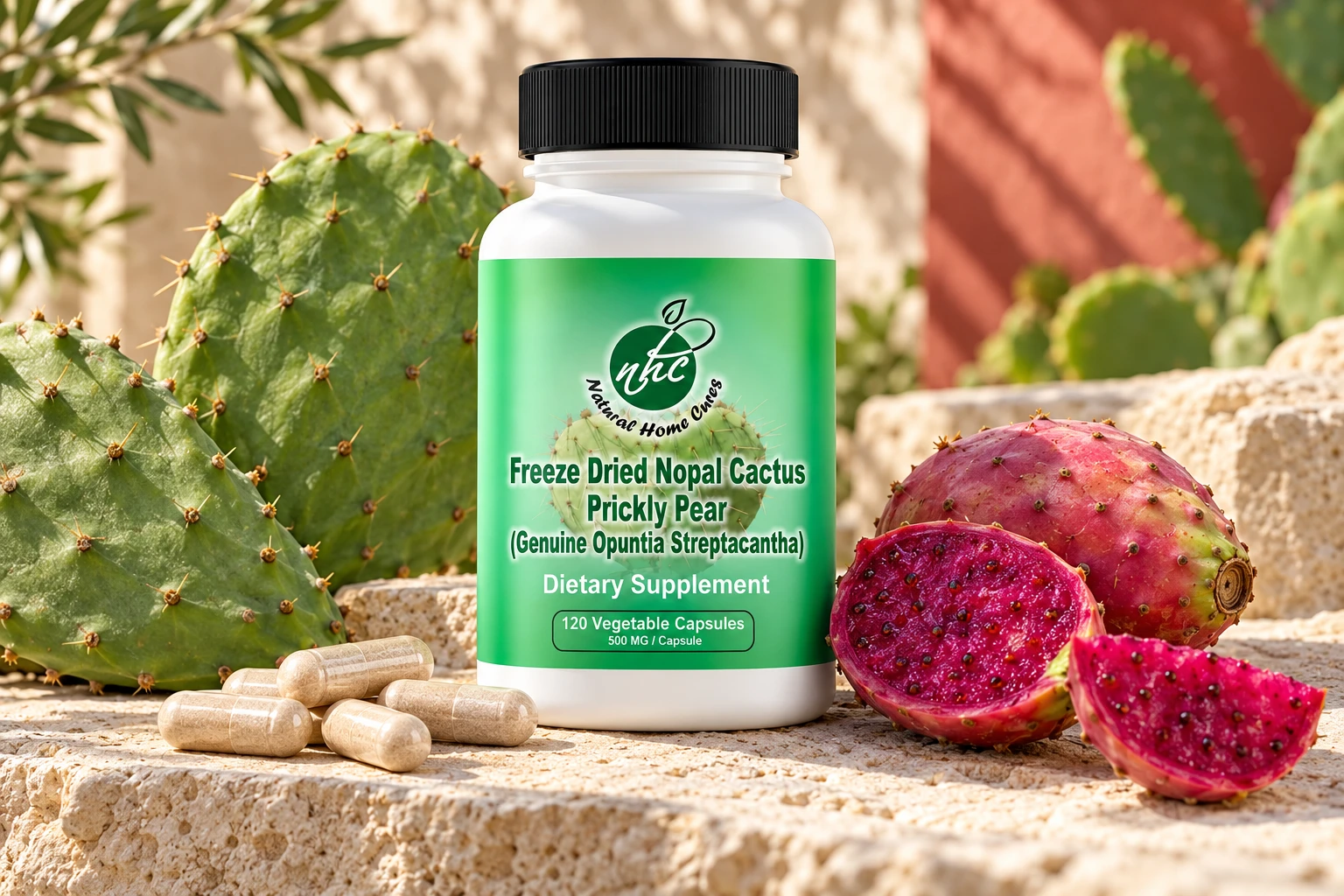
Our capsules use freeze-dried Opuntia streptacantha pads. A suitable product-specific analysis would be needed to report their vitamin E content.
The Antioxidant Network
THE ANTIOXIDANT NETWORK
Vitamin E ↔ Vitamin C
Under certain conditions, vitamin C can help regenerate oxidized vitamin E.
Vitamin E doesn’t operate by itself.
One particularly interesting relationship exists between vitamin E and vitamin C.
Vitamin E can react with free radicals while protecting fats within cell membranes.
Vitamin C participates in antioxidant chemistry in water-based environments and can help regenerate oxidized vitamin E under certain conditions.(2), (7)
This gives us a useful picture of how nutrition often works.
Nutrients don’t simply perform isolated jobs.
They interact.
This explains antioxidant chemistry. It does not demonstrate that taking our Nopal products reproduces the interaction observed in laboratory research.
Why Prickly Pear Seeds Are Interesting
INSIDE THE FRUIT
Seeds have a story, too
Prickly pear seed oil has been studied for fatty acids, sterols, phenolic compounds and tocopherols.
Most people probably eat a prickly pear without giving much thought to the tiny seeds inside.
Scientists see something different.
Those seeds contain oil.
And prickly pear seed oil has been studied for its fatty acids, sterols, phenolic compounds and tocopherols.(5), (6)
So even within one cactus fruit, different components can tell completely different nutritional stories.
The colorful flesh gives us one collection of compounds.
The seeds give us another.
The green pads give us still another.
That’s a remarkable amount of natural chemistry packed into one plant.
From Our Farms to the Nopal Family
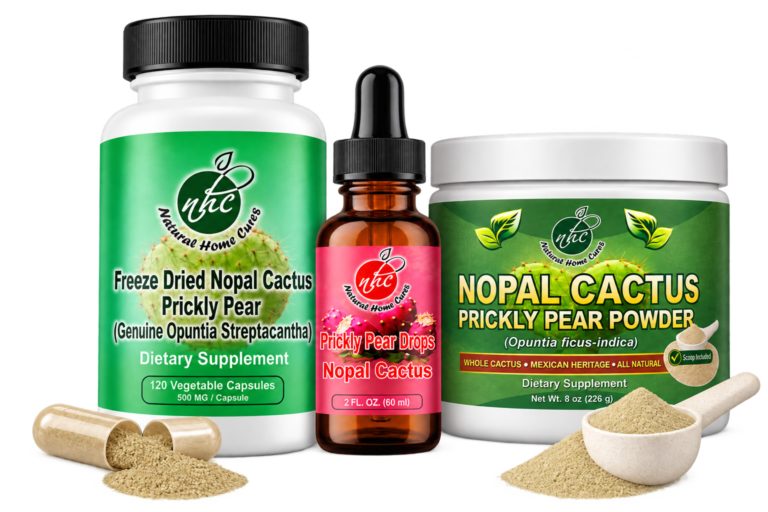
Our flagship Freeze-Dried Nopal Powder Capsules use Opuntia streptacantha pads grown on our own farms.
After harvest, we freeze-dry the Nopal, mill it into powder and prepare it for our capsules.
Our loose Nopal Powder uses Opuntia ficus-indica pads, while Prickly Pear Drops are fruit-based. These products are distinct from the extracted seed and pulp oils discussed above.
More Than Vitamin E
Vitamin E is interesting because of its antioxidant role.
Tocopherols are interesting because they’re naturally present in different plant foods.
Prickly pear seeds are interesting because they contain an oil with its own distinctive collection of compounds.
But none of these tells the whole Nopal story.
Nopal cactus and prickly pear contain a broad mixture of naturally occurring nutrients and plant compounds.(4), (5)
Vitamin E research is one part of that picture; the plant part and vitamin E form must stay clear.
And the more pieces we examine, the more we begin to understand just how much can be hidden inside this deceptively simple cactus.
That’s the story behind Natural Home Cures Nopal cactus and prickly pear—from the plants we grow to the Nopal products we offer our customers.
FROM CACTUS TO PRODUCT
Keep the botanical
in the story.
500 mg of freeze-dried Nopal pad powder per capsule. This is the total botanical amount, not a measured vitamin E dose.
Explore our Nopal →The research behind this articleSource References
- 01Nutrition referenceVitamin E — Fact Sheet for Health Professionals.View source
Full citation
National Institutes of Health, Office of Dietary Supplements. “Vitamin E — Fact Sheet for Health Professionals.” - 02Biochemistry reviewVitamin E, Antioxidant and Nothing More.View source
Full citation
Traber MG, Atkinson J. “Vitamin E, Antioxidant and Nothing More.” Free Radical Biology and Medicine. 2007;43(1):4–15. - 03Absorption reviewVitamin E Bioavailability: Mechanisms of Intestinal Absorption in the Spotlight.View source
Full citation
Reboul E. “Vitamin E Bioavailability: Mechanisms of Intestinal Absorption in the Spotlight.” Antioxidants. 2017;6(4):95. - 04Cactus composition reviewNopal Cactus (Opuntia ficus-indica) as a Source of Bioactive Compounds for Nutrition, Health and Disease.View source
Full citation
El-Mostafa K, El Kharrassi Y, Badreddine A, et al. “Nopal Cactus (Opuntia ficus-indica) as a Source of Bioactive Compounds for Nutrition, Health and Disease.” Molecules. 2014;19(9):14879–14901. - 05Cactus fruit reviewPhytochemical and Nutritional Significance of Cactus Pear.View source
Full citation
Stintzing FC, Schieber A, Carle R. “Phytochemical and Nutritional Significance of Cactus Pear.” European Food Research and Technology. 2001;212:396–407. - 06Oil composition studyOil Cactus Pear (Opuntia ficus-indica L.).View source
Full citation
Ramadan MF, Mörsel JT. “Oil Cactus Pear (Opuntia ficus-indica L.).” Food Chemistry. 2003;82(3):339–345. - 07Laboratory chemistry studyDirect Observation of a Free Radical Interaction Between Vitamin E and Vitamin C.View source
Full citation
Packer JE, Slater TF, Willson RL. “Direct Observation of a Free Radical Interaction Between Vitamin E and Vitamin C.” Nature. 1979;278:737–738.