NATURAL HOME CURES · NOPAL SCIENCE
Nitric Oxide
& Nopal
How a tiny signaling molecule connects to the amino acid arginine.
Explore the scienceNitric oxide (NO) is a tiny signaling molecule made naturally by the body. It helps cells communicate and plays a role in the normal function of blood vessels.
Our bodies can make nitric oxide from the amino acid L-arginine through a tightly regulated enzyme system. (1), (2)
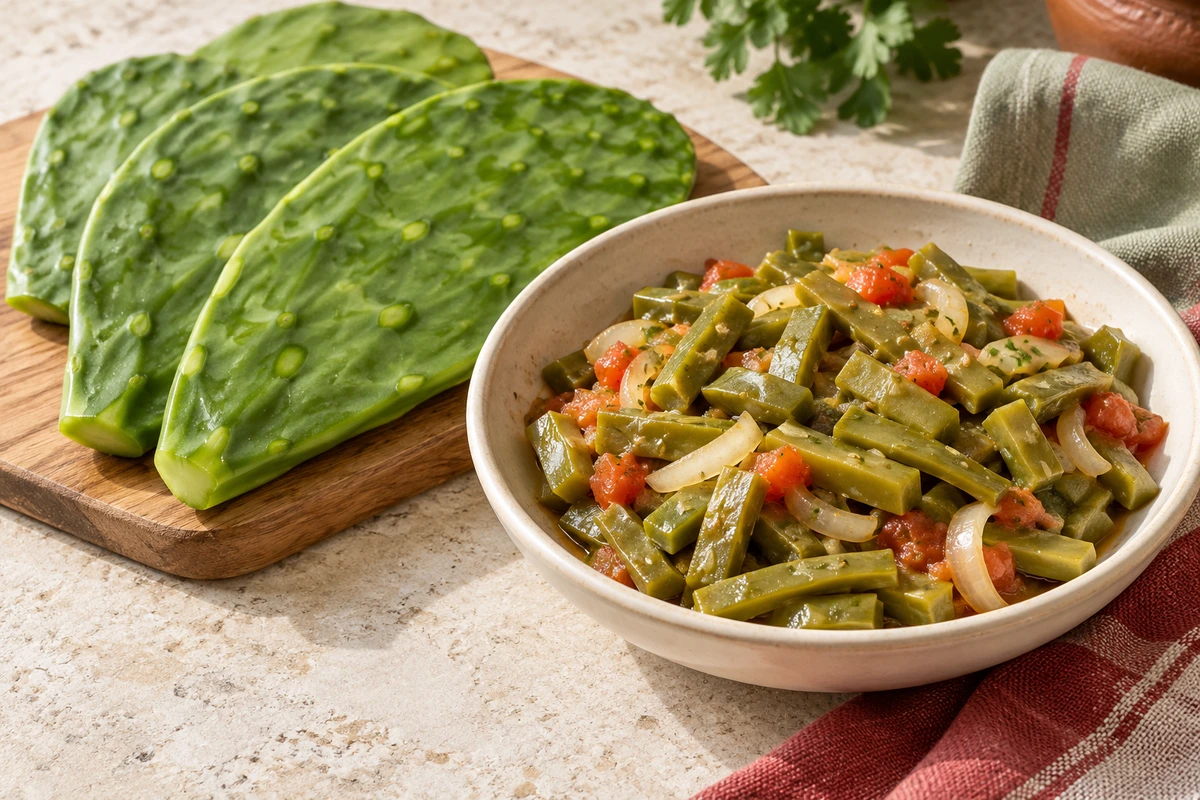
Arginine has been reported among the amino acids found in Opuntia cactus. (4), (5)
What Is Nitric Oxide?
A SIGNALING MOLECULE
N + O → NO
One nitrogen atom and one oxygen atom form a small molecule that cells make for local signaling.
Nitric oxide (NO) is a small, short-lived gas that cells make for local signaling. Its chemical formula, NO, represents one nitrogen atom and one oxygen atom. Because nitric oxide is short-lived, it generally acts near where it is produced, carrying messages between nearby cells. (1)
How Our Bodies Make Nitric Oxide
A SIMPLIFIED PATHWAY
L-arginine → Nitric oxide
Nitric oxide synthase enzymes use L-arginine as a starting material. The pathway depends on several other substances and regulated steps.
The body can produce nitric oxide through more than one biological pathway.
One of the best understood begins with the amino acid L-arginine. (2), (3)
Specialized enzymes called nitric oxide synthases, or NOS enzymes, use L-arginine as a starting material.
During the reaction, the enzyme converts part of the arginine molecule into nitric oxide.
In simplified form:
L-arginine → nitric oxide
The actual chemistry is more complicated, but that’s the important relationship.
And it gives arginine a direct connection with nitric oxide biology.
The Arginine Connection to Nopal
What Does Nitric Oxide Do to Blood Vessels?
CELL-TO-CELL COMMUNICATION
A signal to relax
Nitric oxide produced in the vessel wall activates signaling in nearby smooth muscle, allowing the blood vessel to widen.
One of nitric oxide’s best-known jobs involves the cells lining our blood vessels.
These cells are called endothelial cells. (1), (2)
When nitric oxide is produced in the blood-vessel wall, it can move into nearby smooth-muscle cells.
There it activates a signaling pathway that encourages the smooth muscle to relax. (1), (6)
When the smooth muscle surrounding a blood vessel relaxes, the vessel can widen.
This process is called vasodilation.
That’s one of the reasons nitric oxide became such an important discovery in cardiovascular biology.
A Nobel Prize Story
PHYSIOLOGY OR MEDICINE · 1998
A Nobel Prize story
Robert F. Furchgott, Louis J. Ignarro and Ferid Murad were recognized for discoveries concerning nitric oxide as a cardiovascular signaling molecule.
Nitric oxide’s role in the cardiovascular system was so important that research into this signaling molecule helped lead to the 1998 Nobel Prize in Physiology or Medicine. (7)
The prize was awarded to Robert F. Furchgott, Louis J. Ignarro and Ferid Murad for discoveries concerning nitric oxide as a signaling molecule in the cardiovascular system.
Before this work, the idea that such a tiny, short-lived gas could act as an important biological messenger was remarkable.
Today nitric oxide is recognized as part of fundamental human physiology.
That’s quite a scientific journey for a molecule made from only two atoms.
Nitric Oxide Is Made Where It’s Needed
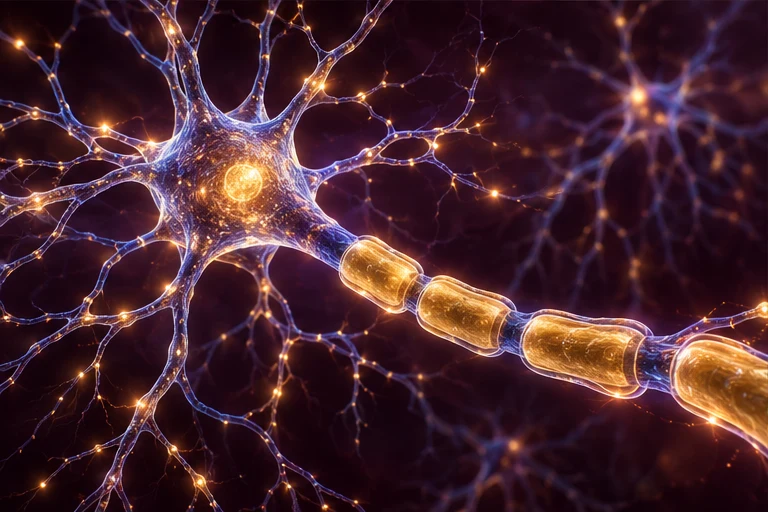
Nitric oxide isn’t something the body simply stores in a reservoir.
Instead, cells can produce it locally when signaling is required. (1), (2)
Different forms of nitric oxide synthase operate in different tissues.
For example, nitric oxide participates in signaling involving:
That helps explain why nitric oxide research extends far beyond circulation alone.
There’s Another Nitric Oxide Pathway
ANOTHER ROUTE
Nitrate → Nitrite → Nitric oxide
Oral bacteria and subsequent chemistry connect dietary nitrate with another nitric oxide pathway.
Arginine isn’t the only nutritional route connected with nitric oxide.
The body can also produce nitric oxide through a pathway involving nitrate and nitrite. (8)
Certain vegetables naturally contain nitrate.
Bacteria in the mouth can help convert nitrate into nitrite.
Additional chemistry can then contribute to nitric oxide formation.
So there are two fascinating nutritional routes into nitric oxide biology:
L-arginine → nitric oxide
and
nitrate → nitrite → nitric oxide. (2), (8)
Different starting points.
Same remarkable signaling molecule.
Where Nopal Fits Into the Story
THE WHOLE BOTANICAL MATRIX
Many parts. One cactus.
Fiber, amino acids, minerals, vitamins and plant compounds occur together within the structure of the Nopal pad.
Nopal is more than one amino acid. Research on Opuntia materials describes fiber, minerals, pigments and a variety of other plant compounds alongside amino acids. (4), (5)
Arginine provides a useful link between food chemistry and nitric oxide biology. It is a link worth understanding, not a promise that Nopal itself produces a particular physiological effect.
Why the Whole Nopal Matters to Us
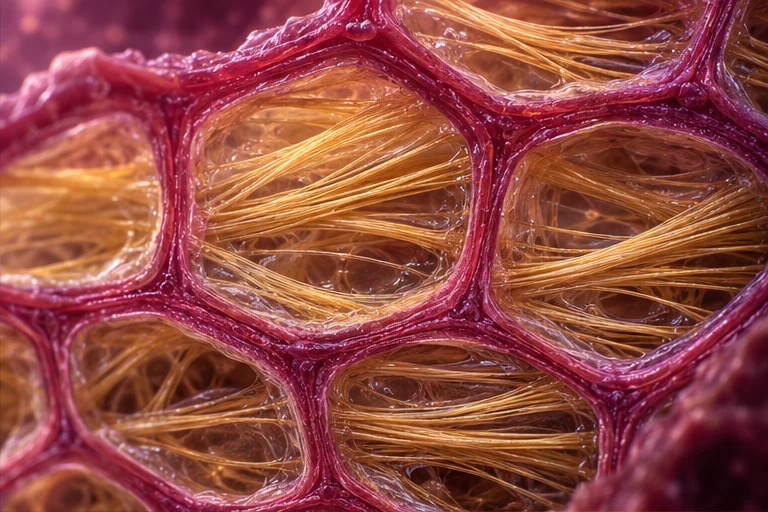
Natural Home Cures focuses on the Nopal cactus as a whole botanical, rather than isolating arginine and presenting it as the only ingredient that matters.
The plant naturally contains multiple components, including fiber, amino acids, minerals, and pigments.
From Our Farms to Our Capsules
FROM THE FARM FORWARD
Living Nopal → Harvest → Freeze-drying
The dried cactus is milled into whole Nopal powder and prepared for our capsules.
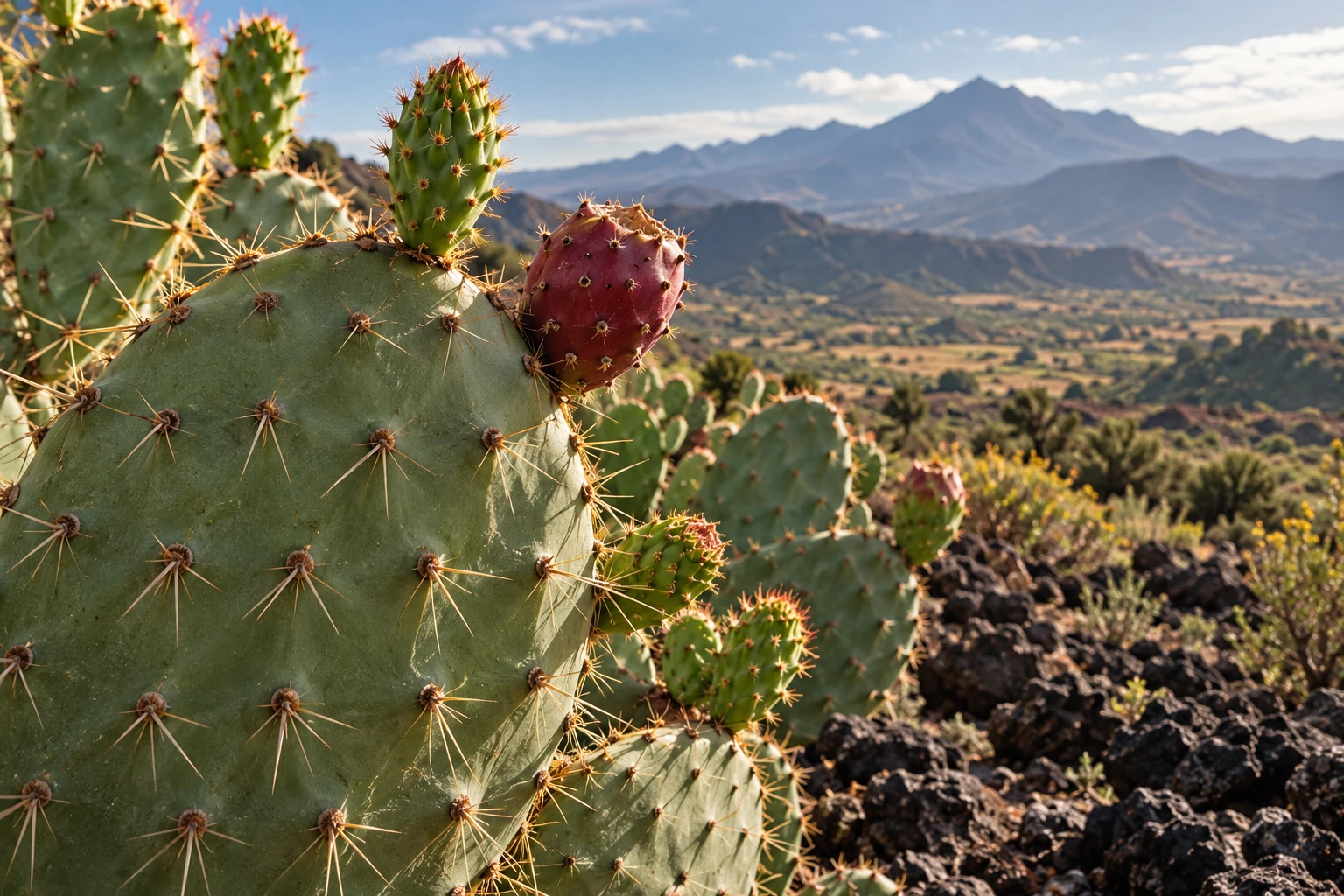
Our Nopal capsule story begins on our mountain farms in Mexico, where Opuntia streptacantha grows at approximately 2,500 meters (8,200 feet) above sea level on mountainsides with rich volcanic soil.
Sunlight, temperature and rainfall shape the growing environment. We stay involved from growing through harvest and preparation of our capsules.
That connection to the living cactus is part of our product story; it does not establish how much arginine is present in any individual capsule.
Preparing Nopal for Our Capsules
REMOVING WATER
Freeze. Dry. Mill.
Freeze-drying prepares Nopal for our capsules while keeping the broader cactus together.
After harvest, Nopal pads are freeze-dried to remove moisture. The dried pads are then milled into powder and prepared for encapsulation.
The Natural Home Cures Nopal Family
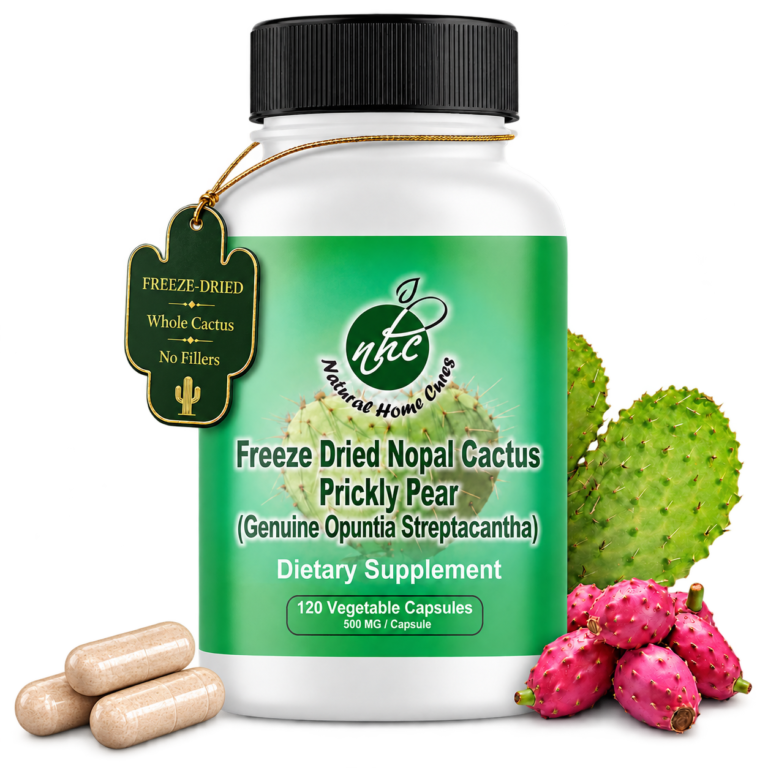
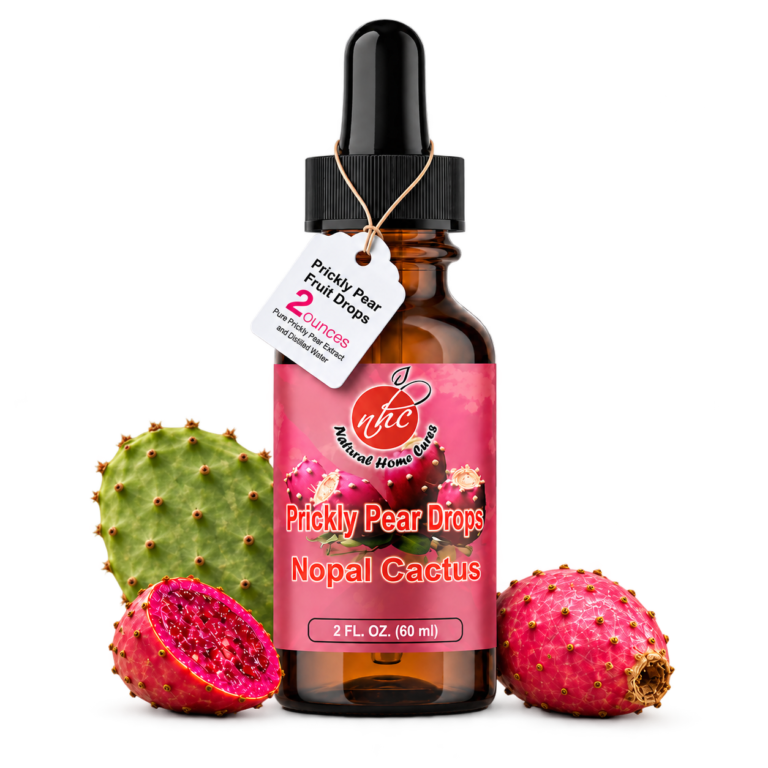
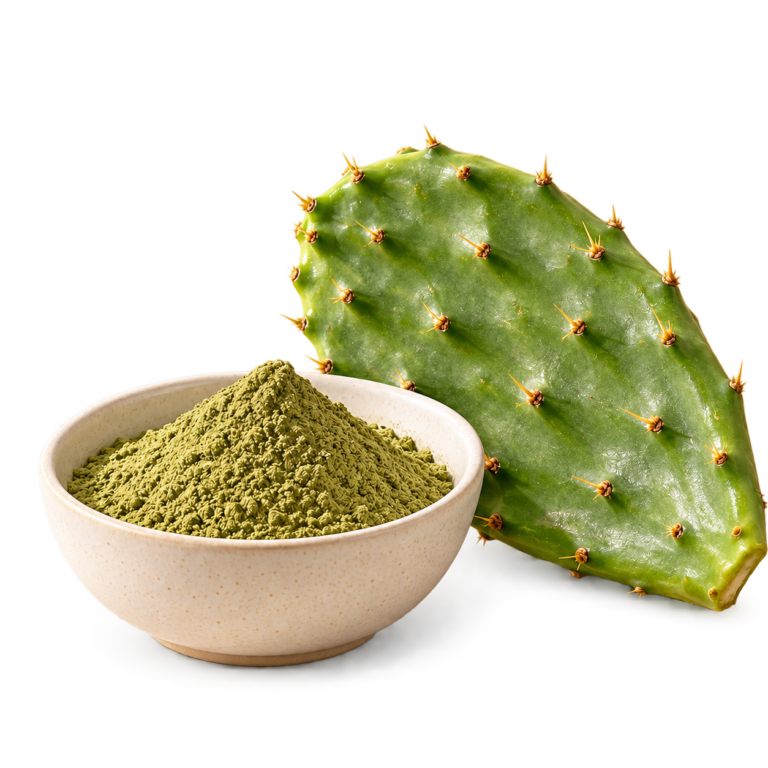
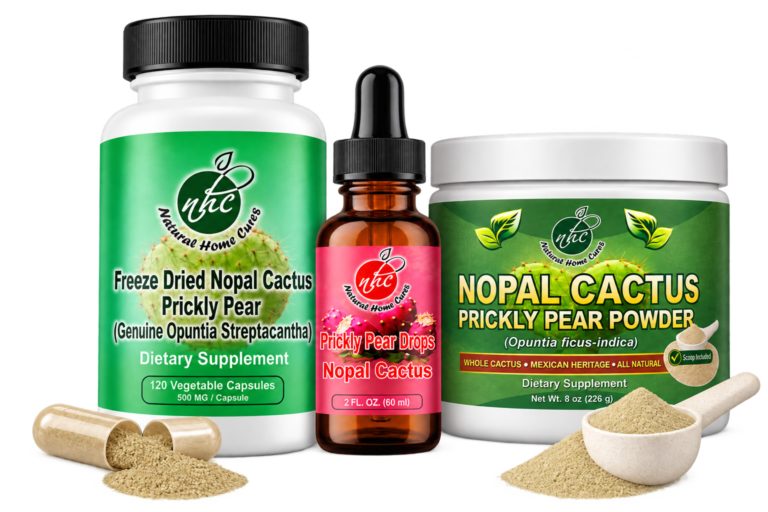
Our flagship Natural Home Cures Freeze-Dried Nopal Powder Capsules remain at the center of our Nopal line. We also offer Prickly Pear Drops and Nopal Powder, giving customers several ways to explore Nopal cactus and prickly pear.
FROM CACTUS TO PRODUCT
Keep the botanical
in the story.
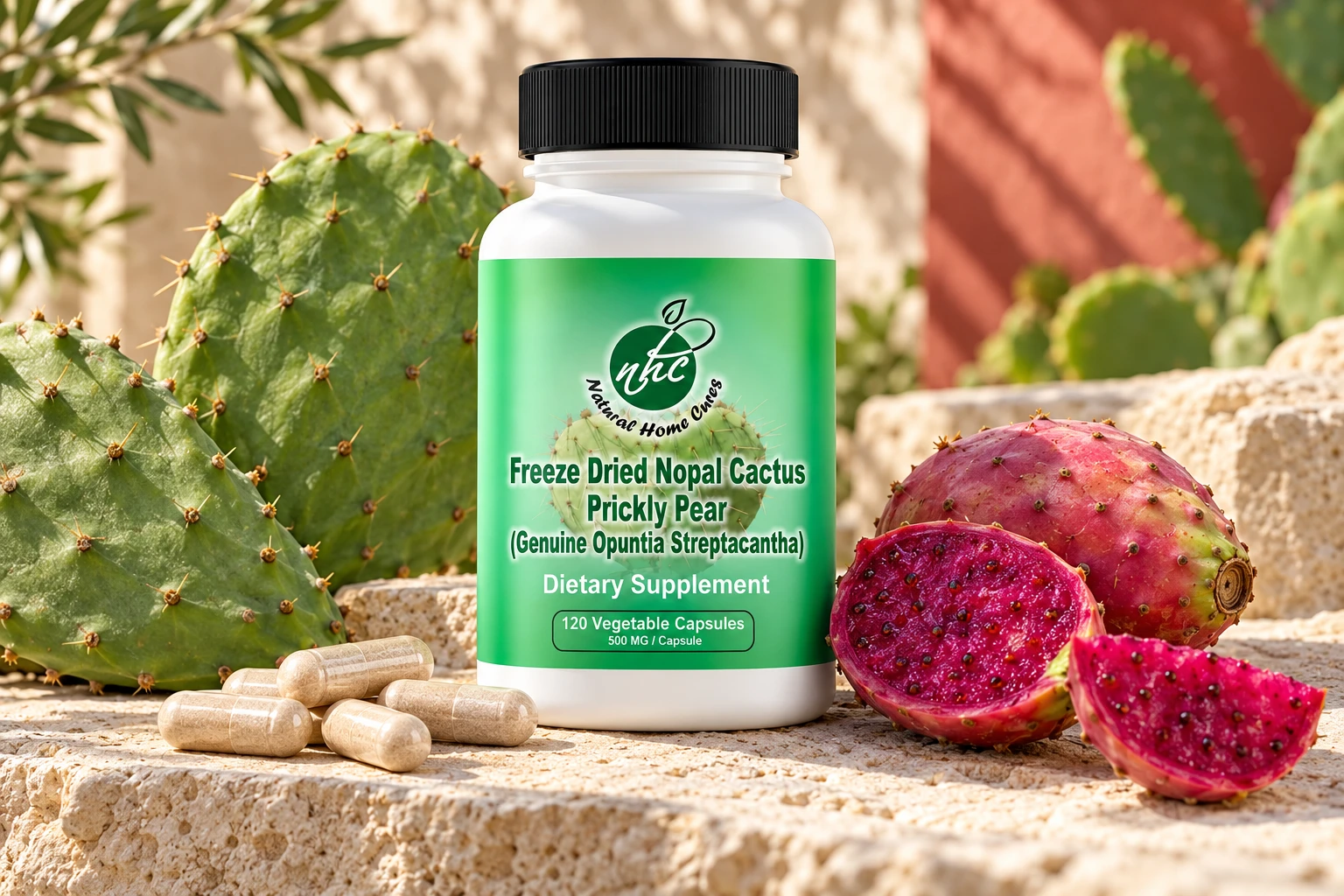
Freeze-dried Nopal cactus capsules.
Explore our Nopal →The research behind this articleSource References
- 01Source referenceNitric Oxide: Physiology, Pathophysiology, and Pharmacology.View source
Full citation
Moncada S, Palmer RMJ, Higgs EA. “Nitric Oxide: Physiology, Pathophysiology, and Pharmacology.” Pharmacological Reviews. 1991;43(2):109–142. - 02Source referenceNitric Oxide Synthases: Regulation and Function.View source
Full citation
Förstermann U, Sessa WC. “Nitric Oxide Synthases: Regulation and Function.” European Heart Journal. 2012;33(7):829–837. - 03Source referenceArginine Metabolism: Nitric Oxide and Beyond.View source
Full citation
Wu G, Morris SM Jr. “Arginine Metabolism: Nitric Oxide and Beyond.” Biochemical Journal. 1998;336:1–17. - 04Source referenceNopal Cactus (Opuntia ficus-indica) as a Source of Bioactive Compounds for Nutrition, Health and Disease.View source
Full citation
El-Mostafa K, El Kharrassi Y, Badreddine A, et al. “Nopal Cactus (Opuntia ficus-indica) as a Source of Bioactive Compounds for Nutrition, Health and Disease.” Molecules. 2014;19(9):14879–14901. - 05Source referenceCactus Stems (Opuntia spp.): A Review on Their Chemistry, Technology, and Uses.View source
Full citation
Stintzing FC, Carle R. “Cactus Stems (Opuntia spp.): A Review on Their Chemistry, Technology, and Uses.” Molecular Nutrition & Food Research. 2005;49(2):175–194. - 06Source referenceNitric Oxide as a Unique Signaling Molecule in the Vascular System: A Historical Overview.View source
Full citation
Ignarro LJ. “Nitric Oxide as a Unique Signaling Molecule in the Vascular System: A Historical Overview.” Journal of Physiology and Pharmacology. 2002;53(4):503–514. - 07Source referenceThe Nobel Prize in Physiology or Medicine 1998.View source
Full citation
Nobel Prize Outreach. “The Nobel Prize in Physiology or Medicine 1998.” - 08Source referenceThe Nitrate–Nitrite–Nitric Oxide Pathway in Physiology and Therapeutics.View source
Full citation
Lundberg JO, Weitzberg E, Gladwin MT. “The Nitrate–Nitrite–Nitric Oxide Pathway in Physiology and Therapeutics.” Nature Reviews Drug Discovery. 2008;7:156–167.