NATURAL HOME CURES · NOPAL SCIENCE
Cysteine, Cystine
& Nopal
Related building blocks for proteins, hair, nails and the body’s natural cell defenses.
Explore the science
in hair and nails.
Your body can normally make cysteine using another amino acid called methionine. You also get these related amino acids through foods that contain protein.(2)
Cysteine helps build proteins and make glutathione, a natural compound that helps protect cells. Its linked form, cystine, helps explain the small bridges that give some proteins their structure.(3),(5)
Cysteine & Cystine: What’s the Difference?
Think of cysteine as one building block and cystine as two linked building blocks. Their similar names describe these closely related forms.(3)
An individual amino acid your body uses to make proteins and other useful compounds.
Two cysteine units joined together through sulfur, a natural part of cysteine.
What Do Cysteine and Cystine Do?
Alongside their place in proteins, these related forms have two useful roles to understand.
Helping proteins hold their shape
Proteins need the right shape to do their jobs. When two cysteine units join, they can form a small bridge that helps hold parts of a protein together. Scientists call this a disulfide bond.(3)
Keratin in hair and nails is a familiar example. These small connections help support its strong structure.(3),(4)
Helping protect cells
THREE BUILDING BLOCKS · ONE NATURAL DEFENSE
Cysteine & Cystine in Everyday Foods
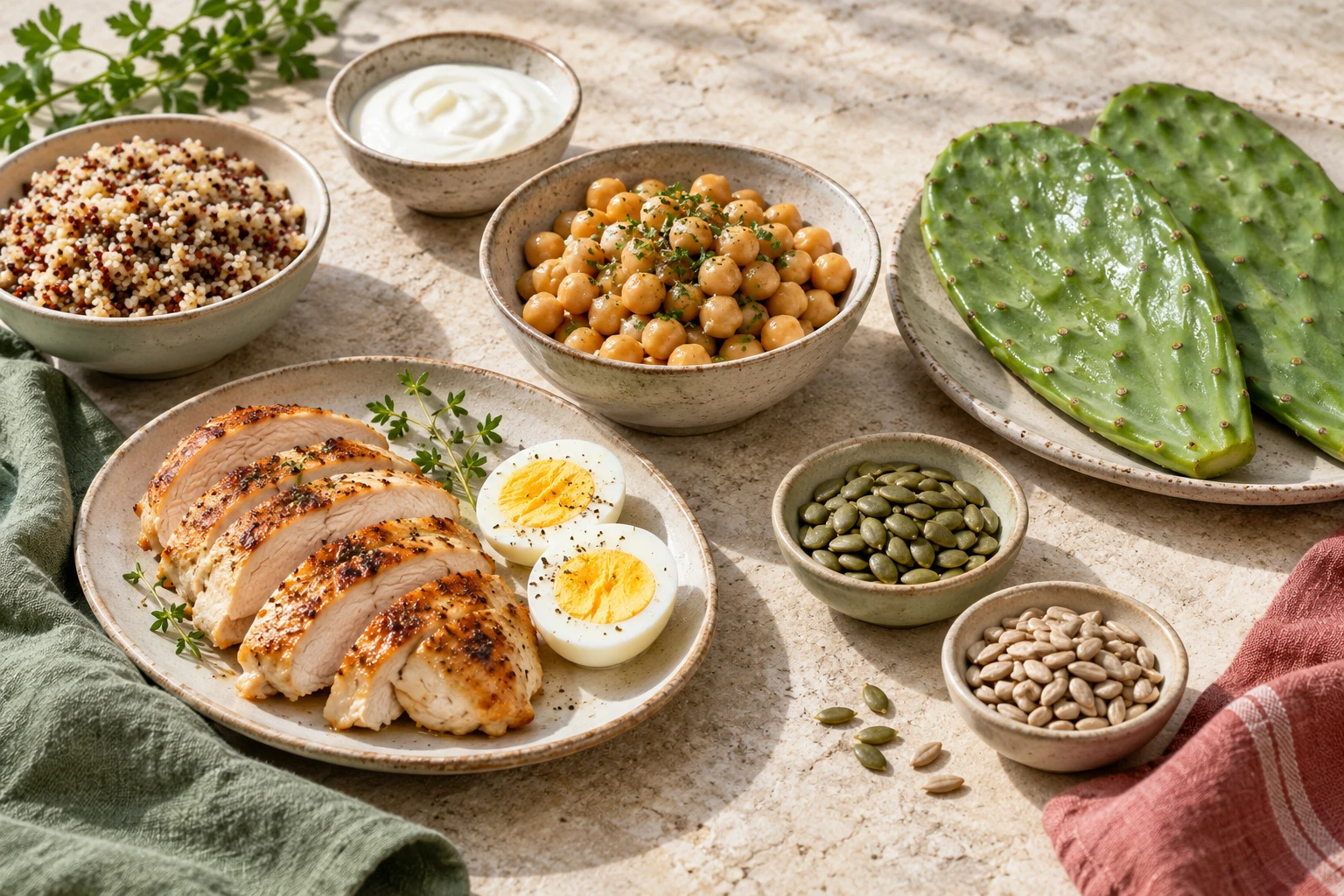
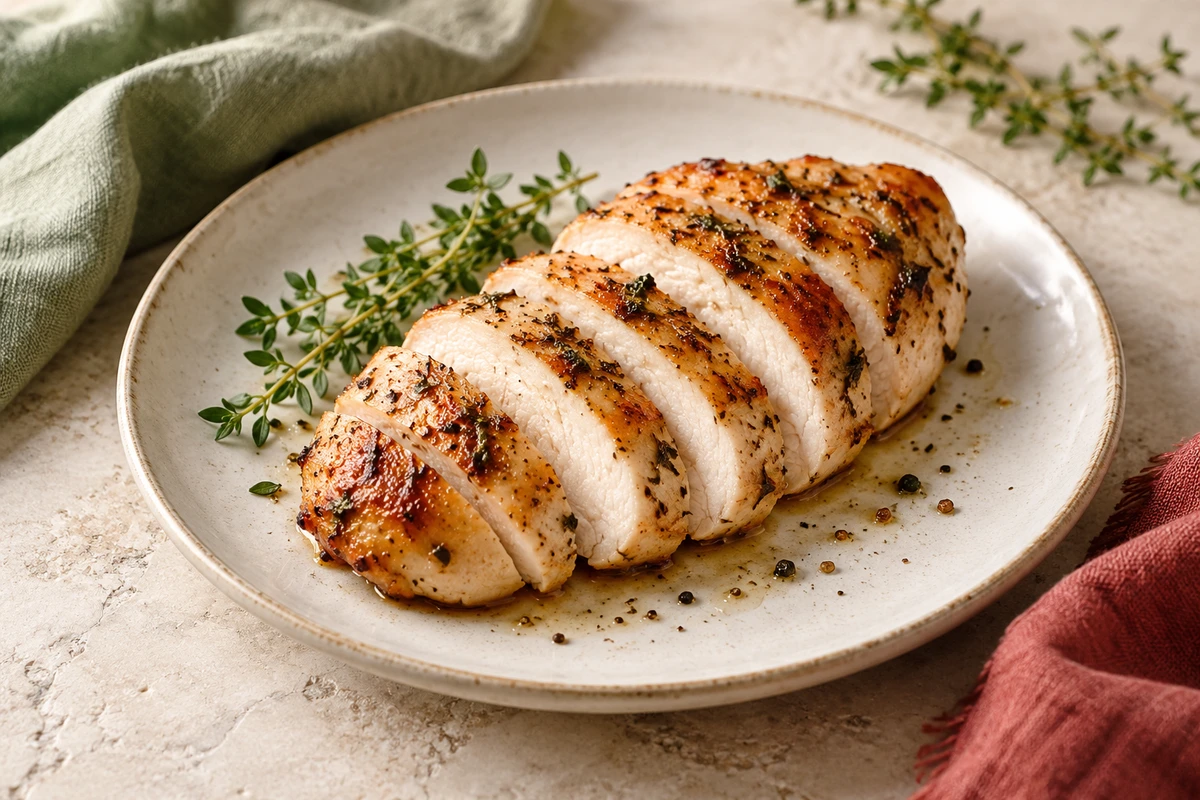 Meat and poultry
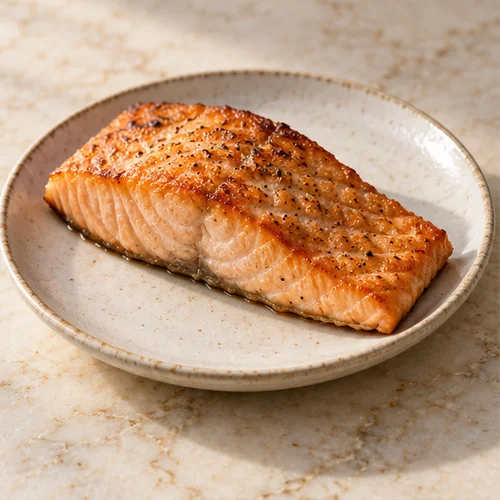 Fish
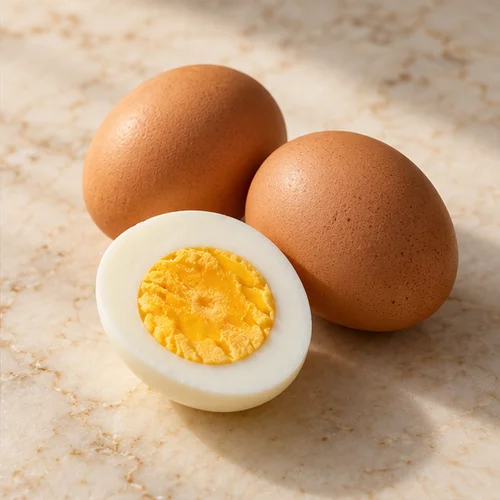 Eggs
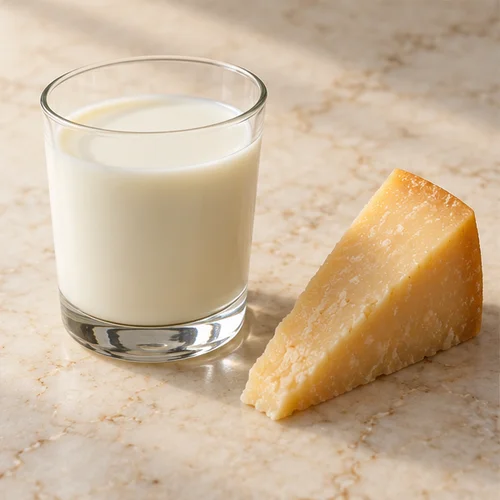 Milk and dairy products
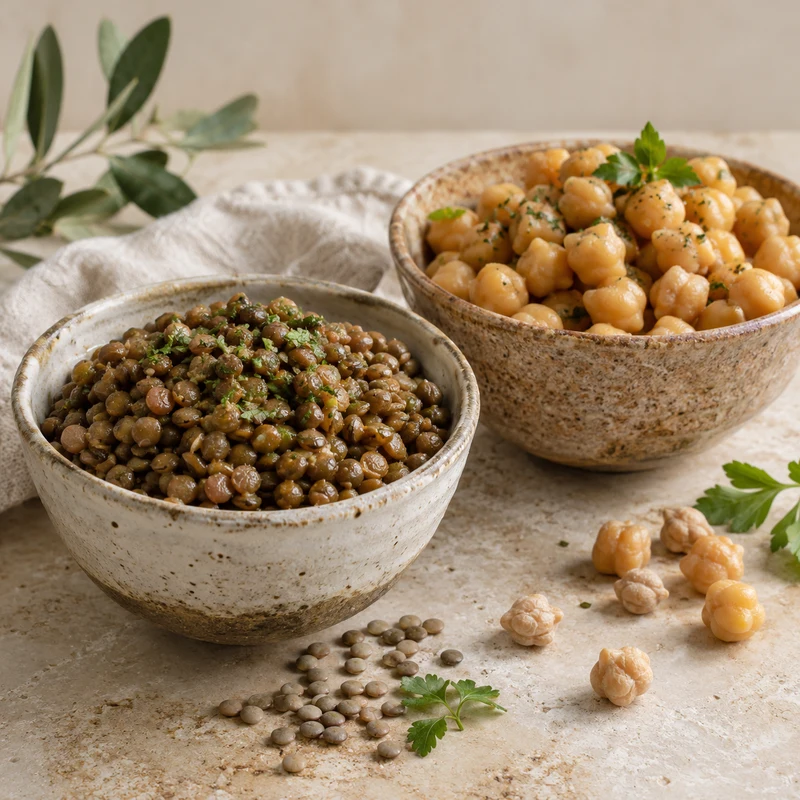 Beans and lentils
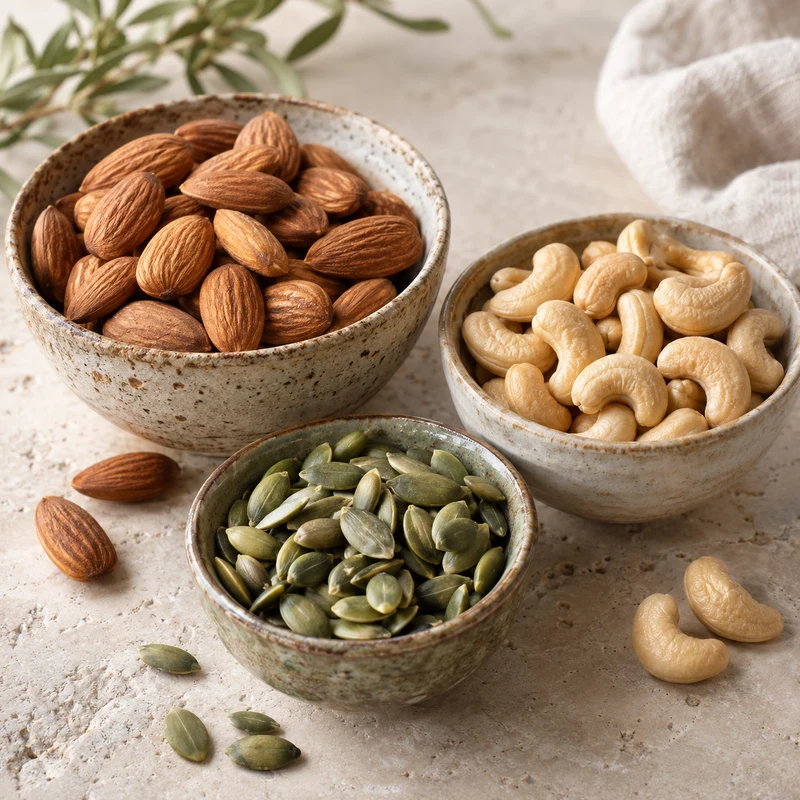 Nuts and seeds
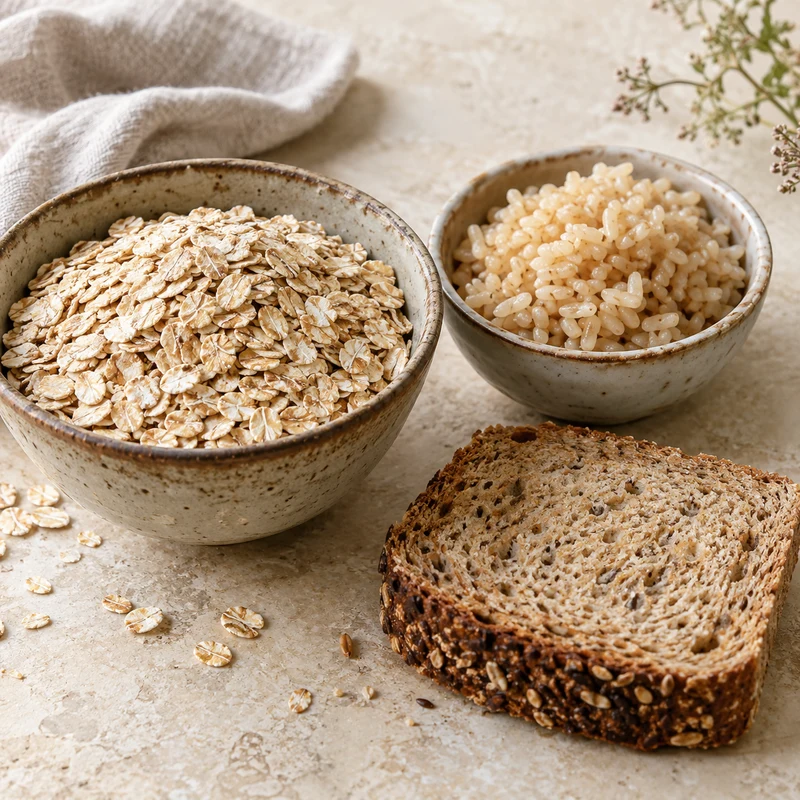 Whole grains
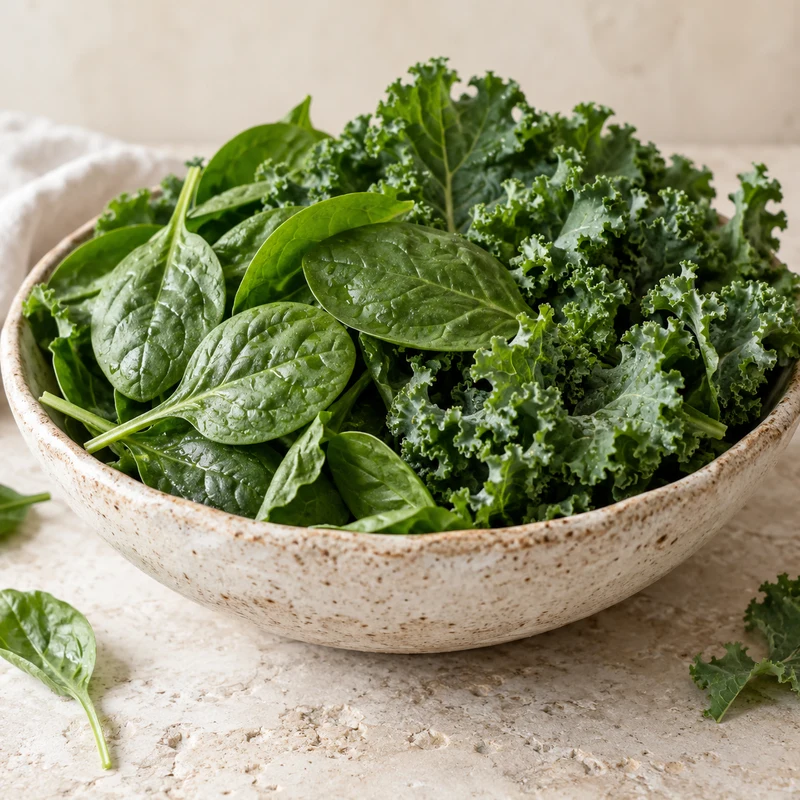 Leafy vegetables
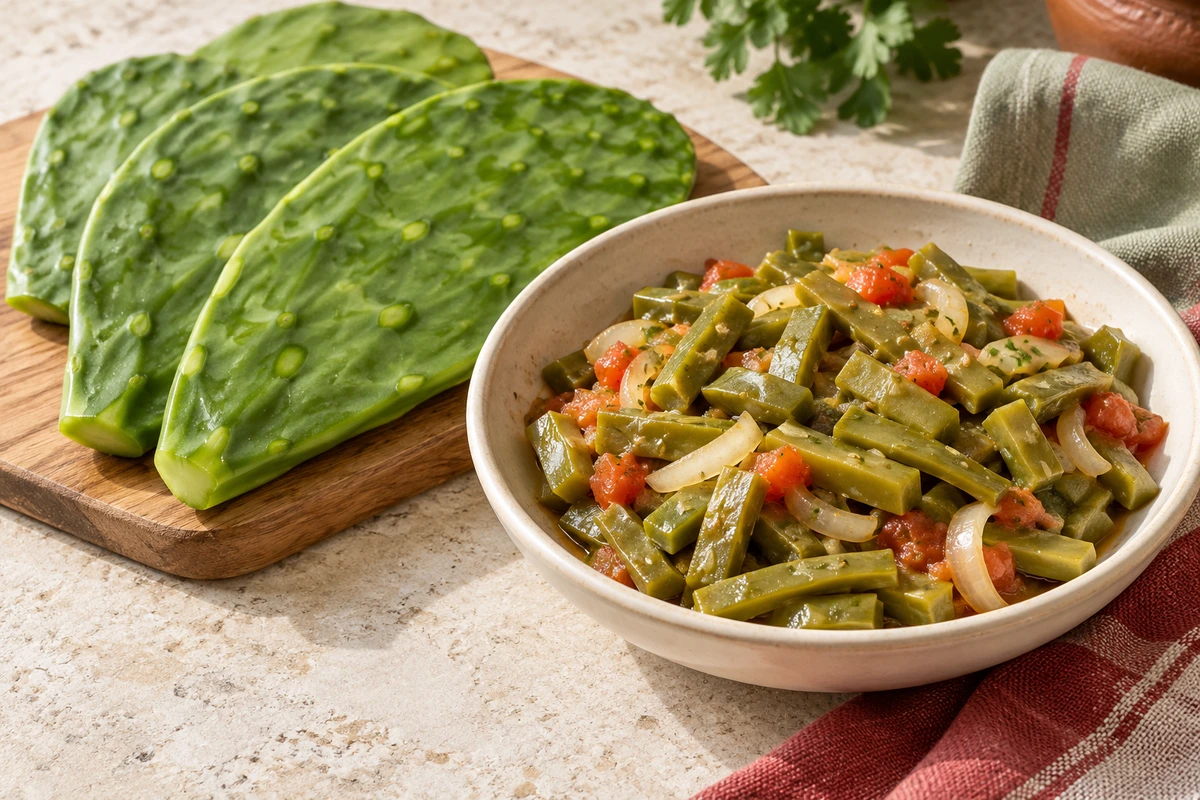 Nopal cactus pads
The amount you get depends on the food and how much you eat. A varied diet supplies these amino acids alongside other building blocks the body needs.(2)
How Much Cystine Is in Nopal?
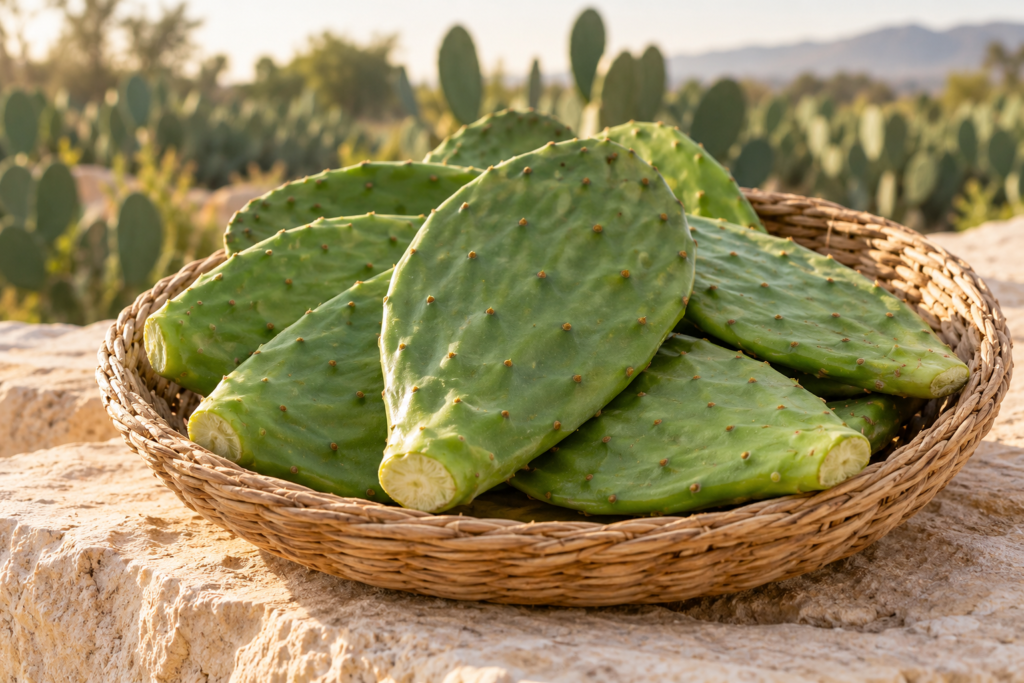
USDA’s food database lists cystine, the linked form of cysteine, in raw nopales, the edible cactus pads.(8)
USDA FoodData Central · “Nopales, raw”
The USDA entry lists 0.008 grams of cystine per 100 grams of raw nopales, equal to 8 milligrams. This gives an idea of the amount in fresh cactus pads.(8)
Cystine has also been reported in studies of Opuntia ficus-indica cactus.(6)
The USDA value is a general food reference.
From Our Farms to Your Bottle
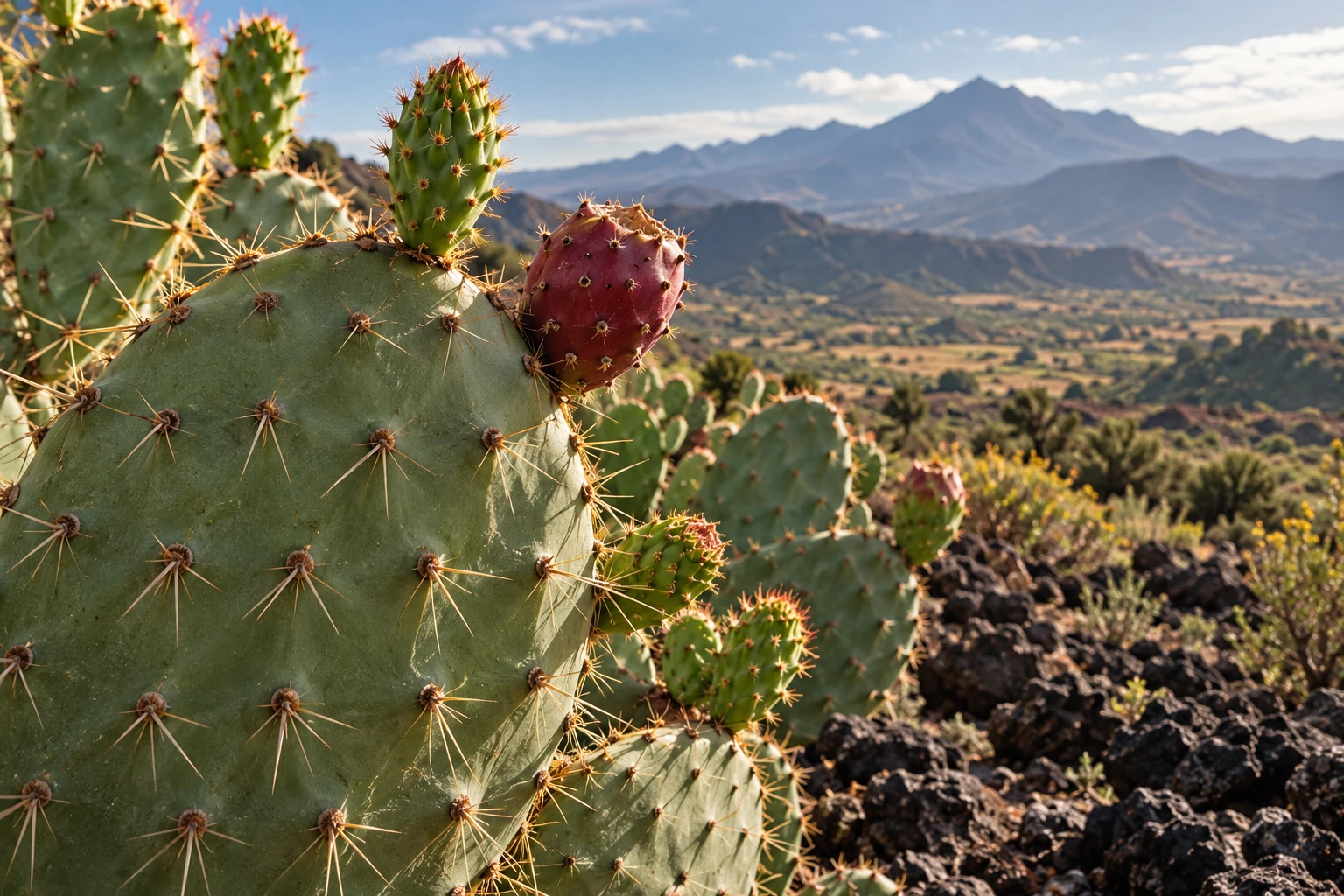
Our Nopal capsule story begins on our mountain farms in Mexico, where Opuntia streptacantha grows at about 8,200 feet in rich volcanic soil. Sunlight, temperature, and rainfall shape the living cactus.
We stay involved from growing through harvest and preparation of the capsules. This growing environment is part of the story behind each amino acid discussed here.
More Than One Amino Acid
Our capsules and powder bring together the naturally occurring compounds in cactus pads. They are whole botanical products, rather than isolated cysteine or cystine supplements.
Explore the other Nopal articles to learn about its fiber, vitamins, minerals and other plant compounds. Each adds another piece to the story of this familiar cactus.
FROM CACTUS TO PRODUCT
Meet Our Nopal Cactus & Prickly Pear Family
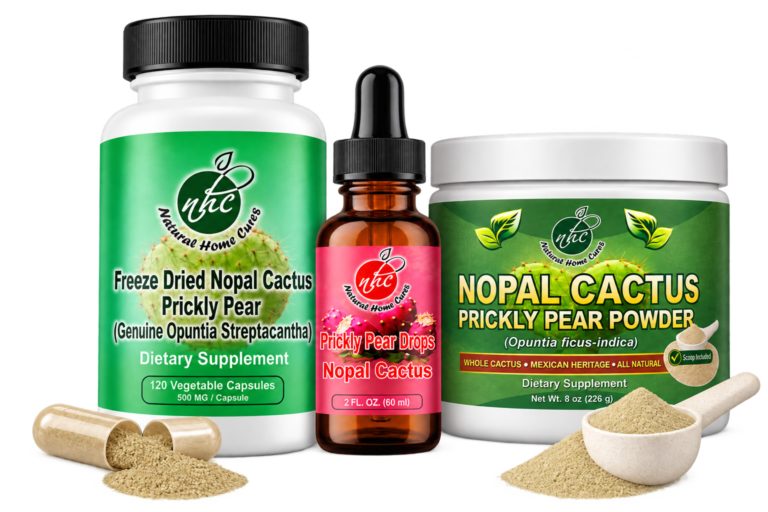
Nopal cactus capsules, prickly pear drops, and Nopal cactus powder.
Explore Nopal Cactus →The research behind this articleSource References
- 01Nutrition referencePhysiology, Proteins.View source
Full citation
LaPelusa A, Kaushik R. “Physiology, Proteins.” StatPearls. National Center for Biotechnology Information. - 02Research referenceSulfur Amino Acid Metabolism: Pathways for Production and Removal of Homocysteine and Cysteine.View source
Full citation
Stipanuk MH. “Sulfur Amino Acid Metabolism: Pathways for Production and Removal of Homocysteine and Cysteine.” Annual Review of Nutrition. 2004;24:539–577. - 03Research referenceAlberts B, Johnson A, Lewis J, et al. The Shape and Structure of Proteins. Molecular Biology of the Cell. 4th edition. Garland Science; 2002.View source
Full citation
Alberts B, Johnson A, Lewis J, et al. The Shape and Structure of Proteins. Molecular Biology of the Cell. 4th edition. Garland Science; 2002. - 04Research referenceProteome Analysis of Human Hair Shaft: From Protein Identification to Posttranslational Modification.View source
Full citation
Lee YJ, Rice RH, Lee YM. “Proteome Analysis of Human Hair Shaft: From Protein Identification to Posttranslational Modification.” Molecular & Cellular Proteomics. 2006;5(5):789–800. - 05Research referenceGlutathione Synthesis.View source
Full citation
Lu SC. “Glutathione Synthesis.” Biochimica et Biophysica Acta. 2013;1830(5):3143–3153. - 06Research referenceNopal Cactus (Opuntia ficus-indica) as a Source of Bioactive Compounds for Nutrition, Health and Disease.View source
Full citation
El-Mostafa K, El Kharrassi Y, Badreddine A, et al. “Nopal Cactus (Opuntia ficus-indica) as a Source of Bioactive Compounds for Nutrition, Health and Disease.” Molecules. 2014;19(9):14879–14901. - 07Research reviewCactus Stems (Opuntia spp.): A Review on Their Chemistry, Technology, and Uses.View source
Full citation
Stintzing FC, Carle R. “Cactus Stems (Opuntia spp.): A Review on Their Chemistry, Technology, and Uses.” Molecular Nutrition & Food Research. 2005;49(2):175–194. - 08USDA food composition referenceNopales, raw.View source
Full citation
U.S. Department of Agriculture. FoodData Central. “Nopales, raw.” FDC ID 168571. Cystine: 0.008 g per 100 g of raw edible food, equivalent to 8 mg.