NATURAL HOME CURES · NOPAL SCIENCE
Dietary Fiber
& Nopal
Structure, texture and water.
Explore the science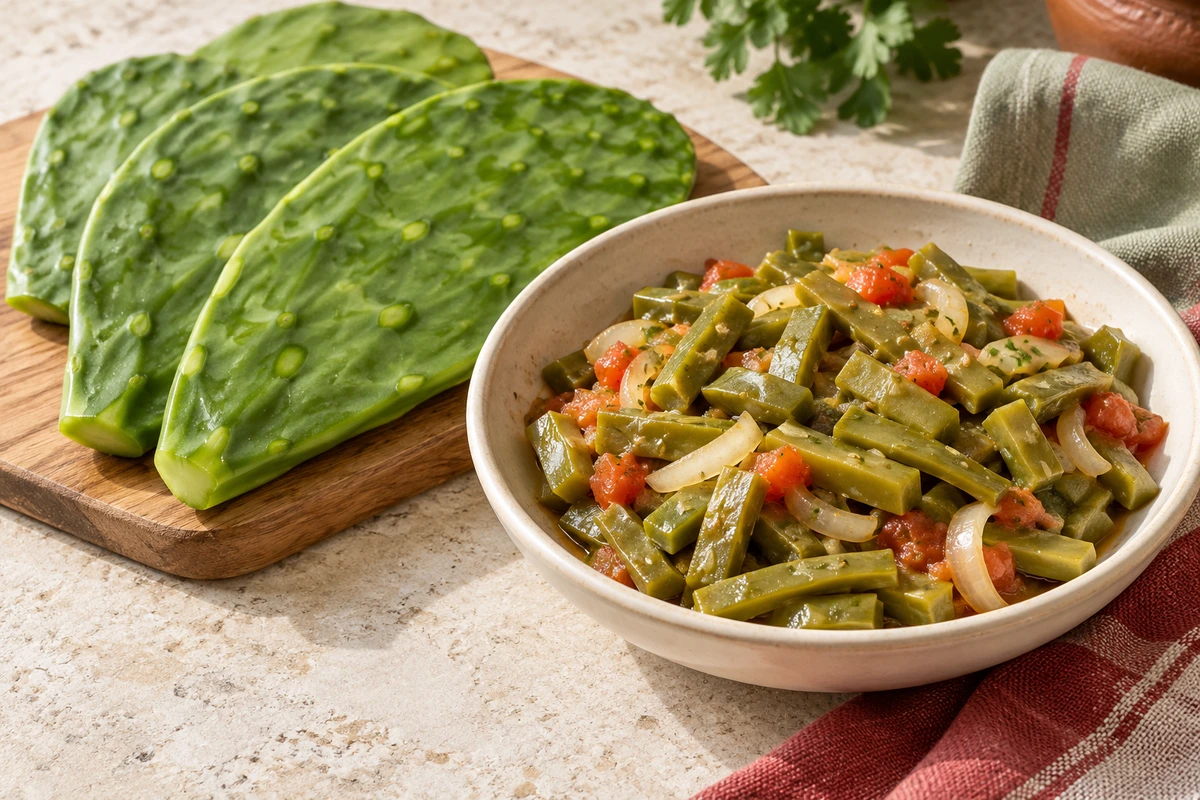
Cut open a fresh Nopal pad and you can see its firm plant tissue and feel its slippery interior.
Those textures are a starting point for exploring the different kinds of fiber inside the cactus.
Dietary fiber isn't one single substance. Different types of fiber behave differently in water, interact differently with digestion and become part of the physical structure that makes plant foods what they are.(1), (2)
Nopal cactus and prickly pear contain both soluble and insoluble fiber, along with naturally occurring plant materials such as pectin and mucilage that contribute to the cactus's distinctive texture.(3), (4)
And when you cut open a fresh Nopal pad, you can actually see part of that story for yourself.
What Is Dietary Fiber?
A FAMILY OF PLANT COMPONENTS
Different fibers, different roles
Some fibers add bulk. Others bind water or are fermented by microorganisms in the large intestine.
Dietary fiber is made primarily from plant carbohydrates that aren't completely broken down by our digestive enzymes in the small intestine.(1)
Instead of being digested in exactly the same way as sugars and starches, fiber continues farther through the digestive system.
Some types remain relatively intact. Others can be fermented by microorganisms living in the large intestine.(1), (2)
That's why simply listing “fiber” as though it were one ingredient can be misleading.
Fiber is really a family of plant components with different physical and biological characteristics.
Soluble and Insoluble Fiber
You've probably heard fiber divided into two broad categories:
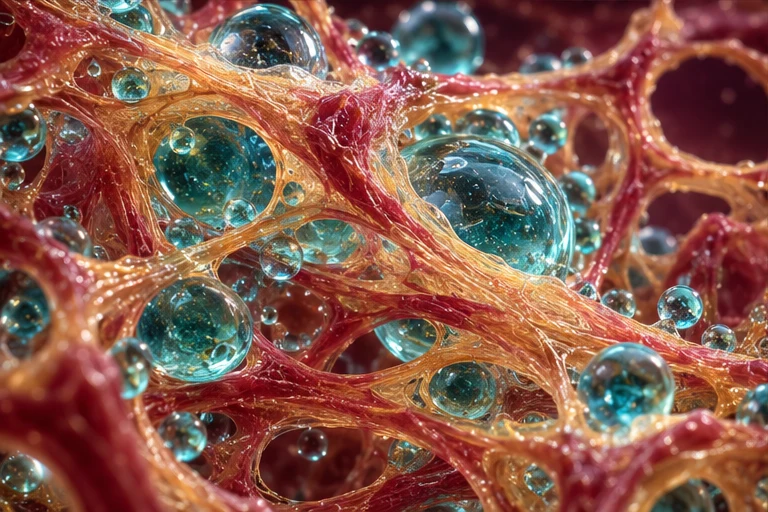
Soluble fiber interacts with water and can form thick or gel-like mixtures.
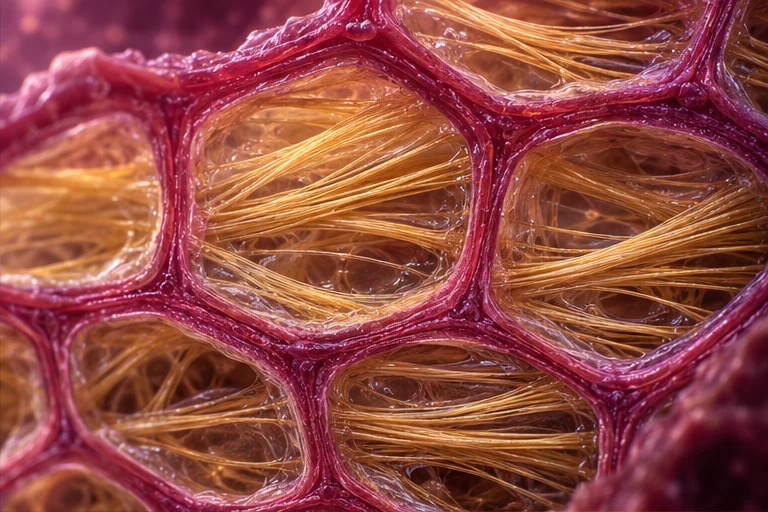
Many plant foods contain a mixture of both.
And that combination becomes particularly interesting because Nopal is a cactus designed to hold and manage water.
Cut Open a Nopal Pad
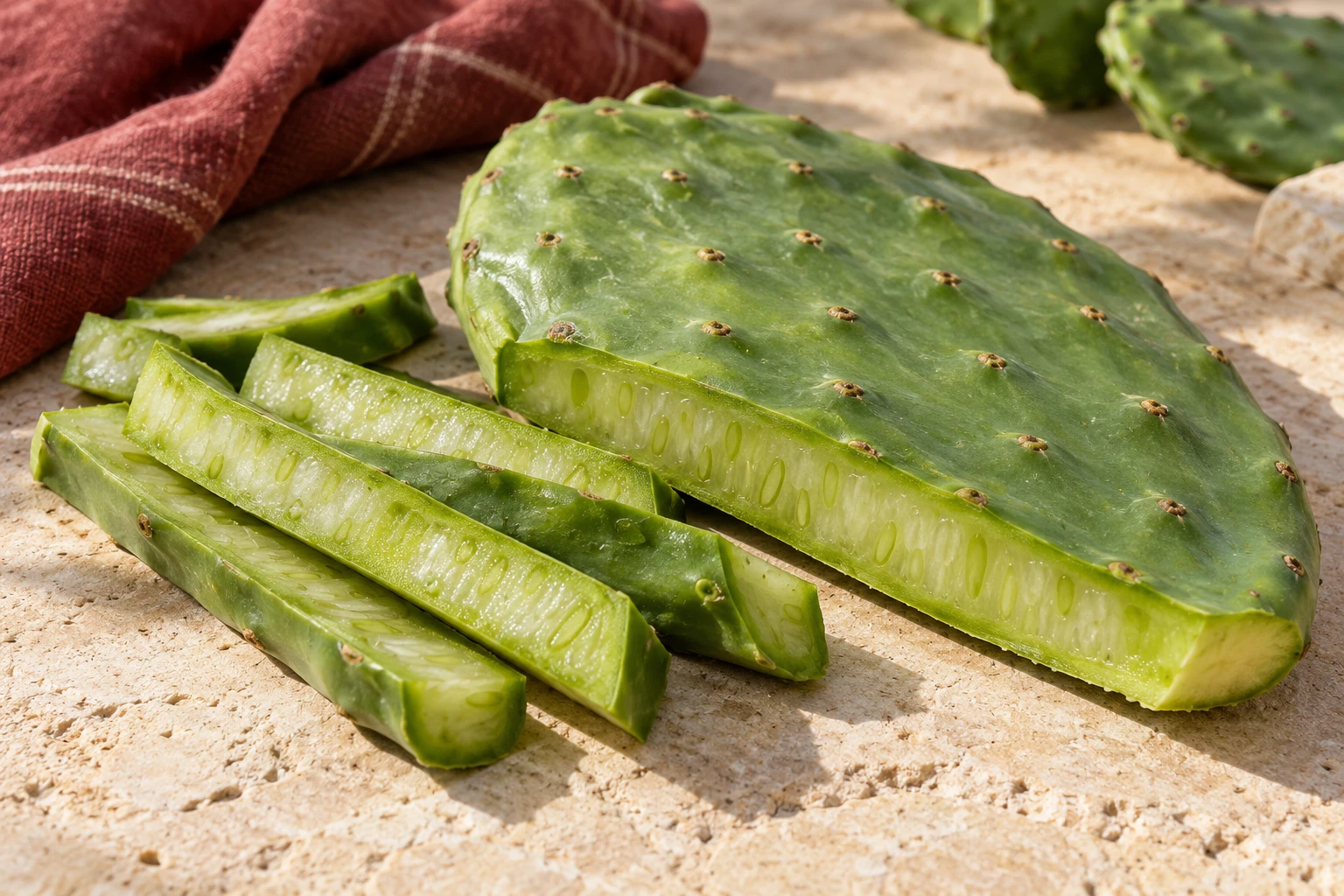
If you've ever cut into a fresh Nopal cactus pad, you've probably noticed something immediately.
It's moist.
And depending on the cactus and preparation, the inside can feel somewhat slick or gel-like.
That isn't something added to the plant.
It's part of the cactus itself.
Nopal contains complex plant carbohydrates called polysaccharides, including mucilage and pectin, that interact strongly with water.(3), (5)
Those materials help explain some of the characteristic texture people associate with fresh Nopal.
In other words, some of the fiber story is visible before the cactus ever reaches a laboratory.
What Is Nopal Mucilage?
WATER INSIDE THE PAD
Mucilage binds water
These plant carbohydrates help hold moisture within the living cactus.
The word mucilage may sound technical, but the idea is fairly simple.
Mucilage is a collection of complex plant carbohydrates that can bind and hold water.(5), (6)
Nopal is particularly interesting because its mucilage contributes to the cactus's ability to retain water.
Think about the environment in which a cactus has to survive.
Rain may not come when the plant wants it. Water can disappear quickly. So holding onto available water becomes extremely valuable.
The same gel-like plant material that interests food and nutrition researchers is part of the cactus's own survival biology.
Pectin Is Part of the Story Too
PART OF THE CELL WALL
Pectin helps hold plant tissue together
It contributes to the walls around plant cells and the connections between them.
Nopal also contains pectin, another type of complex carbohydrate found in plant cell walls.(3), (4)
Most people have encountered pectin without realizing it. It's the substance commonly associated with the gel structure of jams and jellies.
Inside plants, pectin helps contribute to the structure and organization of cell walls. Inside Nopal, it becomes another part of the mixture of fibers and polysaccharides that gives the cactus its unusual physical properties.
So when we talk about Nopal fiber, we're not talking about one isolated substance.
We're talking about a plant matrix—the many components held together within the cactus tissue.
Fiber and Digestion
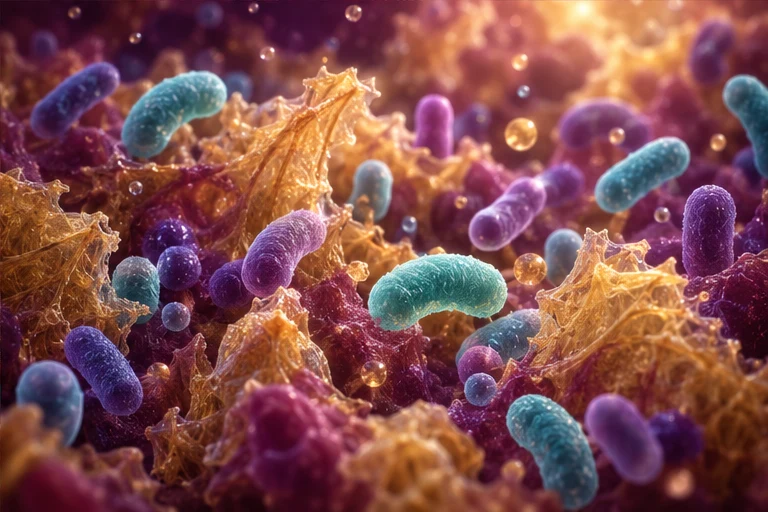
Fiber travels through the digestive system differently from many other carbohydrates.
Insoluble fibers can contribute bulk to intestinal contents. Certain soluble and fermentable fibers can interact with water and may be used by microorganisms in the colon.(1), (2)
Those microorganisms can produce compounds called short-chain fatty acids when they ferment certain fibers.(2), (7)
This is one reason modern fiber research has become so interesting.
Fiber isn't simply material the body “can't digest.” Some fibers become part of an interaction between the food we eat and the enormous microbial community living inside our digestive system.
Fiber Changes the Physical Environment of a Meal
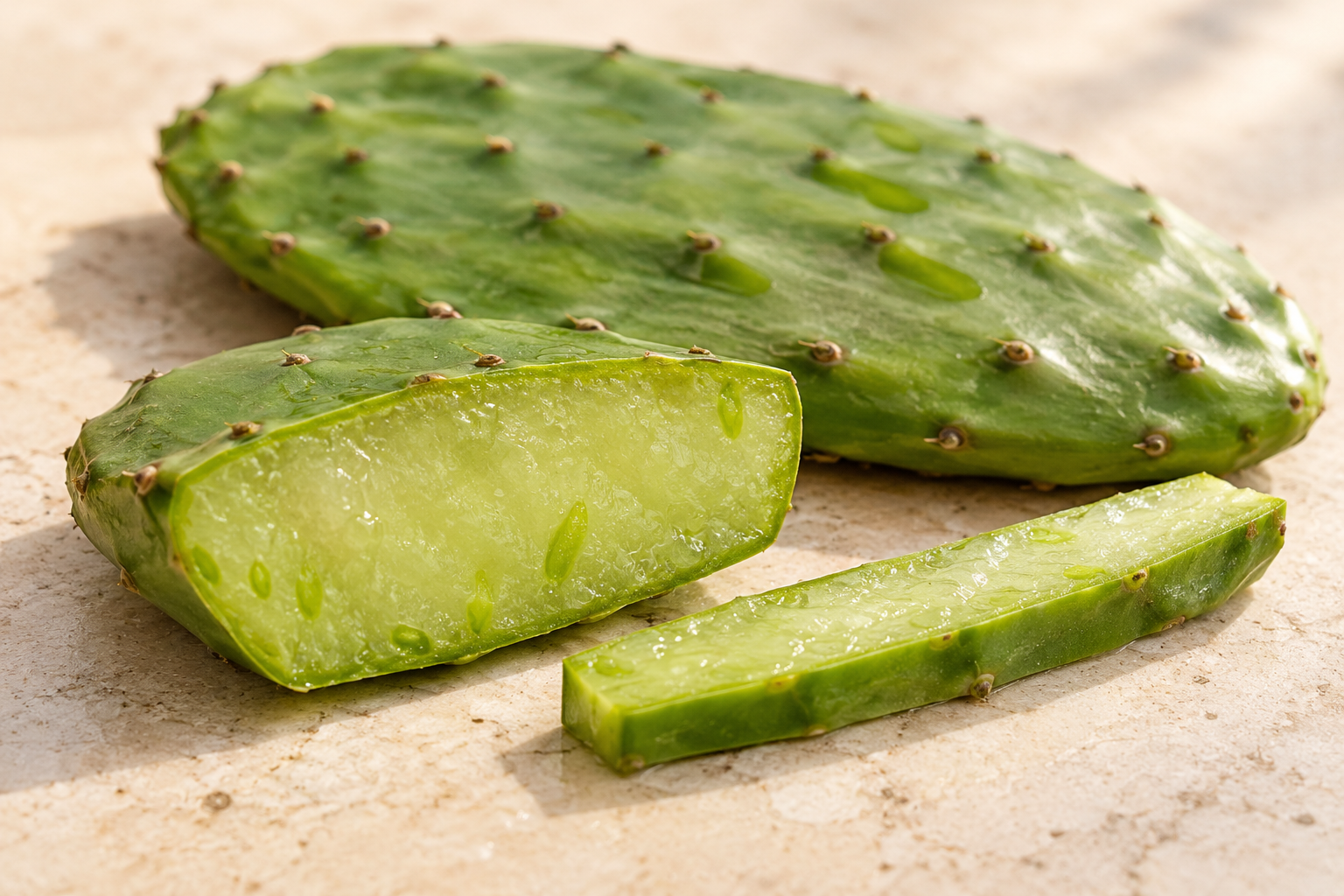
HOW A MIXTURE MOVES
Some fibers make liquids thicker
This property is called viscosity. It can change how food mixes and moves during digestion.
Fiber can also change the physical characteristics of food inside the digestive tract.
Certain soluble fibers increase viscosity—essentially making the contents thicker.(1), (8)
That can influence how nutrients mix and move during digestion.
This doesn't mean every fiber behaves identically or that every serving of a fiber-containing food produces the same effect. But it helps explain why scientists are interested not simply in how much fiber a plant contains, but what kind of fiber it contains and how that fiber behaves.
Nopal gives researchers an especially interesting plant to study because of its combination of fiber, pectin and water-binding mucilage.(3), (5)
Fiber Begins as Part of the Living Cactus
Before we ever think about fiber as human nutrition, it already has a job inside the plant.
Plant cell walls contain complex carbohydrates that help provide structure. Pectin contributes to those walls. Mucilage helps Nopal interact with and retain water. Other fibrous materials contribute to the physical structure of the cactus pad.(3), (5), (6)
So the fiber in Nopal isn't something sprinkled into the cactus.
It's part of what makes a Nopal cactus a Nopal cactus.
Why Freeze-Drying Matters to Our Nopal Story
Fresh Nopal contains a great deal of water. Freeze-drying removes water from frozen plant material under reduced pressure.
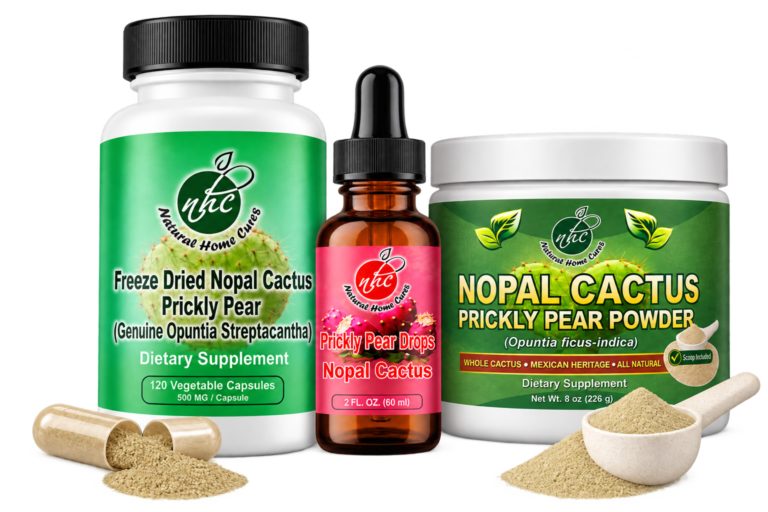
For our flagship Freeze-Dried Nopal Powder Capsules, we prepare the cactus pad material rather than extracting an isolated fiber ingredient.
Fiber, pectin, mucilage and other naturally occurring compounds form part of the Nopal’s broader structure.
Our goal is to preserve the character of the cactus we grow as closely as practical while preparing it in a convenient form.
From Our Farms to the Nopal Family
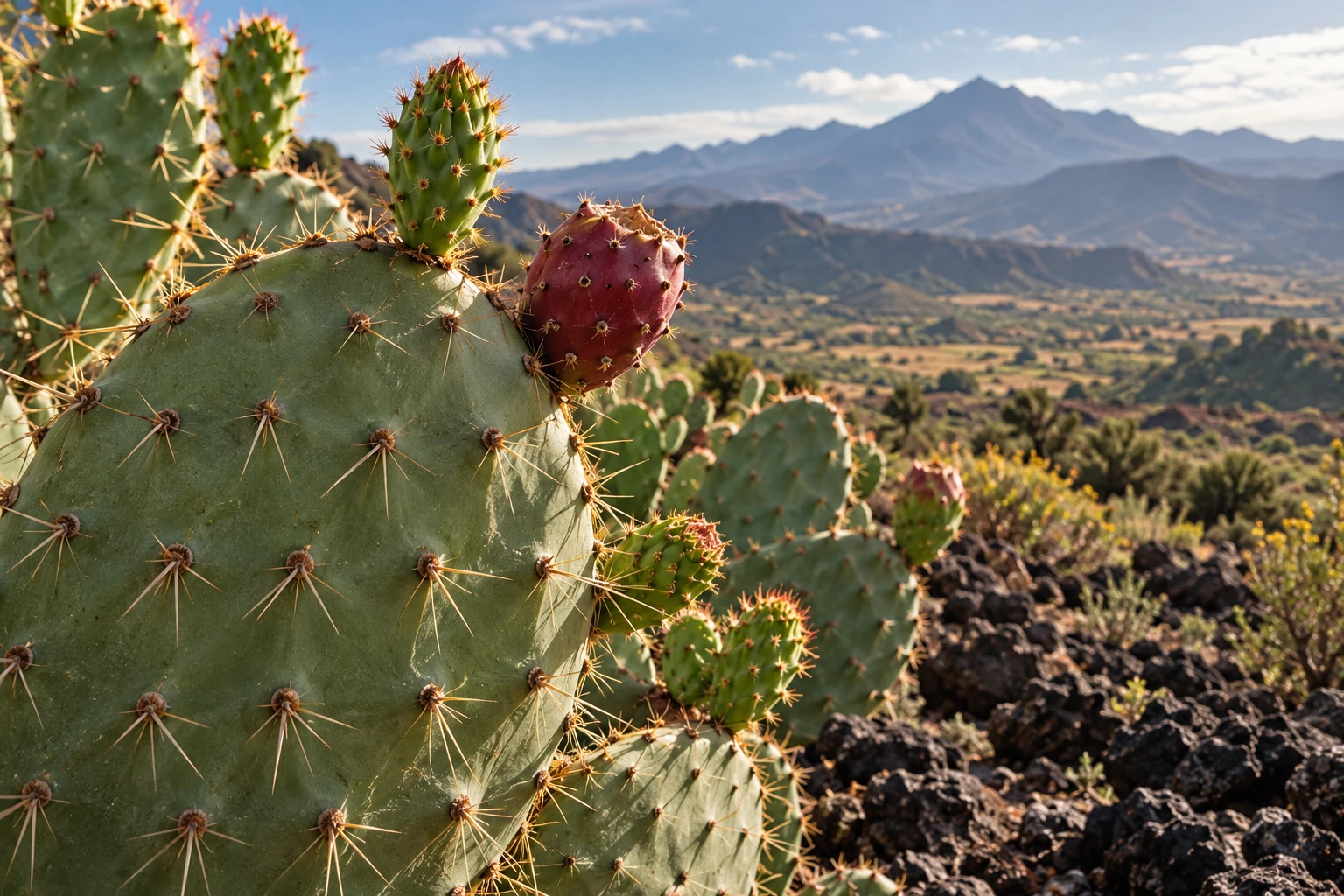
The Opuntia streptacantha behind our flagship capsules grows on our own farms in central Mexico, at approximately 2,500 meters—about 8,200 feet—above sea level.
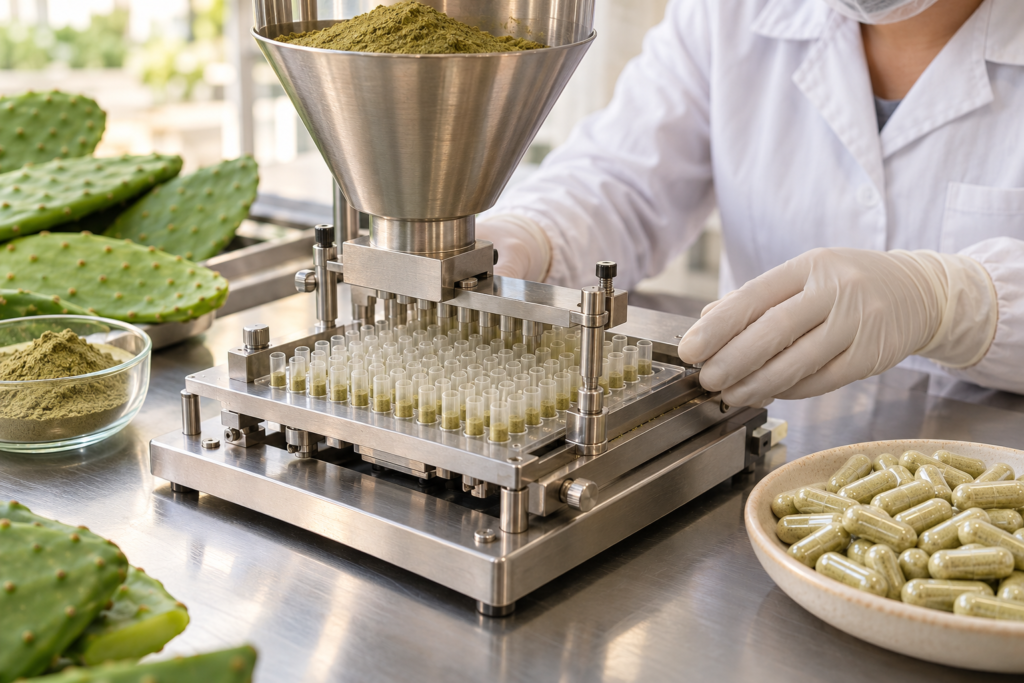
The pads develop their structure while the cactus is alive. After harvest, we freeze-dry them, mill the dried material into powder and fill our capsules.
We also offer Nopal Powder and Prickly Pear Drops, giving customers other ways to explore the Nopal and prickly pear family.
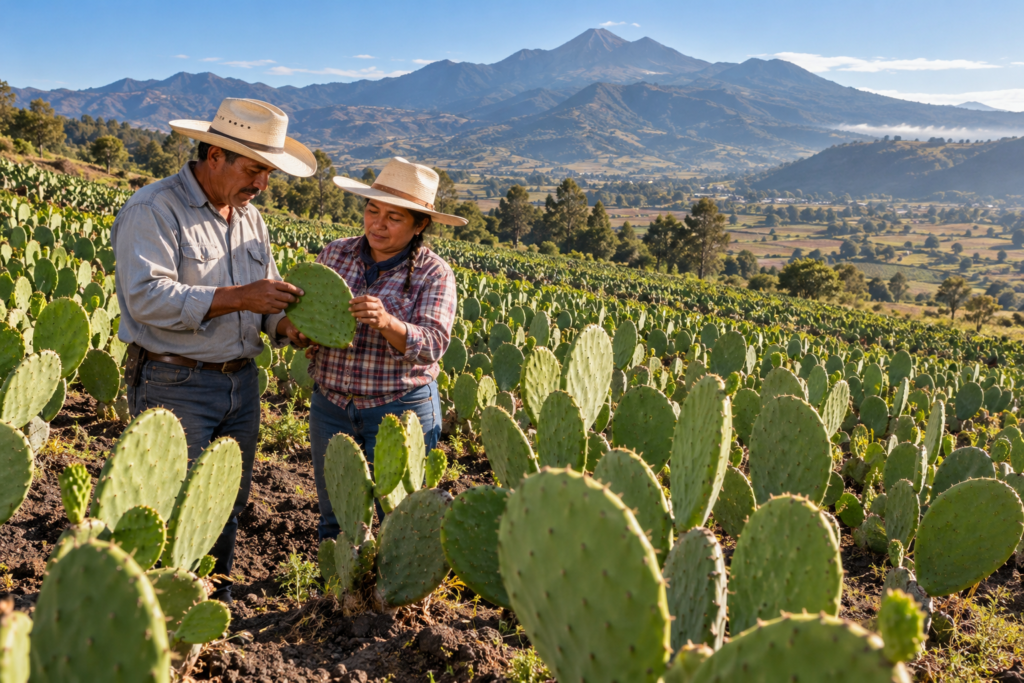 STAGE 1 OF 5
Grow
Nopal cactus grows on our farms.
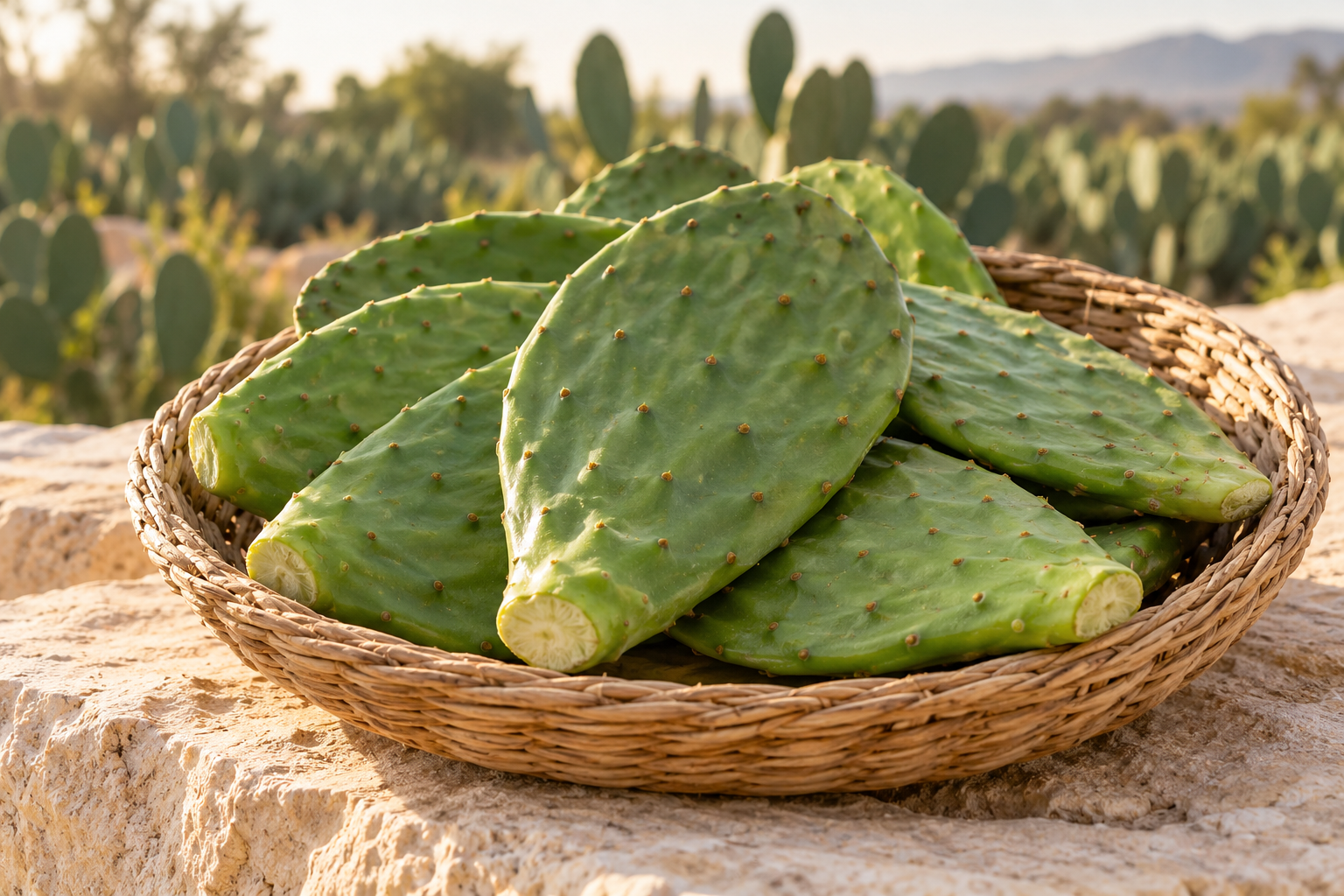 STAGE 2 OF 5
Harvest
The cactus pads are harvested and prepared.
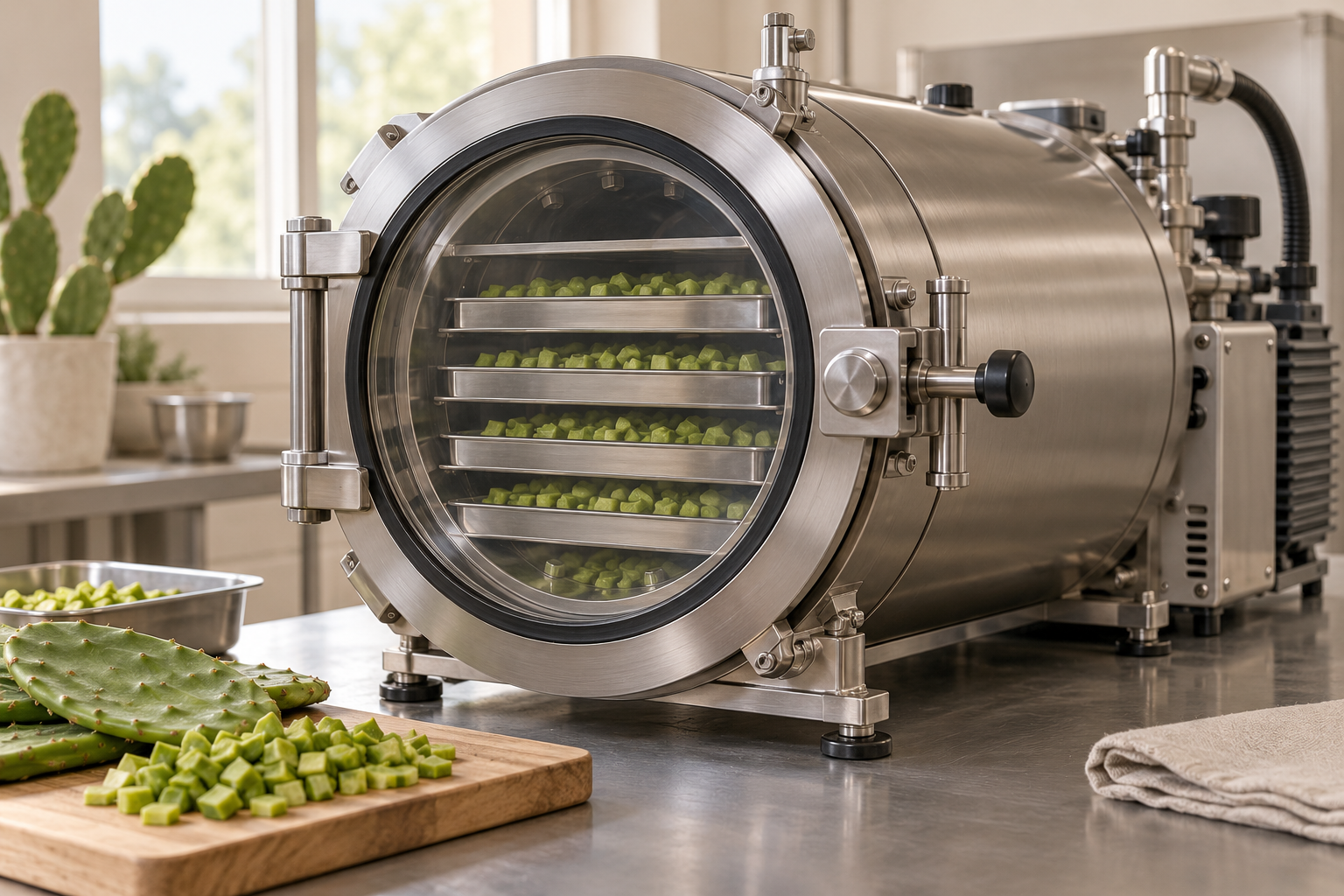 STAGE 3 OF 5
Freeze-dry
Moisture is removed from the prepared pads by freeze-drying.
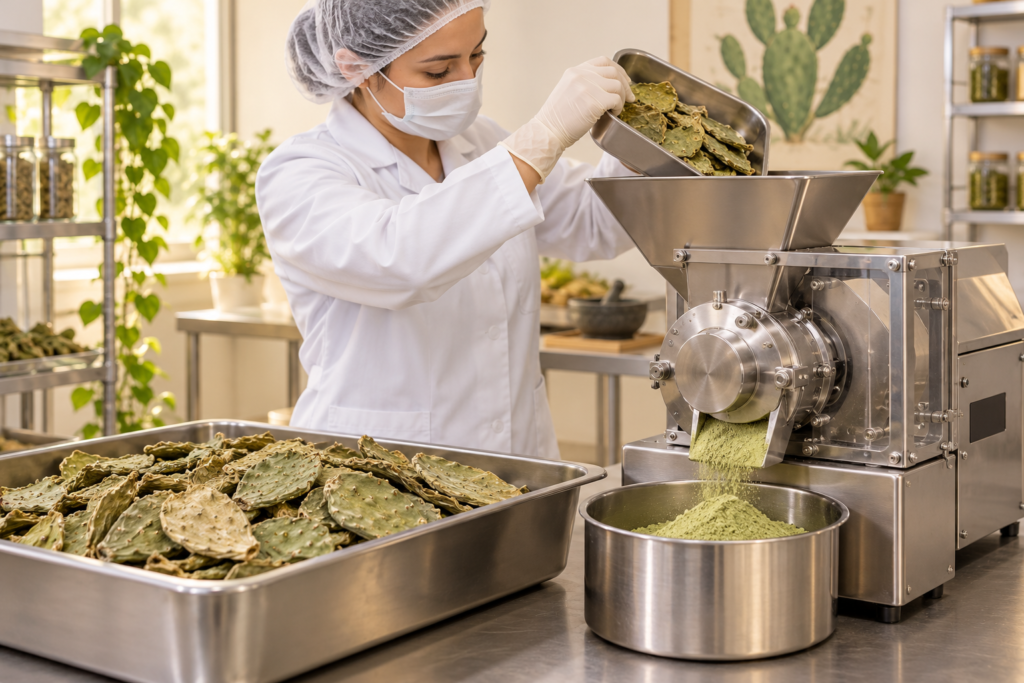 STAGE 4 OF 5
Mill
The dried pads are milled into powder.
 STAGE 5 OF 5
Fill capsules
The milled powder is filled into capsules.
Fiber Is Part of What Makes Nopal Remarkable
Fiber isn't simply a number printed on a nutrition label.
Inside a Nopal cactus, fibrous plant materials help create structure. Pectin contributes to the architecture of plant cell walls. Mucilage helps the cactus interact with and retain water.(3), (5), (6)
When we consume plant foods, those same complex carbohydrates enter an entirely different biological environment—our digestive system.
That's what makes Nopal fiber such an interesting subject.
The story connects plant structure, water management, digestion and nutrition.
And at Natural Home Cures, it connects to something else as well:
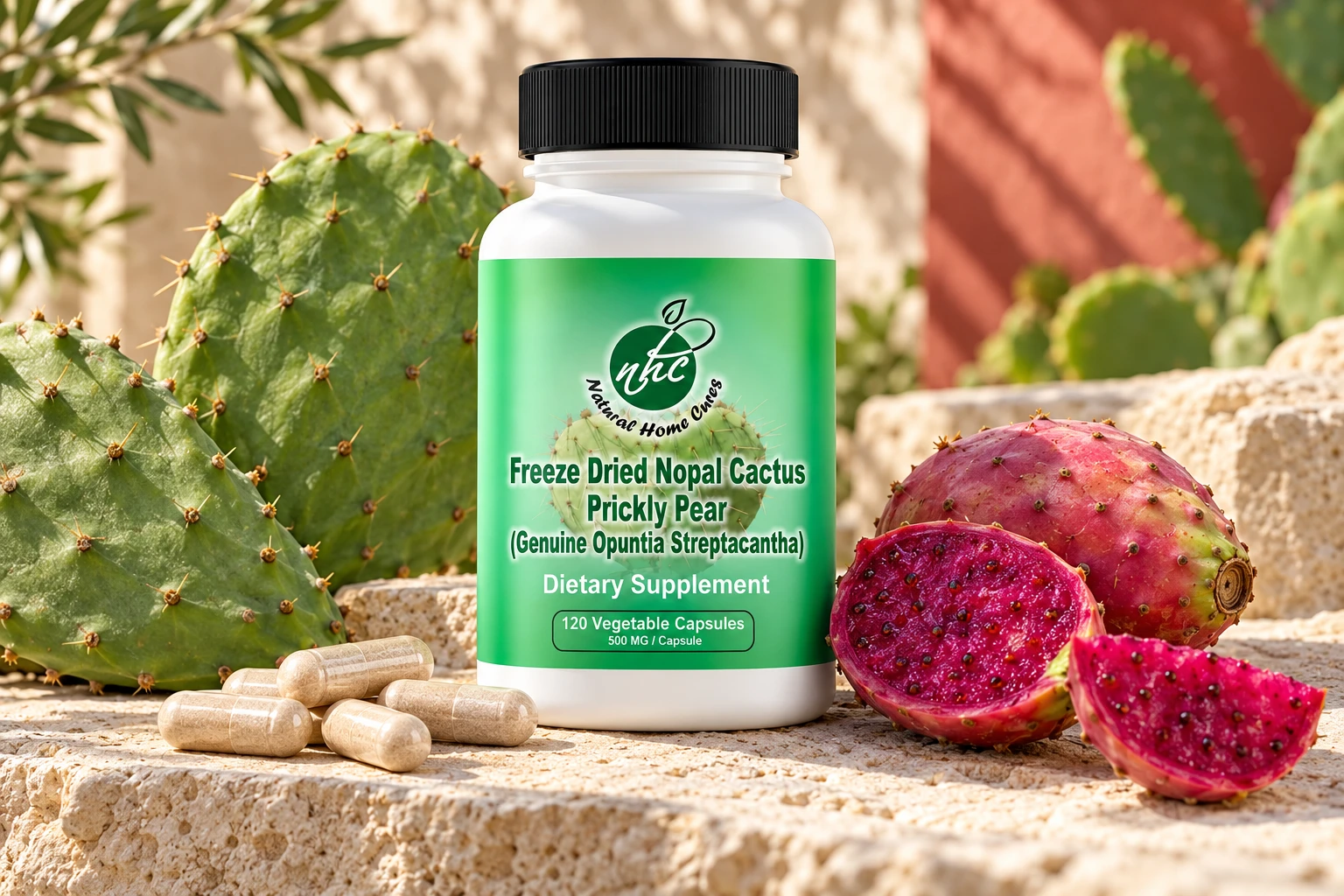
A living cactus growing on our farms that eventually becomes our Freeze-Dried Nopal Powder Capsules.
That's the Nopal story we're interested in preserving.
FROM CACTUS TO PRODUCT
Keep the botanical
in the story.
Freeze-dried Nopal cactus capsules.
Explore our Nopal →The research behind this articleSource References
- 01Nutrition referenceInstitute of Medicine. Dietary Reference Intakes for Energy, Carbohydrate, Fiber, Fat, Fatty Acids, Cholesterol, Protein, and Amino Acids. National Academies Press.View source
Full citation
Institute of Medicine. Dietary Reference Intakes for Energy, Carbohydrate, Fiber, Fat, Fatty Acids, Cholesterol, Protein, and Amino Acids. National Academies Press. - 02Research referenceDietary Fiber and Body Weight.View source
Full citation
Slavin JL. “Dietary Fiber and Body Weight.” Nutrition. 2005;21(3):411–418. - 03Research reviewCactus Stems (Opuntia spp.): A Review on Their Chemistry, Technology, and Uses.View source
Full citation
Stintzing FC, Carle R. “Cactus Stems (Opuntia spp.): A Review on Their Chemistry, Technology, and Uses.” Molecular Nutrition & Food Research. 2005;49(2):175–194. - 04Research referenceNopal Cactus (Opuntia ficus-indica) as a Source of Bioactive Compounds for Nutrition, Health and Disease.View source
Full citation
El-Mostafa K, El Kharrassi Y, Badreddine A, et al. “Nopal Cactus (Opuntia ficus-indica) as a Source of Bioactive Compounds for Nutrition, Health and Disease.” Molecules. 2014;19(9):14879–14901. - 05Research referenceExtraction and Characterization of Mucilage in Opuntia spp.View source
Full citation
Sepúlveda E, Sáenz C, Aliaga E, Aceituno C. “Extraction and Characterization of Mucilage in Opuntia spp.” Journal of Arid Environments. 2007;68(4):534–545. - 06Research referenceOpuntia spp. Mucilage's: A Functional Component With Industrial Perspectives.View source
Full citation
Sáenz C, Sepúlveda E, Matsuhiro B. “Opuntia spp. Mucilage's: A Functional Component With Industrial Perspectives.” Journal of Arid Environments. 2004;57(3):275–290. - 07Research referenceThe Role of Short-Chain Fatty Acids in the Interplay Between Diet, Gut Microbiota, and Host Energy Metabolism.View source
Full citation
den Besten G, van Eunen K, Groen AK, Venema K, Reijngoud DJ, Bakker BM. “The Role of Short-Chain Fatty Acids in the Interplay Between Diet, Gut Microbiota, and Host Energy Metabolism.” Journal of Lipid Research. 2013;54(9):2325–2340. - 08Research reviewViscosity as Related to Dietary Fiber: A Review.View source
Full citation
Dikeman CL, Fahey GC Jr. “Viscosity as Related to Dietary Fiber: A Review.” Critical Reviews in Food Science and Nutrition. 2006;46(8):649–663.