NATURAL HOME CURES · NOPAL SCIENCE
The Phytonutrients
of Nopal Cactus
Explore the living chemistry inside the cactus.
Explore the science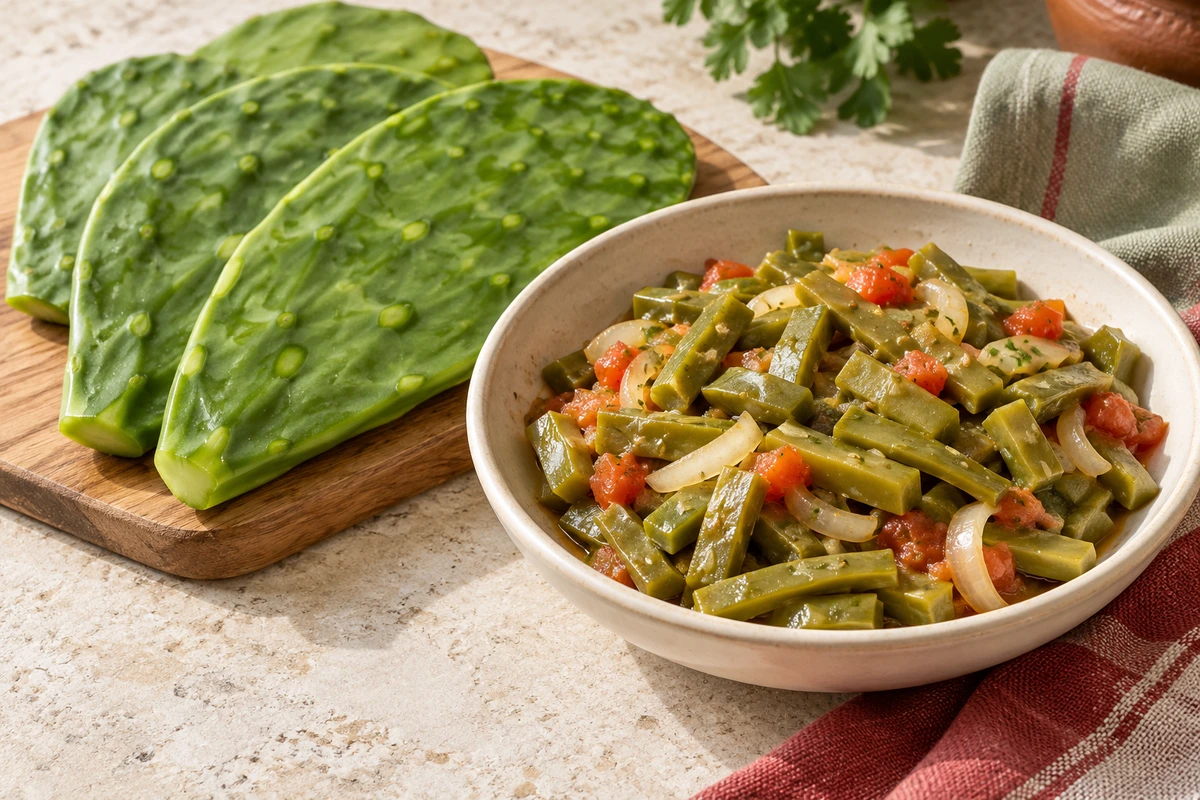
Plants contain an enormous world of natural chemistry.
A green cactus pad contains more than fiber and water. Researchers studying Opuntia have found a varied collection of compounds connected with the plant’s color, structure and responses to its environment. This guide brings those families together, then links you to the individual science articles.(1)(2)(3)
Plant Chemistry With a Purpose
Phyto means plant. Phytonutrients, also called phytochemicals, are naturally occurring plant compounds studied for their chemistry and biological roles. Unlike essential vitamins and minerals, they generally do not have established daily intake requirements.
For a cactus rooted in one place, chemistry is part of how it meets the world. Plant compounds contribute to color, defense and responses to sunlight and environmental stress. Researchers studying Opuntia—the genus that includes Nopal and prickly pear—have identified many such compounds in its pads, fruit and other tissues.(1)(2)(3)
Color
Pigments help create the colors we see in plant tissues.
Defense
Specialized compounds participate in the plant’s interactions with its surroundings.
Response
The plant’s chemistry changes with growth and environmental conditions.
A Map of Nopal’s Compound Families
These groups are related, but they are not interchangeable. Flavonoids and phenolic acids sit within the wider polyphenol picture; carotenoids, betalains and phytosterols add other kinds of chemistry. The examples below come from research across Opuntia materials, rather than one identical profile for every cactus or product.(1)(3)(6)
THE BROADER PHENOLIC PICTURE
Polyphenols
A varied group connected with plant growth, defense and environmental responses.
SUNLIGHT & PIGMENTS
Carotenoids
Beta-carotene, lutein and related compounds.
Explore carotenoids →THE COLORS OF PRICKLY PEAR
Betalains
Red-violet and yellow-orange pigment groups.
Explore betalains →PLANT CELL MEMBRANES
Phytosterols
Plant sterols with structural roles of their own.
Explore phytosterols →Meet the Flavonoids
Opuntia research describes numerous flavonoids, including isorhamnetin, quercetin, kaempferol and related glycosides. Glycoside simply means that a molecule has a sugar component attached. These attachments help explain why one familiar compound name can lead to a whole set of related forms.(1)(3)(4)
Phenolic Acids: Familiar Names, Related Chemistry
Carotenoids: Part of the Sunlight Story
Carotenoids participate in photosynthesis and help plants manage energy from sunlight. Researchers studying cactus pads have reported beta-carotene, lutein and beta-cryptoxanthin among these pigments.(1)(2)
Some carotenoids, including beta-carotene, can also serve as provitamin A compounds in human nutrition. Others, such as lutein, cannot be converted into vitamin A. Sharing a pigment family does not mean sharing every biological role.(9)
A PROVITAMIN A CAROTENOID
Beta-carotene
A plant pigment the body can use as starting material for vitamin A.
A DIFFERENT CAROTENOID
Lutein
A pigment with its own roles, rather than a source of vitamin A.
Betalains: Color You Can See
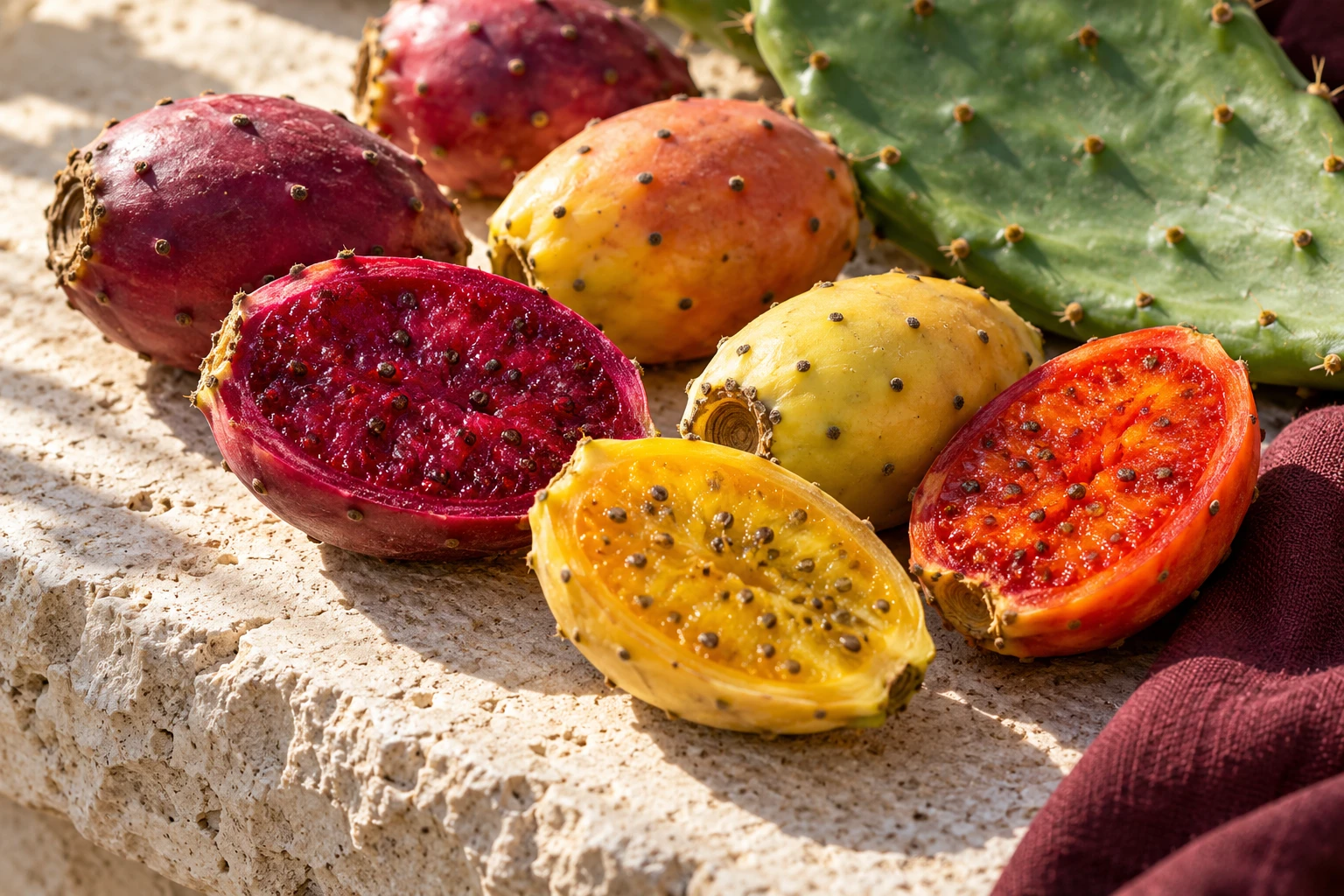
The bright colors of prickly pear fruit are one of the easiest ways to see phytochemistry at work. Betalains help create vivid reds, purples, yellows and oranges, particularly in fruits and other pigmented tissues.(5)
Betacyanins
Generally red to violet.
Betaxanthins
Generally yellow to orange.(5)
Phytosterols: Structure Inside the Plant
Phytosterols are sterol compounds made by plants. Their structures have similarities to cholesterol, but they are plant molecules with their own roles. Plant sterols contribute to cell membranes and other aspects of normal plant biology.(6)
Their identification in Opuntia research adds another dimension to the cactus: alongside the compounds connected with color and environmental responses are molecules involved in the organization of living cells.(1)(6)
Which Cactus? Which Part? Which Preparation?
Nopal does not mean one chemically identical material. Species, cultivar, maturity, geography, growing conditions and plant tissue can all affect a phytochemical profile. A result from fruit, for example, does not automatically describe the green pads.(1)(3)
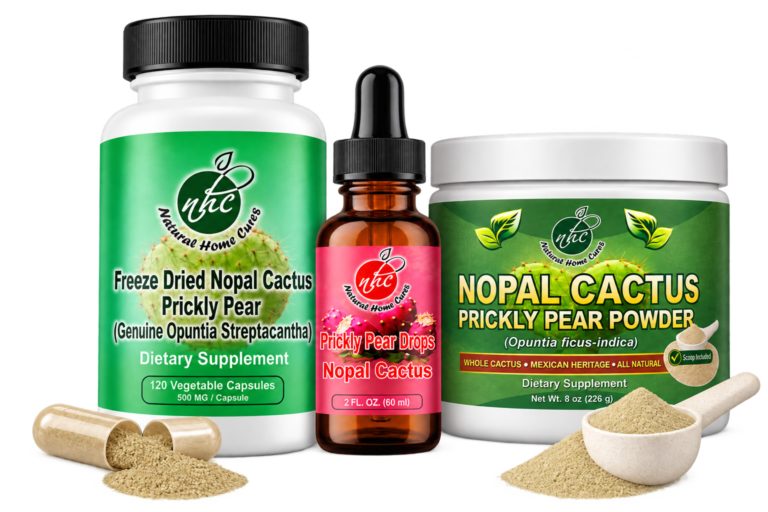
Flagship capsules
Our capsules contain freeze-dried Opuntia streptacantha green-pad powder: 500 mg per capsule.
Loose Nopal powder
Our loose powder uses Opuntia ficus-indica green pads. It is not freeze-dried.
Prickly Pear Drops
Our drops use prickly pear fruit concentrate in vegetable glycerin. Fruit and green pads have different compositions.
These are three different preparations. Research on one should not be presented as a measured composition or demonstrated effect of the others.
Reading the Research With the Plant in Mind
CHEMISTRY IN THE LABORATORY
What does “antioxidant” tell us?
Many plant compounds interact with reactive molecules in laboratory systems. That chemistry helps explain the scientific interest, but a laboratory result does not by itself establish a benefit in people or the effects of a finished Nopal product.(1)(5)
THE GROWING ENVIRONMENT
What can altitude research show?
A study of ‘Dellahia’ Opuntia ficus-indica fruit juice from northern Morocco found differences between locations: some measured compounds were more abundant at higher sites, others at lower sites.(8)
It studied fruit juice from a different species at sites below 800 meters. It does not establish the composition of our high-altitude cactus pads or finished capsules.
The useful questions are specific: which species was studied, which plant part was used, how was it prepared, and what did the researchers actually measure? Those details make the science more informative.
From a Living Cactus to Our Capsules
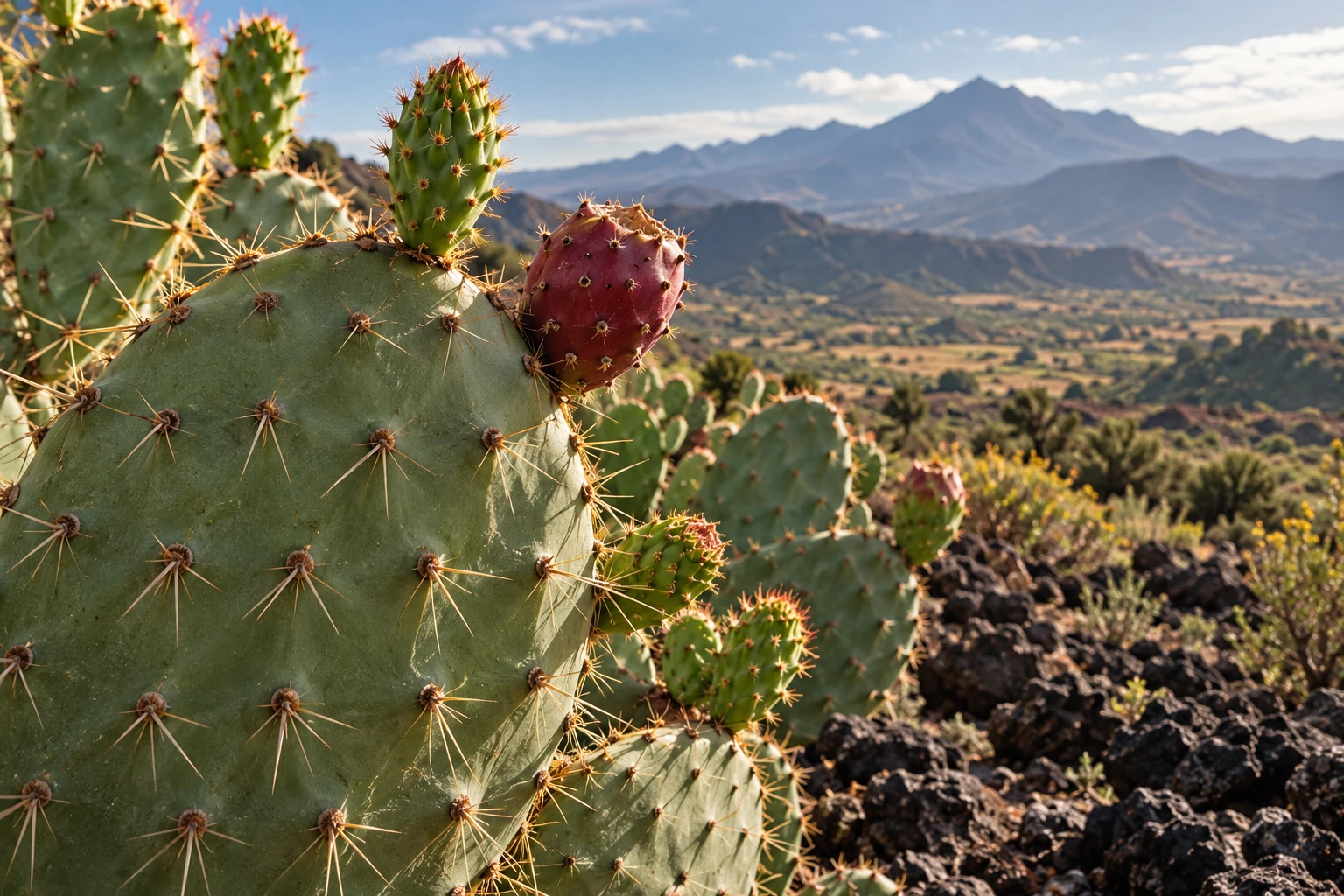
Our flagship Nopal begins on our own farms in the mountains of Mexico. At approximately 2,500 meters—about 8,200 feet—the cactus grows in volcanic soil and a mild, semi-tropical climate.(7)
Sunlight, water, available mineral nutrients and climate are part of the plant’s growing environment. Owning our farms connects us with the cactus while it is alive, through harvest and into preparation.
After harvest, the prepared green pads are frozen and dried under reduced pressure, then milled and filled into vegetable capsules. This explains the process; it does not establish the amount or retention of any particular phytochemical. Those questions require appropriate analysis, including storage measurements when shelf-life retention is claimed.
- Grow
- Harvest
- Freeze-dry
- Mill
- Capsule
Studying these compound families helps explain the living plant. Keeping constituents together in green-pad powder does not, by itself, establish that they work together to produce a particular benefit in people.
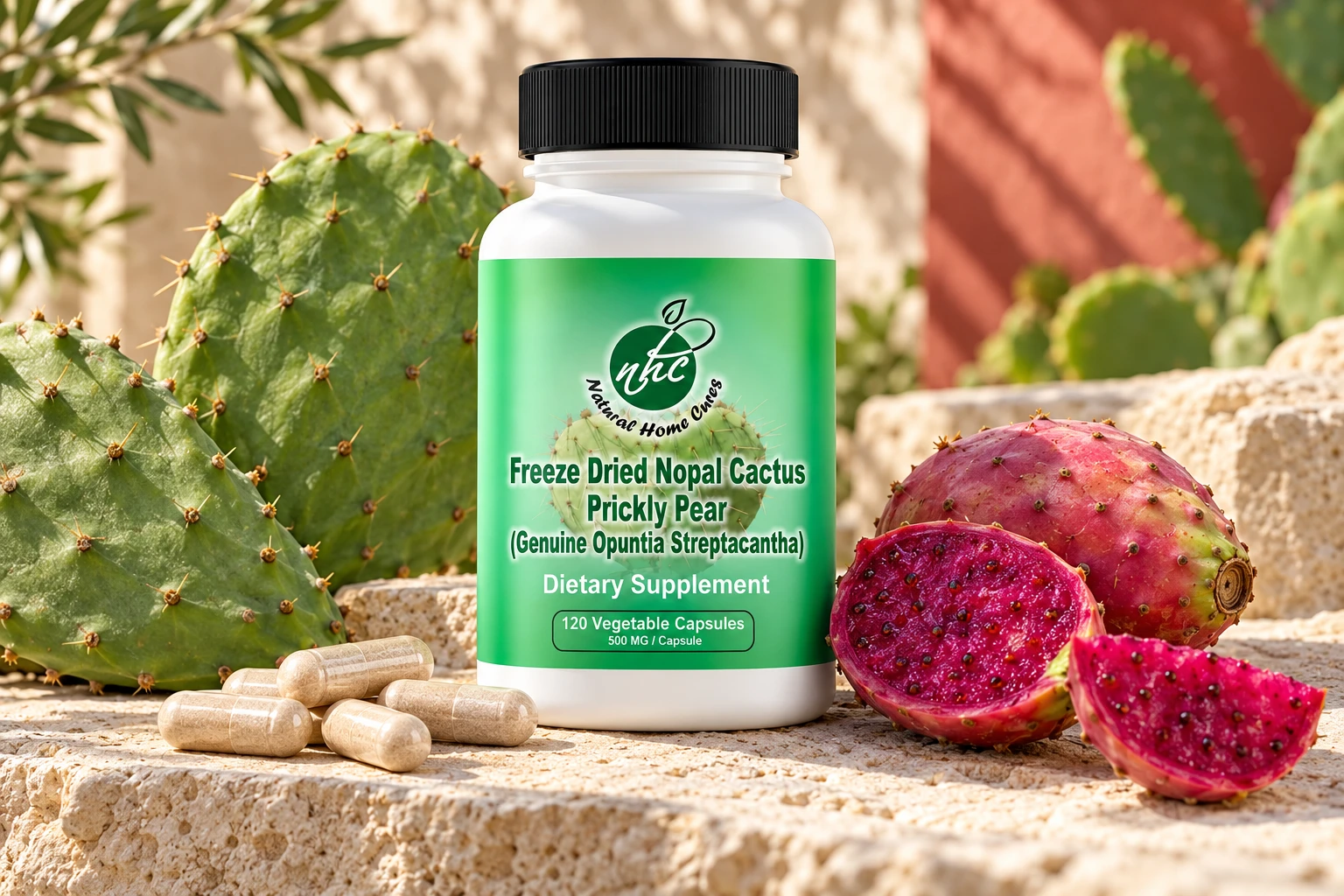
FROM CACTUS TO PRODUCT
Keep the botanical
in the story.
Freeze-dried green-pad powder, 500 mg per capsule. Individual phytochemical amounts are not established by this overview.
Explore our Nopal →The research behind this articleSource References
- 01Review: cactus chemistry and biological researchNopal Cactus (Opuntia ficus-indica) as a Source of Bioactive Compounds for Nutrition, Health and Disease.View source
Full citation
El-Mostafa K, El Kharrassi Y, Badreddine A, et al. “Nopal Cactus (Opuntia ficus-indica) as a Source of Bioactive Compounds for Nutrition, Health and Disease.” Molecules. 2014;19(9):14879–14901. - 02FAO reference book: cactus cultivation and useFood and Agriculture Organization of the United Nations. Crop Ecology, Cultivation and Uses of Cactus Pear. 2017.View source
Full citation
Food and Agriculture Organization of the United Nations. Crop Ecology, Cultivation and Uses of Cactus Pear. 2017. - 03Review: cactus-stem chemistryCactus Stems (Opuntia spp.): A Review on Their Chemistry, Technology, and Uses.View source
Full citation
Stintzing FC, Carle R. “Cactus Stems (Opuntia spp.): A Review on Their Chemistry, Technology, and Uses.” Molecular Nutrition & Food Research. 2005;49(2):175–194. - 04Laboratory composition study of cactus padsChemical Composition and Phenolic Compounds Profile of Cladodes from Opuntia spp. Cultivars with Different Domestication Gradient.View source
Full citation
Astello-García MG, Cervantes I, Nair V, et al. “Chemical Composition and Phenolic Compounds Profile of Cladodes from Opuntia spp. Cultivars with Different Domestication Gradient.” Journal of Food Composition and Analysis. 2015;43:119–130. - 05Review: plant pigments and food chemistryFunctional Properties of Anthocyanins and Betalains in Plants, Food, and in Human Nutrition.View source
Full citation
Stintzing FC, Carle R. “Functional Properties of Anthocyanins and Betalains in Plants, Food, and in Human Nutrition.” Trends in Food Science & Technology. 2004;15(1):19–38. - 06Review: cactus-pad compoundsStructure–Function Relationships and Health-Promoting Properties of the Main Nutraceuticals of the Cactus Pear (Opuntia spp.) Cladodes: A Review.View source
Full citation
Koufan M, Choukrane B, Mazri MA. “Structure–Function Relationships and Health-Promoting Properties of the Main Nutraceuticals of the Cactus Pear (Opuntia spp.) Cladodes: A Review.” Molecules. 2024;29(19):4732. - 07Company information — sourcing and preparationFrom Nopal Plant to Bottle: The Complete Journey.View source
Full citation
Natural Home Cures. From Nopal Plant to Bottle: The Complete Journey. Company description of sourcing and preparation; not independent research, a laboratory assay or a clinical trial. - 08Observational fruit-juice composition studyEffect of Altitude on Polyphenolic Profile of ‘Dellahia’ Prickly Pear (Opuntia ficus-indica) Juice from Northern Morocco.View source
Full citation
Koalaga DY, Messaoudi Z, Ibriz M, Ait Haddou L. “Effect of Altitude on Polyphenolic Profile of ‘Dellahia’ Prickly Pear (Opuntia ficus-indica) Juice from Northern Morocco.” Journal of Biochemistry International. 2021;8(1):93–103. - 09NIH nutrient referenceVitamin A and Carotenoids: Health Professional Fact Sheet.View source
Full citation
NIH Office of Dietary Supplements. Vitamin A and Carotenoids: Health Professional Fact Sheet. Explains provitamin A and non-provitamin A carotenoids; does not measure a Nopal product.