NATURAL HOME CURES · NOPAL SCIENCE
Vitamin E
& Nopal
A family of fat-soluble compounds, cell membranes and the distinct chemistry of prickly pear seeds.
Explore the science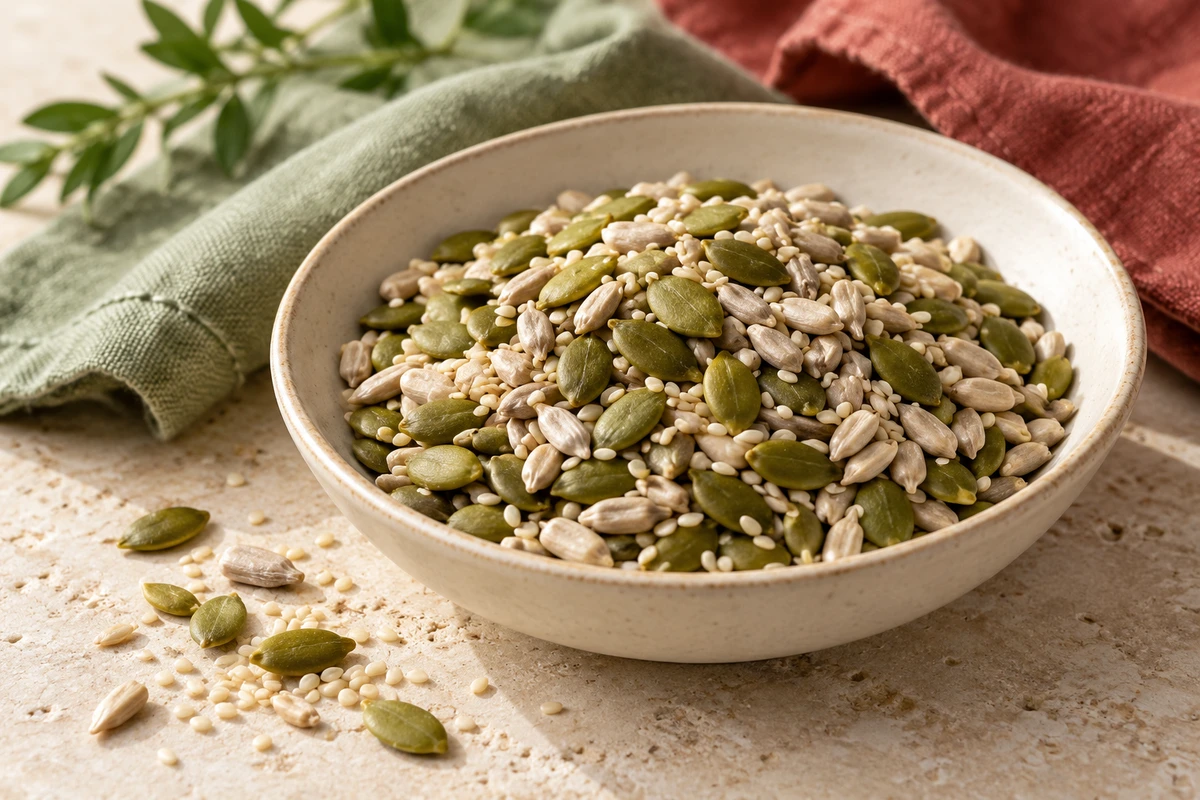
Vitamin E is an essential nutrient best known for one particularly important role: helping protect our cells from oxidative damage.(1)
But vitamin E isn’t actually one single substance.
It’s the name given to a family of eight naturally occurring compounds—four tocopherols and four tocotrienols.(1), (2)
Of these, alpha-tocopherol is the form the human body preferentially maintains and uses to meet vitamin E requirements.(1)
Vitamin E is also fat-soluble, which means the body handles it differently from water-soluble vitamins.
And vitamin E has a natural connection with Nopal cactus and prickly pear.
What Does Vitamin E Do?
AROUND EACH CELL
Protecting membrane fats
Vitamin E acts within a wider antioxidant network that helps protect fats from oxidation.
Every cell in our body is surrounded by a membrane.
These membranes contain fats that can be vulnerable to damage from reactive molecules produced during normal metabolism and environmental exposure.
Vitamin E acts as an antioxidant, helping protect these fats from oxidation.(1), (2)
Think of the cell membrane almost like a protective outer wall.
Vitamin E becomes one part of the defense system helping protect that wall.
It doesn’t work alone.
Our bodies use a network of antioxidants, enzymes and other protective systems that work together.
Vitamin E is one member of that much larger team.
Why Being Fat-Soluble Matters
Some vitamins dissolve in water.
Vitamin E dissolves in fat.
That affects how our bodies absorb, transport and store it.(1)
Vitamin E is absorbed along with dietary fat in the intestine and then carried through the bloodstream in packages of fat and protein called lipoproteins.(1), (3)
That’s one reason vitamin E is naturally associated with foods containing healthy fats.
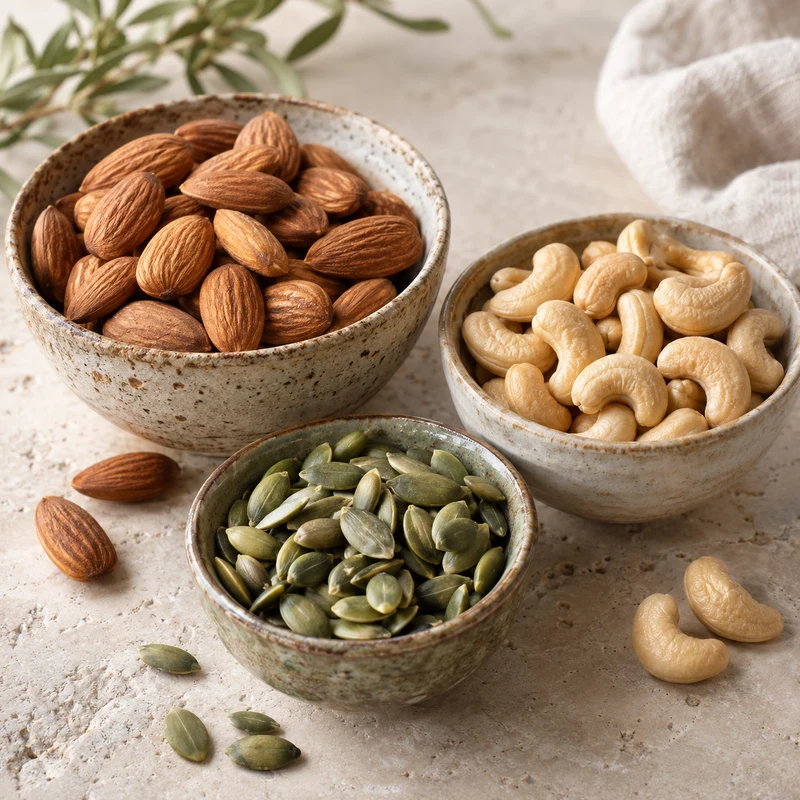
It also explains why nuts, seeds and vegetable oils are among the richest dietary sources.
Where Does Vitamin E Come From?
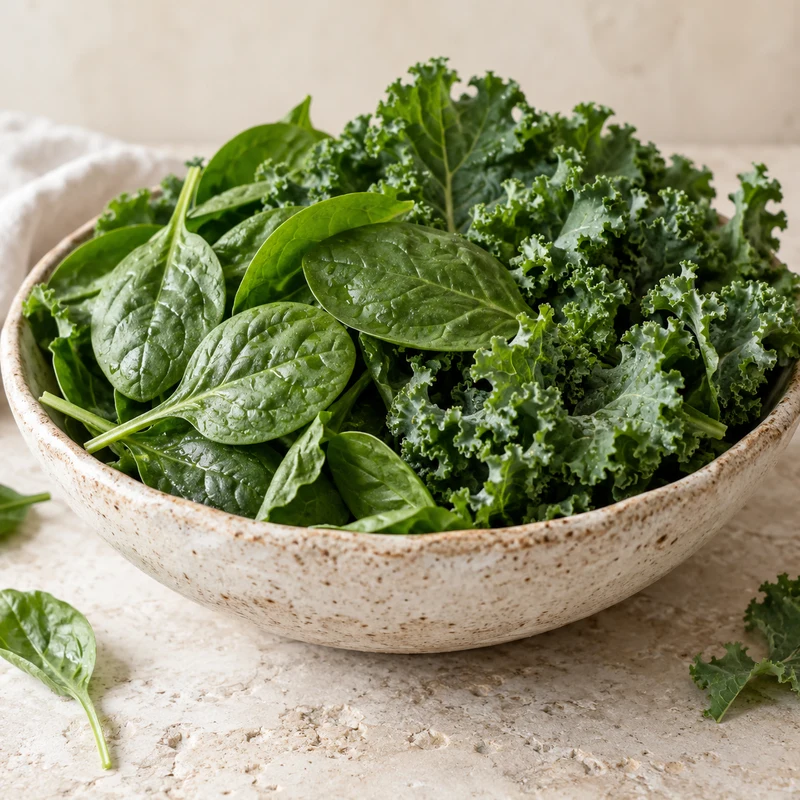
Vitamin E occurs naturally in foods such as:
- Almonds
- Sunflower seeds
- Hazelnuts
- Peanuts
- Wheat germ
- Avocado
- Spinach and other green vegetables
- Vegetable oils
- Nopal cactus
- Prickly pear fruit and seeds
Scientific studies of Nopal and prickly pear materials have identified tocopherols—the family of compounds that includes vitamin E—in different parts of the plant.(4), (5)
Vitamin E in Nopal and Prickly Pear
DISTINCT PLANT MATERIALS
Pads · Fruit · Seed oil
Each material has its own composition. Seed-oil findings describe the oil that researchers studied.
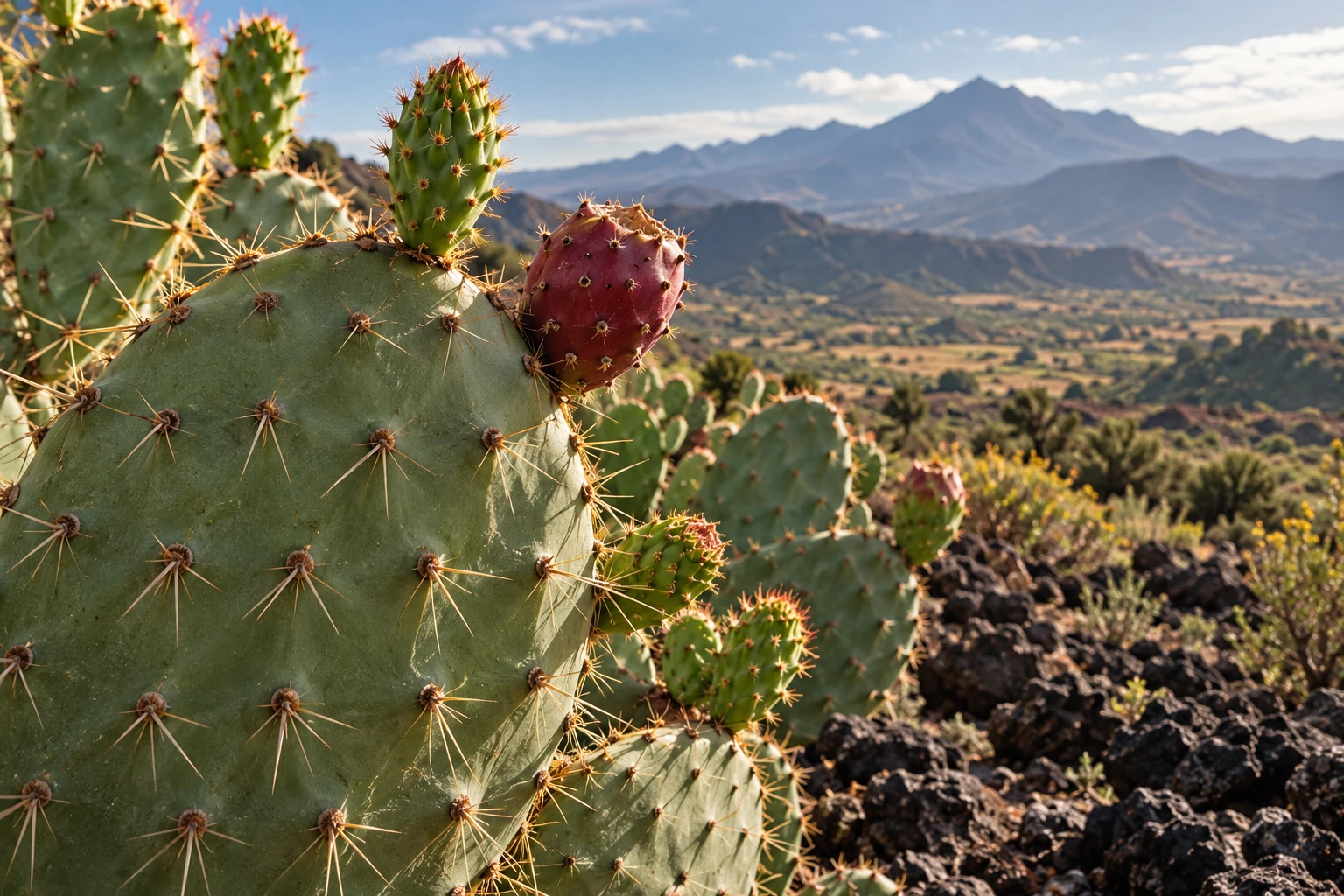
Prickly pear gives us an especially interesting vitamin E story because the cactus has several very different parts.
There are the familiar green pads.
There is the colorful fruit.
And inside that fruit are the seeds.
Researchers examining prickly pear seed oil have identified tocopherols among its naturally occurring compounds.(5), (6)
That means the vitamin E story isn’t limited to what we see in the green cactus pad.
Different parts of prickly pear can have their own nutritional characteristics.
Pads, fruit and extracted seed oil are distinct materials. Each needs its own analysis to establish a nutrient amount per serving.
This is another reason looking at the whole plant can be so fascinating.
The Antioxidant Network
THE ANTIOXIDANT NETWORK
Vitamin E ↔ Vitamin C
Under certain conditions, vitamin C can help regenerate oxidized vitamin E.
Vitamin E doesn’t operate by itself.
One particularly interesting relationship exists between vitamin E and vitamin C.
Vitamin E can react with free radicals while protecting fats within cell membranes.
Vitamin C participates in antioxidant chemistry in water-based environments and can help regenerate oxidized vitamin E under certain conditions.(2), (7)
This gives us a useful picture of how nutrition often works.
Nutrients don’t simply perform isolated jobs.
They interact.
And plants such as Nopal contain numerous naturally occurring compounds existing together rather than one ingredient at a time.
Why Prickly Pear Seeds Are Interesting
INSIDE THE FRUIT
Seeds have a story, too
Prickly pear seed oil has been studied for fatty acids, sterols, phenolic compounds and tocopherols.
Most people probably eat a prickly pear without giving much thought to the tiny seeds inside.
Scientists see something different.
Those seeds contain oil.
And prickly pear seed oil has been studied for its fatty acids, sterols, phenolic compounds and tocopherols.(5), (6)
So even within one cactus fruit, different components can tell completely different nutritional stories.
The colorful flesh gives us one collection of compounds.
The seeds give us another.
The green pads give us still another.
That’s a remarkable amount of natural chemistry packed into one plant.
From Our Farms to the Nopal Family
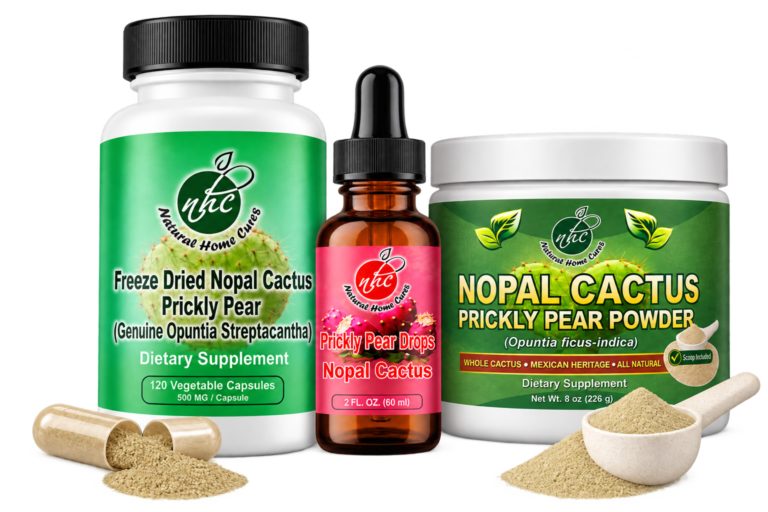
At Natural Home Cures, our flagship Freeze-Dried Nopal Powder Capsules begin with Nopal cactus grown on our own farms. Our relationship with the cactus starts while it is still growing.
After harvest, we freeze-dry the Nopal, mill it into powder and prepare it for our capsules.
Our Nopal family also includes Nopal Powder and Prickly Pear Drops, giving customers several ways to explore Nopal cactus and prickly pear.
More Than Vitamin E
Vitamin E is interesting because of its antioxidant role.
Tocopherols are interesting because they’re naturally present in different plant foods.
Prickly pear seeds are interesting because they contain an oil with its own distinctive collection of compounds.
But none of these tells the whole Nopal story.
Nopal cactus and prickly pear contain a broad mixture of naturally occurring nutrients and plant compounds.(4), (5)
Vitamin E is another piece.
And the more pieces we examine, the more we begin to understand just how much can be hidden inside this deceptively simple cactus.
That’s the story behind Natural Home Cures Nopal cactus and prickly pear—from the plants we grow to the Nopal products we offer our customers.
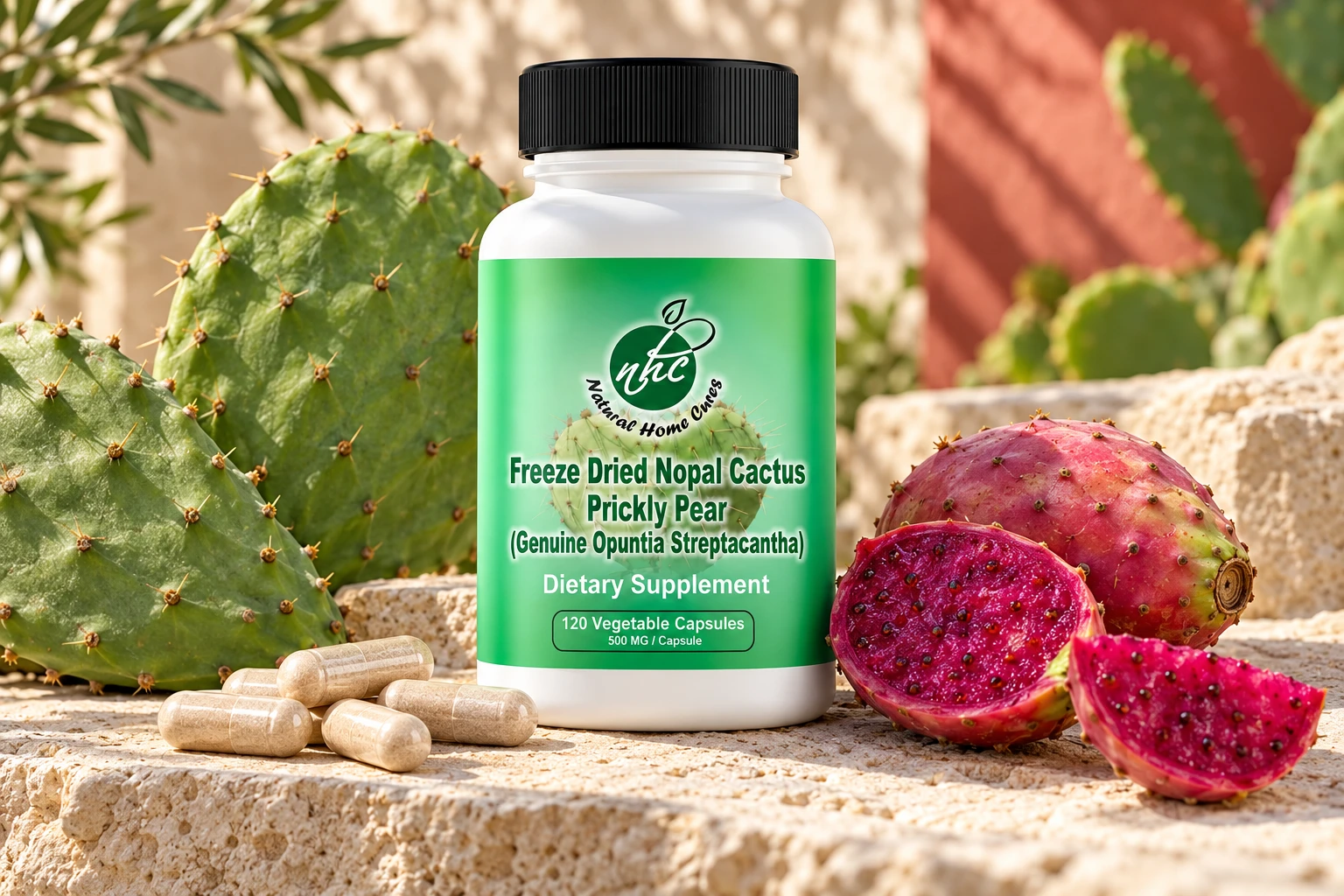
FROM CACTUS TO PRODUCT
Keep the botanical
in the story.
Freeze-dried Nopal cactus capsules.
Explore our Nopal →The research behind this articleSource References
- 01Nutrition referenceVitamin E — Fact Sheet for Health Professionals.View source
Full citation
National Institutes of Health, Office of Dietary Supplements. “Vitamin E — Fact Sheet for Health Professionals.” - 02Research referenceVitamin E, Antioxidant and Nothing More.View source
Full citation
Traber MG, Atkinson J. “Vitamin E, Antioxidant and Nothing More.” Free Radical Biology and Medicine. 2007;43(1):4–15. - 03Research referenceVitamin E Bioavailability: Mechanisms of Intestinal Absorption in the Spotlight.View source
Full citation
Reboul E. “Vitamin E Bioavailability: Mechanisms of Intestinal Absorption in the Spotlight.” Antioxidants. 2017;6(4):95. - 04Research referenceNopal Cactus (Opuntia ficus-indica) as a Source of Bioactive Compounds for Nutrition, Health and Disease.View source
Full citation
El-Mostafa K, El Kharrassi Y, Badreddine A, et al. “Nopal Cactus (Opuntia ficus-indica) as a Source of Bioactive Compounds for Nutrition, Health and Disease.” Molecules. 2014;19(9):14879–14901. - 05Research referencePhytochemical and Nutritional Significance of Cactus Pear.View source
Full citation
Stintzing FC, Schieber A, Carle R. “Phytochemical and Nutritional Significance of Cactus Pear.” European Food Research and Technology. 2001;212:396–407. - 06Research referenceOil Cactus Pear (Opuntia ficus-indica L.).View source
Full citation
Ramadan MF, Mörsel JT. “Oil Cactus Pear (Opuntia ficus-indica L.).” Food Chemistry. 2003;82(3):339–345. - 07Research referenceDirect Observation of a Free Radical Interaction Between Vitamin E and Vitamin C.View source
Full citation
Packer JE, Slater TF, Willson RL. “Direct Observation of a Free Radical Interaction Between Vitamin E and Vitamin C.” Nature. 1979;278:737–738.