NATURAL HOME CURES · NOPAL SCIENCE
Sodium
& Nopal
Beyond the salt shaker: sodium, electrical signals and the balance of water in living systems.
Explore the science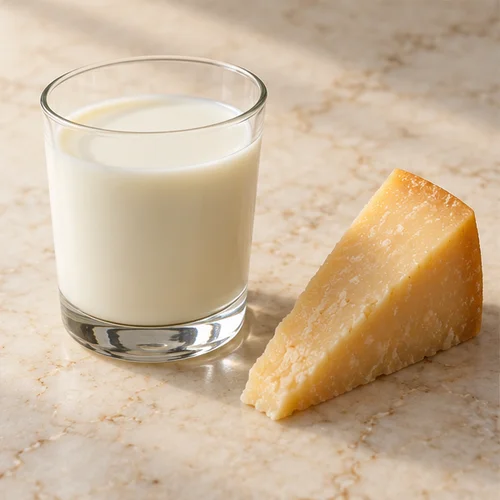
Sodium has a complicated reputation.
Most of us hear the word sodium and immediately think about salt, but sodium itself is an essential mineral and one of the body’s major electrolytes.(1)
Our bodies need sodium for normal nerve signaling, muscle function and fluid balance.(1), (2) The important part is balance: we need sodium, but modern diets can also provide considerably more than we require.
Sodium also occurs naturally in Nopal cactus and prickly pear.
Sodium and Salt Aren’t Exactly the Same Thing
SODIUM & SALT
About 40% sodium
By weight, ordinary table salt is approximately 40% sodium and 60% chloride. A sodium amount on a label differs from the amount of salt.
We often use the words sodium and salt as though they mean the same thing, but there’s an important difference.
Table salt is sodium chloride. It’s made from sodium and chloride chemically joined together.
By weight, ordinary table salt is about 40% sodium and 60% chloride.(1)
So when a food label lists sodium, it isn’t telling you how many milligrams of salt are present. It’s telling you the amount of the sodium portion.
That distinction becomes useful when we’re trying to understand what sodium actually does inside the body.
What Does Sodium Do?
an essential
electrolyte
Sodium is found primarily in the fluid outside our cells.(2), (3)
Our bodies carefully control how much sodium and water are present in those fluids because the two are closely connected.
Where sodium goes, water often follows.
This relationship helps the body maintain normal fluid volume and contributes to the balance between the fluids inside and outside our cells.(2), (3)
The kidneys play a major role in maintaining that balance by adjusting how much sodium and water the body retains or eliminates.
Sodium Helps Nerves Communicate
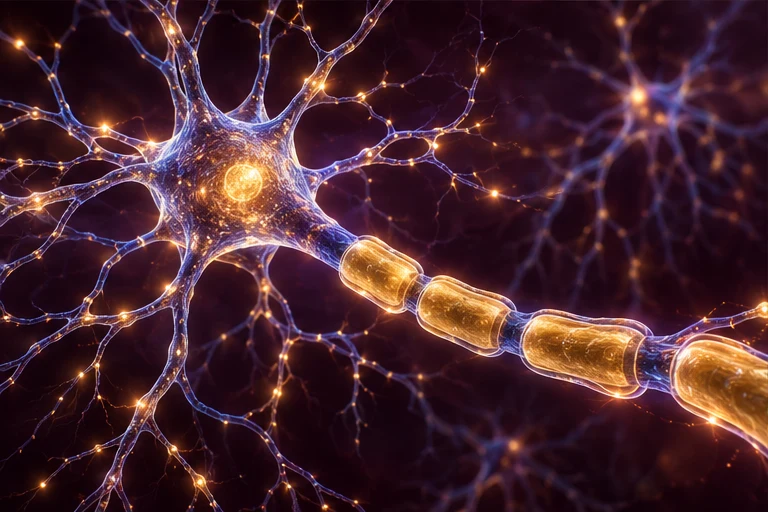
Every time you move a finger, feel the temperature of something or hear a sound, electrical signals are moving through your nervous system.
Sodium is one of the minerals that makes those signals possible.(2), (3)
When a nerve cell fires, tiny channels in its membrane open. Sodium rapidly moves across the membrane, helping create an electrical change called an action potential.
A moment later, other ions—including potassium—help restore the cell’s electrical state.
This can happen in milliseconds.
So sodium isn’t merely something sprinkled onto food. It’s part of the electrical chemistry that allows our nervous system to function.
Sodium and Potassium: Two Sides of a Cellular System
ACROSS THE CELL MEMBRANE
Sodium out. Potassium in.
The sodium-potassium pump uses cellular energy to maintain different ion concentrations inside and outside cells.
Sodium and potassium have a particularly interesting relationship.
Sodium is concentrated mainly outside cells, while potassium is concentrated mainly inside cells.(2), (3)
The body maintains that difference using a microscopic protein called the sodium-potassium pump.
This pump continually moves sodium out of cells and potassium into them, using cellular energy to maintain the concentration difference.(3)
That gradient becomes essential for normal nerve and muscle function.
Two familiar minerals, separated by a cell membrane, help create part of the electrical foundation of life.
Sodium and Muscles
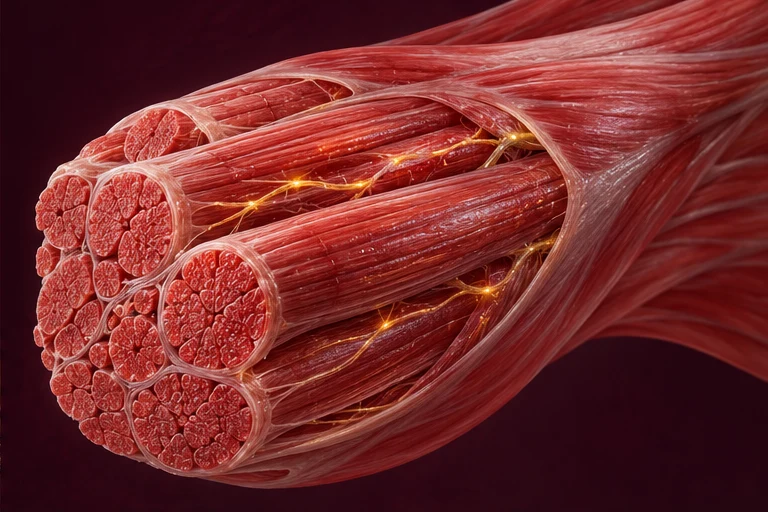
Muscle cells also depend on electrical signals.
Before a skeletal muscle contracts, an electrical signal travels along its membrane. Sodium movement helps generate and propagate that signal.(2), (3)
Other minerals, particularly calcium and potassium, then participate in the processes involved in contraction and relaxation.
Once again, no single mineral is doing everything.
Sodium works as part of a coordinated system.
Where Does Sodium Come From?
Sodium occurs naturally in many foods, but much of the sodium in modern diets comes from salt and sodium compounds added during food processing.(1)
Common sources include:
- Breads and baked products
- Processed meats
- Soups
- Cheese
- Sauces and condiments
- Snack foods
- Restaurant and prepared foods
- Naturally occurring sodium in vegetables and other foods
- Nopal cactus and prickly pear
Sodium in Nopal Cactus
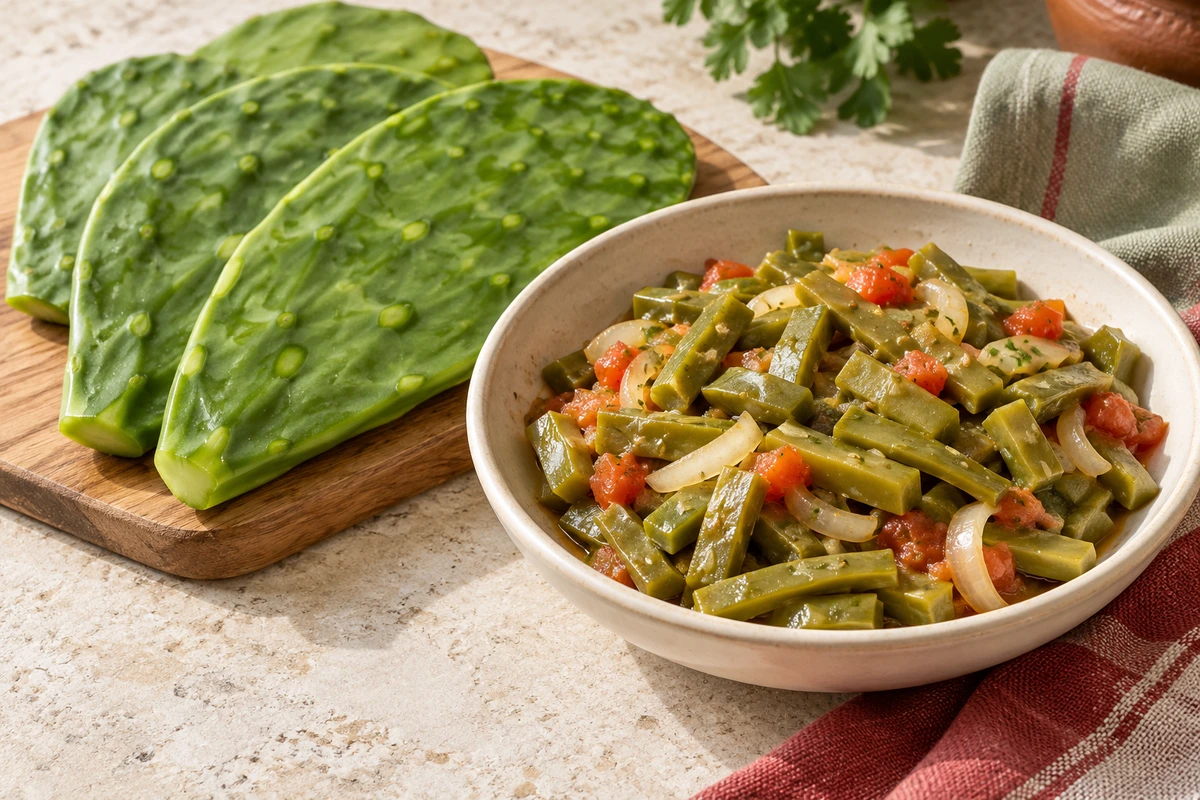
Nopal contains a collection of naturally occurring minerals rather than one mineral in isolation.
Studies of Nopal cactus and prickly pear have reported minerals including calcium, magnesium, potassium and sodium.(4), (5)
The amounts found in a plant can be influenced by growing conditions, soil and the particular plant material being studied.
That makes sodium part of a larger mineral story.
The cactus is constantly interacting with the environment around it, absorbing minerals and water through its roots and managing them as it grows.
Plants Have to Manage Sodium Too
PLANTS MANAGE MINERALS, TOO
Salt stress
Too much sodium in soil can make water uptake more difficult and disturb the balance of other minerals.
Sodium has an interesting relationship with plants because too much sodium in the soil can create salt stress.(6), (7)
High salt conditions can make it more difficult for plants to take up water and can disturb the balance of other important minerals, particularly potassium.(6)
Plants therefore have cellular systems that help control where sodium goes and how much accumulates in sensitive tissues.
For a plant growing in a challenging environment, managing minerals isn’t simply nutritional chemistry.
It’s part of survival.
A Cactus Built to Manage Water
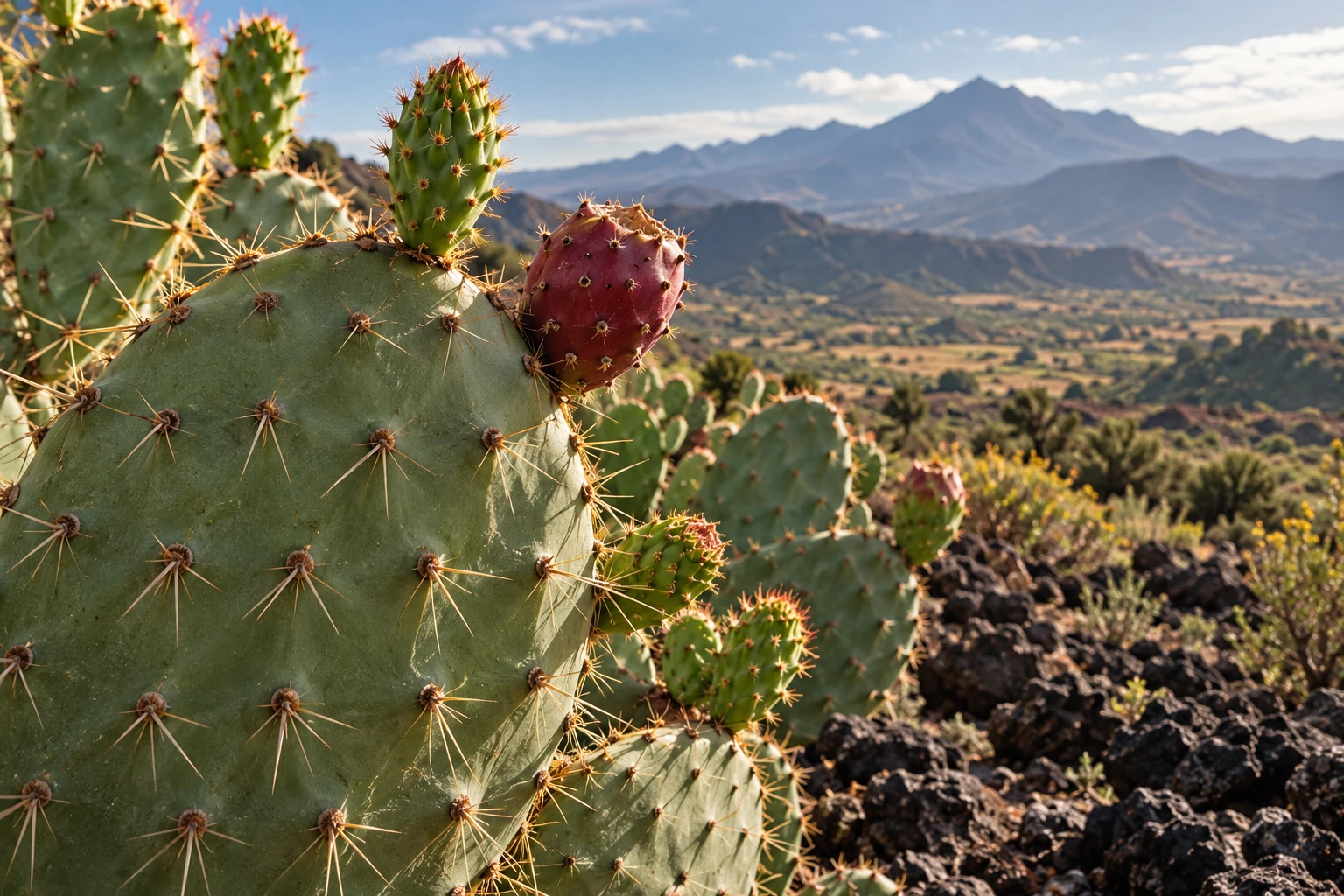
Nopal is famous for surviving where water may be limited.
Its thick pads store water, and its specialized form of photosynthesis helps reduce water loss.
Mineral balance becomes part of that larger survival strategy.
Sodium, potassium and other charged minerals influence water movement and cellular function within plants.(6), (7)
So when researchers identify sodium inside a Nopal pad, they’re looking at one small piece of the plant’s much larger relationship with water, soil and its environment.
From Our Farms to Natural Home Cures
FROM OUR FARMS FORWARD
Farm → Cactus → Capsule
After harvest, our Nopal is freeze-dried and prepared for our flagship whole-cactus capsules.
At Natural Home Cures, our flagship Freeze-Dried Nopal Powder Capsules begin with prickly pear cactus growing on our own farms.
The mineral story starts there—in the soil, water and living cactus—not after the plant has already become powder.
After harvesting, our Nopal is freeze-dried as part of preparing it for our capsules. Our goal is to preserve the character of the cactus we grow as closely as practical while preparing it in a convenient finished form.
That farm-to-product connection gives us a much closer relationship with the Nopal behind our products.
The Natural Home Cures Nopal Family
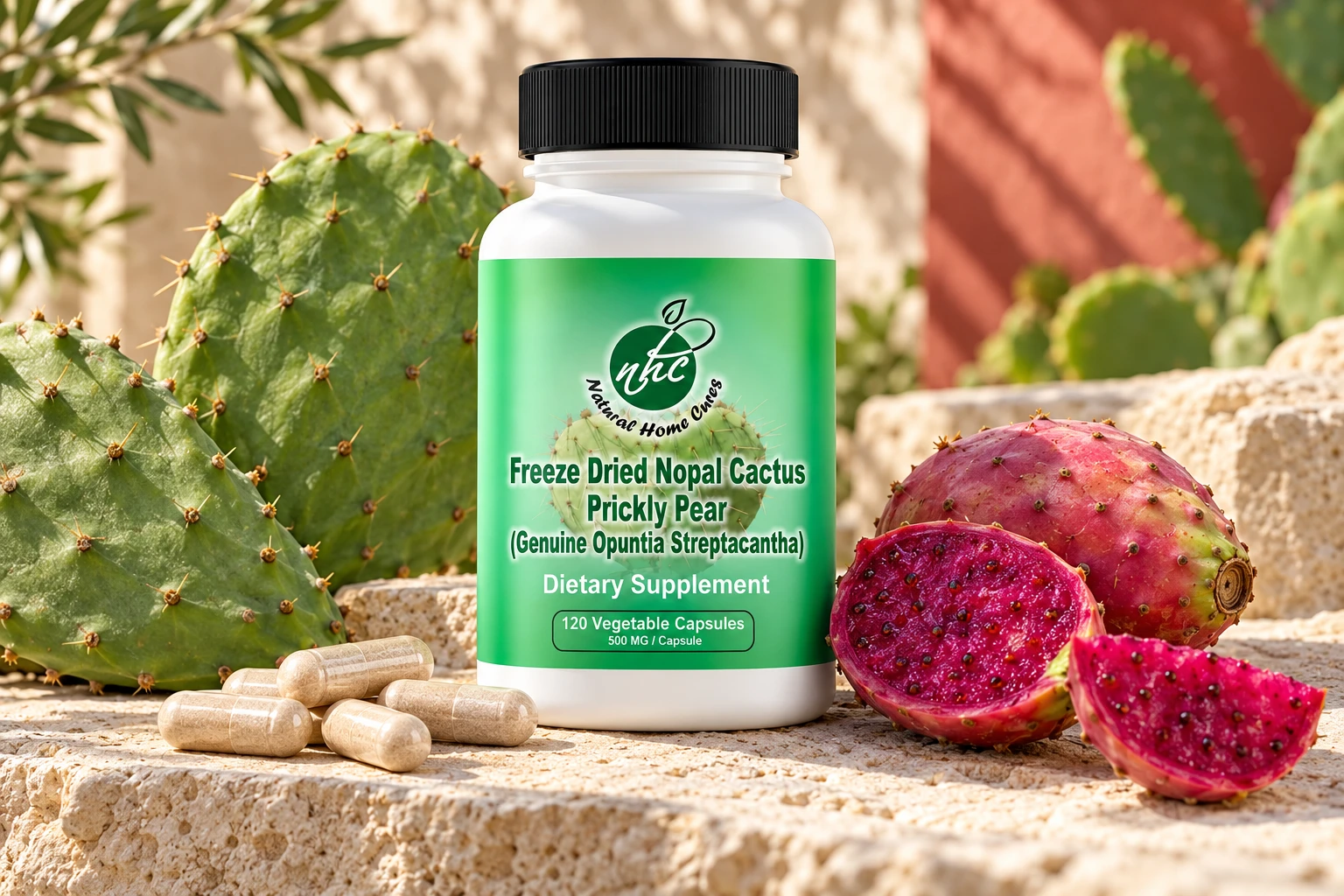
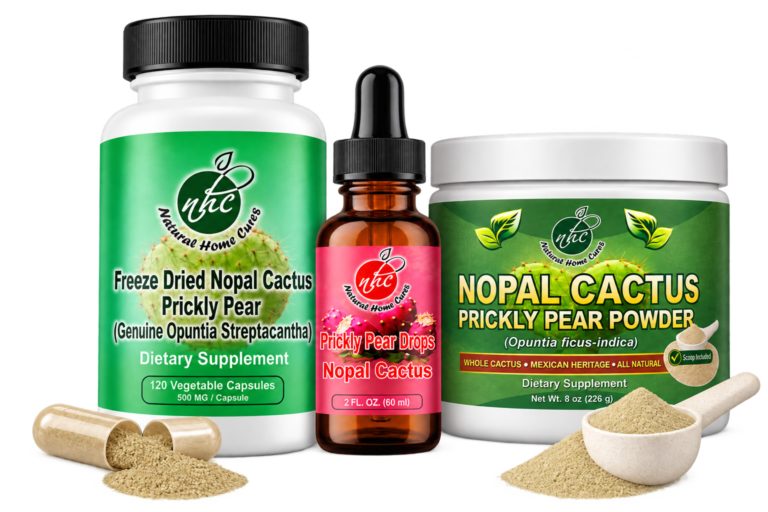
Our flagship Natural Home Cures Freeze-Dried Nopal Powder Capsules remain at the center of our Nopal line.
Natural Home Cures also offers Nopal Powder and Prickly Pear Drops, giving customers several ways to explore Nopal cactus and prickly pear.
Sodium becomes another piece of the science behind this remarkable cactus—not because sodium alone defines Nopal, but because it helps us understand the larger mineral composition and biology of the plant.
A Mineral With Two Very Different Reputations
Sodium is easy to think of only as something we’re told not to eat too much of.
But biologically, the story is much more interesting.
Our bodies need sodium for fluid balance, nerve impulses and normal muscle function.(1), (2) Plants also have to carefully manage sodium as part of maintaining their own cellular and water balance.(6), (7)
Within Nopal cactus and prickly pear, sodium becomes another part of a much larger collection of naturally occurring minerals and plant compounds.(4), (5)
For Natural Home Cures, that’s the story worth exploring: how all those individual pieces come together inside the whole cactus.
FROM CACTUS TO PRODUCT
Keep the botanical
in the story.
Freeze-dried Nopal cactus capsules.
Explore our Nopal →The research behind this articleSource References
- 01Source referenceNational Academies of Sciences, Engineering, and Medicine. Dietary Reference Intakes for Sodium and Potassium. National Academies Press, 2019.View source
Full citation
National Academies of Sciences, Engineering, and Medicine. Dietary Reference Intakes for Sodium and Potassium. National Academies Press, 2019. - 02Source referenceSodium and Potassium in Health and Disease.View source
Full citation
Pohl HR, Wheeler JS, Murray HE. “Sodium and Potassium in Health and Disease.” Metal Ions in Life Sciences. 2013;13:29–47. - 03Source referenceThe Structure and Function of the Na,K-ATPase Isoforms in Health and Disease.View source
Full citation
Clausen MV, Hilbers F, Poulsen H. “The Structure and Function of the Na,K-ATPase Isoforms in Health and Disease.” Frontiers in Physiology. 2017;8:371. - 04Source referenceNopal Cactus (Opuntia ficus-indica) as a Source of Bioactive Compounds for Nutrition, Health and Disease.View source
Full citation
El-Mostafa K, El Kharrassi Y, Badreddine A, et al. “Nopal Cactus (Opuntia ficus-indica) as a Source of Bioactive Compounds for Nutrition, Health and Disease.” Molecules. 2014;19(9):14879–14901. - 05Source referenceCactus Stems (Opuntia spp.): A Review on Their Chemistry, Technology, and Uses.View source
Full citation
Stintzing FC, Carle R. “Cactus Stems (Opuntia spp.): A Review on Their Chemistry, Technology, and Uses.” Molecular Nutrition & Food Research. 2005;49(2):175–194. - 06Source referenceMechanisms of Salinity Tolerance.View source
Full citation
Munns R, Tester M. “Mechanisms of Salinity Tolerance.” Annual Review of Plant Biology. 2008;59:651–681. - 07Source referencePlant Salt-Tolerance Mechanisms.View source
Full citation
Deinlein U, Stephan AB, Horie T, Luo W, Xu G, Schroeder JI. “Plant Salt-Tolerance Mechanisms.” Trends in Plant Science. 2014;19(6):371–379.