NATURAL HOME CURES · NOPAL SCIENCE
Riboflavin
& Nopal
Vitamin B2, cellular energy and the story of a naturally yellow vitamin.
Explore the science
Riboflavin is better known as vitamin B2.
It’s an essential, water-soluble vitamin that helps our cells release energy from carbohydrates, fats and proteins.(1)
But riboflavin has another characteristic that makes it particularly interesting:
It’s naturally yellow.
In fact, the name comes partly from the Latin word flavus, meaning yellow.
That distinctive color is one reason riboflavin can give vitamin supplements—and sometimes even urine after taking a high-dose B-vitamin supplement—a bright yellow appearance.(1), (2)
And riboflavin has a natural connection with Nopal cactus and prickly pear.
What Does Riboflavin Do?
THE ACTIVE HELPERS
B2 → FMN & FAD
The body uses riboflavin to make two coenzymes that help enzymes carry out reactions, including those involved in using energy from food.
Riboflavin doesn’t simply float around the body performing one job.
The body uses it to make two important substances called FMN and FAD.(1), (2)
Those names aren’t important to remember.
What matters is what they do.
FMN and FAD help enzymes carry out chemical reactions throughout the body.
Many of those reactions are involved in turning the food we eat into forms of energy our cells can actually use.(1), (2)
So, like other nutrients involved in energy metabolism, riboflavin isn’t fuel itself.
It’s more like part of the machinery that allows us to use the fuel.
Riboflavin Helps Other Vitamins Work
NUTRIENTS WORK TOGETHER
A vitamin network
Riboflavin-dependent enzymes participate in the metabolism of other nutrients, including vitamin B6 and folate.
Riboflavin has another interesting role that shows how interconnected nutrition can be.
Some vitamins need help being converted into forms the body can use.
Riboflavin-dependent enzymes participate in the metabolism of other nutrients, including vitamin B6 and folate.(1), (3)
This is a good reminder that vitamins don’t operate in separate little compartments.
They interact.
One nutrient may help an enzyme work.
That enzyme may then help process another nutrient.
Nutrition is a network, not a collection of isolated ingredients.
Where Does Riboflavin Come From?
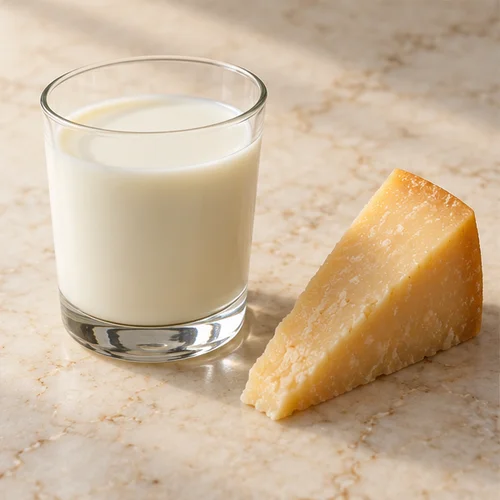
Foods that provide riboflavin, either naturally or through fortification, include:
- Milk and dairy products
- Eggs
- Meat
- Fish
- Almonds
- Mushrooms
- Spinach and other green vegetables
- Fortified cereals and grains
- Nopal cactus and prickly pear
Scientific analyses of Nopal and prickly pear materials have reported riboflavin among the naturally occurring vitamins associated with the plant.(4), (5)
Riboflavin in Nopal Cactus
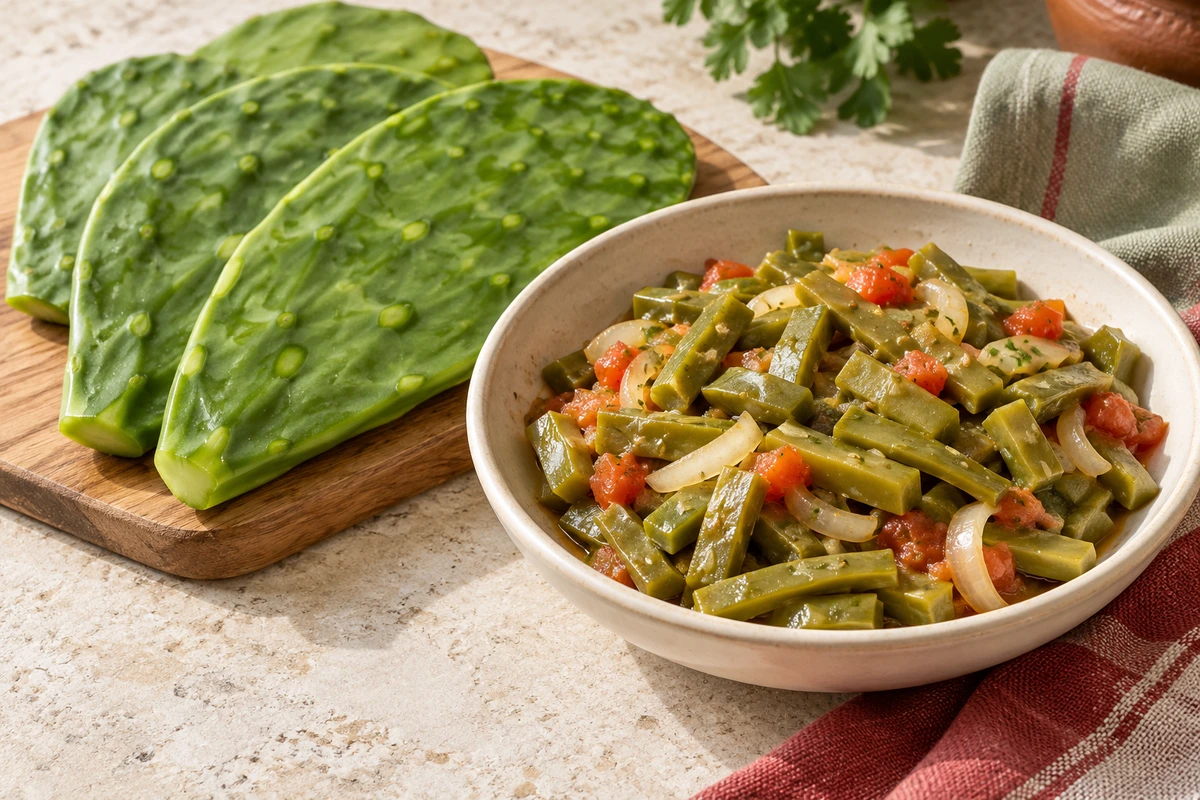
Nopal is probably better known for fiber than for vitamin B2.
But when researchers look closely at Nopal cactus and prickly pear, they find a much broader nutritional picture.
Vitamins are there.
Minerals are there.
Amino acids are there.
Fiber and numerous naturally occurring plant compounds add still more.(4), (5)
Riboflavin becomes another small piece of that larger picture.
And because riboflavin participates in normal energy metabolism, it helps show that the nutritional story inside a cactus pad extends far beyond one famous component.
The Vitamin That Doesn’t Like Light
NATURALLY YELLOW
Sensitive to light
Light can break down riboflavin. Storage and light-protective packaging can help limit losses in certain foods.
Riboflavin has an unusual weakness.
Light can break it down.(1), (6)
This has mattered in food packaging for decades.
Milk was once commonly delivered in clear glass bottles, but exposure to sunlight could contribute to riboflavin losses.(6)
That’s one reason light-protective packaging became important for certain foods.
It’s a fascinating example of how simply identifying a vitamin in a food isn’t the end of the story.
How that food is stored and handled can matter too.
From Food to Cellular Energy
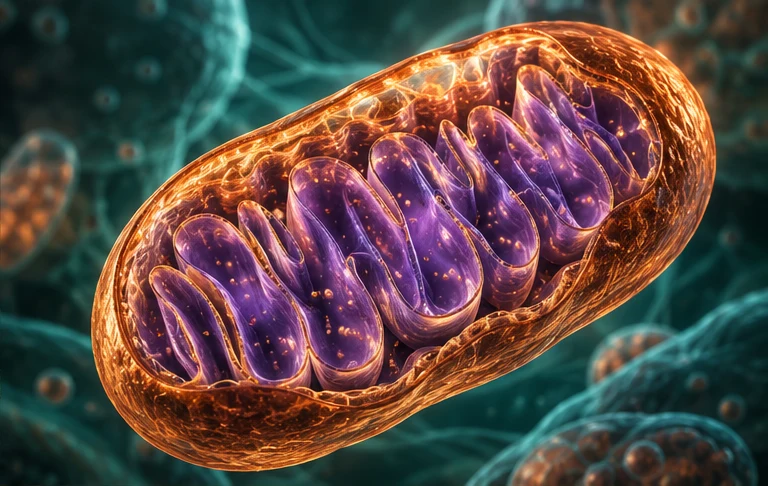
Imagine eating a meal containing carbohydrates, fats and protein.
Your digestive system breaks that food down into smaller components.
But those nutrients still have to travel through many chemical reactions before cells can capture their energy.
Riboflavin-derived FAD and FMN participate in many of those reactions.(1), (2)
They’re helping behind the scenes.
You don’t feel riboflavin suddenly "switch on."
Instead, vitamin B2 quietly participates in the cellular machinery that keeps metabolism moving every day.
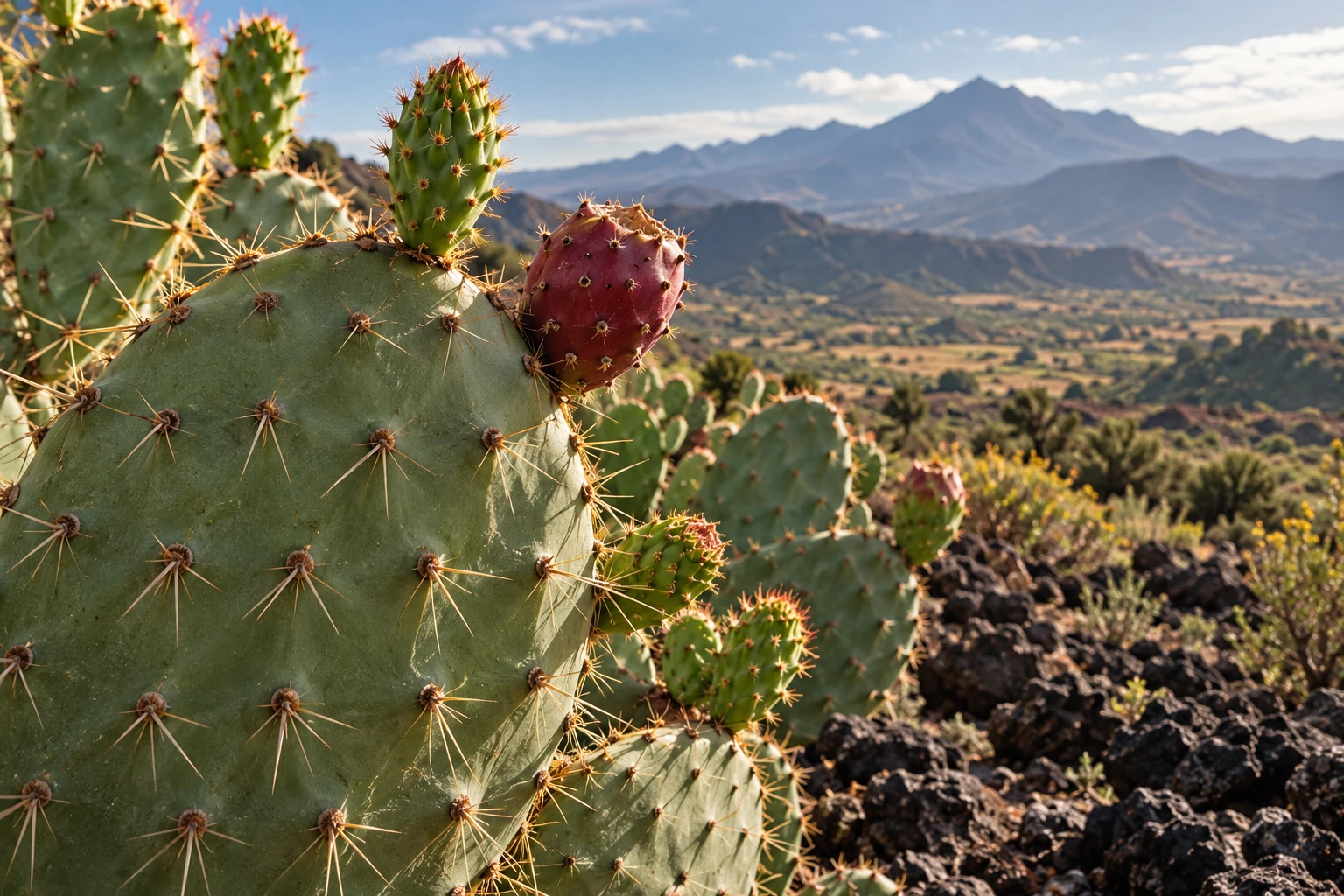
Our Nopal Begins on Our Farms
At Natural Home Cures, the Nopal behind our flagship Freeze-Dried Nopal Powder Capsules begins as cactus growing on our own farms.
We’re connected to the plant before it ever becomes powder.
After harvesting, our Nopal is freeze-dried as part of preparing it for our capsules.
Our goal is to preserve the character of the cactus we grow as closely as practical while creating a convenient finished Nopal product.
That connection—from living cactus to finished bottle—is an important part of the Natural Home Cures story.
More Than One Way to Discover Nopal
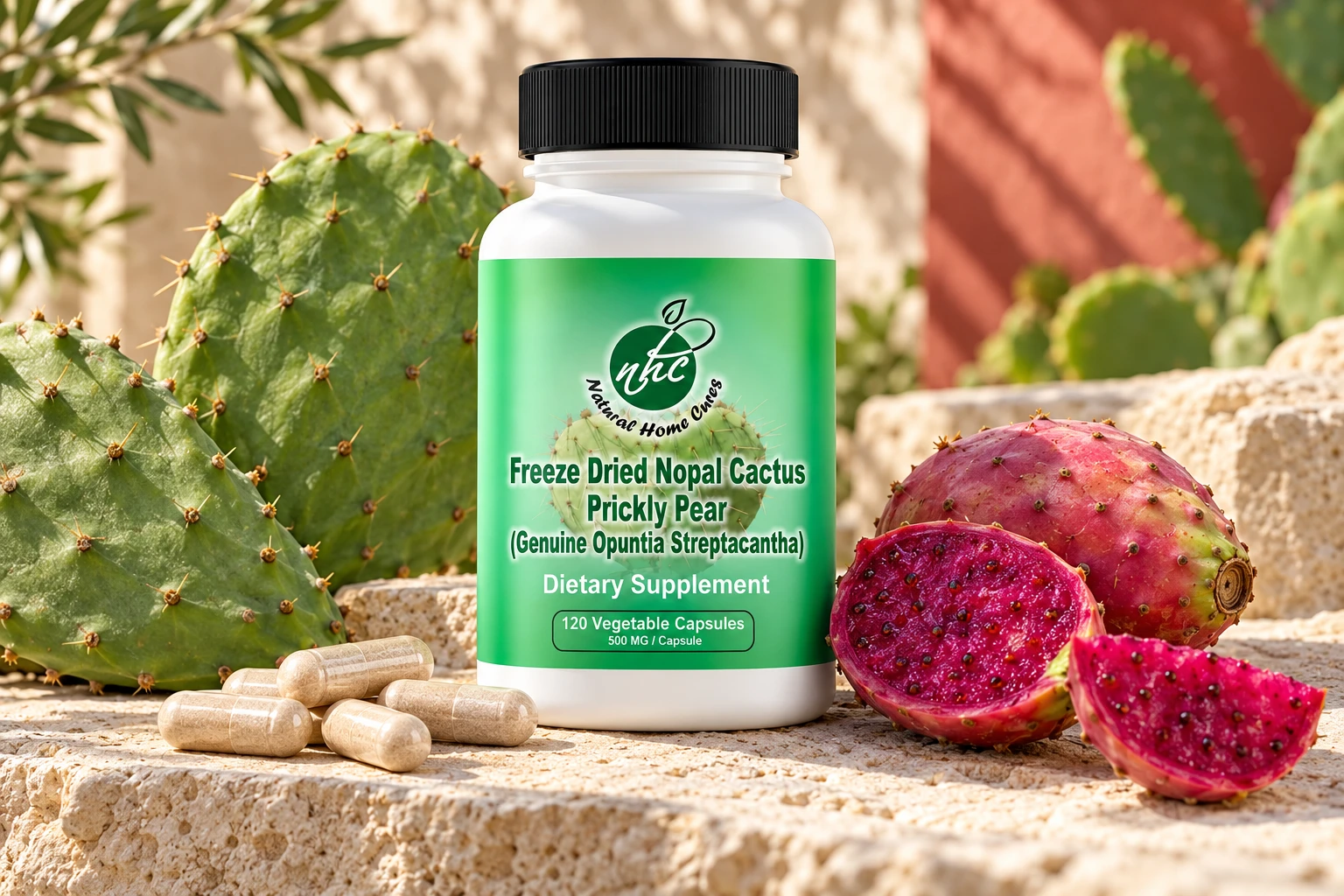
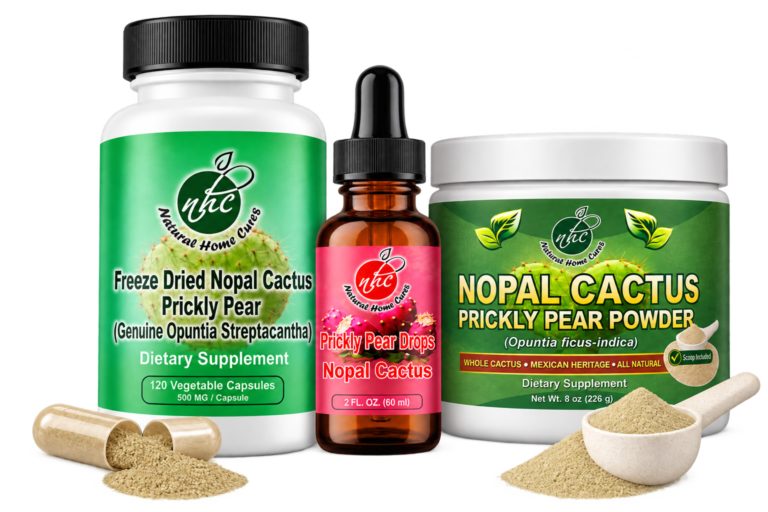
Our flagship Natural Home Cures Freeze-Dried Nopal Powder Capsules remain at the center of our Nopal line.
But customers can also explore our Nopal Powder and Prickly Pear Drops.
Each provides another way to discover Natural Home Cures Nopal and prickly pear.
And articles like this help show why there’s so much to discover.
Nopal isn’t simply fiber.
It’s a remarkably complex plant containing numerous naturally occurring nutritional components.(4), (5)
One Small Vitamin in a Much Bigger Plant
Riboflavin may be microscopic, but its role inside the body is anything but insignificant.
It helps our cells use energy from food.
It participates in enzyme reactions.
And it even helps with the metabolism of other vitamins.(1), (2), (3)
Within Nopal, riboflavin becomes another part of a much larger nutritional picture.
And that’s what we’re interested in at Natural Home Cures:
Not simply one nutrient.
But the remarkable collection of naturally occurring components found within Nopal cactus and prickly pear, and the products we create around this extraordinary plant.
FROM CACTUS TO PRODUCT
Keep the botanical
in the story.
Freeze-dried Nopal cactus capsules.
Explore our Nopal →The research behind this articleSource References
- 01Source referenceRiboflavin — Fact Sheet for Health Professionals.View source
Full citation
National Institutes of Health, Office of Dietary Supplements. “Riboflavin — Fact Sheet for Health Professionals.” - 02Source referenceRiboflavin (Vitamin B-2) and Health.View source
Full citation
Powers HJ. “Riboflavin (Vitamin B-2) and Health.” American Journal of Clinical Nutrition. 2003;77(6):1352–1360. - 03Source referenceRiboflavin.View source
Full citation
Said HM, Ross AC. “Riboflavin.” In: Modern Nutrition in Health and Disease. 11th ed. Wolters Kluwer Health; 2012:325–330. - 04Source referenceNopal Cactus (Opuntia ficus-indica) as a Source of Bioactive Compounds for Nutrition, Health and Disease.View source
Full citation
El-Mostafa K, El Kharrassi Y, Badreddine A, et al. “Nopal Cactus (Opuntia ficus-indica) as a Source of Bioactive Compounds for Nutrition, Health and Disease.” Molecules. 2014;19(9):14879–14901. - 05Source referencePhytochemical and Nutritional Significance of Cactus Pear.View source
Full citation
Stintzing FC, Schieber A, Carle R. “Phytochemical and Nutritional Significance of Cactus Pear.” European Food Research and Technology. 2001;212:396–407. - 06Source referencePhotodegradation of Riboflavin in Milks Exposed to Fluorescent Light.View source
Full citation
Allen C, Parks OW. “Photodegradation of Riboflavin in Milks Exposed to Fluorescent Light.” Journal of Dairy Science. 1979;62(9):1377–1379.