NATURAL HOME CURES · NOPAL SCIENCE
Pyridoxine
& Nopal
Vitamin B6 connects amino acids, chemical messengers and the biology of red blood cells.
Explore the science
Pyridoxine is one of the forms commonly associated with vitamin B6.
Vitamin B6 is actually a family of related compounds, and inside the body much of its work is carried out by an active form called pyridoxal 5′-phosphate, usually shortened to PLP.(1), (2)
You certainly don’t need to remember that name.
What’s interesting is what vitamin B6 helps the body do.
It participates in more than 100 enzyme reactions, many of them involving proteins and amino acids.(1)
And vitamin B6 has a natural connection with Nopal cactus and prickly pear.
What Does Vitamin B6 Do?
AN ACTIVE FORM OF B6
Meet PLP
Pyridoxal 5′-phosphate helps enzymes carry out many reactions involving amino acids.
When we eat protein, our digestive system breaks much of it down into individual amino acids.
The body then has to decide what to do with them.
Some become part of new proteins.
Some are changed into other substances.
Some can eventually be used for energy.
Vitamin B6 helps enzymes carry out many of these amino-acid reactions.(1), (2)
That makes B6 particularly interesting in the context of Nopal because of the many different amino acids associated with the nutritional makeup of prickly pear cactus.
Vitamin B6 and Brain Chemistry
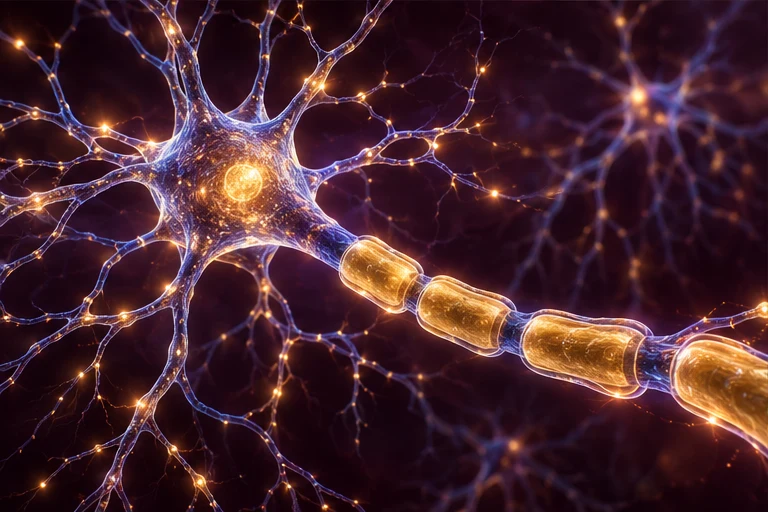
Vitamin B6 also participates in the production of several neurotransmitters—chemical messengers used by the nervous system.(1), (3)
These include substances such as:
- Serotonin
- Dopamine
- GABA
- Norepinephrine
That doesn’t mean consuming extra vitamin B6 automatically changes someone’s mood or brain function.
The body carefully regulates these systems.
But vitamin B6-dependent enzymes participate in the normal pathways the body uses to produce these chemical messengers.(1), (3)
It’s another example of how a tiny vitamin can become involved in remarkably complicated biology.
Vitamin B6 and Red Blood Cells
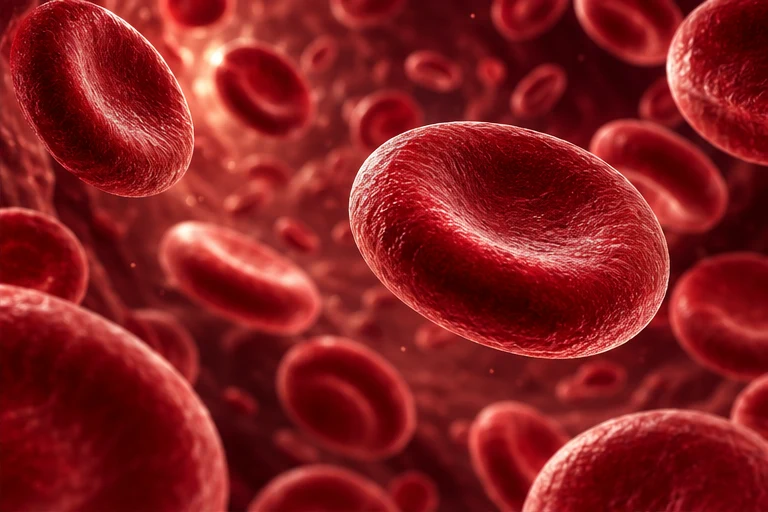
Vitamin B6 also participates in the production of hemoglobin.(1)
Hemoglobin is the protein inside red blood cells that carries oxygen.
The body uses vitamin B6-dependent enzymes during steps involved in making heme, the iron-containing part of hemoglobin.(2), (4)
So B6 connects amino-acid metabolism, nervous-system chemistry and red-blood-cell biology.
That’s a surprisingly broad résumé for one vitamin.
Where Does Vitamin B6 Come From?
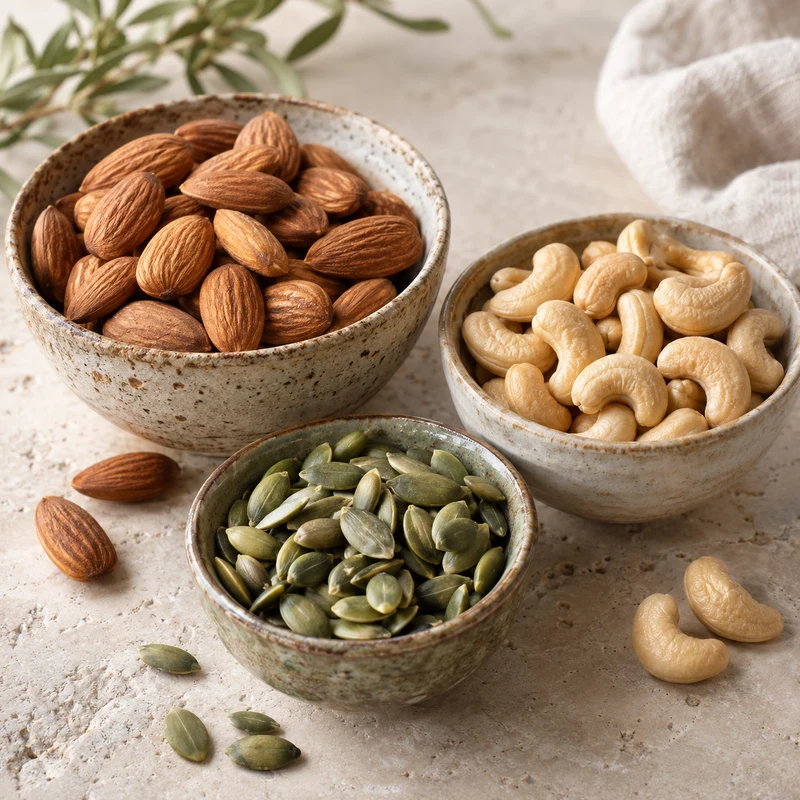
Foods that provide vitamin B6, either naturally or through fortification, include:
- Poultry
- Fish
- Beef
- Potatoes
- Chickpeas
- Bananas
- Fortified cereals
- Nuts and seeds
- Certain vegetables and fruits
- Nopal cactus and prickly pear
Scientific analyses of Nopal and prickly pear materials have reported vitamin B6-related compounds among the vitamins associated with the plant.(5), (6)
Vitamin B6 in Nopal Cactus
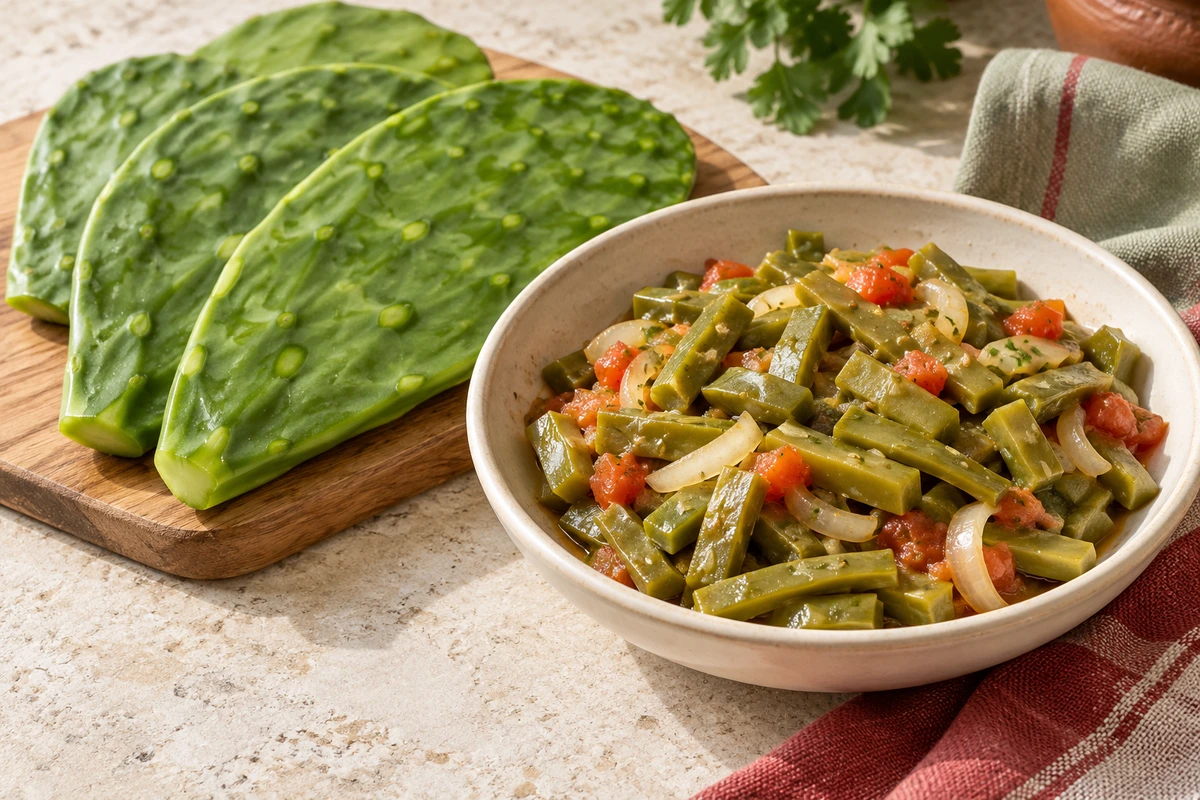
Nopal is often introduced as a high-fiber cactus.
That’s true, but it barely begins to describe the plant.
Researchers examining Nopal cactus and prickly pear have identified amino acids, minerals, vitamins, fiber, pigments and numerous other naturally occurring compounds.(5), (6)
Vitamin B6 becomes especially interesting when we place it beside the amino acids.
Why?
Because one of B6’s major jobs is helping enzymes process amino acids.(1), (2)
The plant contains the nutritional pieces.
The human body has the machinery that determines what happens to those pieces after we eat them.
That’s where nutrition becomes much more interesting than simply reading a list of ingredients.
More Than 100 Reactions
NORMAL CELLULAR CHEMISTRY
More than 100 reactions
Vitamin B6 in its coenzyme forms participates in many enzyme reactions, especially those involving protein metabolism.
It’s easy to look at a vitamin label and see B6 as just another number.
But inside the body, vitamin B6 participates in more than 100 enzyme reactions.(1)
Many involve amino acids.
Others contribute to neurotransmitter production, hemoglobin formation and carbohydrate metabolism.(1), (2), (3)
Imagine more than 100 tiny biochemical workstations.
Vitamin B6 helps enzymes at many of those stations perform their jobs.
That’s a much better picture of what a vitamin actually does than simply calling it "good for you."
From Our Farms to Natural Home Cures
At Natural Home Cures, our flagship Freeze-Dried Nopal Powder Capsules begin with prickly pear cactus grown on our own farms.
We don’t begin with an anonymous finished powder.
We’re connected to our Nopal while it’s still growing.
After harvesting, our Nopal is freeze-dried as part of preparing it for our capsules.
Our goal is to preserve the character of the cactus we grow as closely as practical while turning it into a convenient Nopal product.
The Natural Home Cures Nopal Family
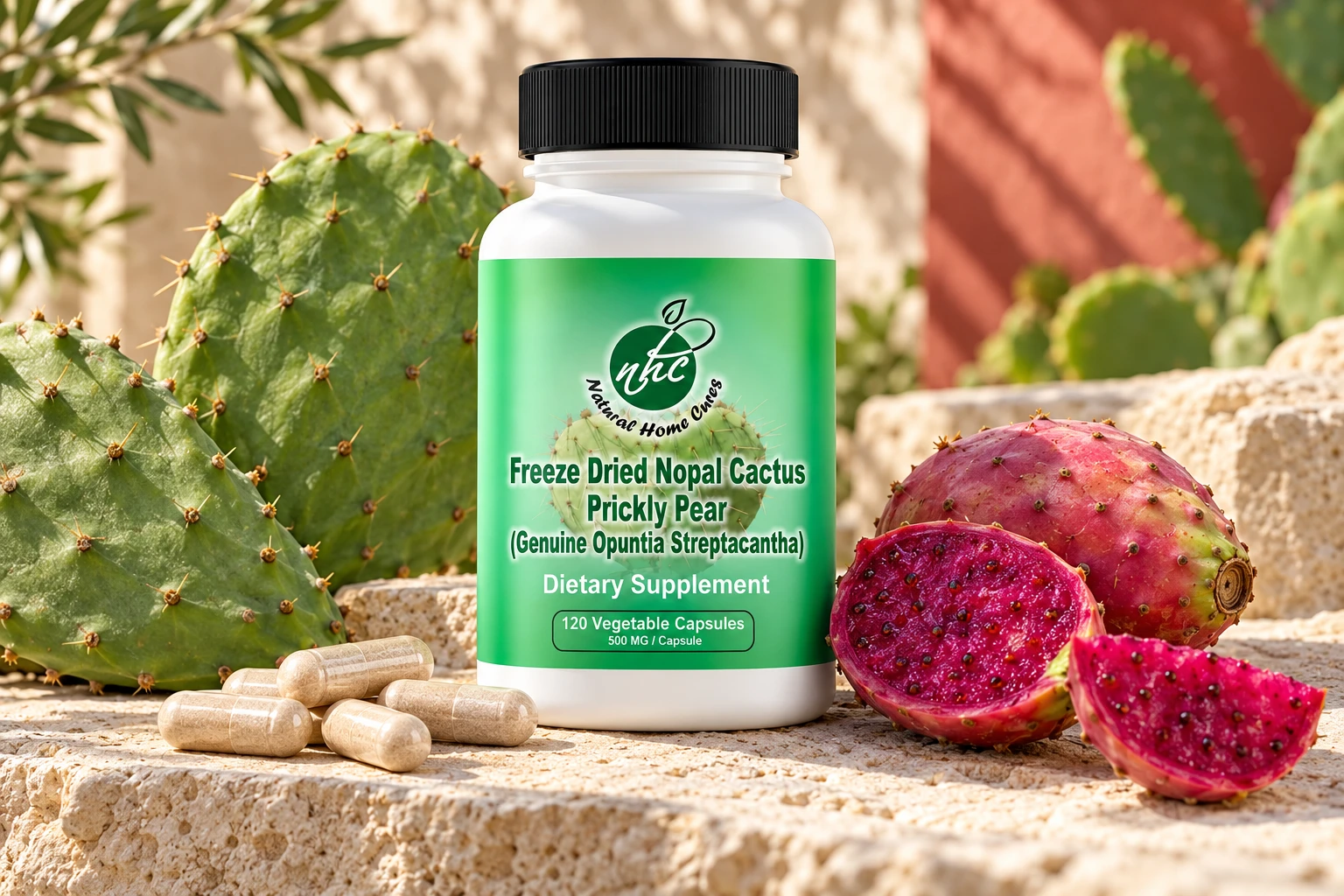
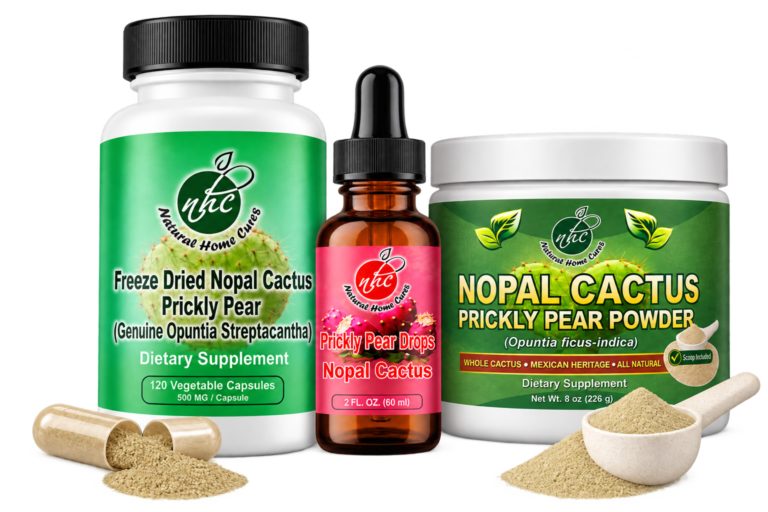
Our flagship Natural Home Cures Freeze-Dried Nopal Powder Capsules remain at the center of our Nopal line.
Natural Home Cures also offers Nopal Powder and Prickly Pear Drops.
These different forms give customers several ways to explore Nopal cactus and prickly pear through Natural Home Cures.
And as we look at vitamins such as B6 alongside amino acids, minerals, fiber and plant pigments, the reason for studying the whole cactus becomes increasingly clear.
One Vitamin Connecting Many Nutrients
Vitamin B6 gives us a particularly good example of how interconnected nutrition really is.
It helps enzymes process amino acids.
It participates in neurotransmitter production.
It contributes to normal hemoglobin formation.
And it participates in many other reactions throughout the body.(1), (2), (3)
Within Nopal cactus and prickly pear, vitamin B6 becomes another piece of a much larger nutritional picture.(5), (6)
That’s the picture Natural Home Cures wants customers to see:
Not a cactus defined by one ingredient, but a remarkably complex plant with many different nutritional components worth understanding.
FROM CACTUS TO PRODUCT
Keep the botanical
in the story.
Freeze-dried Nopal cactus capsules.
Explore our Nopal →The research behind this articleSource References
- 01Source referenceVitamin B6 — Fact Sheet for Health Professionals.View source
Full citation
National Institutes of Health, Office of Dietary Supplements. “Vitamin B6 — Fact Sheet for Health Professionals.” - 02Source referenceVitamin B6 and Its Role in Cell Metabolism and Physiology.View source
Full citation
Parra M, Stahl S, Hellmann H. “Vitamin B6 and Its Role in Cell Metabolism and Physiology.” Cells. 2018;7(7):84. - 03Source referenceBlood Pressure Regulation and Micronutrients.View source
Full citation
Dakshinamurti K, Dakshinamurti S. “Blood Pressure Regulation and Micronutrients.” Nutrition Research Reviews. 2001;14(1):3–43. - 04Source referenceSideroblastic Anemia: Diagnosis and Management.View source
Full citation
Bottomley SS, Fleming MD. “Sideroblastic Anemia: Diagnosis and Management.” Hematology/Oncology Clinics of North America. 2014;28(4):653–670. - 05Source referenceNopal Cactus (Opuntia ficus-indica) as a Source of Bioactive Compounds for Nutrition, Health and Disease.View source
Full citation
El-Mostafa K, El Kharrassi Y, Badreddine A, et al. “Nopal Cactus (Opuntia ficus-indica) as a Source of Bioactive Compounds for Nutrition, Health and Disease.” Molecules. 2014;19(9):14879–14901. - 06Source referencePhytochemical and Nutritional Significance of Cactus Pear.View source
Full citation
Stintzing FC, Schieber A, Carle R. “Phytochemical and Nutritional Significance of Cactus Pear.” European Food Research and Technology. 2001;212:396–407.