NATURAL HOME CURES · NOPAL SCIENCE
Pectin
& Nopal
From the structure of a cactus pad to the remarkable science of dietary fiber.
Explore the science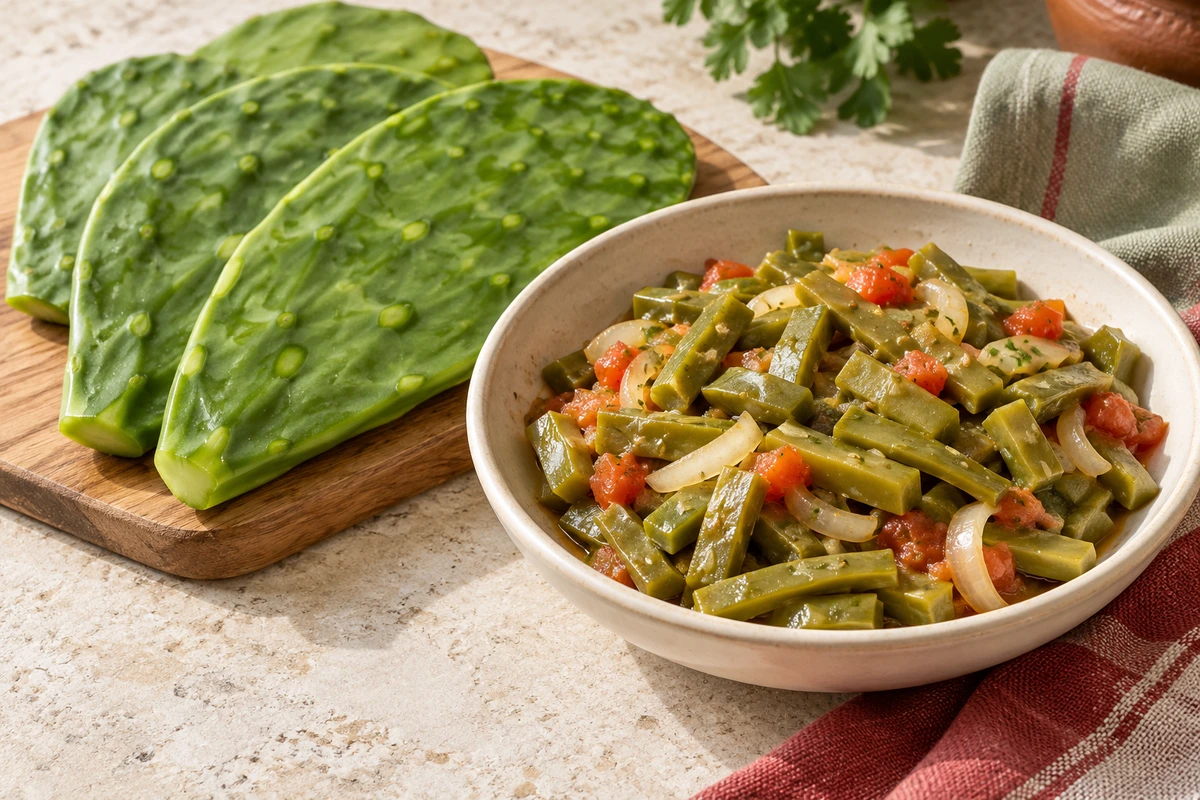
If you’ve ever made jam or jelly, you’ve probably encountered pectin.
It’s the naturally occurring plant material that helps fruit mixtures form their familiar gel-like texture.
But pectin wasn’t created for making jam.
Long before people discovered its usefulness in the kitchen, plants were already using pectin as an important part of their cell walls.(1), (2)
And Nopal cactus and prickly pear naturally contain pectin as part of their complex mixture of fibers and structural carbohydrates.(3), (4)
That makes pectin another fascinating piece of the Nopal story.
What Is Pectin?
A FAMILY OF POLYSACCHARIDES
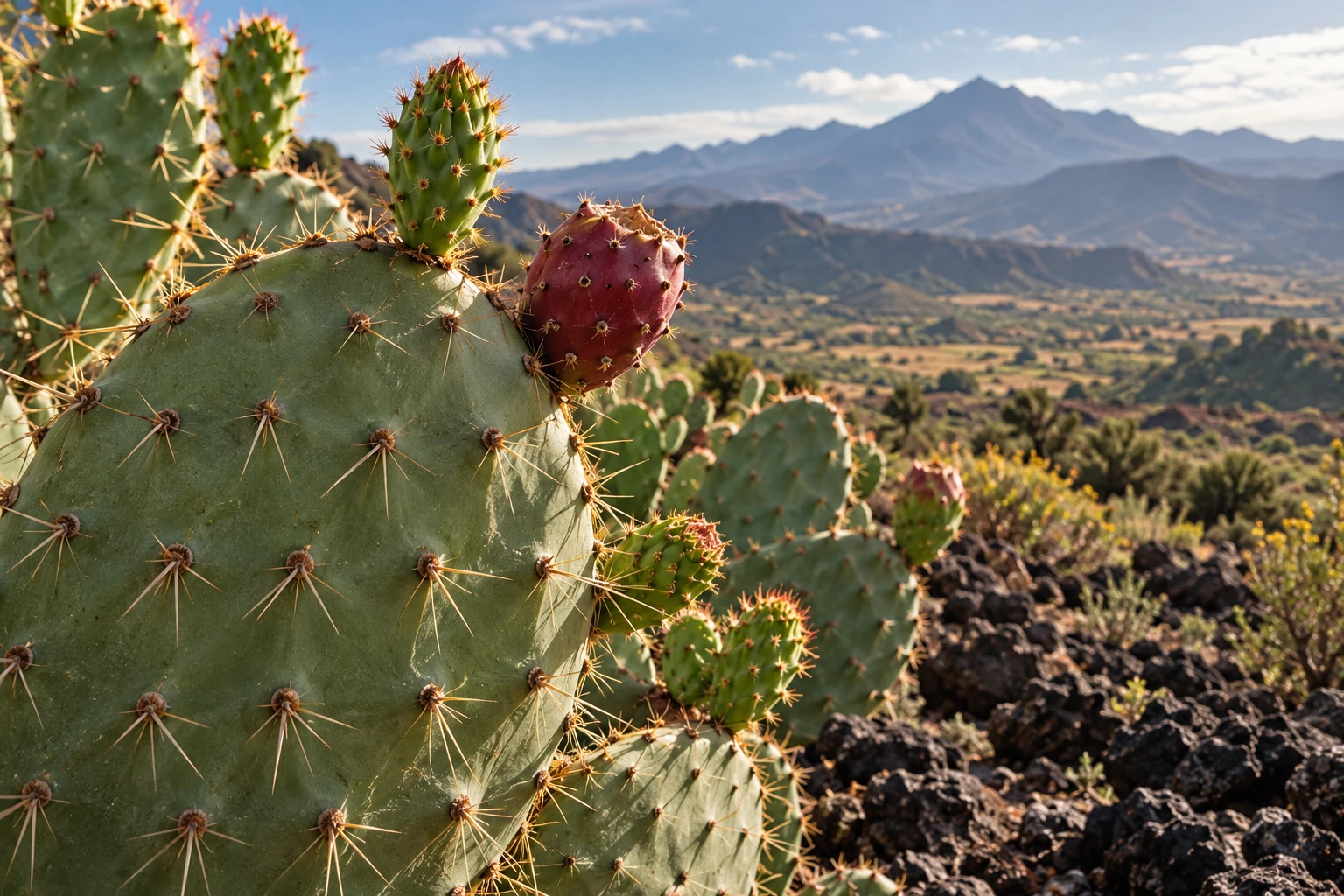
Plant architecture
Pectin is made from connected sugar units and helps organize plant cell walls and the connections between cells.
Pectin is a family of complex carbohydrates called polysaccharides.
That word sounds complicated, but the basic idea isn’t.
A polysaccharide is a large molecule built from many smaller sugar units connected together.
Pectin is found primarily in the cell walls of plants, where it helps cells attach to one another and contributes to the physical structure of plant tissue.(1), (2)
Think of a plant cell wall almost like the framework surrounding each individual plant cell.
Pectin becomes part of the material helping that framework hold together.
How Pectin Helps a Mixture Set
FROM LIQUID TO GEL
Water held in a network
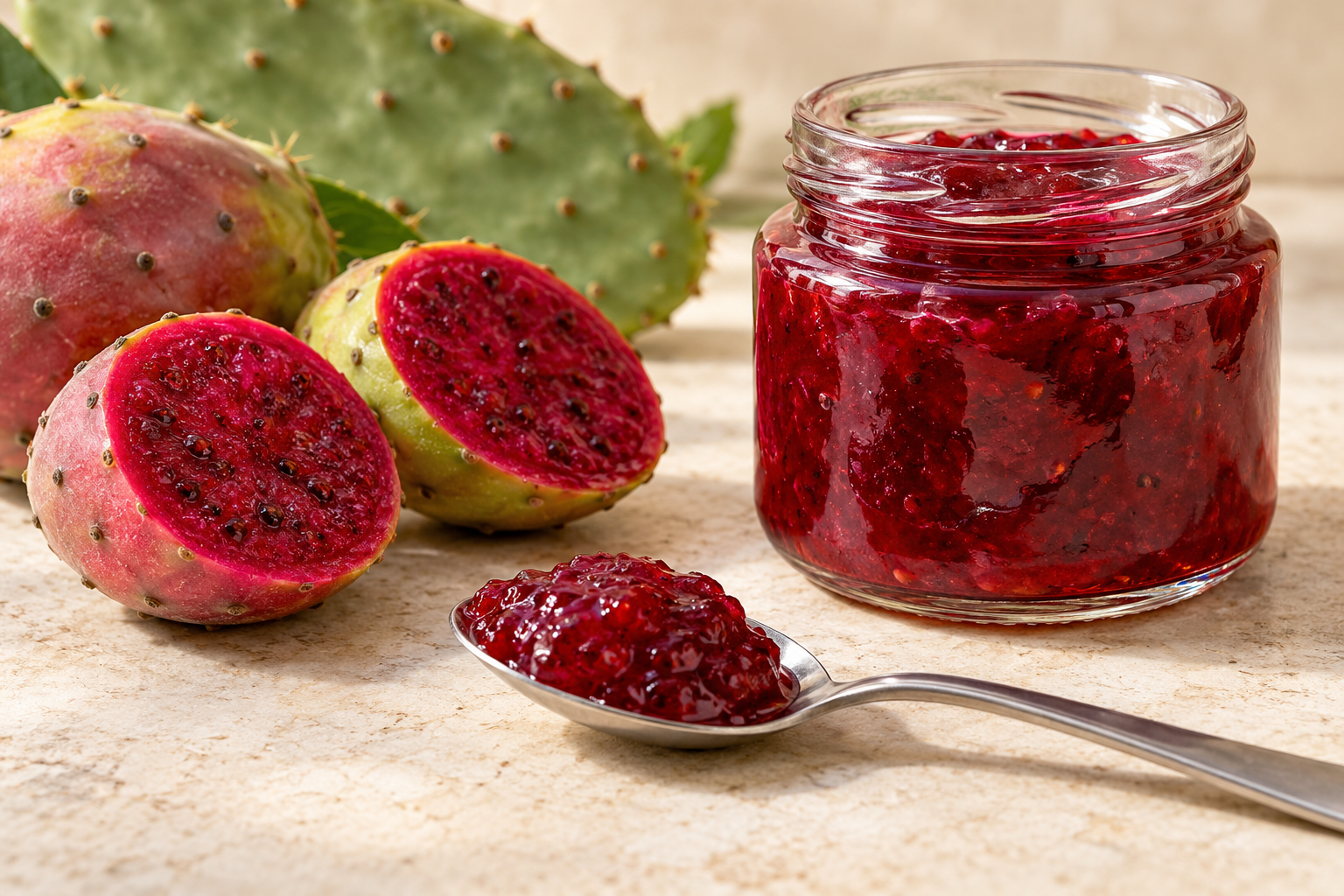
Under the right conditions, pectin molecules connect into a network that traps water. This helps a runny mixture thicken and form a gel.
One of pectin’s most familiar characteristics is its ability to interact with water.
Under the right conditions, pectin molecules can form networks that trap water inside them.(1), (5)
That’s how pectin can help transform a runny fruit mixture into something resembling jam or jelly.
But the ability to interact with water is also interesting when we’re talking about Nopal.
Nopal is a plant whose survival depends heavily on managing and retaining water.
And pectin exists alongside another remarkable water-binding component of Nopal:
mucilage.
Pectin and Mucilage Aren’t Exactly the Same Thing
TWO PARTS OF THE CACTUS STORY
Pectin & mucilage
Pectin helps form cell walls. Mucilage is water-binding polysaccharide material associated with the cactus’s characteristic texture.
Because both can interact with water and contribute to the characteristic texture of Nopal, it’s easy to think pectin and mucilage are simply two names for the same thing.
They’re not.
Pectin is an important structural component of plant cell walls.(1), (2)
Mucilage refers to water-binding polysaccharide material produced by the cactus that contributes to its characteristic gel-like properties and water-storage biology.(4), (6)
Both belong to the larger carbohydrate and fiber story of Nopal.
But they have different structures and roles within the plant.
Together, they help explain why a freshly cut Nopal pad feels so different from something like a carrot or potato.
Cut Open a Fresh Nopal Pad
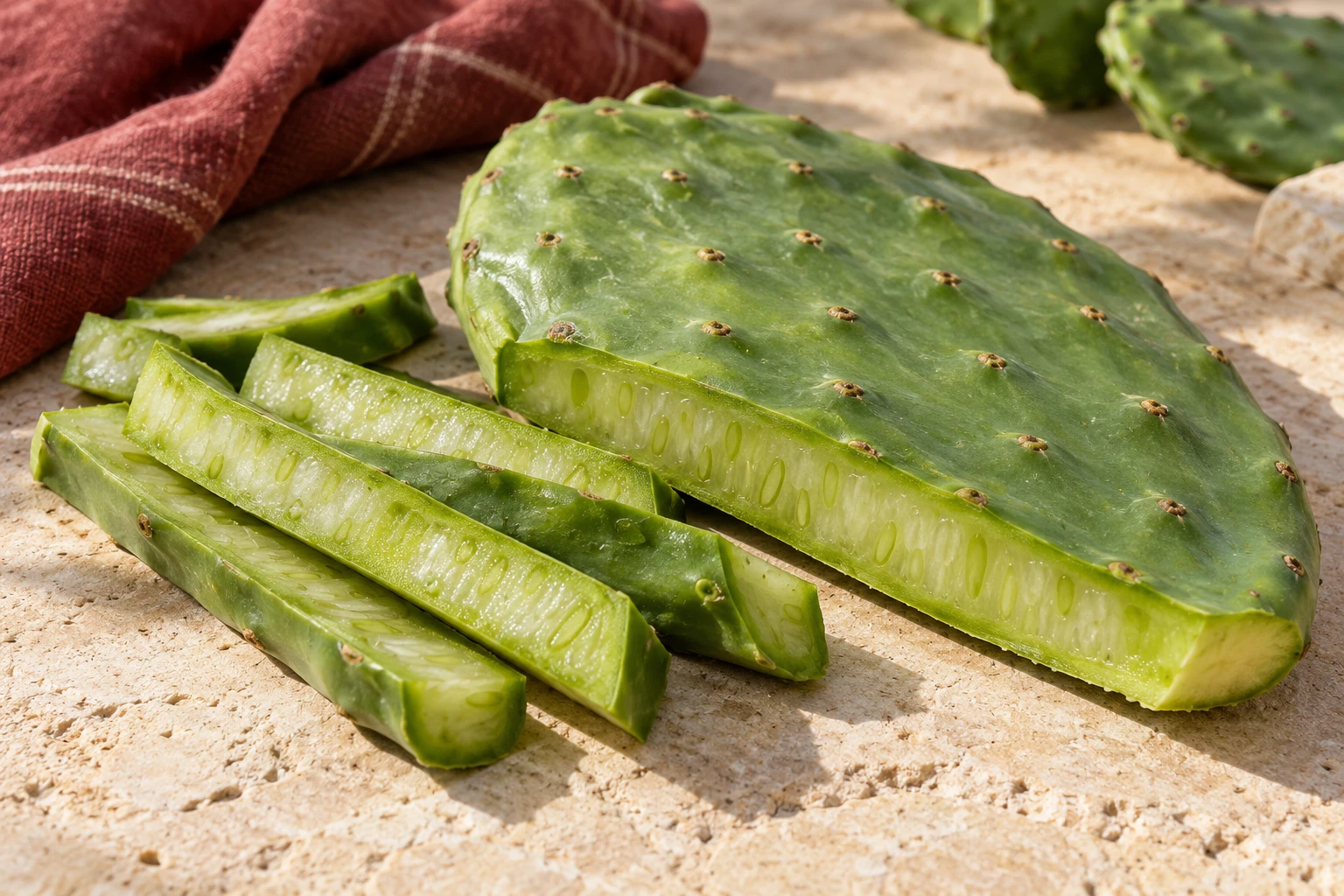
A fresh Nopal pad doesn’t feel dry and fibrous.
It’s thick, moist and succulent.
Cut into it and you encounter a plant built around holding water.
Inside that living tissue are cell walls containing pectin, fibrous structural materials and water-binding mucilage.(3), (4), (6)
Those components work together as part of the physical architecture of the cactus.
That’s one reason Nopal becomes so interesting when we stop looking at it simply as a green vegetable.
Its texture reflects its biology.
Why a Cactus Needs This Kind of Structure
Nopal survives in environments where water can’t always be taken for granted.
The cactus has evolved a collection of strategies for dealing with that challenge.
Its thick pads store water. Its waxy outer surface helps reduce water loss. Its specialized form of photosynthesis allows the plant to conserve water.
And inside the pad, complex carbohydrates help contribute to the structure and water-management characteristics of the plant.(4), (6)
Pectin becomes one piece of that larger survival system.
Pectin Is Also Dietary Fiber
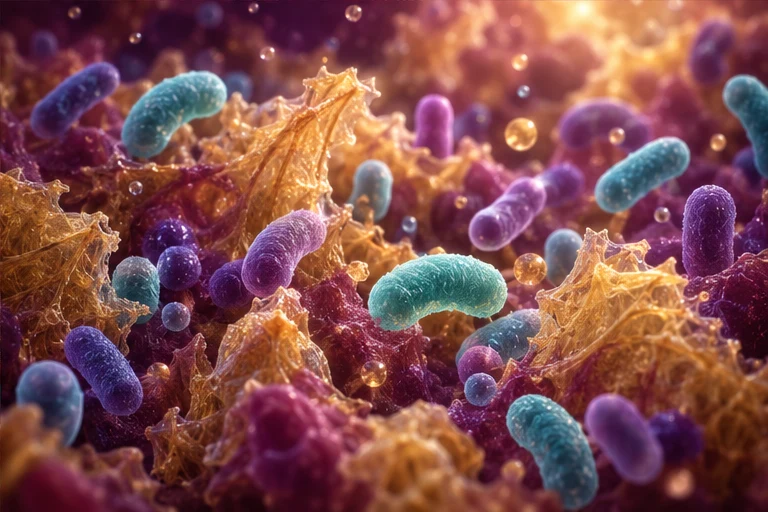
From a nutritional perspective, pectin is generally considered a soluble, fermentable dietary fiber.(7)
Our digestive enzymes don’t break it down in the same way they digest ordinary starch.
Instead, pectin can travel into the large intestine, where microorganisms can ferment portions of it.(7), (8)
During fermentation, gut microorganisms can produce substances called short-chain fatty acids.(8)
That makes pectin interesting not only as part of the structure of a cactus but also as part of the broader science of dietary fiber.
What Happens When Pectin Meets Water?
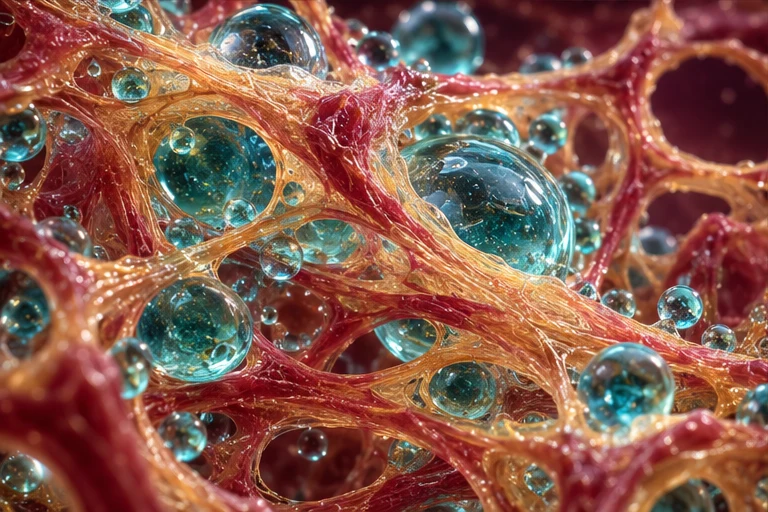
Pectin’s interaction with water can influence the physical characteristics of material inside the digestive tract.
Certain pectins can contribute to viscosity, meaning they can make a water-containing mixture thicker.(5), (7)
You can think about the difference between water and a thin gel.
They’re both mostly water, but they behave differently.
That physical property helps explain why researchers studying fiber care about much more than simply counting grams.
The type and structure of the fiber matter too.
Pectin Is Part of the Whole Nopal
THE WHOLE BOTANICAL MATRIX
Many parts. One cactus.
Fiber, amino acids, minerals, vitamins and plant compounds occur together within the structure of the Nopal pad.
This is an important distinction for the Natural Home Cures Nopal story.
We don’t add isolated pectin to our flagship Nopal product.
Pectin is naturally part of the Nopal cactus itself.
It exists alongside fiber, mucilage, minerals, vitamins, amino acids, pigments and numerous other naturally occurring plant compounds.(3), (4)
That’s why we’re interested in the whole cactus rather than reducing Nopal to a single isolated ingredient.
Pectin is fascinating, but it’s one member of a much larger botanical family.
Why Freeze-Drying Fits Our Philosophy
REMOVING WATER
Freeze. Dry. Mill.
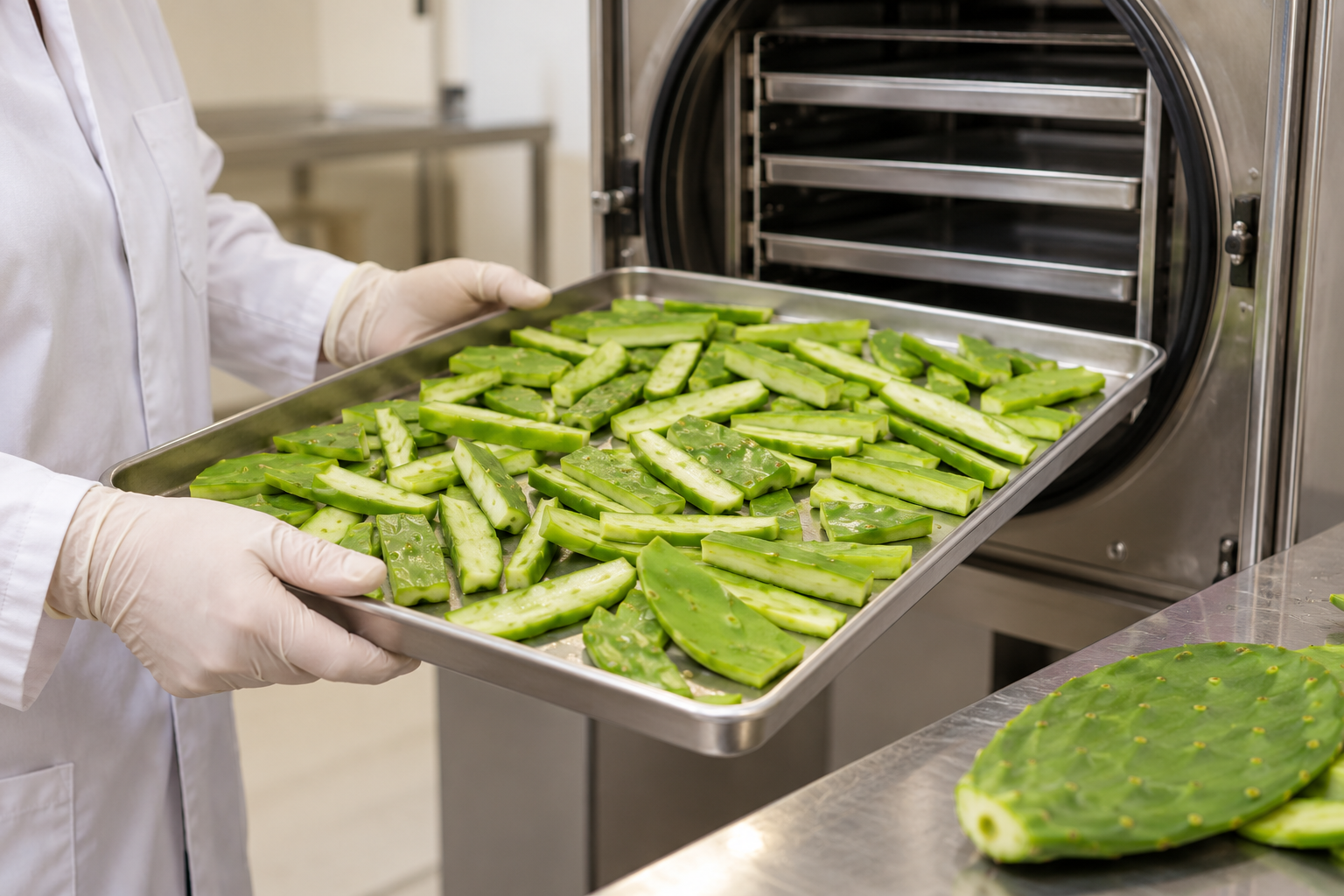
Freeze-drying removes water from the Nopal used in our flagship capsules.
For our flagship Freeze-Dried Nopal Powder Capsules, we freeze-dry the harvested cactus pads rather than extract pectin as a separate ingredient.
Freeze-drying removes water from frozen plant material under reduced pressure.
Our goal is to preserve the character of the Nopal we grow as closely as practical while preparing it in a convenient form.
Pectin remains part of the larger cactus story, alongside its other fibers and naturally occurring plant components.
From Our Farms to the Nopal Family
The Opuntia streptacantha behind our flagship capsules grows on our own farms in central Mexico, at approximately 2,500 meters—about 8,200 feet—above sea level.
Pectin becomes part of the pad’s cell walls while the cactus is growing. Our involvement continues through harvest, freeze-drying, milling and preparation for capsules.
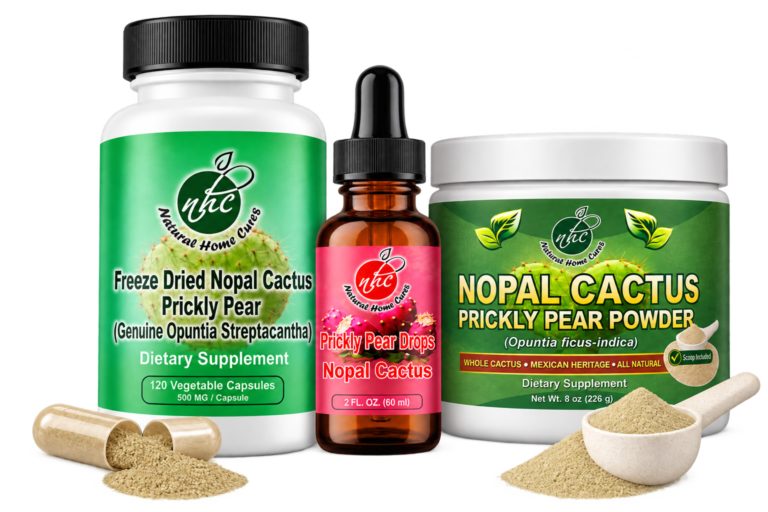
Our Nopal family also includes Nopal Powder and Prickly Pear Drops, providing additional ways to explore the cactus and its fruit.
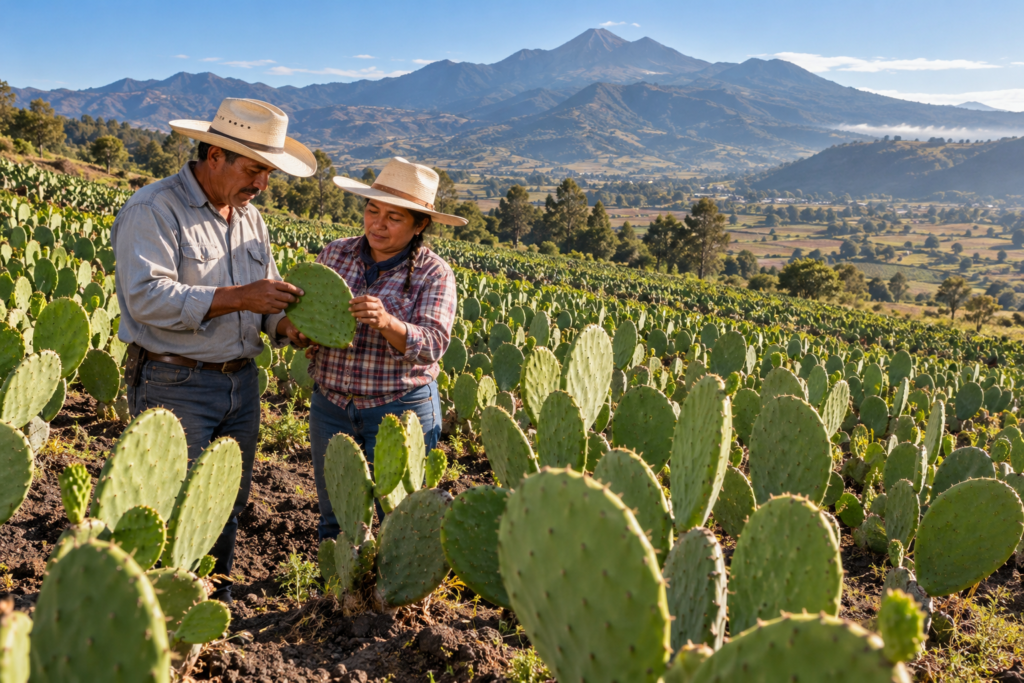 STAGE 1 OF 5
Grow
Nopal cactus grows on our farms.
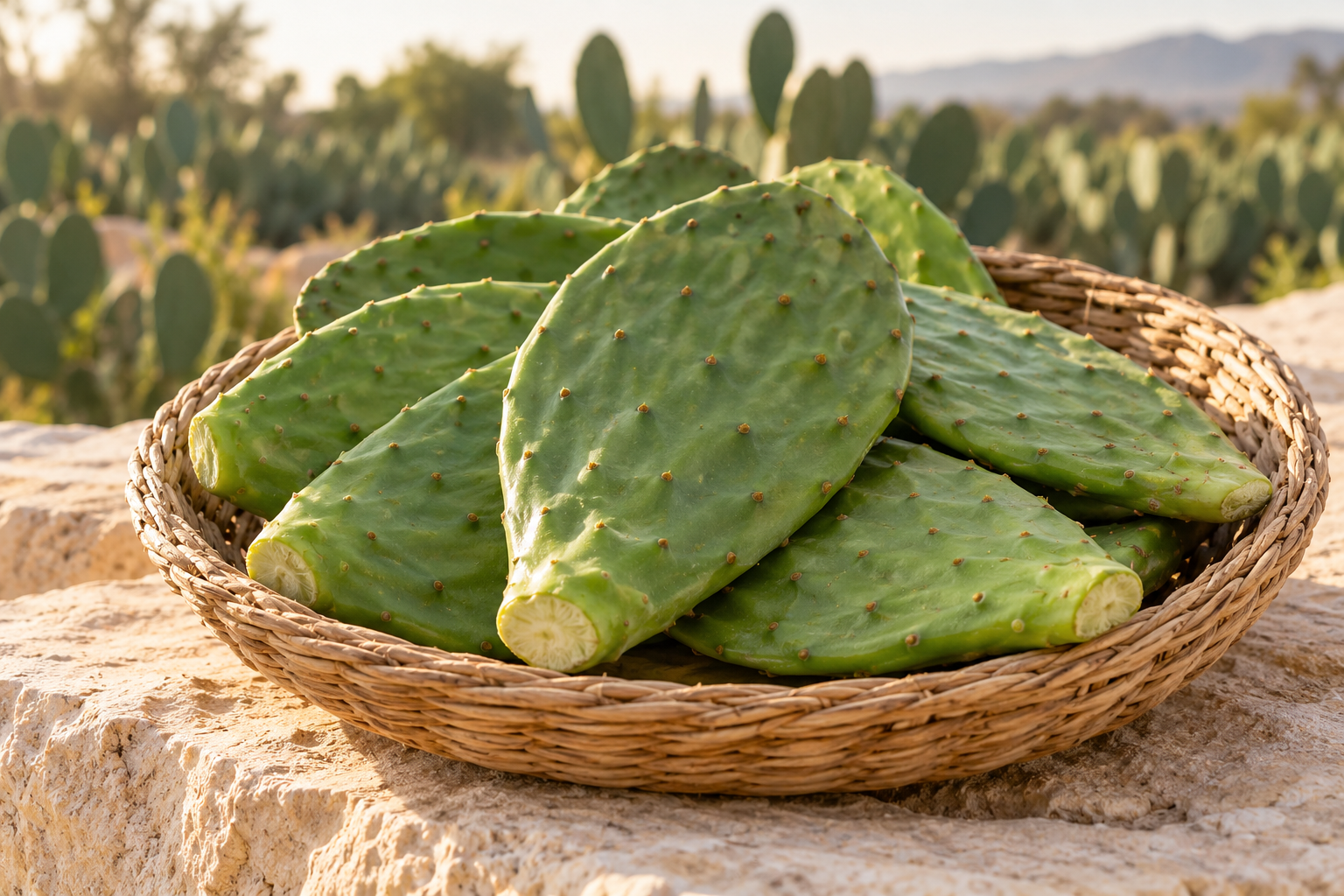 STAGE 2 OF 5
Harvest
The cactus pads are harvested and prepared.
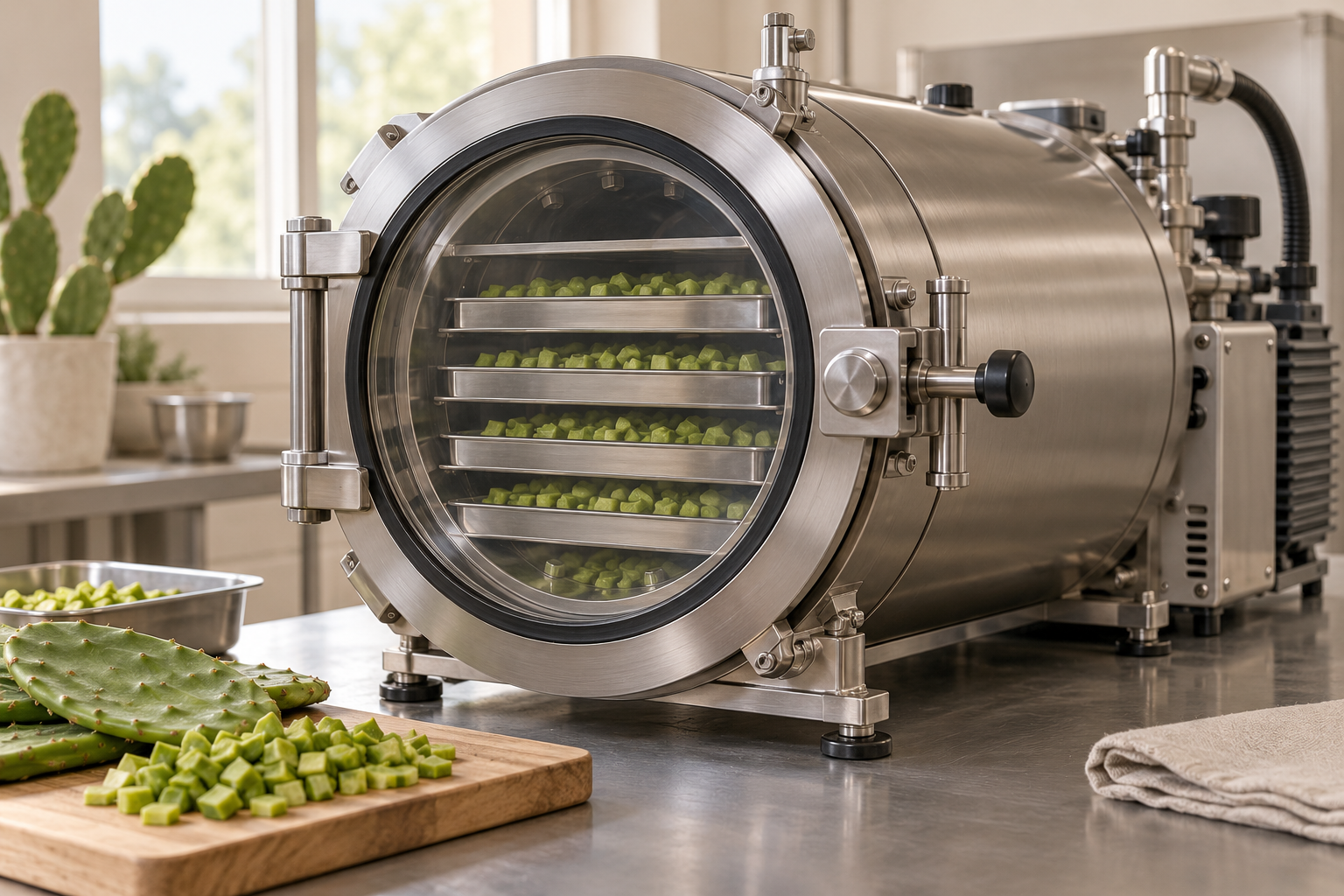 STAGE 3 OF 5
Freeze-dry
Moisture is removed from the prepared pads by freeze-drying.
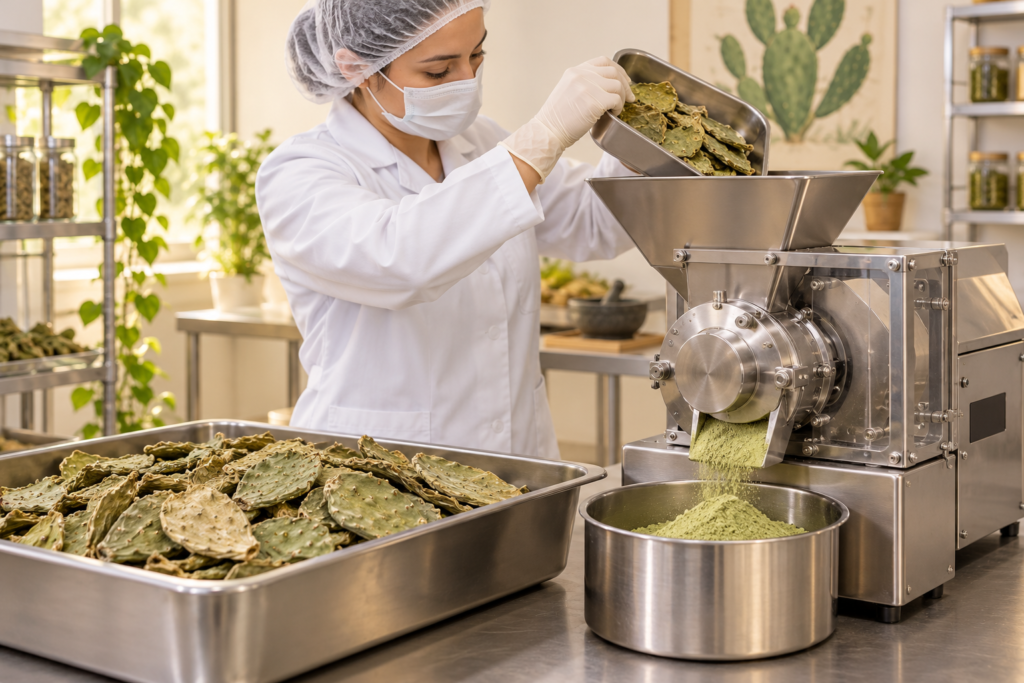 STAGE 4 OF 5
Mill
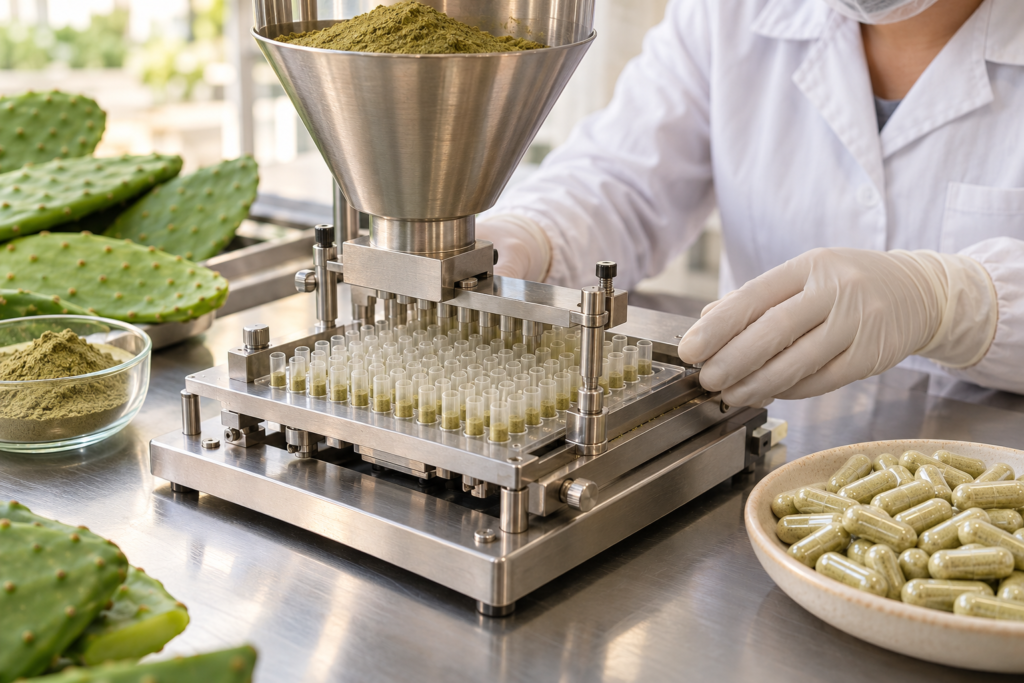
The dried pads are milled into powder.
 STAGE 5 OF 5
Fill capsules
The milled powder is filled into capsules.
More Than Something That Makes Jelly
Pectin may be familiar because of jam and jelly.
But inside a living Nopal cactus, its story is much more interesting.
Pectin helps form the architecture of plant cell walls.(1), (2)
It interacts with water.
It becomes part of the cactus’s complex mixture of dietary fibers and polysaccharides.(3), (4)
And when consumed as part of plant material, pectin enters the fascinating world of dietary fiber and microbial fermentation.(7), (8)
At Natural Home Cures, pectin gives us another reason to appreciate the whole Nopal cactus.
Because the more closely we examine this plant, the more we discover that even something as ordinary-sounding as fiber is actually made up of an extraordinary collection of natural components.
FROM CACTUS TO PRODUCT
Keep the botanical
in the story.
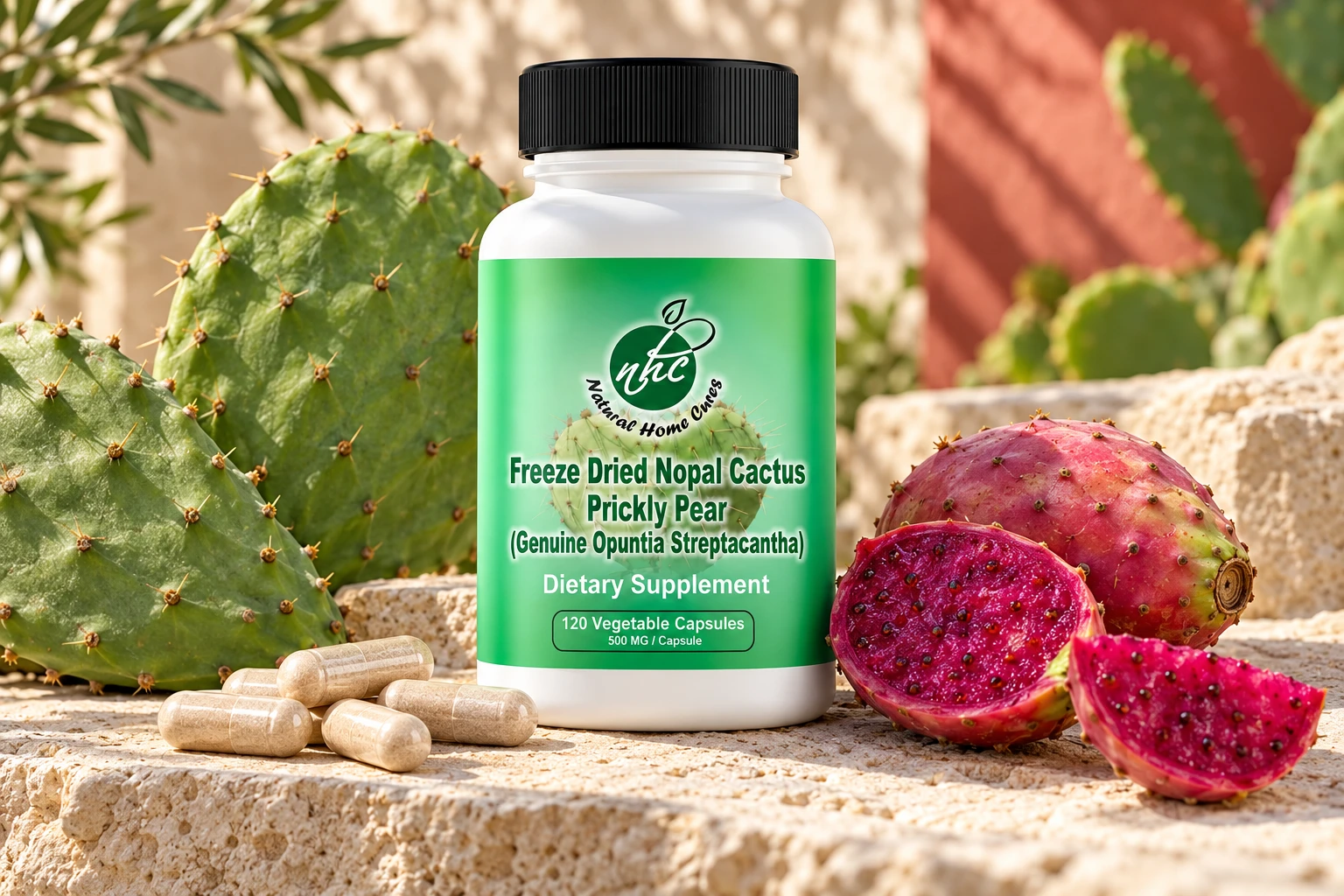
Freeze-dried Nopal cactus capsules.
Explore our Nopal →The research behind this articleSource References
- 01Source referencePectin Structure and Biosynthesis.View source
Full citation
Mohnen D. “Pectin Structure and Biosynthesis.” Current Opinion in Plant Biology. 2008;11(3):266–277. - 02Source referenceEvolving Views of Pectin Biosynthesis.View source
Full citation
Atmodjo MA, Hao Z, Mohnen D. “Evolving Views of Pectin Biosynthesis.” Annual Review of Plant Biology. 2013;64:747–779. - 03Source referenceCactus Stems (Opuntia spp.): A Review on Their Chemistry, Technology, and Uses.View source
Full citation
Stintzing FC, Carle R. “Cactus Stems (Opuntia spp.): A Review on Their Chemistry, Technology, and Uses.” Molecular Nutrition & Food Research. 2005;49(2):175–194. - 04Source referenceNopal Cactus (Opuntia ficus-indica) as a Source of Bioactive Compounds for Nutrition, Health and Disease.View source
Full citation
El-Mostafa K, El Kharrassi Y, Badreddine A, et al. “Nopal Cactus (Opuntia ficus-indica) as a Source of Bioactive Compounds for Nutrition, Health and Disease.” Molecules. 2014;19(9):14879–14901. - 05Source referenceChemistry and Uses of Pectin—A Review.View source
Full citation
Thakur BR, Singh RK, Handa AK, Rao MA. “Chemistry and Uses of Pectin—A Review.” Critical Reviews in Food Science and Nutrition. 1997;37(1):47–73. - 06Source referenceOpuntia spp. Mucilage’s: A Functional Component With Industrial Perspectives.View source
Full citation
Sáenz C, Sepúlveda E, Matsuhiro B. “Opuntia spp. Mucilage’s: A Functional Component With Industrial Perspectives.” Journal of Arid Environments. 2004;57(3):275–290. - 07Source referenceQuestions and Answers on Dietary Fiber.View source
Full citation
U.S. Food and Drug Administration. “Questions and Answers on Dietary Fiber.” - 08Source referenceThe Role of the Gut Microbiota in Nutrition and Health.View source
Full citation
Flint HJ, Scott KP, Louis P, Duncan SH. “The Role of the Gut Microbiota in Nutrition and Health.” Nature Reviews Gastroenterology & Hepatology. 2012;9:577–589.