Natural Home Cures · Growing & Harvesting
Mangosteen
Soil
A living foundation.
Moisture, depth and balance.
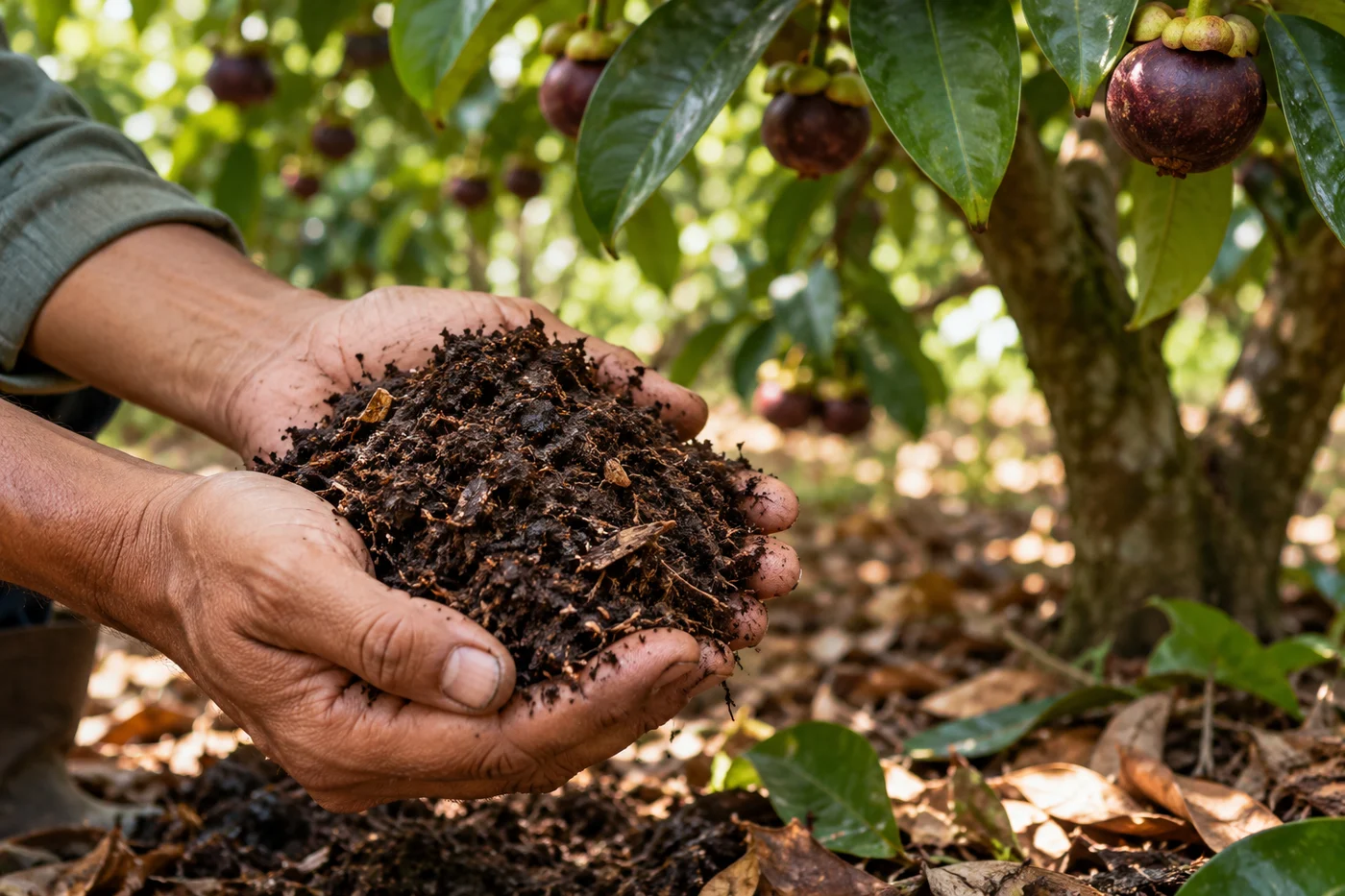
with the ground.
Good soil care starts with how the whole site behaves. Follow water through the root zone, compare soil structure, then consider organic material and testing before choosing amendments.
01 · The foundation of a long-lived tree
What Mangosteen Needs
From Its Soil.
Mangosteen benefits from deep, porous soil enriched with organic material and dependable moisture.(1)(2)
Depth
Space for the root system and a stable growing environment.
Organic matter
A richer soil environment with moisture-holding capacity.
Drainage
Excess water can move away rather than remain around young roots.
The first balance to understand is between holding useful moisture and allowing excess water to escape.
02 · Moisture and drainage belong together
Keep Moisture.
Drain the Excess.
The production guide calls for moist soil with good drainage. It also warns that standing water over seedling roots can kill the plant.(2)
Moist soil and waterlogged soil are different growing conditions.
Moist & porous
Useful moisture stays in the soil while air space remains and excess water drains away.
Moisture + drainageWaterlogged
Persistent saturation leaves less room for air around the roots. Young seedlings are especially vulnerable.
Standing waterTexture and structure help explain how that water moves through a particular soil.
03 · Look beyond the soil’s name
Look at Soil Texture
and Structure Together.
The species profile describes several growing soils. Their ability to hold water and drain it matters alongside texture.(1)(2)
Balance in the mix.
World Agroforestry lists sandy loam and lateritic soils with good drainage among favorable environments.(1)
Clay can support the crop.
The sources describe productive clay soils containing coarse material, sand or silt.(1)(2)
Drainage is only one part.
The profile associates low-humus sand with low yields and describes sandy alluvial soil as unsuitable.(1)
These soil descriptions are not a recipe to add sand to a planting hole. Assess the whole site and its drainage before choosing amendments.
Surface texture is only part of the picture. Groundwater and the deeper soil profile also matter.
04 · Below the visible surface
Check Drainage
Below the Surface.
A deep profile can still behave differently as rainfall, soil texture and groundwater change.
The published water-table figures help explain why site drainage matters. They are not a universal engineering specification or a fixed planting depth.
Once the site’s drainage is understood, surface care and planting preparation can be considered.
05 · Care at the soil surface
Use Organic Material
to Support the Root Zone.
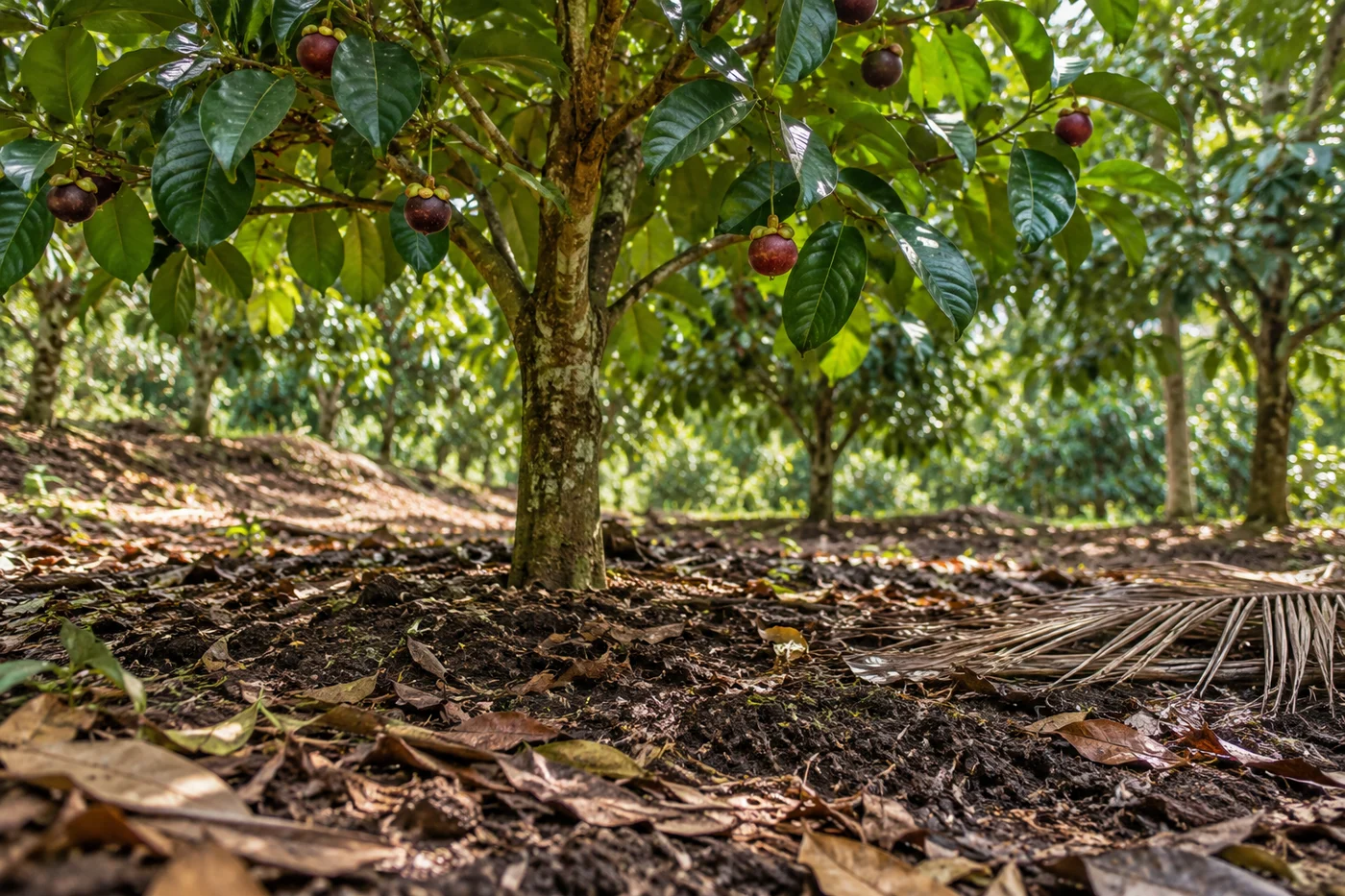
The production guide describes topsoil and farm manure in planting preparation. World Agroforestry also records coconut husk or frond mulch used to retain moisture.(2)(1)
Match care to the tree.
Nutrient management depends on tree age, existing fertility and local conditions. More fertilizer is not automatically better.
Organic material is one part of soil care. Chemical conditions need their own assessment.
06 · Measure before you amend
Test the Soil
Before Choosing Amendments.
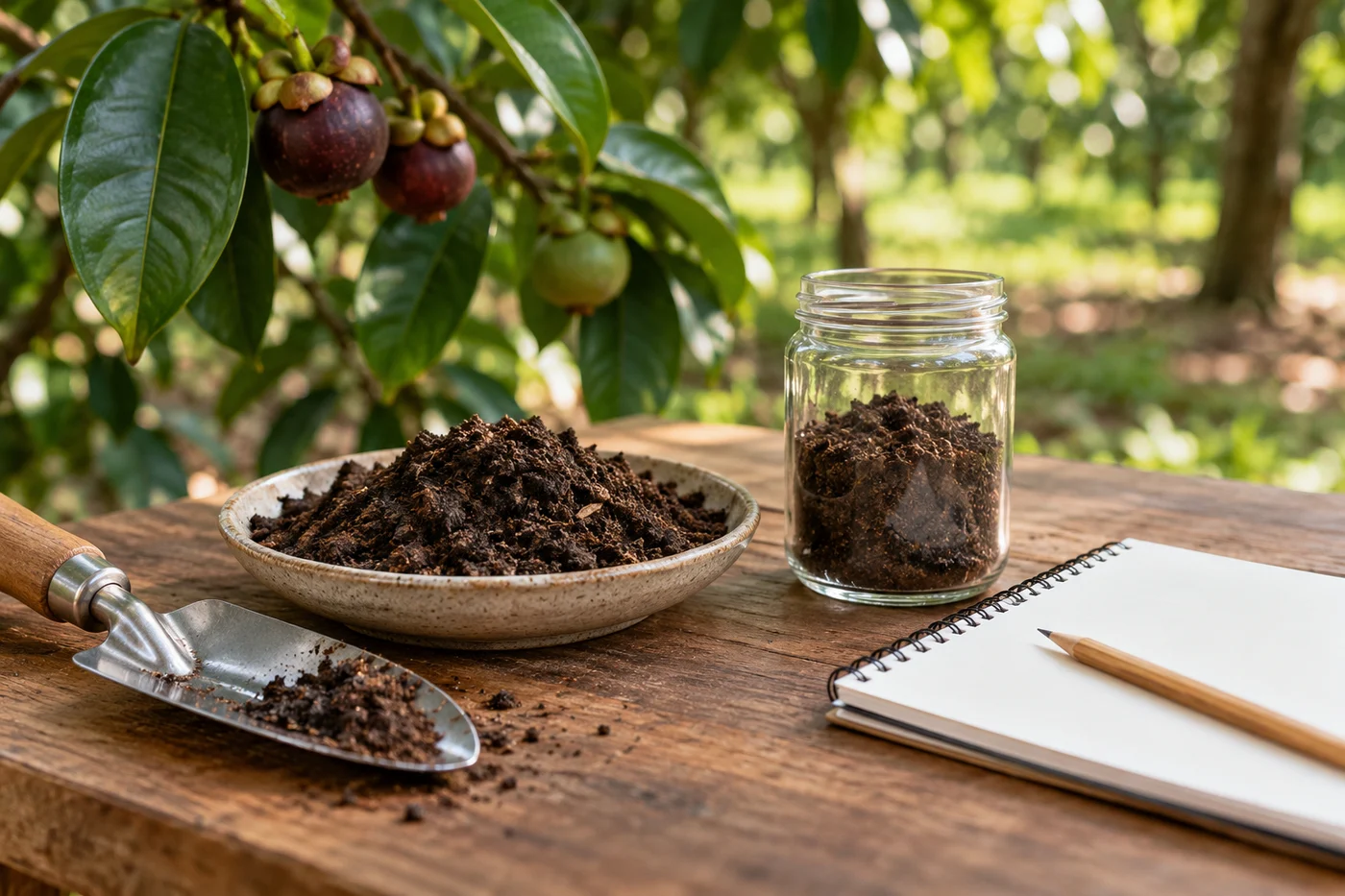
World Agroforestry notes poor adaptation to limestone soils.(1) A soil test can help distinguish pH, nutrient supply and salt-related concerns.

07 · The orchard behind the botanical
From Living Soil
to Living Fruit.
The root environment is part of the cultivation story behind mangosteen.
Our Freeze-Dried Rich Pericarp Mangosteen Capsules use the fruit’s pericarp of Garcinia mangostana.
Explore our mangosteen →The research behind this articleSource References
- 01Agroforestry species profileGarcinia mangostana — Soil and EcologyView source ↗
Full citation
Orwa C, Mutua A, Kindt R, Jamnadass R, Simons A. 2009. Agroforestree Database: a tree reference and selection guide, version 4.0. Garcinia mangostana L. species profile. Ecology, soil type and tree management.
- 02Orchard production guideMangosteen Production GuideView source ↗
Full citation
Philippine Department of Agriculture, High Value Crops Development Program. Mangosteen Production Guide. Soil and climatic requirements, irrigation, planting and fertilization. Guidance is interpreted in its local growing context.
- 03Soil and plant nutrition researchChanges of Plant Nutrients in Soils and Trees During Fruit DevelopmentView source ↗
Full citation
Pechkeo S, Sdoodee S, Nilnond C. Changes of Plant Nutrients Concentration in Soils and Trees of Mangosteen (Garcinia mangostana L.) during the Fruit Development. Agriculture and Natural Resources. 2007;41(1):61–71. Reported soil properties are measurements in the studied orchard, not an optimum-pH recommendation.