Natural Home Cures · Growing & Harvesting
Mangosteen
Season &
Harvesting
Read the fruit.
Respect the season.
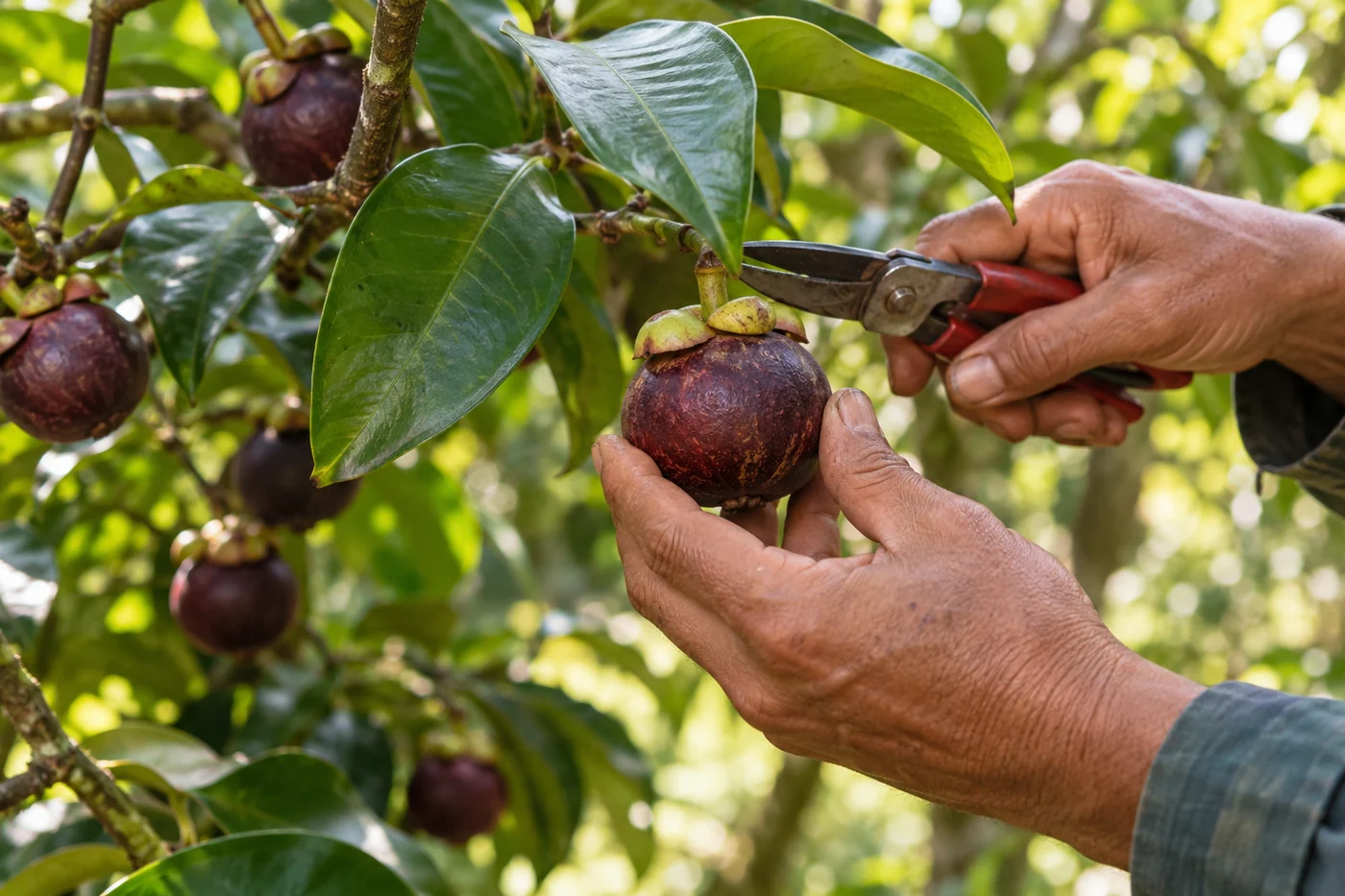
A careful touch.Illustrative orchard scene.
A calendar helps locate the season; the fruit tells you when to pick. Follow the harvest in order: regional timing, pericarp color, repeated picking and gentle handling.
01 · A local calendar
One Fruit.
Different Harvest Seasons.
Eastern region
April–JulyRayong, Chanthaburi and Trat. The Department of Agricultural Extension reports the largest market supply in May.(7)
Southern region
July–SeptemberThe southern crop follows the eastern season, according to Thailand’s Department of Agricultural Extension.(7)
Southern region
May–AugustThe Food and Agriculture Organization (FAO) reports a June–July peak.(2)
Davao
July–SeptemberThe main harvest window described in the JICA technical guideline.(3)
Reported seasonReported peakOutside this window
Within the local season, read the fruit’s maturity cues to decide what is ready to pick.
02 · Maturity you can see
Use Pericarp Color
to Judge Maturity.
The University of California, Davis (UC Davis), identifies skin color moving toward reddish-purple as the main maturity signal.(5) Research describes the progression from pale greenish-yellow through pink and red to deep purple.(4)(6)
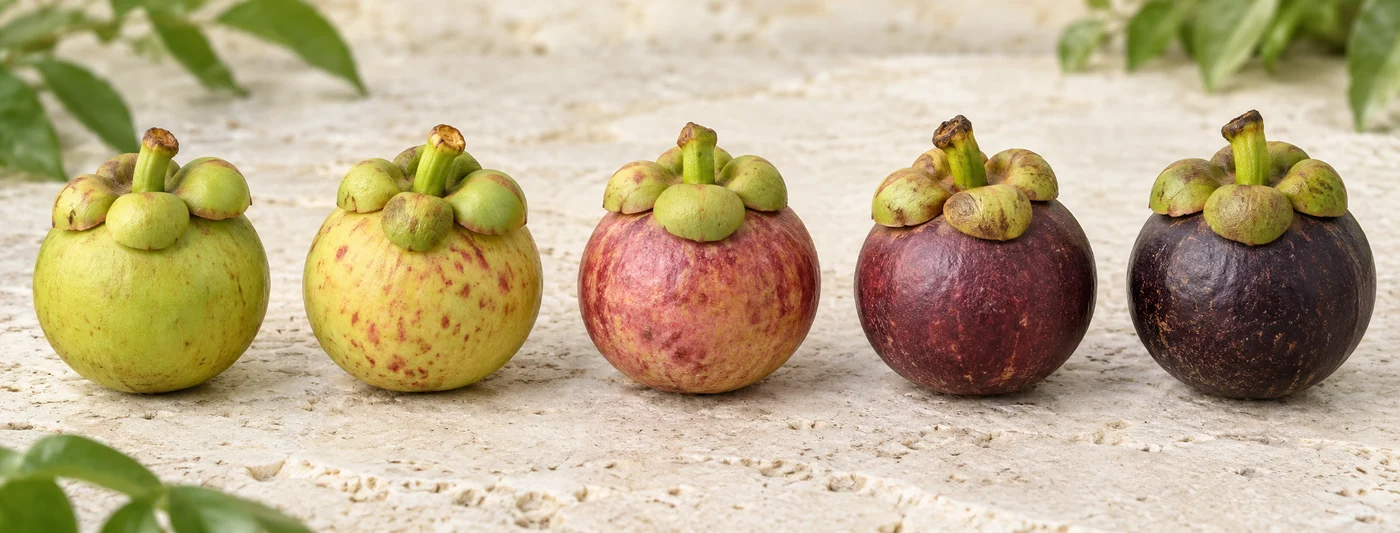
Illustrative color progression—not a calibrated grading chart or five official maturity stages. Local harvest standards and intended distribution also matter.
Color can continue after picking.
Palapol and colleagues observed further purple development in harvested fruit that had begun changing color.(6)
Color alone cannot promise flavor.
Harvesting too early can compromise eating quality. The paper discusses established guidance using distinct pink-red spotting as a minimum quality cue.(6)
Fruit on the same tree will not necessarily reach these colors together. That is why harvesting is repeated.
03 · The orchard ripens in waves
Harvest in Passes
as Fruit Becomes Ready.
Flowering and fruit development are staggered. Select mature fruit and return for those still developing.(2)(4)
Why not count one fixed number of days?
The reviewed sources give different development estimates: about 13 weeks after blooming in the Thai study and five to six months in the Philippine production guide.(4)(1) Their conditions differ. Use maturity and fruit condition together with suitable local guidance.
Selecting the right fruit is the first task. Protecting it during picking is the next.
04 · Pick with care
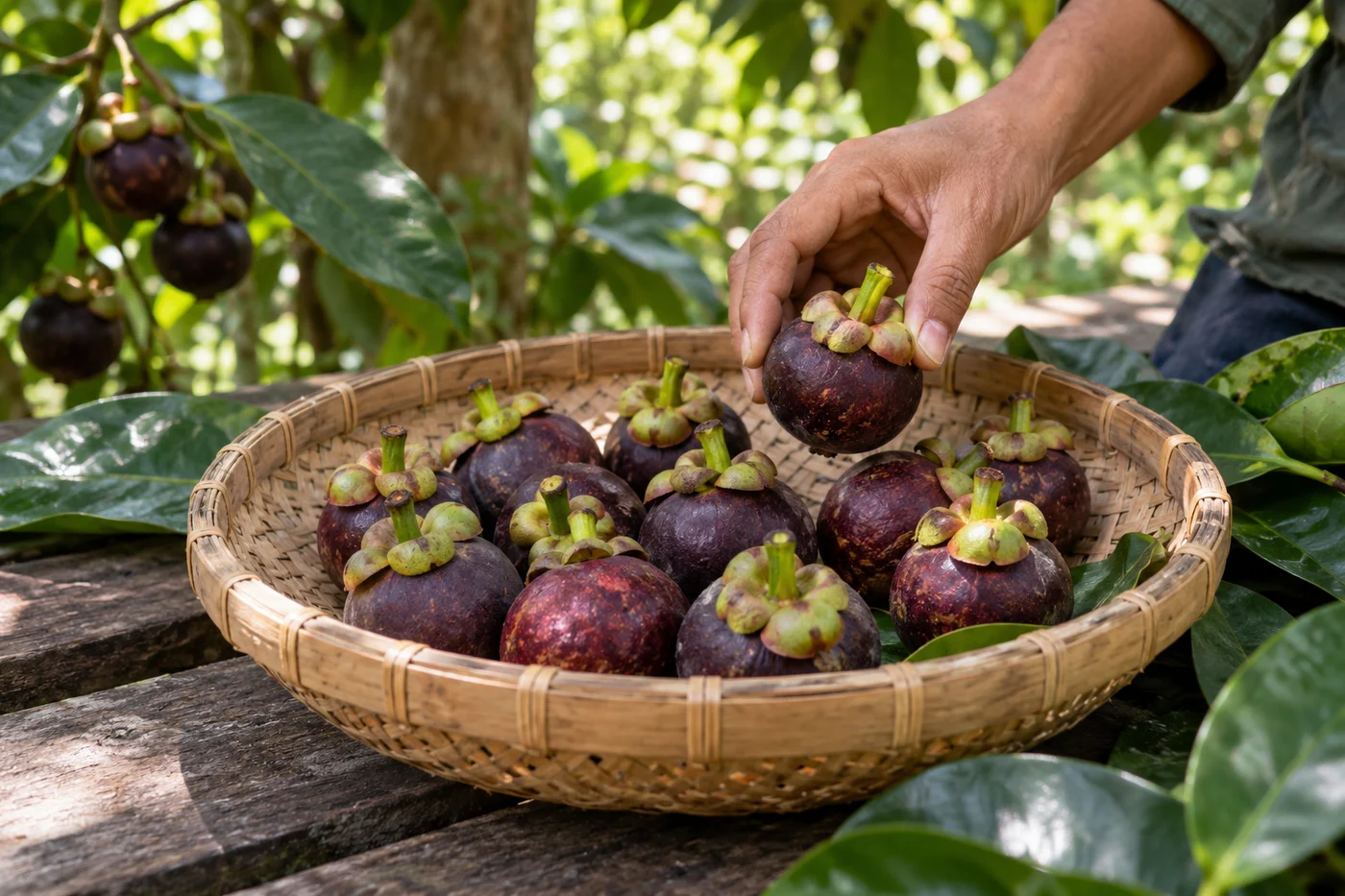
Pick Gently.
Protect the Pericarp and Flesh.
A protective-looking pericarp does not make mangosteen resistant to impact. Compression and bruising can lead to pericarp hardening and changes in the flesh.(5)
After collection, assess the fruit’s overall condition as well as its color.
05 · More than ripeness
Look Beyond
Ripeness Alone.
A ripe color is one part of quality. UC Davis identifies four features to assess when sorting the fruit.(5)
Size
Assess size as part of grading the harvest.
Shape
Look at the fruit’s overall form and regularity.
Color
Check development of the pericarp color.
Condition
Inspect cracks, blemishes, latex staining and insect damage.
External appearance is useful for sorting, but it does not reveal every internal defect.
06 · From harvest to pericarp
Botanical Quality
Begins With the Fruit.
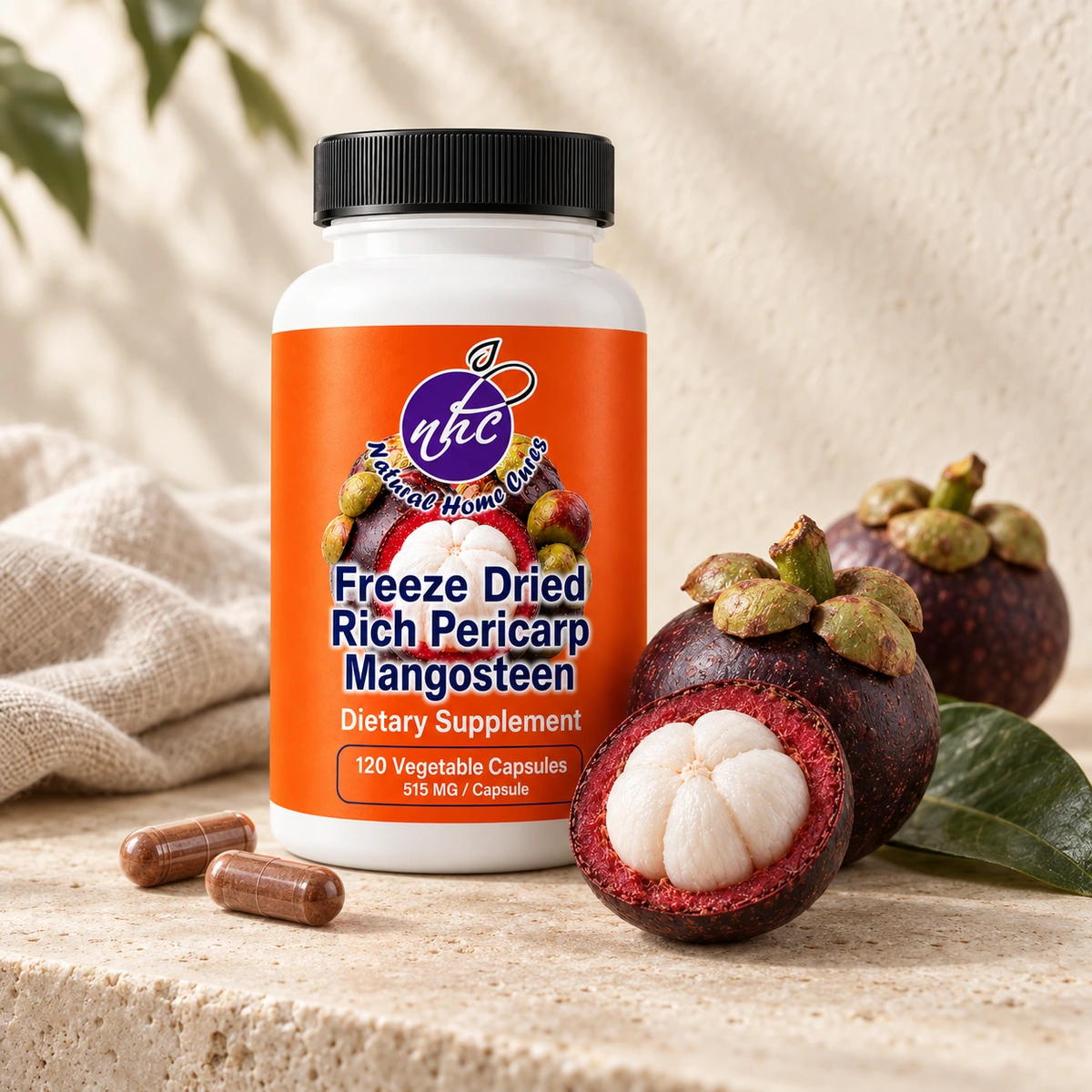
Our Freeze-Dried Rich Pericarp Mangosteen Capsules use the thick outer pericarp of Garcinia mangostana.
Careful harvesting helps protect that botanical material before the processing step.
Explore our mangosteen →The research behind this articleSource References
- 01Orchard production guideMangosteen Production GuideView source ↗
Full citation
Philippine Department of Agriculture, High Value Crops Development Program. Mangosteen Production Guide. Fruit maturity and harvesting methods.
- 02Regional harvest guidanceFruits of Vietnam — MangosteenView source ↗
Full citation
Food and Agriculture Organization of the United Nations. Fruits of Vietnam, section 4.6: Mangosteen. Regional fruiting seasons, repeated picking and careful handling.
- 03Postharvest technical guidelinePackaging Development and Post-Harvest ProcessesView source ↗
Full citation
Japan International Cooperation Agency. Technical Guideline for Packaging Development and Post-Harvest Process of Fresh and Semi-processed Agricultural Products. Mangosteen harvest season in Davao.
- 04Harvest maturity researchHarvesting Seasons, Maturity Stages and Internal CharacteristicsView source ↗
Full citation
Chaisrichonlathan P, Noomhorm A. Effects of harvesting seasons and maturity stages on internal characteristics of the mangosteen having different surface properties. International Journal of Food Science & Technology. 2011;46(4):717–723.
- 05Maturity & quality fact sheetMangosteen — Produce FactsView source ↗
Full citation
Kader AA. Mangosteen. Produce Facts. UC Davis Postharvest Research and Extension Center. Updated May 2001. Accessed October 14, 2026.
- 06Fruit ripening researchColour Development and Quality During Ripening and After HarvestView source ↗
Full citation
Palapol Y, Ketsa S, Stevenson D, Cooney JM, Allan AC, Ferguson IB. Colour development and quality of mangosteen (Garcinia mangostana L.) fruit during ripening and after harvest. Postharvest Biology and Technology. 2009;51(3):349–353.
- 07Official Thai harvest guidanceMangosteen Seasons in ThailandView source ↗
Full citation
Department of Agricultural Extension, Ministry of Agriculture and Cooperatives, Thailand. Official question and answer on mangosteen varieties and regional production seasons. Eastern region: April–July, largest market supply in May; southern region: July–September. Published 8 June 2023. Thai-language source.