Freeze-Dried Mangosteen: A Careful Process for Preserving What Matters
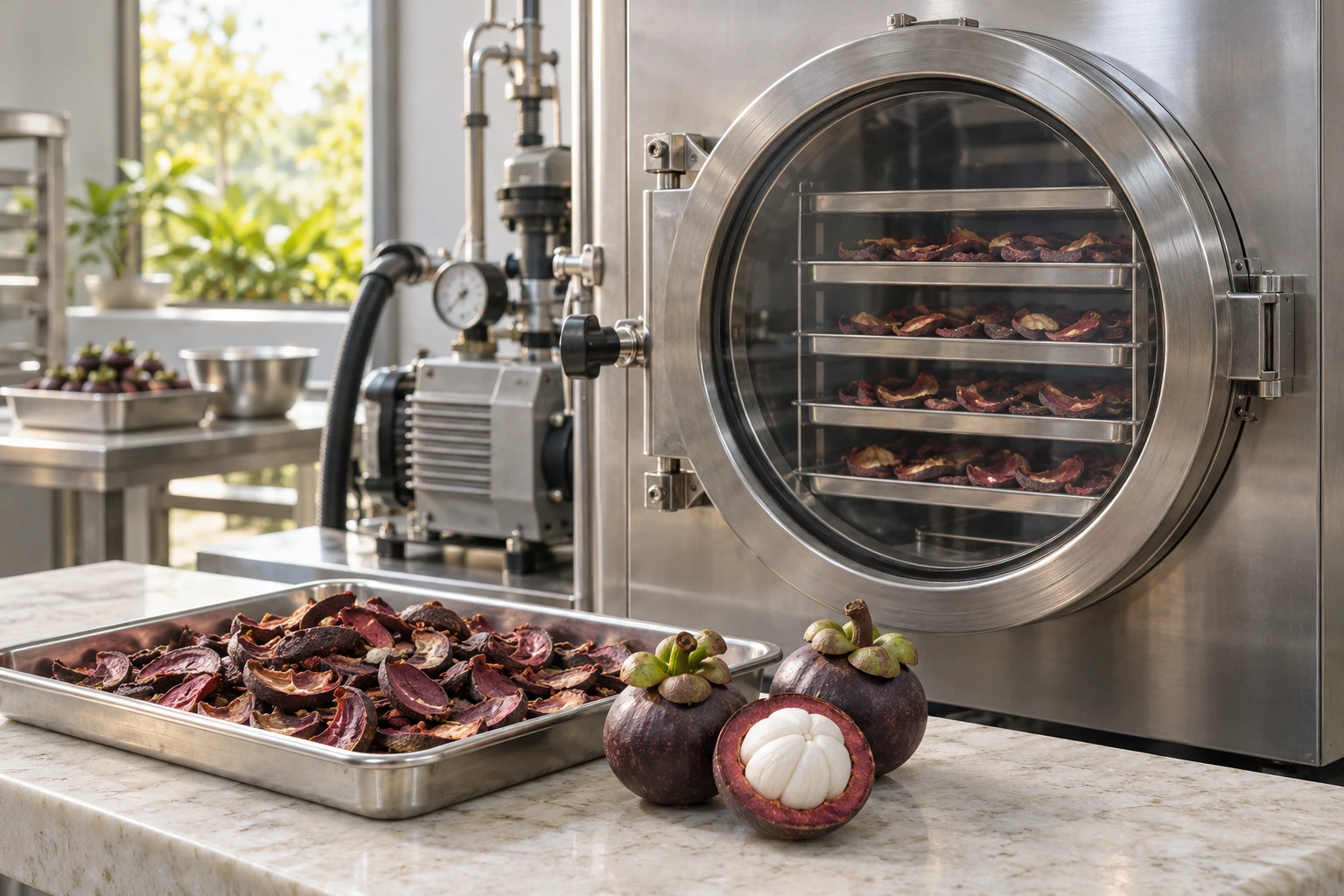
A mangosteen supplement’s story begins long before you open the bottle—with the fruit, the part we use, and the care taken to prepare it.
At Natural Home Cures, we choose freeze-drying for our Rich Pericarp Mangosteen Capsules. The process removes moisture from the frozen rind under vacuum, limiting prolonged exposure to high temperatures that can affect heat-sensitive nutrients and plant compounds.(1) After drying, the rind is milled into powder and filled into capsules. “Freeze-dried” is more than a phrase on our label—it tells you how your mangosteen was prepared.
Why it matters to you
You choose the pericarp.
We take care of what makes it valuable.
The mangosteen pericarp matters. So does the care we give it. Freeze-drying helps protect its natural characteristics as we prepare it for your capsules.(1)
Care for sensitive compounds
A gentler way to remove moisture from mangosteen pericarp.
Preserve natural character
A process chosen with the rind’s natural color and plant compounds in mind.
Prepare it for everyday use
Dried pericarp can be milled into powder, filled into capsules, and packaged with care.
In a 2023 comparison of mangosteen pericarp, freeze-dried samples retained more anthocyanin pigments than the oven- and sun-dried samples tested.(7)
What Is Freeze-Drying?
Freeze-drying, also called lyophilization, removes water from a frozen product. Inside a vacuum chamber, ice changes directly into water vapor, bypassing the liquid stage. This change is called sublimation.(1)
The aim is to remove moisture while treating the rind with care. The resulting dried pericarp is lighter and easier to store than fresh, water-rich rind.
How Ice Can Leave Without Melting
An ice cube melts into a puddle, and liquid water evaporates. Both changes depend on temperature and pressure. Lowering the pressure changes the conditions under which water moves between its solid, liquid, and gaseous states.(2)
A freeze dryer puts this relationship to work. Once the rind is frozen, the machine lowers the pressure and supplies controlled heat so the ice can pass directly into vapor. The equipment controls both temperature and pressure throughout this stage.(1), (3)
Stage One: Preparing the Mangosteen
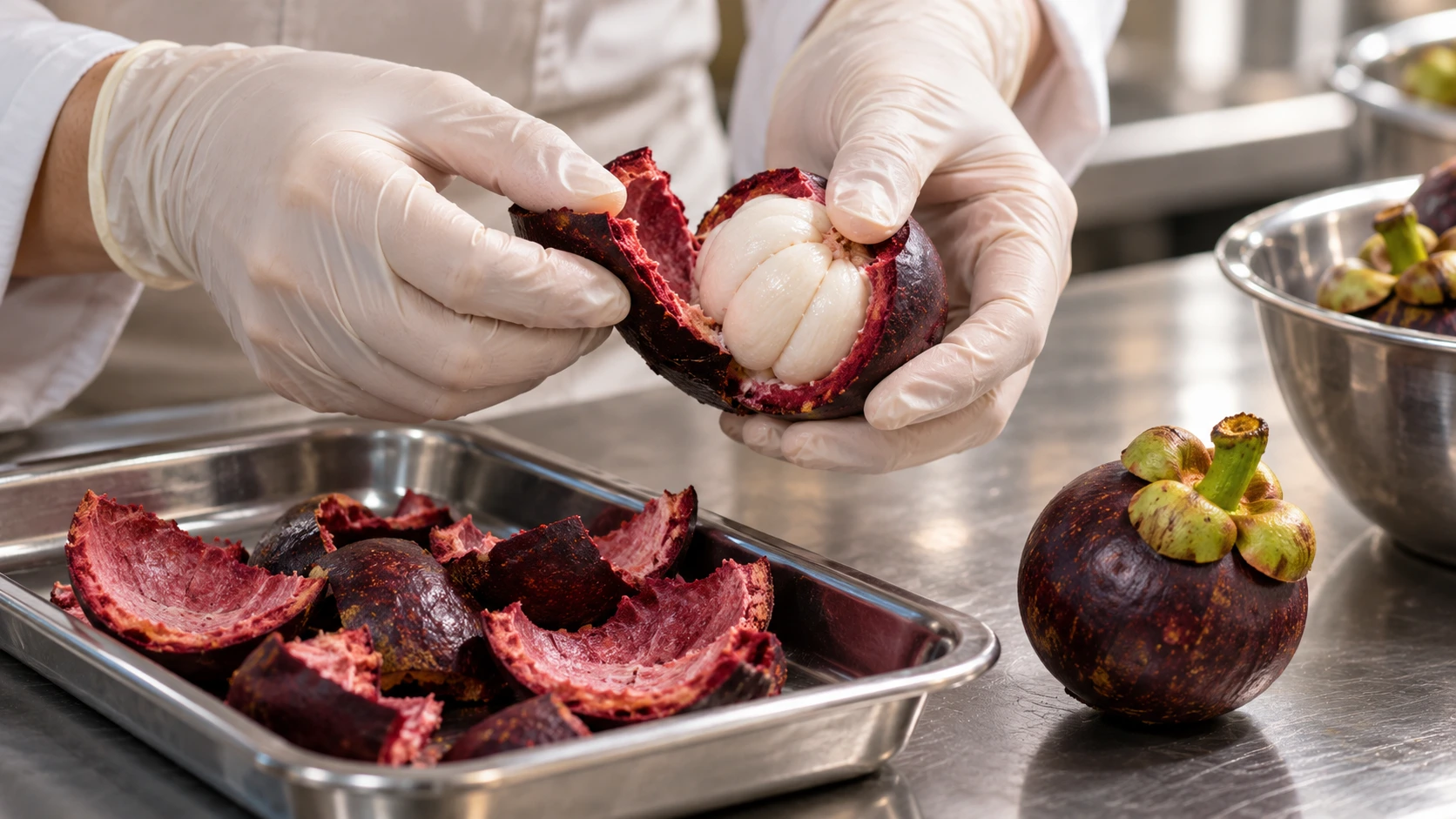
The rind is cut into suitable pieces and arranged on trays. Layer depth influences how it freezes and dries.(3)
This gives the freeze-drying process a more consistent starting point.
Stage Two: Freezing With Care
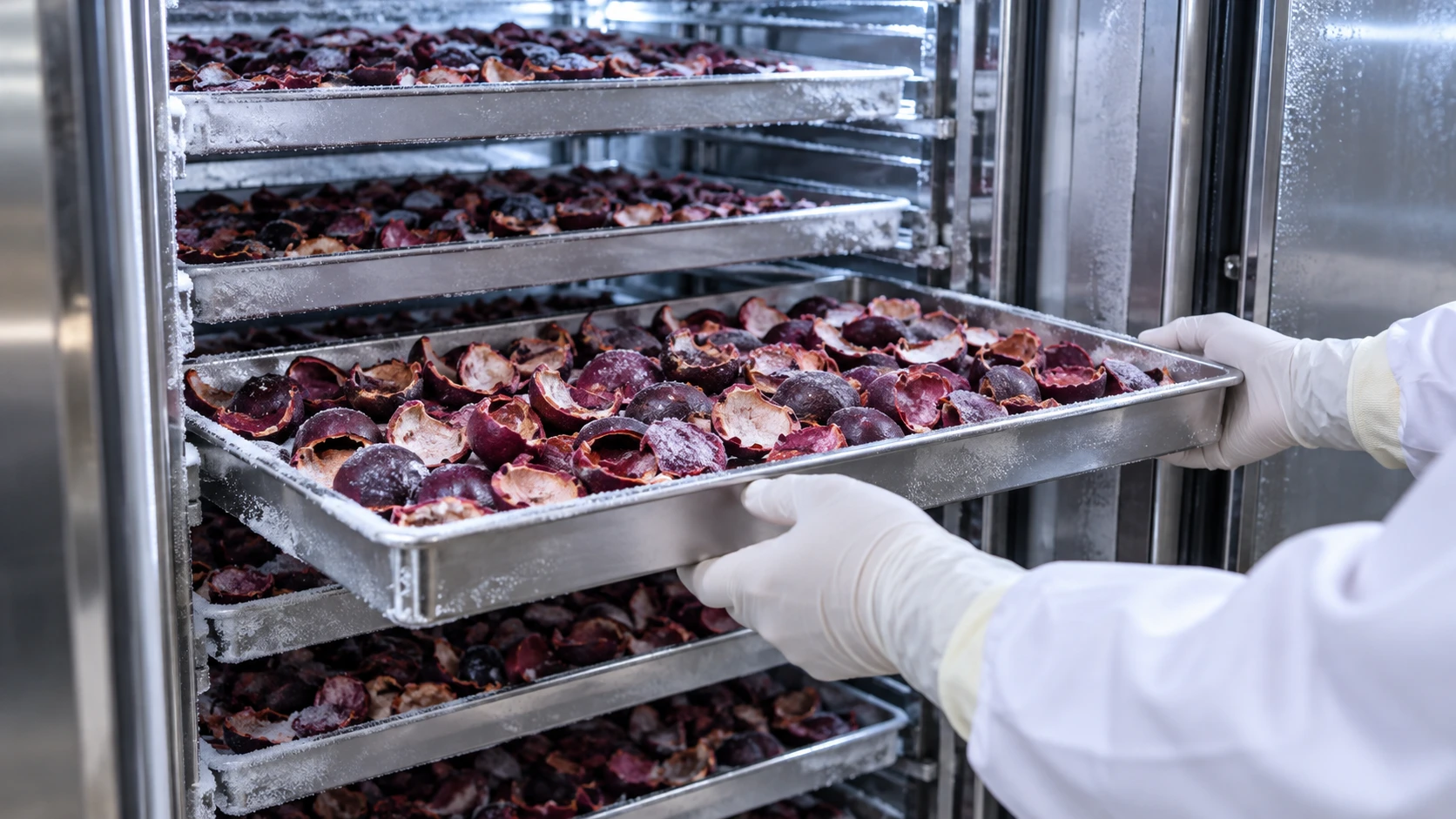
The freezing step does more than make the mangosteen cold. It establishes the ice structure that will later be removed during drying. In foods, rapid freezing can help limit the formation of large ice crystals that can damage cell structures and affect texture.(4)
If you have ever left a can of soda in the freezer, you have seen how water’s expansion can distort its container. Ice formation can also affect the structure of plant tissue. That is why freezing conditions matter for the rind and the drying stages that follow.
Stage Three: Primary Drying—Removing the Ice
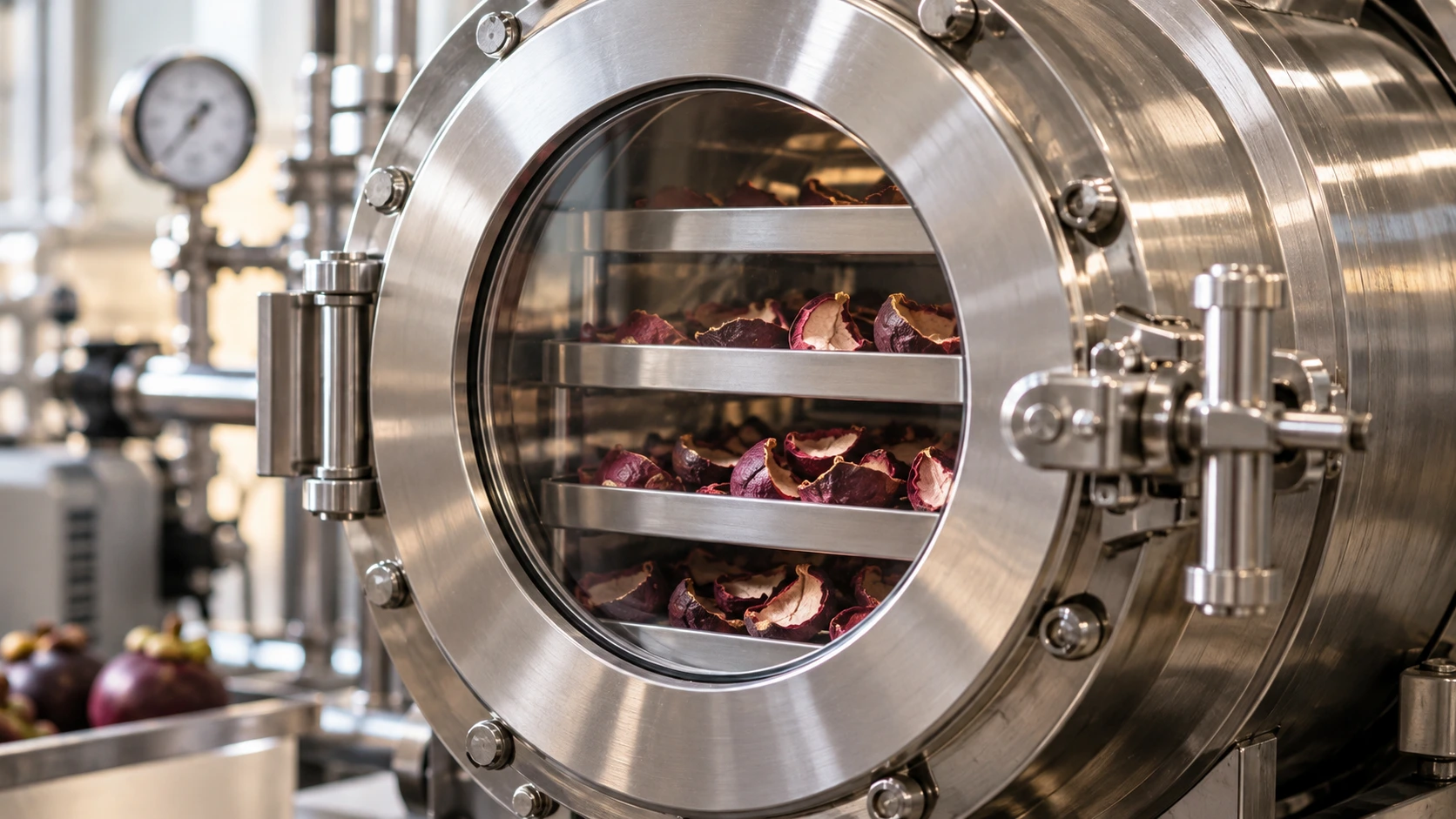
The frozen pericarp is placed under vacuum, and controlled heat supplies the energy needed for sublimation. Most of the ice is removed during this stage. A cold condenser collects the water vapor as ice elsewhere in the system, helping keep the drying process moving.(3)
Primary drying is a balancing act. Heat must reach the rind at a suitable rate while its temperature stays below the point at which its structure could collapse. A well-designed cycle balances temperature, pressure, and time for the product being dried.(5)
Stage Four: Secondary Drying—Finishing the Job
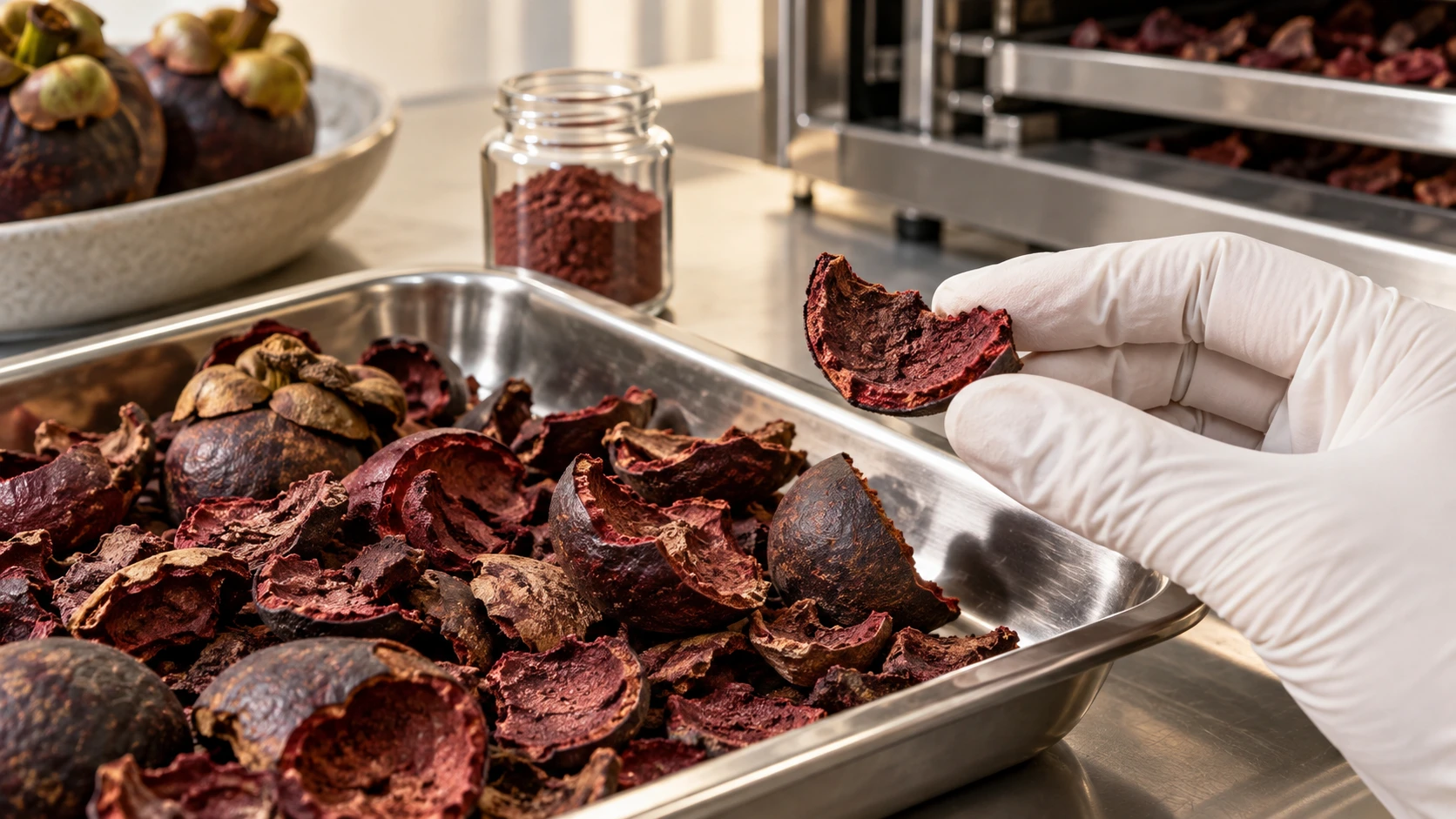
Once the ice has been removed, some moisture remains associated with the rind. Secondary drying addresses this remaining water. Under vacuum, the temperature is adjusted to encourage its release through a process called desorption.(5)
The dried rind is then ready for milling and the remaining steps in capsule preparation.
Why Take This Much Care?
The practical value of freeze-drying is preservation. Removing moisture helps prepare the mangosteen pericarp for storage and the next stage of its journey.(1)
That care takes equipment, energy, time, and attention. We take that care because how we prepare the pericarp matters to what goes into your bottle.
What Food Research Helps Explain
Researchers have compared drying methods by measuring what remains in the finished food. A 2018 study in Food Chemistry examined blueberries, tart cherries, strawberries, and cranberries after hot-air drying, freeze-drying, and Refractance Window drying. The researchers assessed nutrients and plant compounds, including vitamins, anthocyanins, phenolics, and flavonoids, alongside other quality measures.(6)
Refractance Window drying spreads food in a thin layer on a film heated from below by circulating hot water. The film keeps the food separate from the water as moisture evaporates.(8)
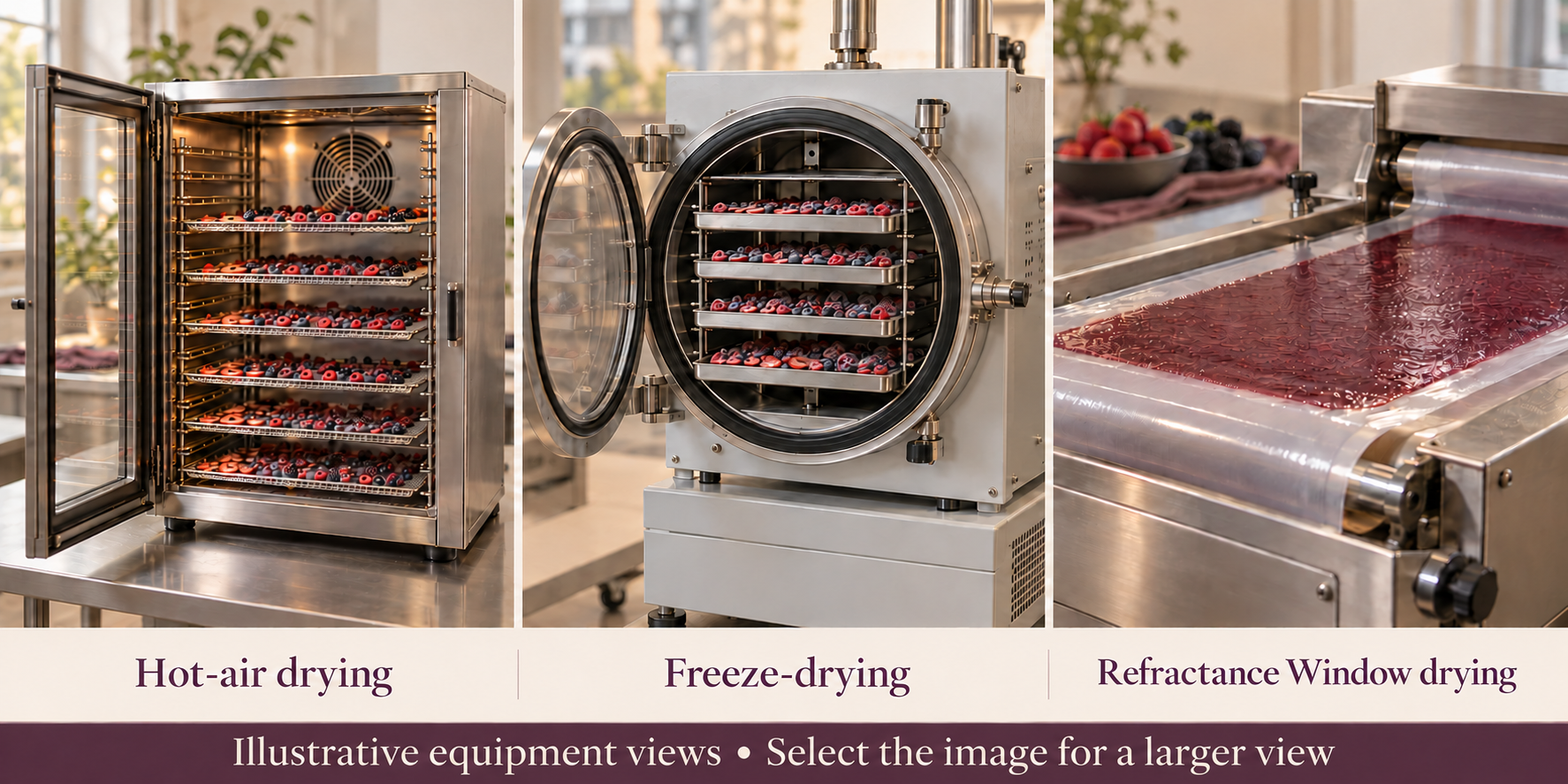
In the 2018 study, hot-air-dried fruits generally showed poorer retention of the measured quality characteristics than fruits dried by the other methods. The findings help explain interest in carefully selected drying methods. Processing can influence how well a plant food’s valuable characteristics are retained. How well a method works depends on the plant being dried and the compounds we want to preserve.
Protecting Quality After Drying
Once the pericarp is dried, careful handling, packaging, and storage help protect its quality. The dried rind can absorb moisture from the air, so moisture-resistant packaging helps protect it during storage and preparation for capsules.(5)
At home, follow the storage directions and keep your bottle properly closed. When comparing products, look at the part of the fruit used, the amount per serving, the drying method, and the quality information available. Together, those details give you a clearer picture of what you are choosing.
Why We Choose Freeze-Dried Pericarp
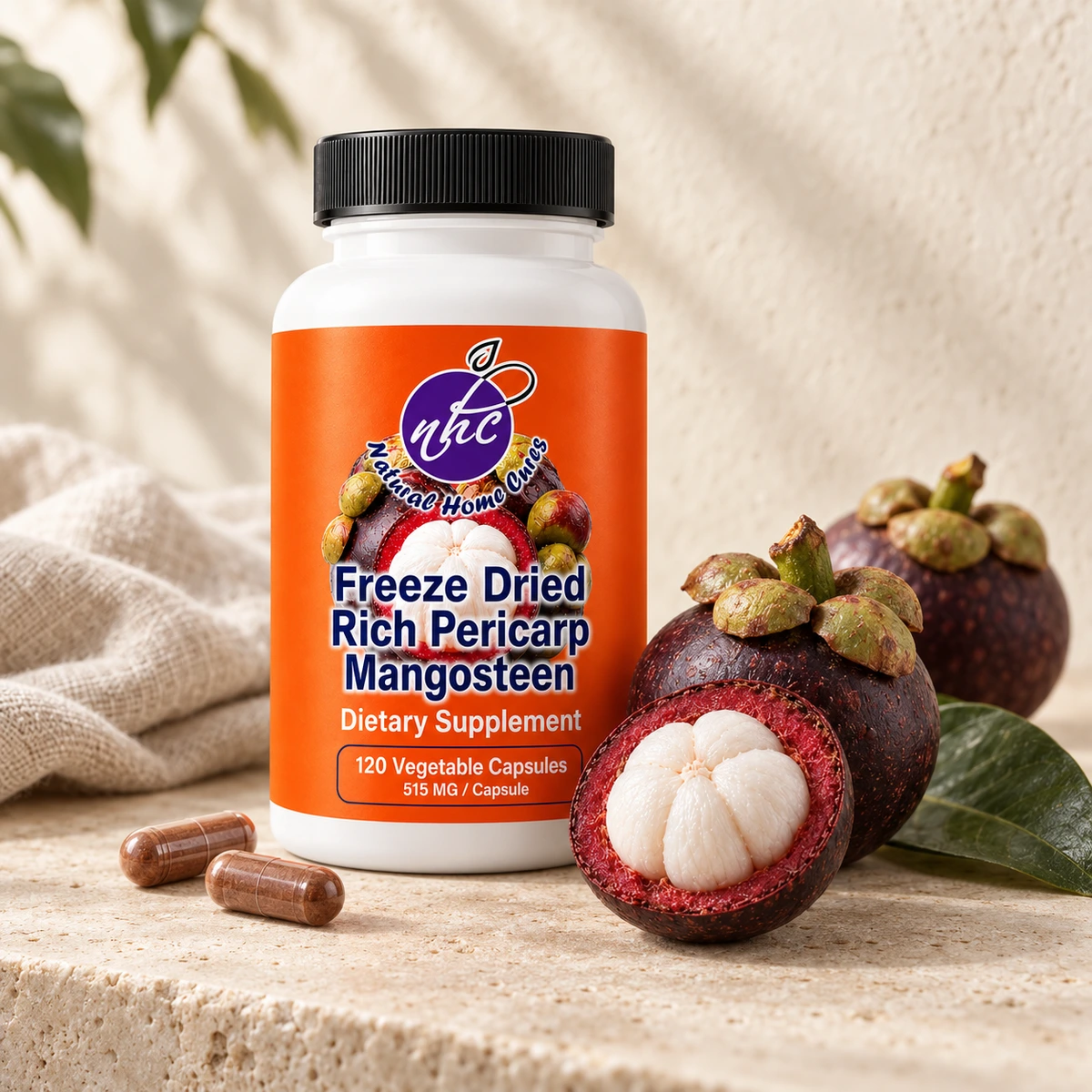
Our focus is the mangosteen pericarp, the fruit’s thick outer rind. It’s the part we use in Natural Home Cures freeze-dried mangosteen capsules.
From freezing to drying to protecting it afterward, each step cares for the mangosteen you choose for your daily routine.
Explore our mangosteen →The story continues
From a living tree to the bottle in your hands
Behind each bottle is a family whose care for growing mangosteen has been handed down for generations. Follow the journey from our family orchards in Thailand through harvesting, freeze-drying, milling, and capsule filling—all the way to the bottle in your hands.
The research behind this articleSource References
- 01Research & guidanceU.S. Food and Drug Administration: Lyophilization of Parenteral (7/93)—technical definition and general principles of freeze-drying.View source
Full citation
U.S. Food and Drug Administration: Lyophilization of Parenteral (7/93)—technical definition and general principles of freeze-drying.
View original source ↗ - 02Research & guidancePurdue University, General Chemistry: Phase Diagrams—temperature, pressure, and changes between solid, liquid, and gas.View source
Full citation
Purdue University, General Chemistry: Phase Diagrams—temperature, pressure, and changes between solid, liquid, and gas.
View original source ↗ - 03Research & guidanceJohn Barley, SP Scientific: Basic Principles of Freeze-Drying—preparation, freezing, equipment, and primary drying.View source
Full citation
John Barley, SP Scientific: Basic Principles of Freeze-Drying—preparation, freezing, equipment, and primary drying.
View original source ↗ - 04Research & guidanceInstitute of Food Technologists: Freeze-Drying Fundamentals—food freezing, ice-crystal formation, and product quality.View source
Full citation
Institute of Food Technologists: Freeze-Drying Fundamentals—food freezing, ice-crystal formation, and product quality.
View original source ↗ - 05Research & guidanceLabconco: A Guide to Freeze Drying for the Laboratory—primary and secondary drying, moisture removal, and storage.View source
Full citation
Labconco: A Guide to Freeze Drying for the Laboratory—primary and secondary drying, moisture removal, and storage.
View original source ↗ - 06Research & guidanceFood Chemistry 262 (2018), 242–250: Phytochemical and physical properties of blueberries, tart cherries, strawberries, and cranberries as affected by different drying methods. DOI: 10.1016/j.foodchem.2018.04.047.View source
Full citation
Food Chemistry 262 (2018), 242–250: Phytochemical and physical properties of blueberries, tart cherries, strawberries, and cranberries as affected by different drying methods. DOI: 10.1016/j.foodchem.2018.04.047.
View original source ↗ - 07Research & guidanceMohamed Nawawi et al. (2023). Influence of Different Drying Methods on Anthocyanins Composition and Antioxidant Activities of Mangosteen Pericarps and LC-MS Analysis of the Active Extract. Foods 12(12):2351. doi:10.3390/foods12122351.View source
Full citation
Mohamed Nawawi et al. (2023). Influence of Different Drying Methods on Anthocyanins Composition and Antioxidant Activities of Mangosteen Pericarps and LC-MS Analysis of the Active Extract. Foods 12(12):2351. doi:10.3390/foods12122351.
View original source ↗ - 08Drying technology researchNindo CI, Tang J. (2007). Refractance Window Dehydration Technology: A Novel Contact Drying Method. Drying Technology 25(1):37–48.View source ↗
Full citation
Nindo CI, Tang J. Refractance Window Dehydration Technology: A Novel Contact Drying Method. Drying Technology. 2007;25(1):37–48. doi:10.1080/07373930601152673.
View original source ↗