Natural Home Cures · Mangosteen Science
What Is
Mangosteen?
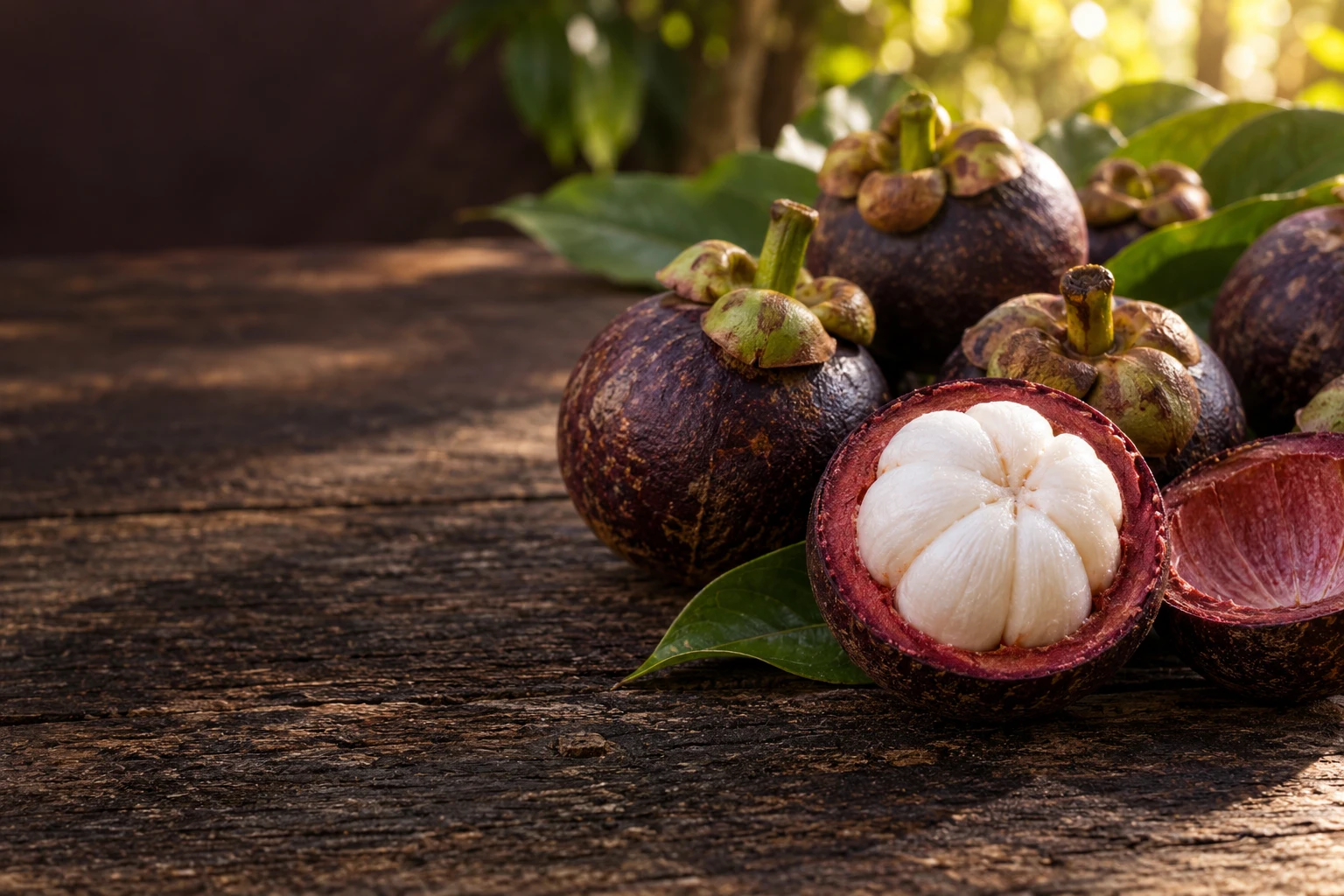
A tropical fruit.
A remarkable outer rind.
Purple pericarp.Different tissues, different chemistry.
Meet the fruit, see its two distinct parts, then follow the pericarp into the science. This is the starting point for the mangosteen collection.
01 · Meet the fruit
A Tropical Fruit.
A Living Tree.
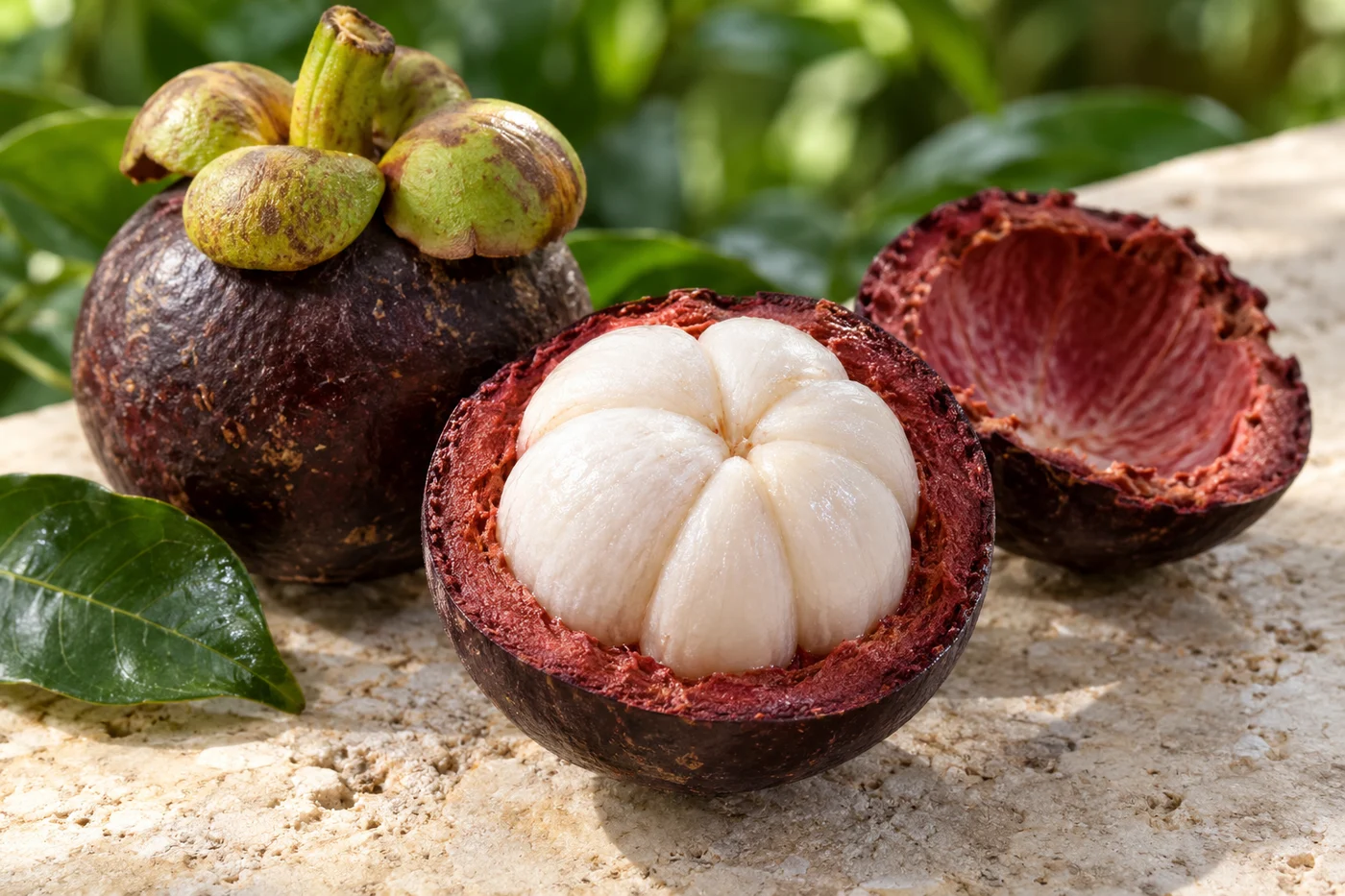
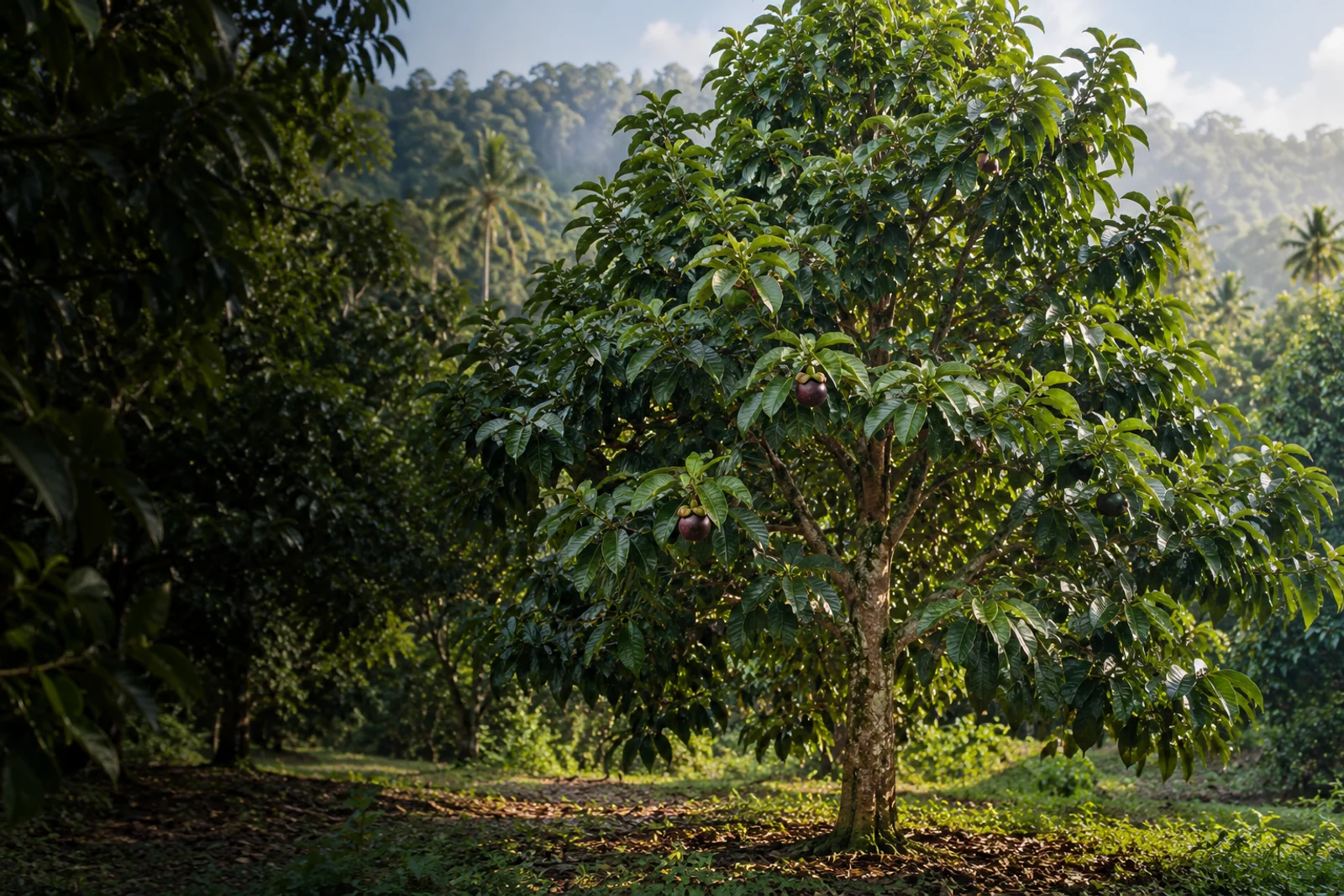
Mangosteen is the fruit of Garcinia mangostana, an evergreen tropical tree in the Clusiaceae family.(1), (2)
Its thick purple rind surrounds the soft white segments people usually eat.(4) The flesh and rind are different tissues—and the distinction is central to the science.
Botanical profile & origins
The Royal Botanic Gardens, Kew, records the species in its Plants of the World Online database.(1)
- Botanical name
- Garcinia mangostana L.
- Family
- Clusiaceae
- Growing environment
- Wet tropical
- Native range in Kew’s record
- Peninsular Malaysia & Borneo
The history of cultivated mangosteen is a separate research question, explored in our Origins article.(2)
Now look inside the fruit: the flesh and rind tell different parts of the same story.
02 · Understand its parts
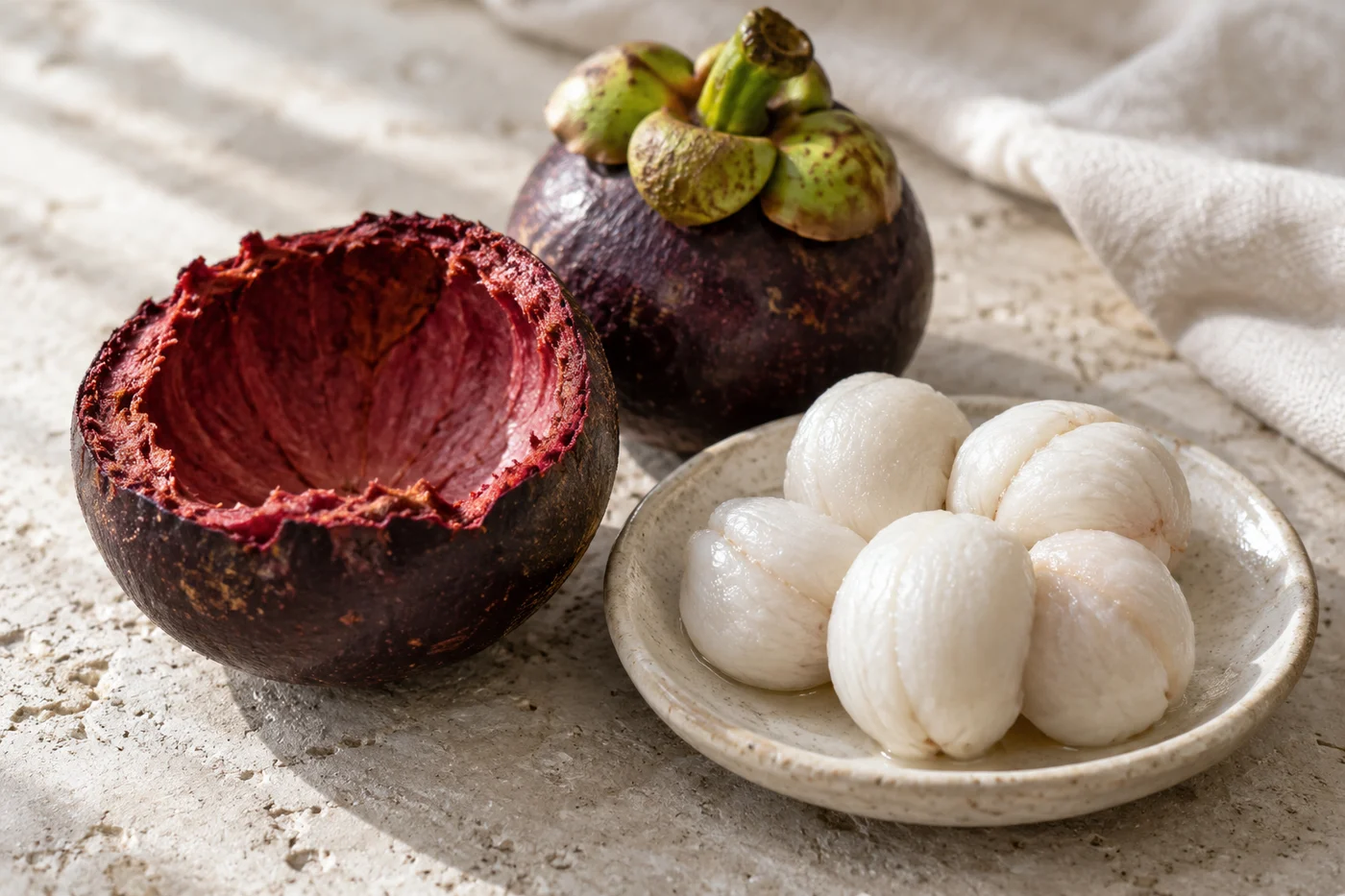
One Fruit.
Two Distinct Parts.
The white flesh is the familiar edible portion. The purple pericarp is the thick outer rind.
Now move from the fruit’s structure to the compounds found in its rind.
03 · Explore the pericarp
A Rind With
More to Discover.
The pericarp has a different composition from the white flesh. Xanthones draw much of the research attention, but they belong to a wider mix of naturally occurring compounds.(3), (4), (5)
Xanthones
Alpha-mangostin and gamma-mangostin are two extensively studied members of a larger xanthone family.(4)
Meet alpha & gamma →Plant pigments
The 2023 pericarp study identified anthocyanins among the rind’s phenolic compounds.(3)
Explore the pigment story →Other phenolic compounds
The same study examined additional phenolic compounds, adding to the picture of the rind’s composition.(3)
A broader mixture
These constituents were also identified in the tested pericarp sample.(3)
Explore the tocopherols →This wider mixture connects the fruit’s anatomy to our whole-pericarp approach.
04 · From fruit to product
Discover the
Whole-Pericarp Story.
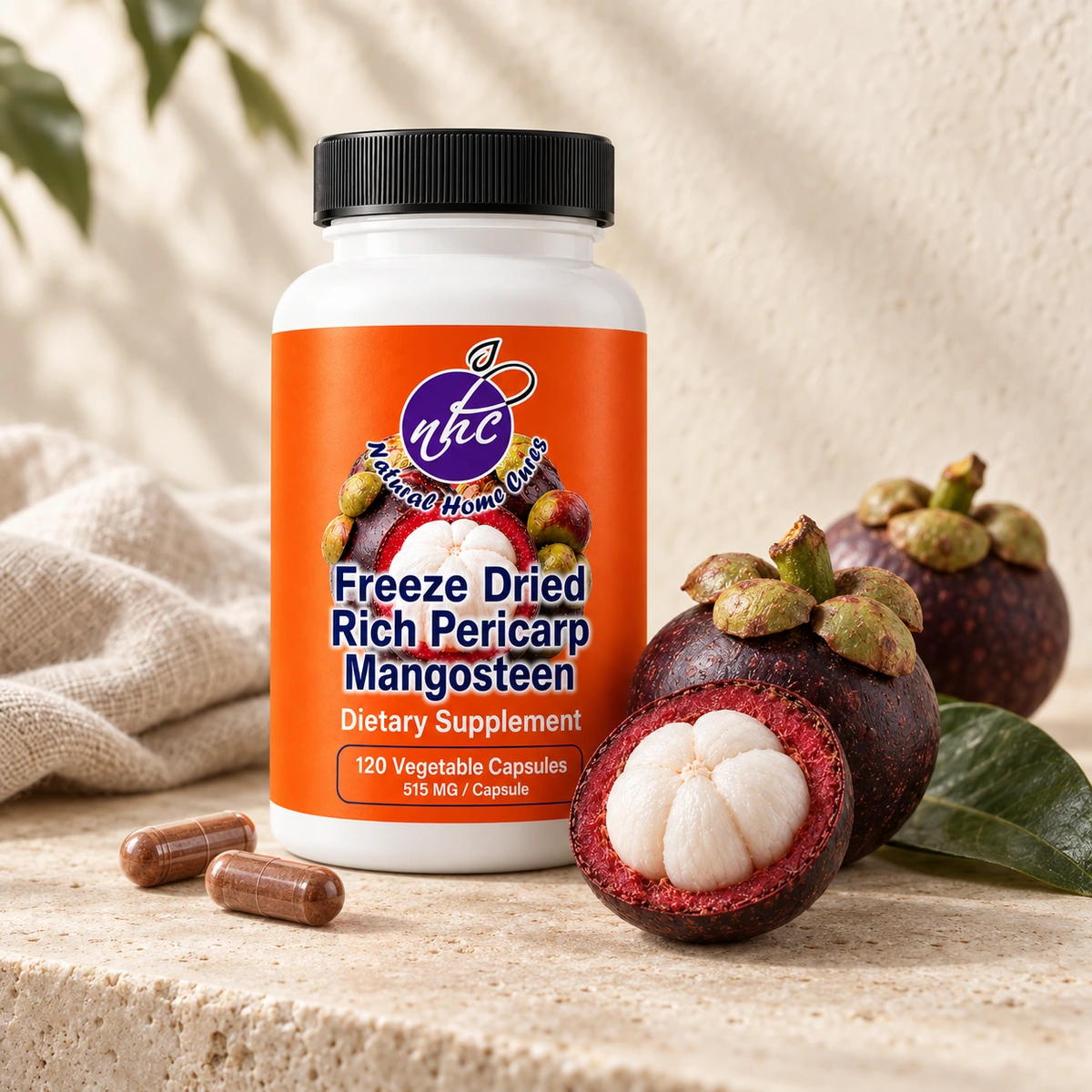
Our Freeze-Dried Rich Pericarp Mangosteen Capsules and Mangosteen Powder begin with the thick outer rind of Garcinia mangostana.
After harvest, the pericarp is freeze-dried and prepared as powder—whole botanical material with a broader composition than one isolated xanthone, vitamin or mineral.
Explore our mangosteen →The capsule’s botanical weight is not a measured amount of any individual constituent.The research behind this articleSource References
- 01Botanical identityGarcinia mangostana L. — Plants of the World OnlineView source ↗
Full citation
Royal Botanic Gardens, Kew. “Garcinia mangostana L.” Plants of the World Online. Accepted species, classification, distribution and wet tropical biome.
- 02Origins & cultivationThe Origin of Cultivated MangosteenView source ↗
Full citation
Yao TL, Nazre M, McKey D, Jalonen R, Duminil J. “The origin of cultivated mangosteen (Garcinia mangostana L. var. mangostana): Critical assessments and an evolutionary-ecological perspective.” Ecology and Evolution. 2023;13:e9792.
- 03Pericarp composition studyChemical Composition and In Vitro Bioactive Properties of Mangosteen PericarpView source ↗
Full citation
Albuquerque BR, Dias MI, Pinela J, et al. “Insights into the Chemical Composition and In Vitro Bioactive Properties of Mangosteen (Garcinia mangostana L.) Pericarp.” Foods. 2023;12(5):994.
- 04Xanthone evidence reviewBiological Activities and Bioavailability of Mangosteen XanthonesView source ↗
Full citation
Gutierrez-Orozco F, Failla ML. “Biological Activities and Bioavailability of Mangosteen Xanthones: A Critical Review of the Current Evidence.” Nutrients. 2013;5(8):3163–3183.
- 05Wider phytochemical reviewPhytochemicals and Bioactive Properties of MangosteenView source ↗
Full citation
Yan M, Hou W, Wang H, Beyatli A, Arshad MS, Suleria HAR. “Phytochemicals and Bioactive Properties of Mangosteen (Garcinia mangostana L.): A Comprehensive Review.” Food Bioscience. 2026;79:108569.