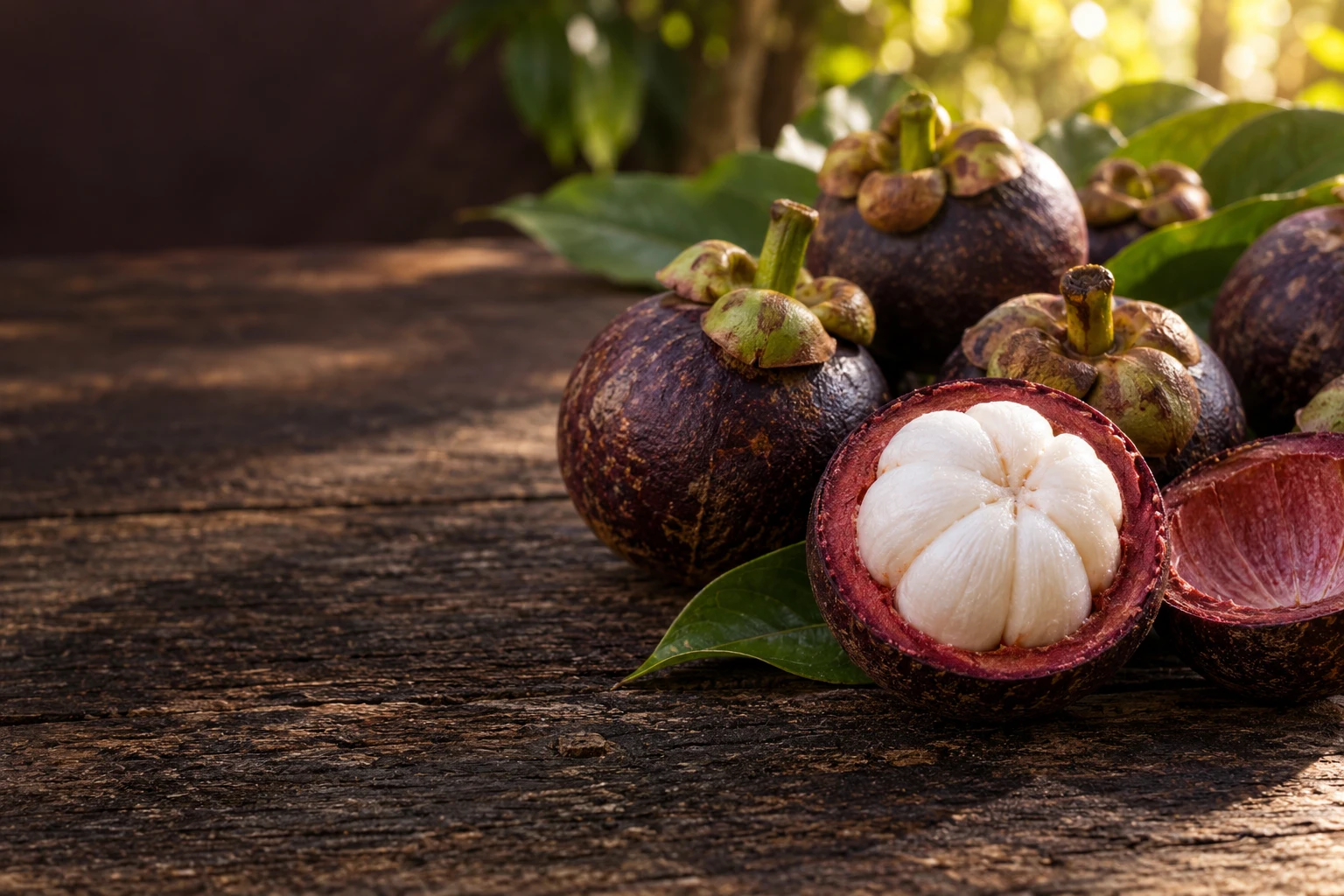
Natural Home Cures · Growing & Harvesting
Mangosteen’s
Ultra Tropical
Climate
Warmth in the air.
Moisture through the year.
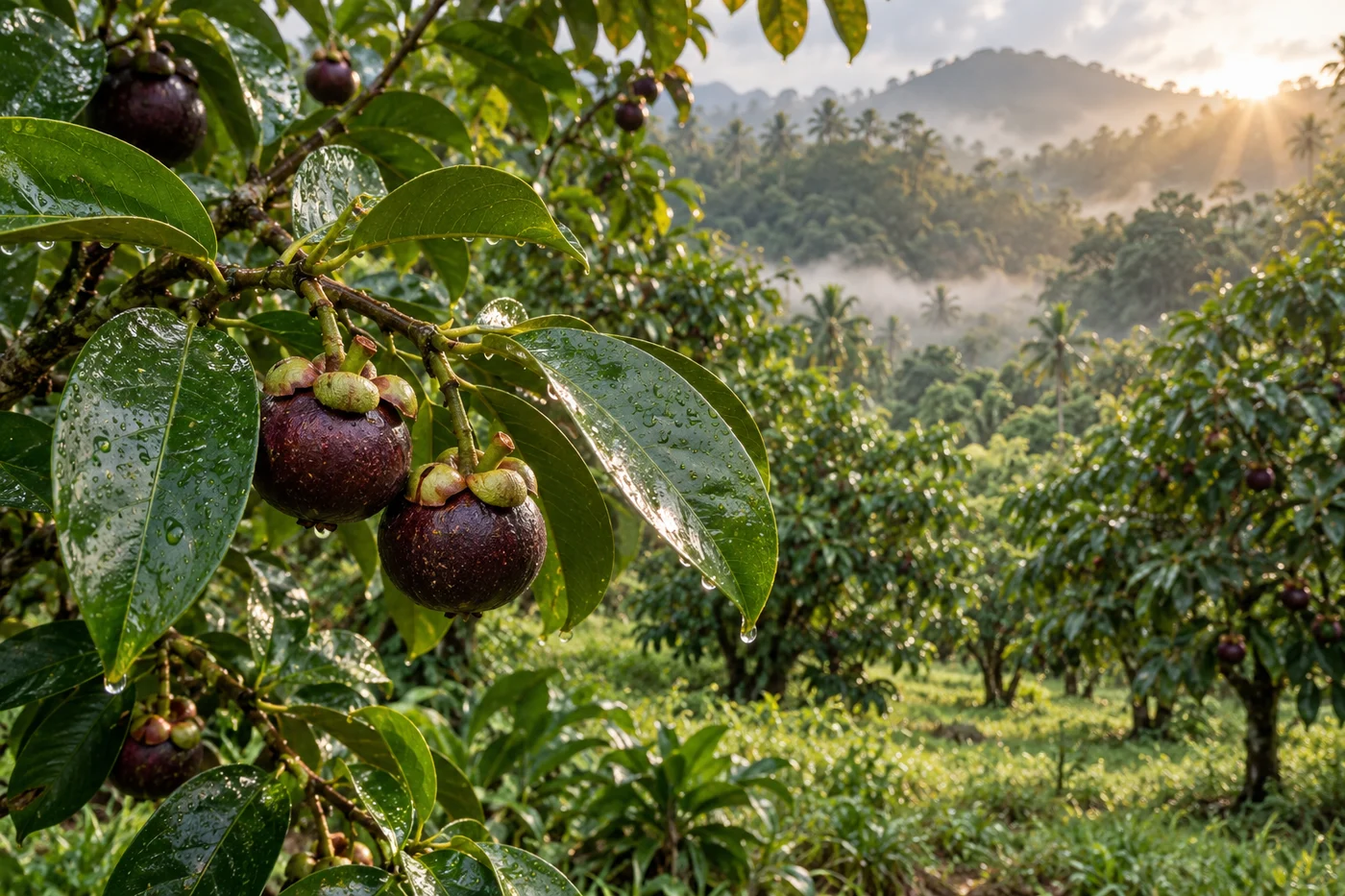
the tree depends on.Illustrative growing landscape.
Mangosteen needs a combination of conditions: warmth, humid air, dependable water and shelter. Follow each part of that environment, then bring them together when assessing a growing site.
01 · Why ultra-tropical?
Why Mangosteen Needs
a Warm Tropical Climate.
The Royal Botanic Gardens, Kew, places Garcinia mangostana in the wet tropical biome.(3) World Agroforestry describes an ultra-tropical tree with demanding moisture and shelter needs.(1)
The Philippine guide gives an ideal growing range of 20–30°C and notes slower growth below 20°C.(2)
About 68–86°F
Reading the reported temperature limits
World Agroforestry reports poor tolerance below about 4°C and above about 38°C.(1) These limits do not describe a suitable year-round growing range. Cold exposure is a concern, especially when assessing a site beyond the humid tropics.
Warmth is the starting point. The next requirement is a dependable water supply.
02 · Dependable moisture
Rainfall Timing Matters
Alongside the Total.
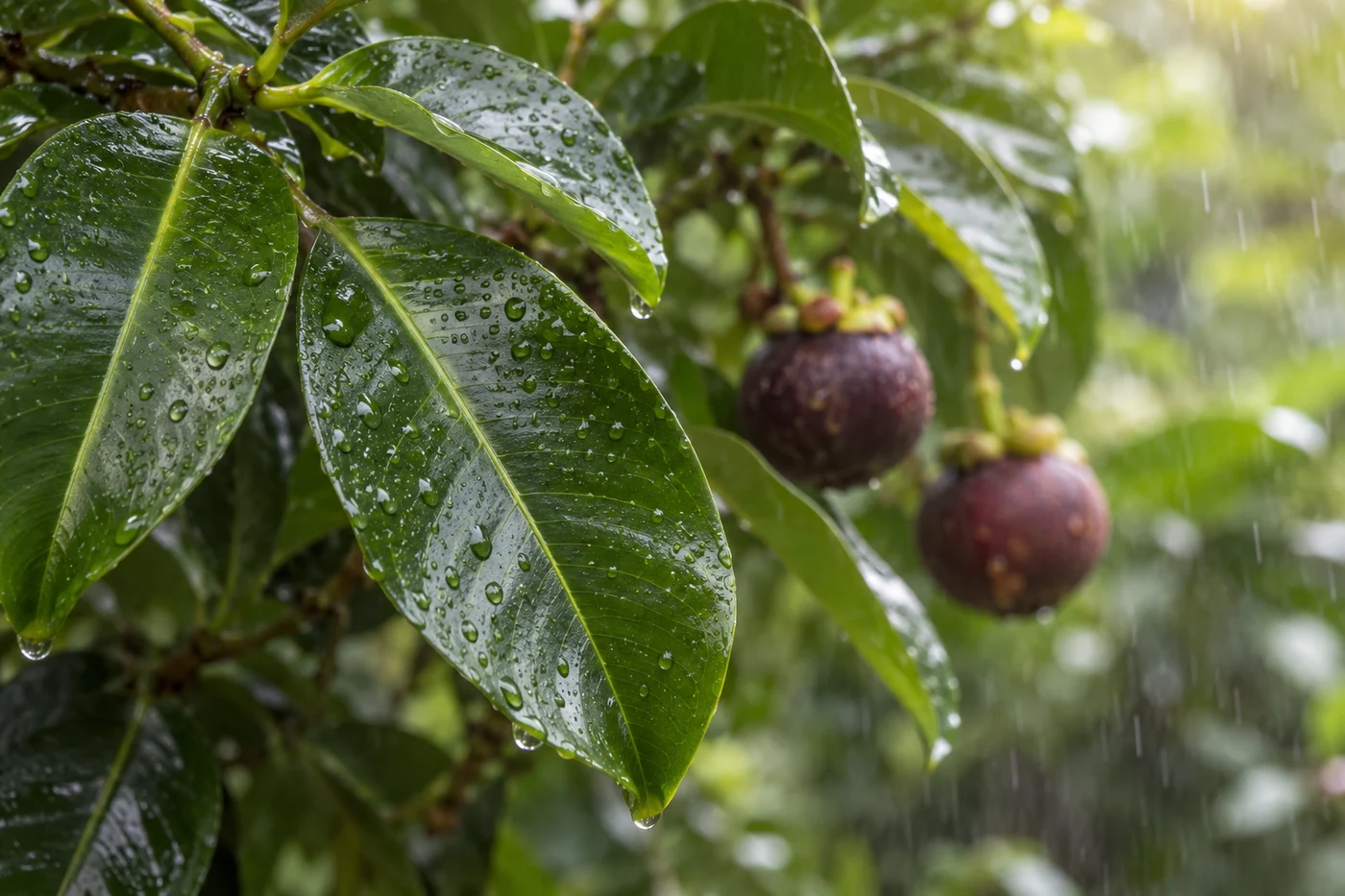
The profile describes a requirement of at least about this amount, with no long drought periods.(1) Seasonal distribution matters alongside the annual total.
The Philippine guide favors well-distributed rainfall and describes irrigation during dry periods.(2)
Rainfall, atmospheric humidity and soil drainage describe different parts of that water balance.
03 · Air and root conditions work together
Humidity Above.
Drainage Below.
A humid environment.
High humidity is part of the species’ reported ecology.(1) Rainfall totals alone cannot describe the air around the tree.
A dependable supply.
Where rainfall is inadequate, suitable irrigation supports the soil-moisture supply.(2)
Avoid standing water.
Persistent water over seedling roots can kill young plants, according to the production guide.(2)
A wet tropical climate does not mean submerged roots.
A site also needs protection from exposures that warmth and moisture alone cannot solve.
04 · Protection belongs in the site plan
Shelter From Wind
and Salt Exposure.
World Agroforestry calls for shelter from strong winds and salt spray, and warns against saline soil or water.(1)
Strong wind
Exposure is a separate constraint to assess alongside warmth.
Salt exposure
A warm coastal location may still have unsuitable salt spray, soil or irrigation water.
Young plants
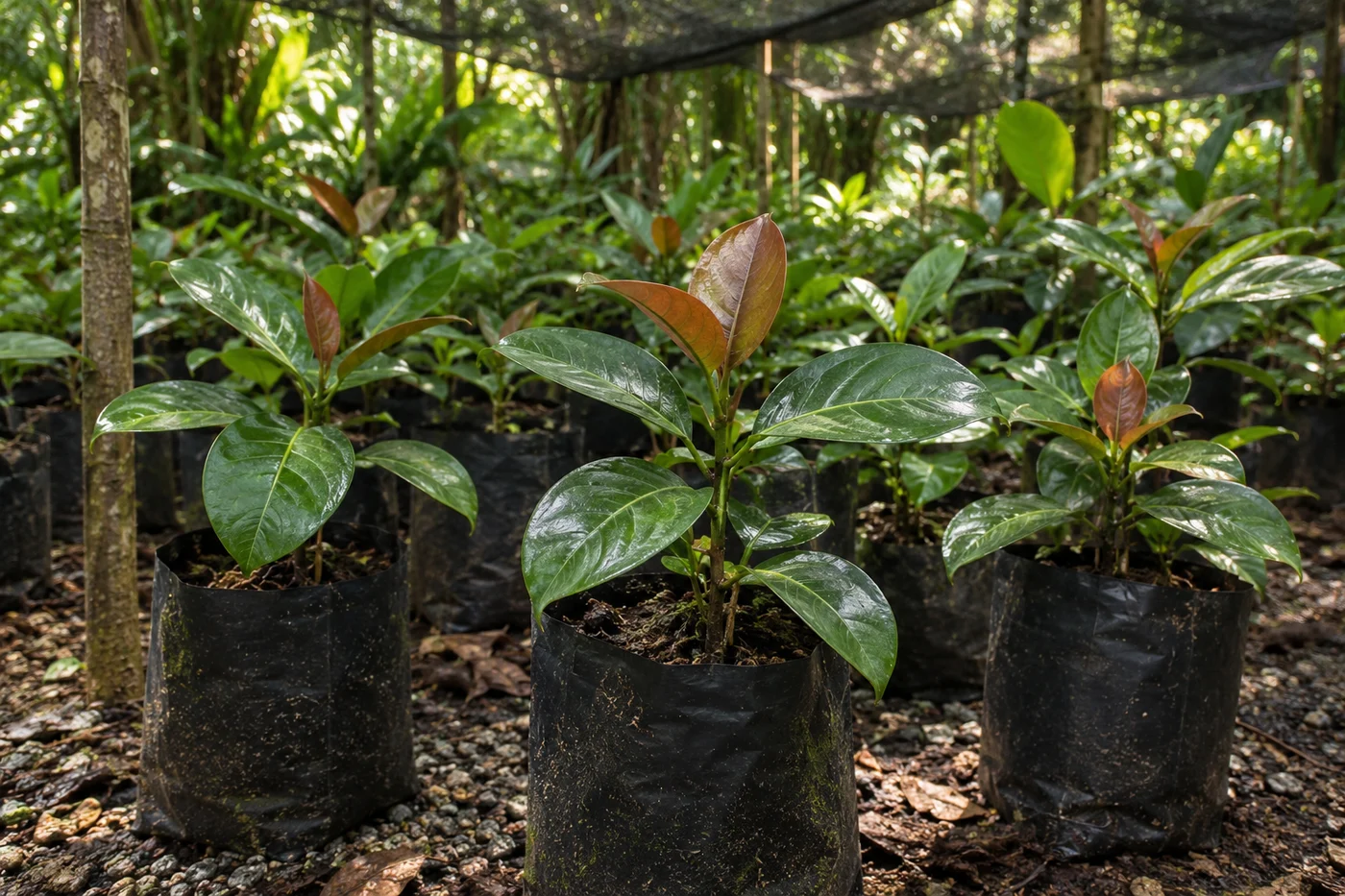
The Philippine guide describes partial shade during nursery care.(2)
Elevation changes the local environment too, so it needs to be read through the climate of the site.
05 · Elevation changes local conditions
Assess Elevation
Through Local Climate.
The species profile records different growing elevations in Malaysia and India.(1) Altitude can change temperature and moisture, so a single elevation ceiling cannot describe every location.
06 · The conditions belong together
Bring the Growing
Conditions Together.
Warmth
Consistently warm tropical conditions.
Humidity
A humid atmospheric environment.
Moisture
Reliable water with good soil drainage.
Shelter
Protection from wind and salt exposure.
The tree’s growing environment is a combination of conditions, not a single temperature or rainfall number.(1)(2)

07 · The environment before the harvest
A Tropical Beginning.
A Botanical Story.
Climate shapes the conditions in which the mangosteen tree grows.
Our Freeze-Dried Rich Pericarp Mangosteen Capsules use the fruit’s pericarp of Garcinia mangostana.
Explore our mangosteen →The research behind this articleSource References
- 01Agroforestry species profileGarcinia mangostana — Ecology and Growing ConditionsView source ↗
Full citation
Orwa C, Mutua A, Kindt R, Jamnadass R, Simons A. 2009. Agroforestree Database: a tree reference and selection guide, version 4.0. Garcinia mangostana L. species profile. Ecology, biophysical limits and tree management.
- 02Orchard production guideMangosteen Production GuideView source ↗
Full citation
Philippine Department of Agriculture, High Value Crops Development Program. Mangosteen Production Guide. Soil and climatic requirements, irrigation and nursery care. Numerical guidance is interpreted in its growing context.
- 03Botanical habitat recordGarcinia mangostana L. — Plants of the World OnlineView source ↗
Full citation
Royal Botanic Gardens, Kew. Garcinia mangostana L. Plants of the World Online. Species record identifying the wet tropical biome. Accessed October 14, 2026.