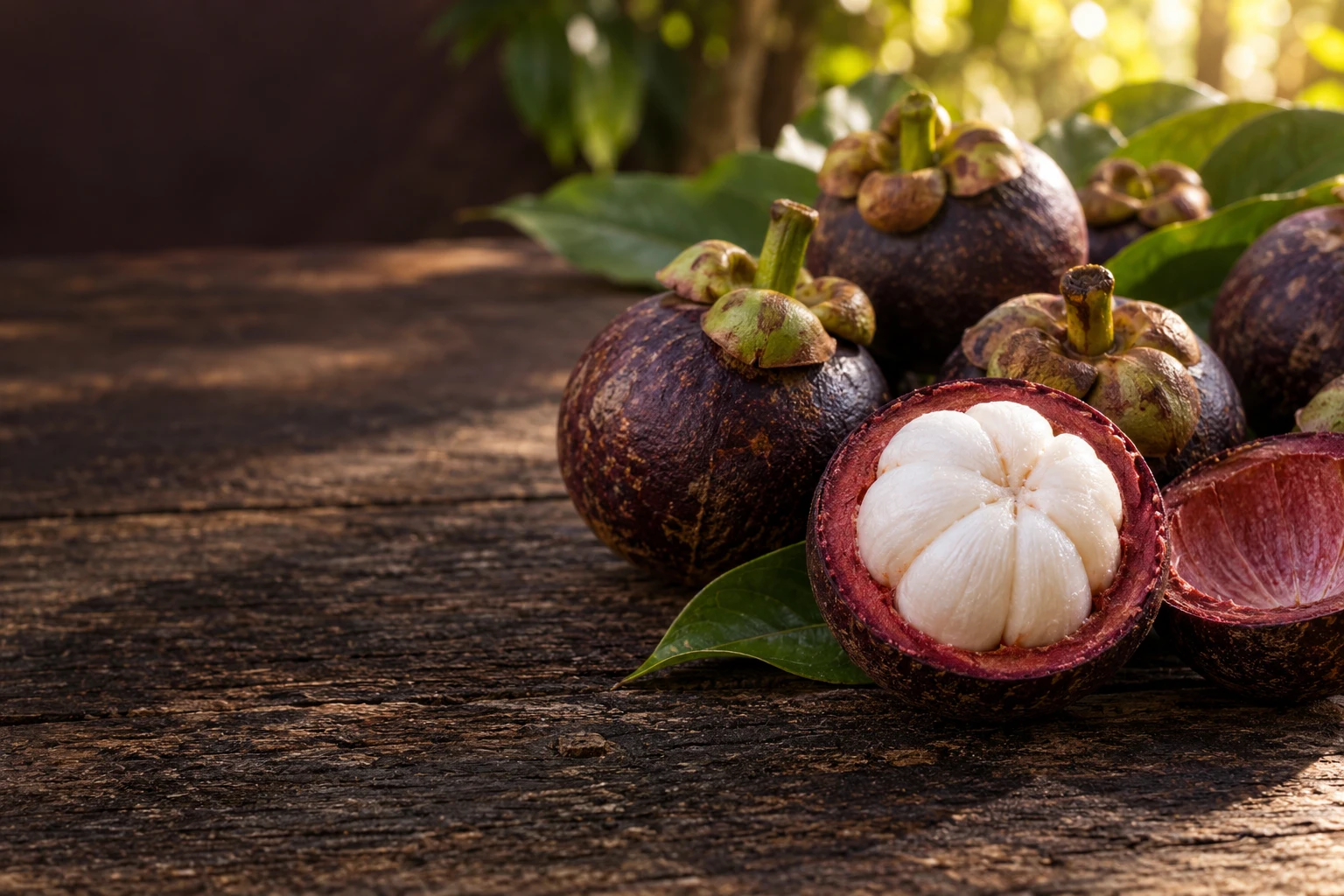
Natural Home Cures · Growing & Harvesting
Mangosteen
Propagation
A remarkable seed.
A patient beginning.
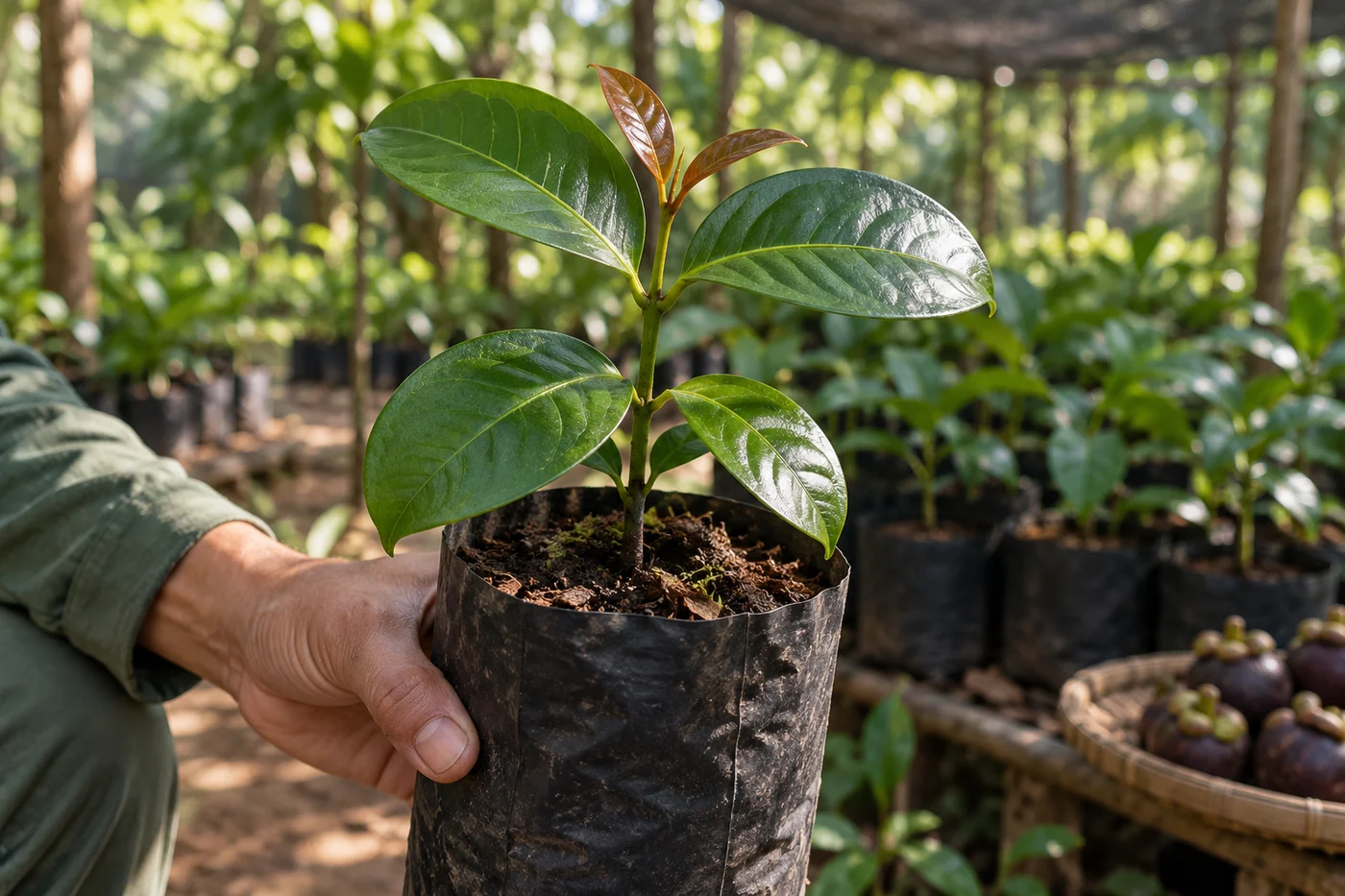
Living potential.Illustrative nursery scene.
Propagation is the beginning of a new mangosteen tree. First understand its unusual seed biology, then follow the practical sequence: fresh seed, a sheltered nursery and careful transplanting.
01 · The unusual seed story
A Seed Can Carry
the Mother Plant Forward.
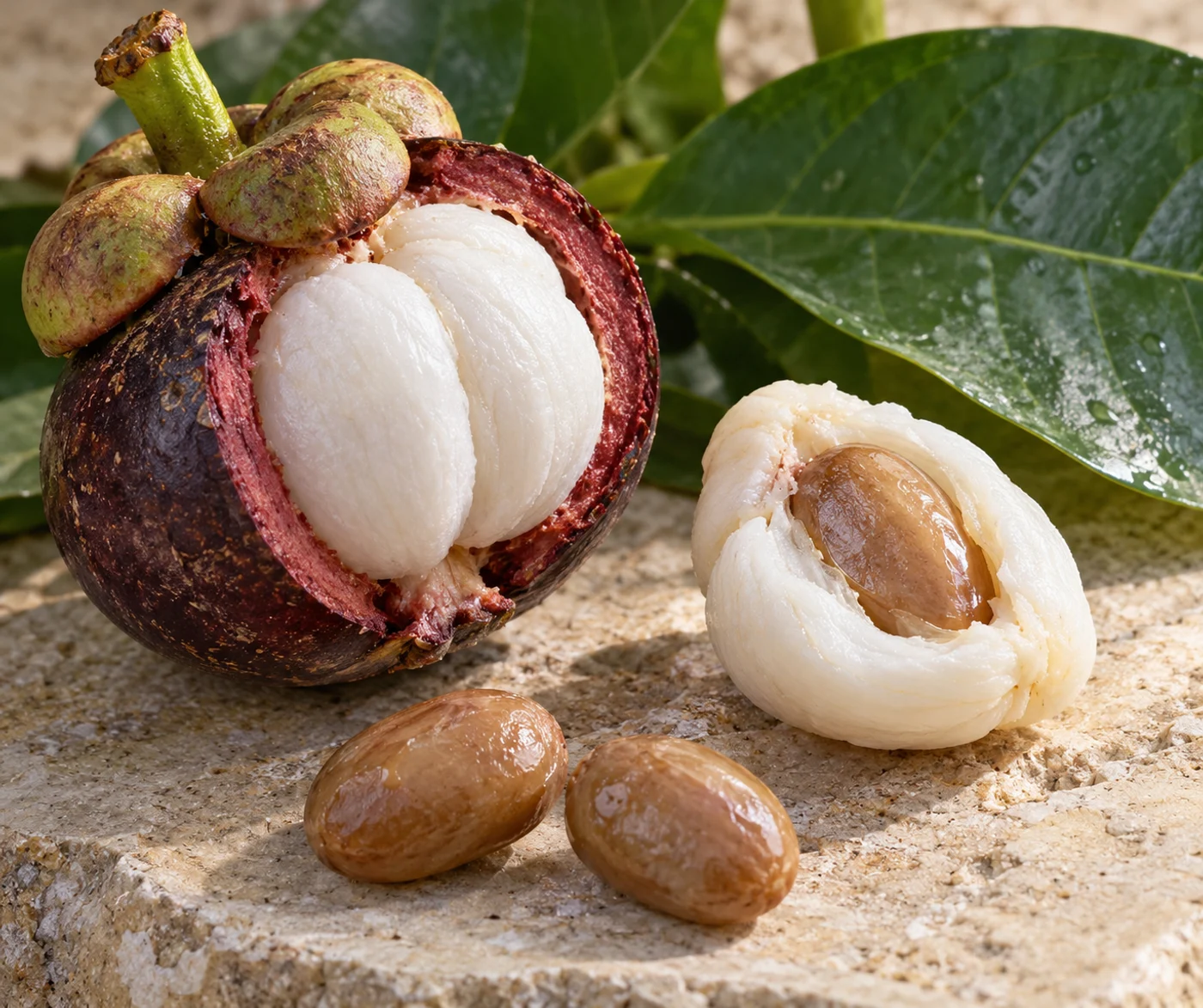
Cultivated mangosteen commonly forms seeds through apomixis—embryos develop from maternal tissue without normal fertilization.(1)(2)
For growers, the practical story still begins with fresh seed and patient nursery care.
The way the seed forms explains its lineage. The way it is handled determines the next practical step.
02 · Freshness matters
Why Mangosteen Seeds
Need to Stay Fresh.
Mangosteen seeds are recalcitrant: they are sensitive to drying and unsuitable for conventional long-term seed storage.(3)
Fresh planting material deserves prompt attention. Drying can reduce its ability to germinate.(3)
Fresh seed then needs a sheltered place to germinate and establish.
03 · From seed to nursery plant
From Fresh Seed
to Nursery Plant.
The Philippine production guide describes sowing under cover, followed by partial shade and regular watering.(4)
Reported sprouting window.
Under the nursery conditions described in the guide.(4)
A patient nursery phase.
About the time the guide reports to reach field-transplant size.(4)
Reported seedling height.
At around two years in the same production guidance.(4)
These are reference observations, not a fixed schedule. Germination and growth depend on planting material and growing conditions.
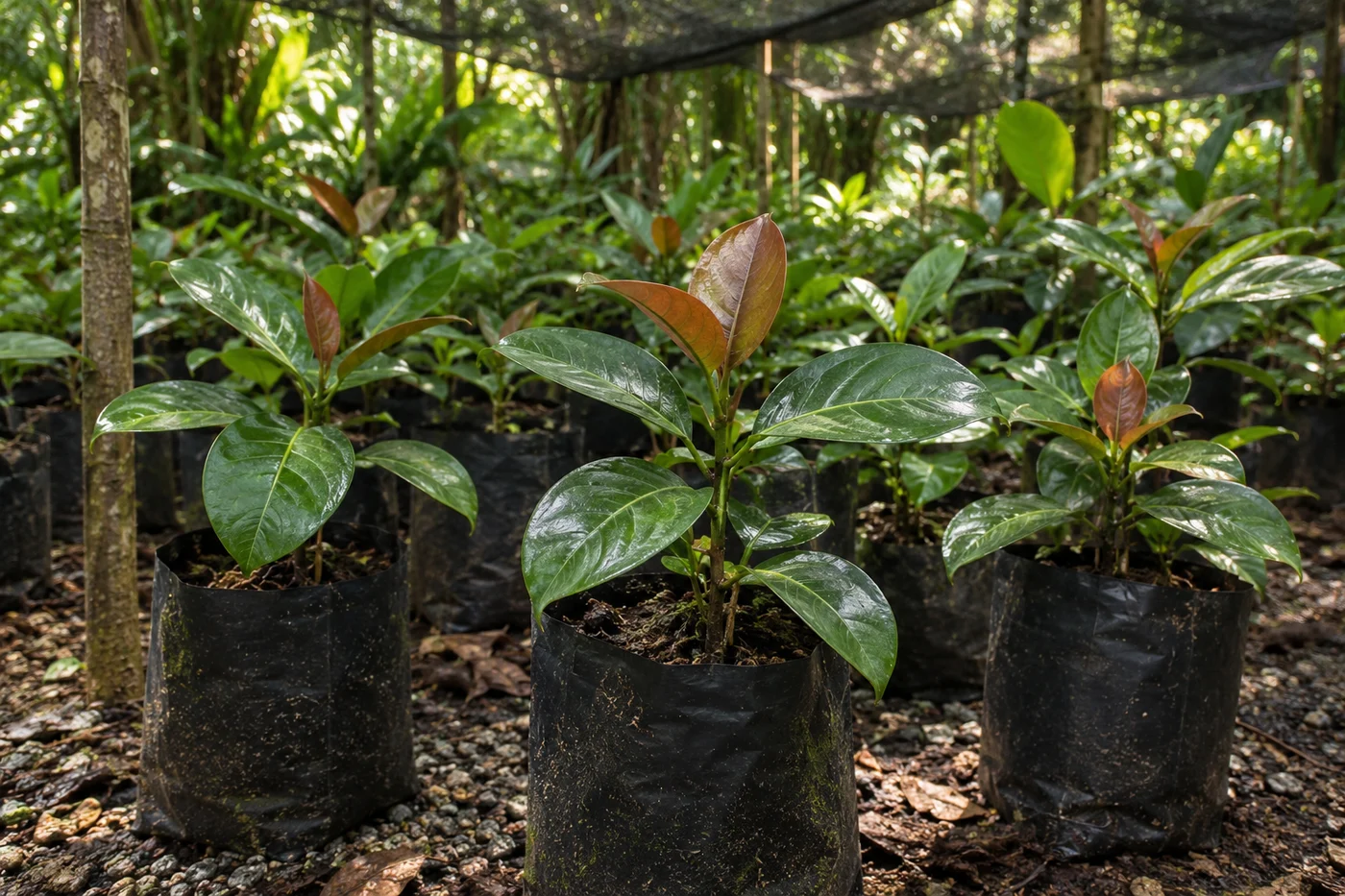
The next transition is from protected nursery conditions to the field.
04 · The move into the field
Transplant Carefully.
Protect the Root System.
Mangosteen is sensitive to root disturbance. The guide calls for careful removal from containers and placement into prepared planting holes.(4)
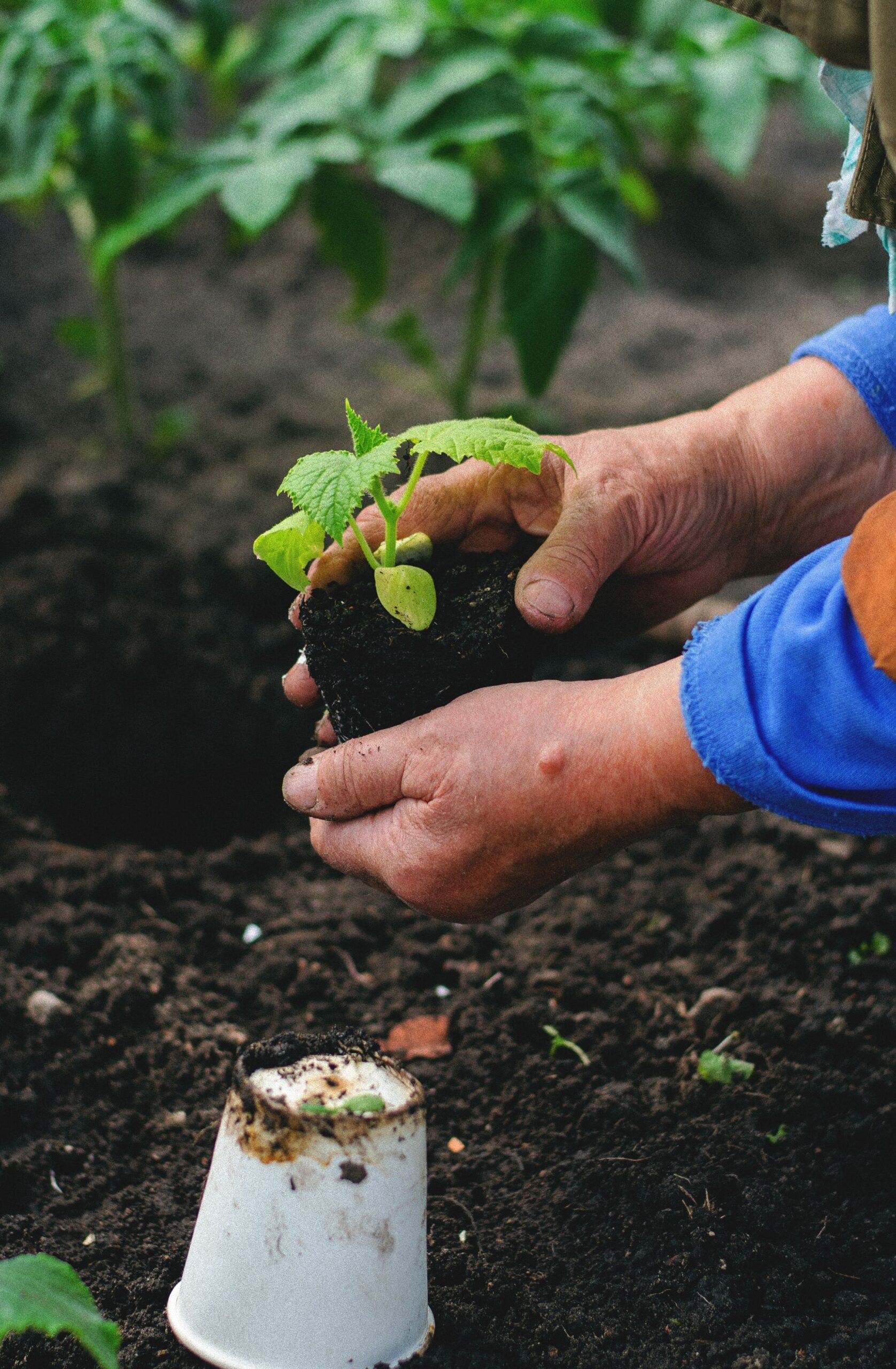
Photo: Tamara Elnova / Pexels · Pexels License
Seed propagation is the route described above. Researchers have also investigated growing new plants from small pieces of tissue.
05 · Beyond seed propagation
Tissue Culture:
A Different Propagation Route.
Multiplying mangosteen through conventional vegetative methods has been difficult. Tissue culture offers another way to regenerate mangosteen from plant tissue.(5)
Researchers have rooted and acclimatized plants produced in vitro.(5) That is evidence of a laboratory method, not proof that tissue culture has replaced seed propagation across ordinary orchards.
Small pieces cultured under controlled conditions
Regeneration using a research protocol
A gradual transition into potting conditions

06 · From a living tree to botanical material
The Orchard Story
Begins Before the Fruit.
Patient propagation is the first chapter in cultivating mangosteen.
Our Freeze-Dried Rich Pericarp Mangosteen Capsules use the fruit’s pericarp of Garcinia mangostana.
Explore our mangosteen →The research behind this articleSource References
- 01Mangosteen reviewPhytochemicals and Bioactive Properties of MangosteenView source ↗
Full citation
Yan M, Hou W, Wang H, Beyatli A, Arshad MS, Suleria HAR. Phytochemicals and Bioactive Properties of Mangosteen (Garcinia mangostana L.): A Comprehensive Review. Food Bioscience. 2026;79:108569.
- 02Reproductive biologyThe Origin of Cultivated MangosteenView source ↗
Full citation
Yao TL, Nazre M, McKey D, Jalonen R, Duminil J. The origin of cultivated mangosteen (Garcinia mangostana L. var. mangostana): Critical assessments and an evolutionary-ecological perspective. Ecology and Evolution. 2023;13(3):e9792.
- 03Seed germination researchTranscriptional Reprogramming During Recalcitrant Seed GerminationView source ↗
Full citation
Goh HH, Abu Bakar S, Kamal Azlan ND, et al. Transcriptional reprogramming during Garcinia-type recalcitrant seed germination of Garcinia mangostana. Scientia Horticulturae. 2019;257:108727.
- 04Nursery & field guidanceMangosteen Production GuideView source ↗
Full citation
Philippine Department of Agriculture, High Value Crops Development Program. Mangosteen Production Guide. Propagation, nursery care and field transplanting. Timings describe the guide’s conditions and are not universal guarantees.
- 05Micropropagation researchImprovement of Mangosteen MicropropagationView source ↗
Full citation
Te-chato S, Lim M. Improvement of mangosteen micropropagation through meristematic nodular callus formation from in vitro-derived leaf explants. Scientia Horticulturae. 2000;86:291–298.