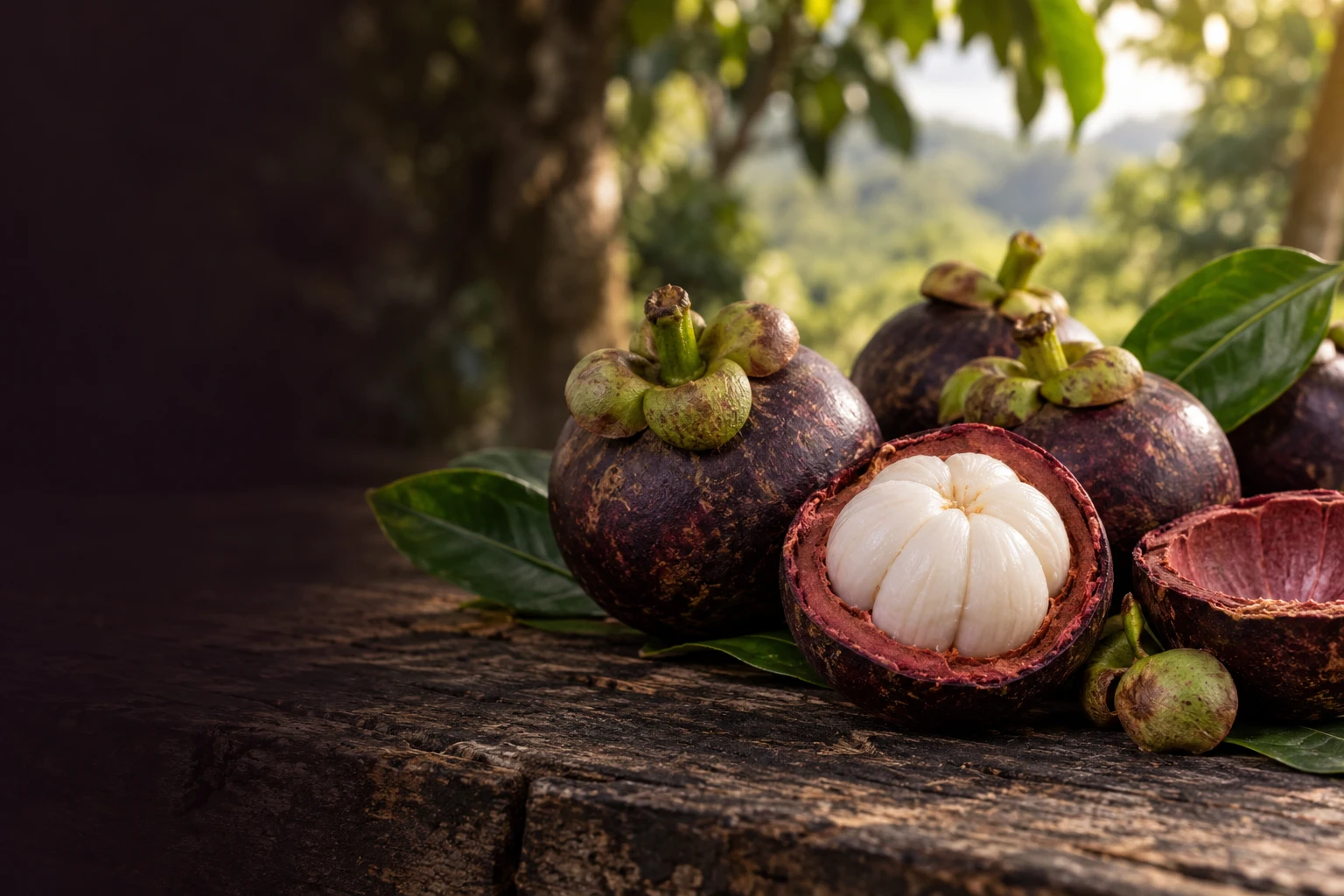
Natural Home Cures · Growing & Harvesting
It All Starts
With the
Mangosteen Tree
From a carefully tended seedling
to the fruit and its pericarp.
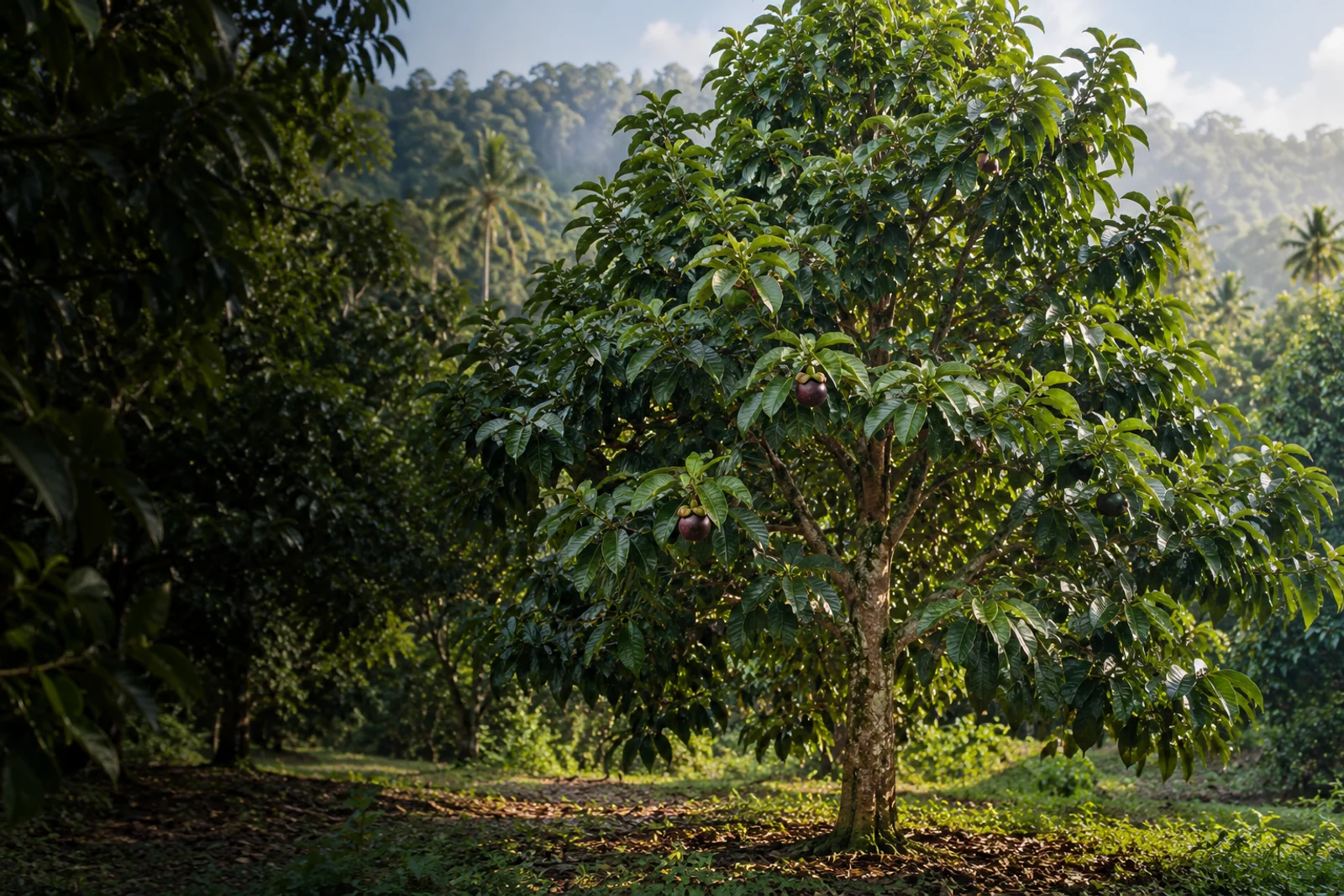
Years of patient growth.Garcinia mangostana · Clusiaceae
About 20–82 feet(1)
01 · Meet the tree
First, Meet the Tree Behind the Fruit.
Every mangosteen begins on a living tree. Understanding how that tree grows helps explain the fruit—and the thick pericarp that surrounds its white flesh.
Garcinia mangostana is a slow-growing evergreen in the Clusiaceae family. Its dense, upright crown is typically pyramidal.(1) The Royal Botanic Gardens, Kew, places its native range in Peninsular Malaysia and Borneo.(2)
Long before it reaches this size, the tree begins as a small seedling that needs careful handling.
02 · A careful beginning
A Young Tree Needs Time and Care.
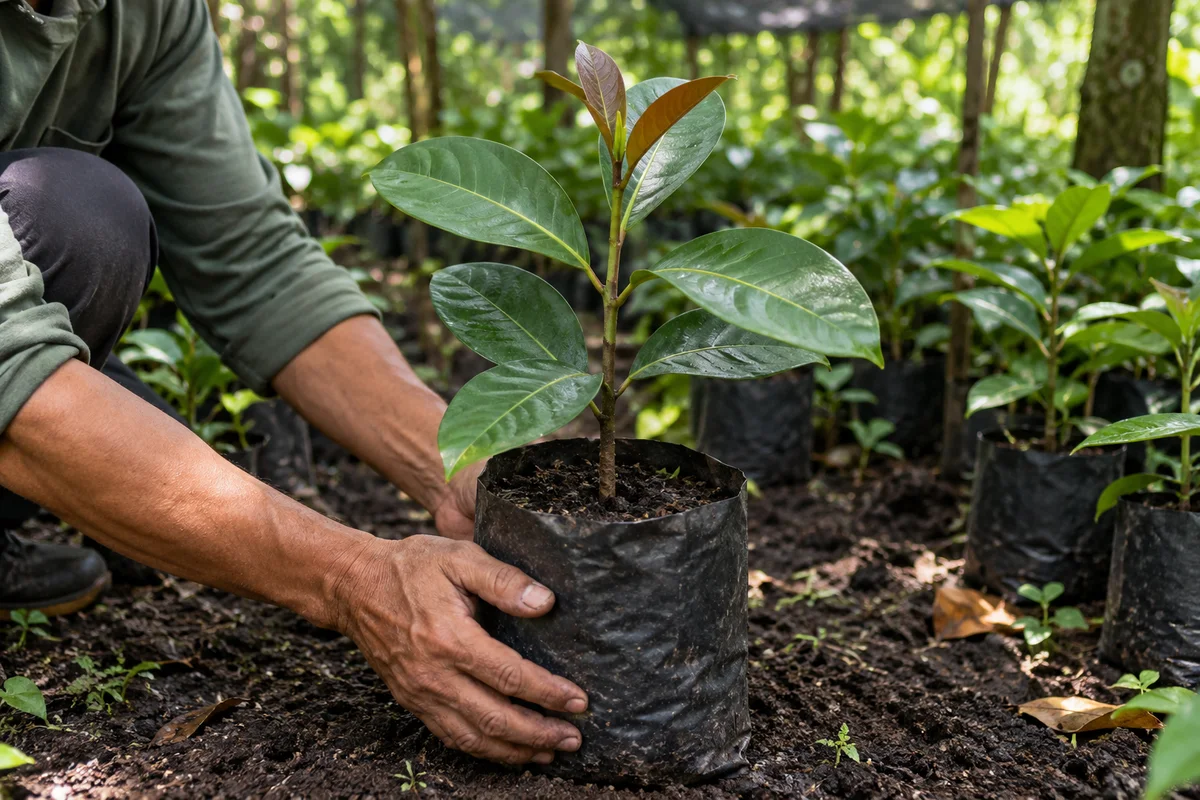
Young mangosteen trees need gentle handling as they develop their root systems. The Philippine production guide describes seedlings spending about two years in the nursery before field transplanting.(3)
Keep disturbance minimal.
Use partial shade and suitable moisture.
Transplant after the rains begin.
Nursery timing varies with conditions; this is guidance from one production system, not a fixed age for every tree. After transplanting, suitable growing conditions remain essential as the tree establishes.
03 · Growing into a mature tree
Growing in the Wet Tropics.
Kew’s Plants of the World Online database identifies mangosteen with the wet tropical biome.(2) After the nursery stage, growth continues in a warm tropical environment. Over time, the tree develops the dense evergreen canopy that gives it its characteristic shape.
Warmth
A tropical growing environment.
Patience
Years of growth before a mature orchard.
Recognizing the growing tree
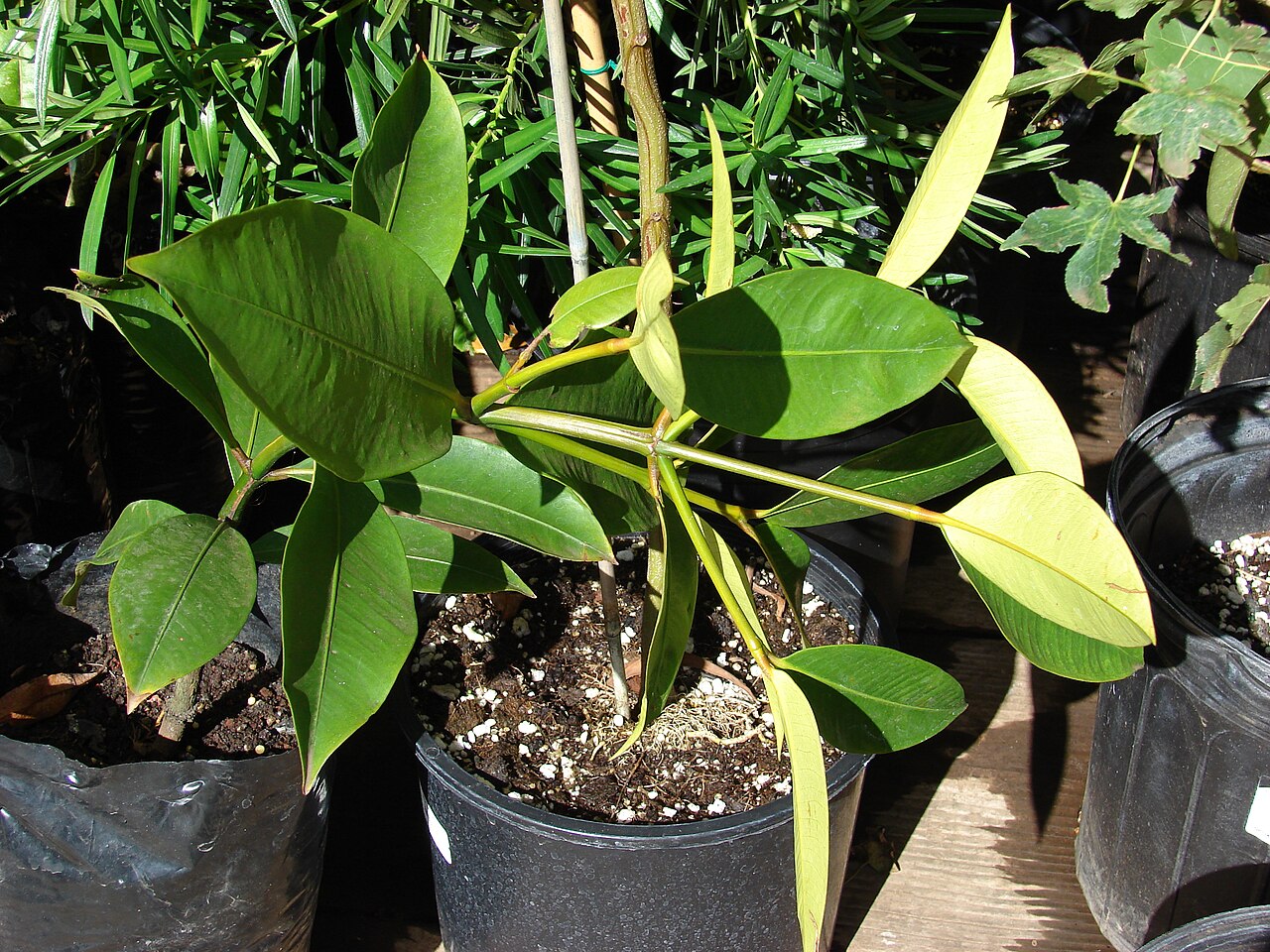
Recognizing Mangosteen Leaves.
Opposite leaves are thick and leathery: glossy dark green above, paler below. New leaves can begin rosy before turning green.(1)
The dark, textured outer bark is another botanical detail. Beneath it, the inner bark contains bitter, gummy yellow latex.(1)
The canopy and bark help identify the tree. Its flowers mark the beginning of fruit development.
04 · From flowers to fruit
From Flower to Developing Fruit.
The flower is followed by a developing green fruit. As it matures, the pericarp takes on the familiar purple color. These separate photographs make the stages easier to recognize; they do not document one fruit over time.
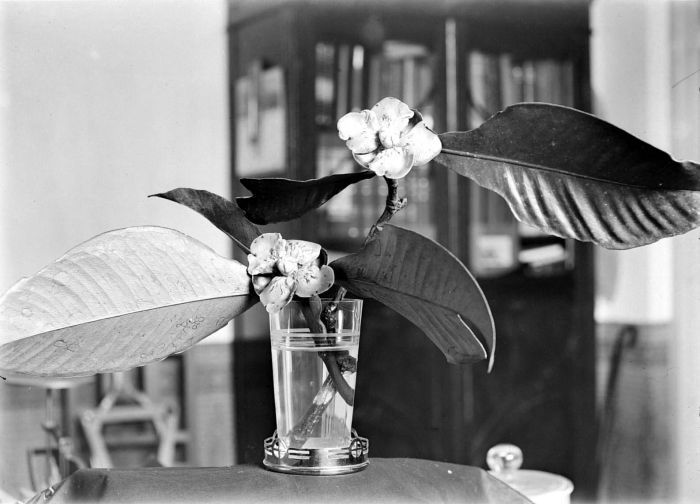
Before the fruit, a flower.
Flowers give rise to rounded fruits capped by a persistent green calyx.(1)
Flowering branch, 1913 · Collectie Wereldmuseum (v/h Tropenmuseum), part of the National Museum of World Cultures · CC BY-SA 3.0
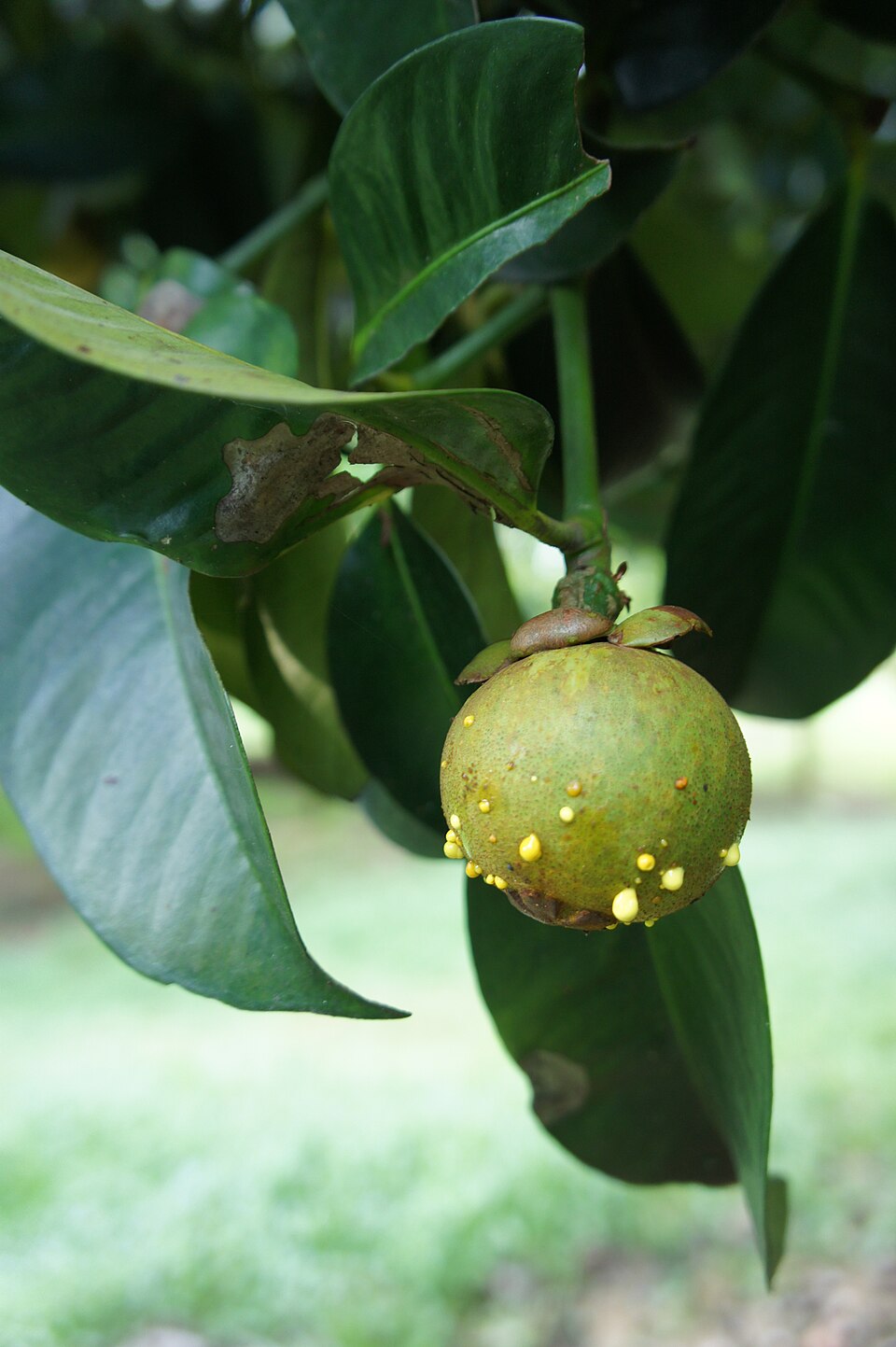
The green fruit grows.
Before the deep-purple stage, the developing fruit is green. Here it is still attached to the branch beneath its leafy calyx.
“Fruit of Garcinia mangostana” · Display cropped · Photo: Michael Hermann · CC BY-SA 3.0
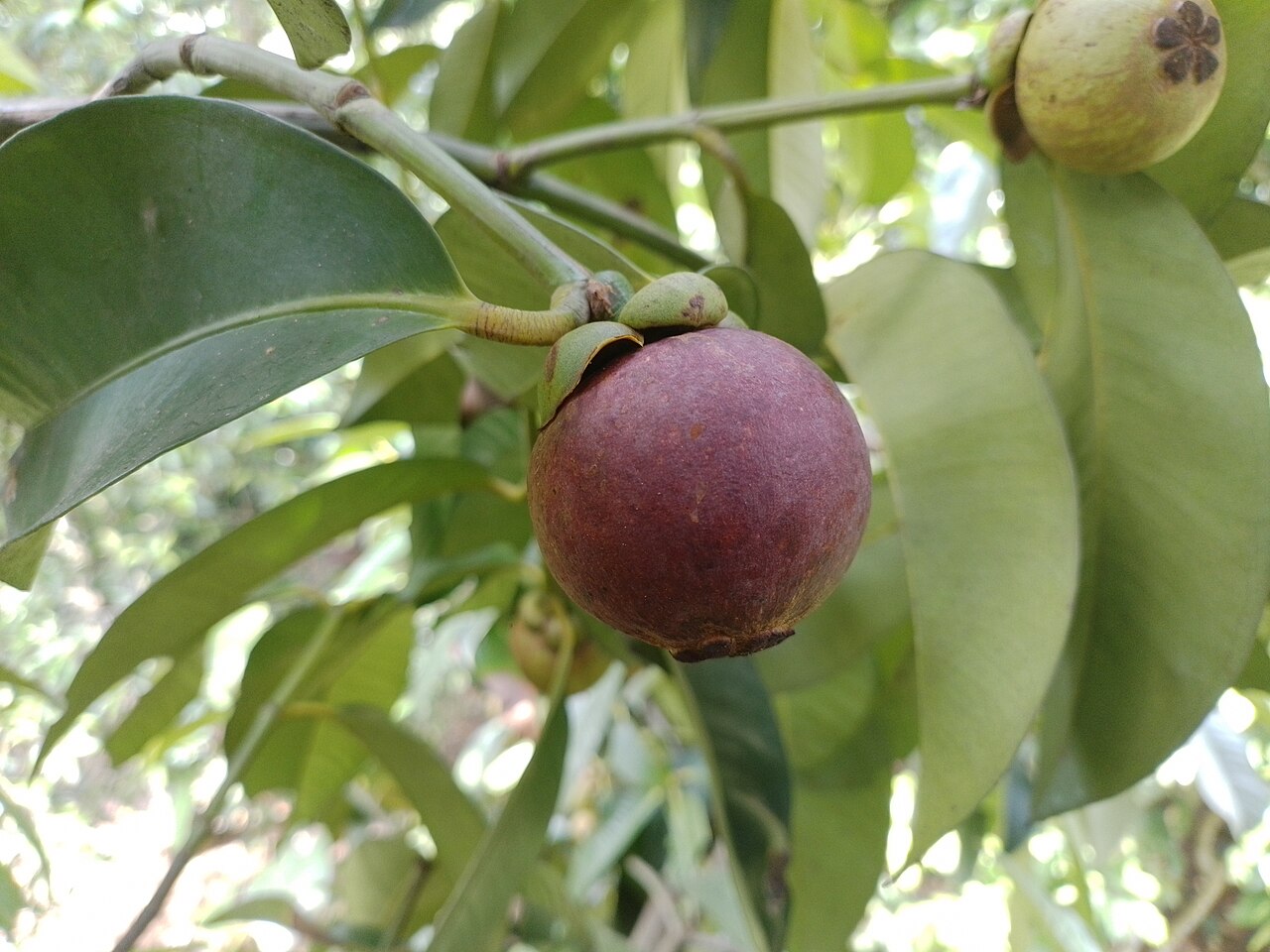
The pericarp turns purple.
The fruit’s exterior becomes red-purple to dark purple as it matures.(1)
“Mangosteen fruit on the tree” · Photo: VpuipV · CC BY-SA 4.0
05 · Understanding the pericarp
Open the Fruit.
Meet the Pericarp.
An opened mangosteen reveals its structure: the pericarp, a thick purple outer rind, surrounds the soft white segments.(1)
This distinction matters when looking at mangosteen products: the white flesh and the pericarp are different botanical materials. Our rich-pericarp capsules use the outer pericarp.

06 · From botanical material to product
From the Fruit’s Pericarp
to Our Mangosteen Product.
Our Freeze-Dried Rich Pericarp Mangosteen Capsules begin with the thick pericarp of Garcinia mangostana.
From a carefully tended seedling to a mature fruit, each stage leads to the botanical material used in the finished product.
Explore our mangosteen →The research behind this articleSource References
- 01Botanical profileGarcinia mangostana — Agroforestree DatabaseView source ↗
Full citation
World Agroforestry Centre. Garcinia mangostana L. Agroforestree Database species profile. Agroforestry Database 4.0, Orwa et al. (2009).
- 02Plant taxonomy & distributionGarcinia mangostana L.View source ↗
Full citation
Royal Botanic Gardens, Kew. Garcinia mangostana L. Plants of the World Online. Accepted species, family Clusiaceae; native range Peninsular Malaysia and Borneo.
- 03Cultivation guideMangosteen Production GuideView source ↗
Full citation
Philippine Department of Agriculture, High Value Crops Development Program. Mangosteen Production Guide. Nursery care, planting and establishment guidance.